A Science-Backed Guide to Fruit Smoothies for Weight Loss
Discover how to use fruit smoothies for weight loss effectively. This guide offers science-backed tips, recipes, and strategies to boost your metabolism.
Yes, fruit smoothies can be an effective tool for weight loss, provided they are prepared correctly. The key is not merely blending fruit, but creating a balanced composition of whole fruits, fiber, and protein. This nutrient-dense combination promotes satiety—the feeling of fullness—which is crucial for adhering to a calorie deficit without persistent hunger.
Why a Well-Formulated Smoothie Supports Weight Management
A common misconception is that fruit smoothies are inherently high in sugar and calories. However, a properly constructed smoothie is a nutritional powerhouse engineered for weight management. Its efficacy lies in nutrient density and its ability to induce satiety.
Unlike fruit juice, which is stripped of its fibrous pulp, a smoothie incorporates the entire fruit. This preserves the dietary fiber, a critical component for weight loss.
Fiber plays a vital role in metabolic health. It slows the absorption of sugar into the bloodstream, which helps stabilize blood glucose levels and prevent the sharp energy fluctuations that often lead to cravings. Furthermore, fiber adds bulk to the smoothie, contributing to a feeling of fullness on fewer calories. This makes managing daily caloric intake a more sustainable process.
The Scientific Principle of Satiety and Caloric Deficit
Ultimately, successful weight loss is achieved by maintaining a consistent caloric deficit, meaning you expend more calories than you consume. A well-designed weight-loss smoothie helps achieve this by maximizing satiety per calorie.
When fiber-rich fruits are combined with a lean protein source and healthy fats, the resulting meal is digested slowly. This gradual digestion process sends prolonged satiety signals to the brain, effectively suppressing hunger for several hours. This is a significant advantage over many conventional breakfast options, such as cereals or pastries, which are often high in refined carbohydrates and can lead to hunger shortly after consumption.
A strategically formulated smoothie is more than a beverage; it is a meal designed to maximize satiety. This helps naturally reduce overall daily calorie intake without causing feelings of deprivation, a cornerstone of sustainable, long-term weight management.
Market data supports the growing adoption of this nutritional strategy. The global smoothie market was valued at USD 12.35 billion in 2024 and is projected to continue its upward trajectory. Fruit-based blends are the dominant segment, and their health benefits are supported by clinical evidence. For instance, one study found that participants who consumed a green-fruit smoothie daily as part of a balanced diet lost an average of 3-5kg over an 8-week period. For further details on market trends, you can read the full research about the smoothies market.
How to Construct an Optimal Smoothie for Fat Loss
Creating a smoothie for weight loss is a matter of strategic ingredient selection, not arbitrary blending. The objective is to formulate a beverage that is both palatable and engineered to control appetite and support metabolic health. Every component should serve a specific nutritional purpose.
The increasing popularity of smoothies is not unfounded; consumers are experiencing tangible benefits.
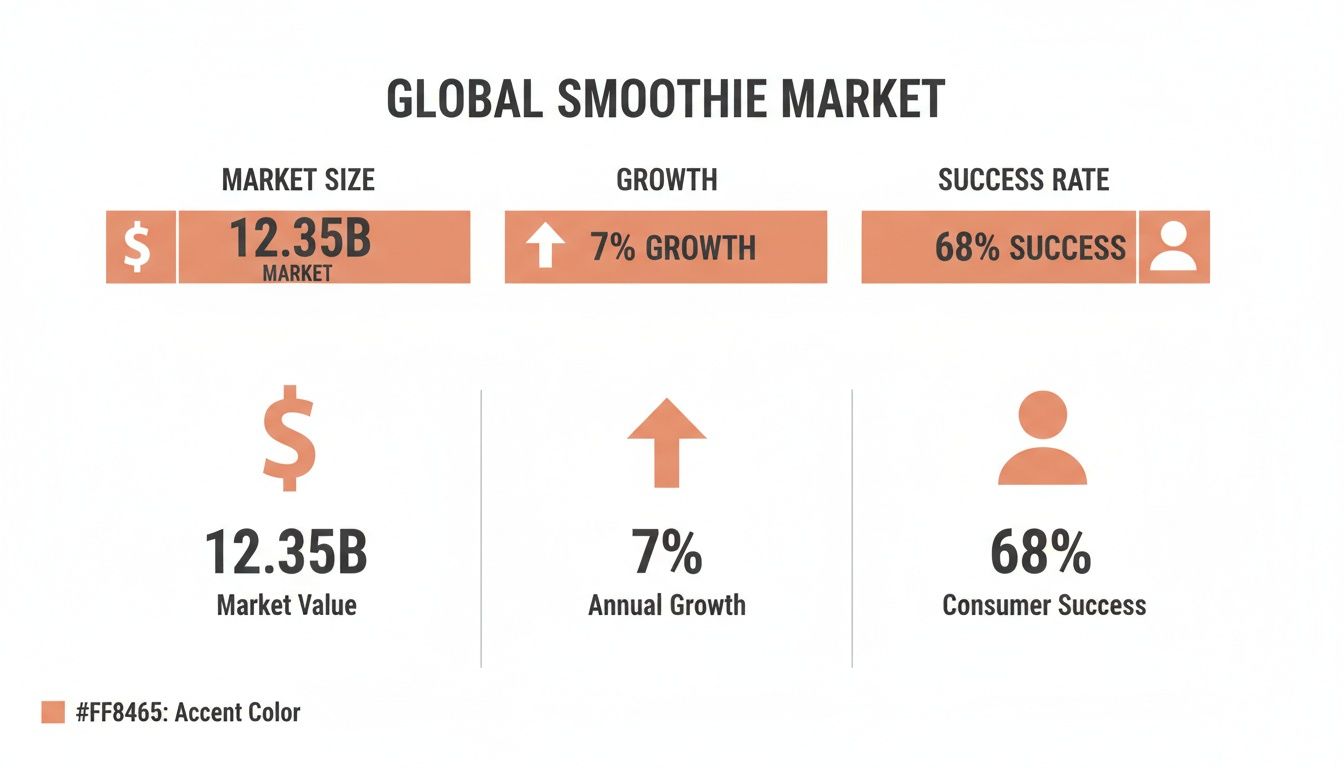
These statistics indicate a shift toward functional, health-oriented food choices. Let's examine the principles for building a smoothie that contributes effectively to weight loss objectives.
Start With a Low-Glycemic Fruit Base
The choice of fruit is foundational and a common point of error. For weight loss, it is essential to prioritize fruits with a low glycemic index and high fiber content.
Berries—such as strawberries, blueberries, and raspberries—are an excellent choice. They are rich in antioxidants and fiber, which helps to regulate blood sugar levels. A standard one-cup serving of mixed berries contains less than 15 grams of sugar, making it an ideal base.
Conversely, fruits like mango, pineapple, and ripe bananas have a higher sugar content. While nutritious, they should be used in moderation. Consider them flavor enhancers rather than the primary base; for instance, a quarter of a banana can add creaminess without significantly increasing the sugar load.
To assist in selection, the following table provides a comparison of common smoothie fruits.
Choosing Your Fruit Base: Low vs. High Sugar Fruits
| Fruit (1 Cup Serving) | Approximate Calories | Approximate Sugar (g) | Approximate Fiber (g) | Role in Weight Management |
|---|---|---|---|---|
| Mixed Berries | 85 | 15 | 8 | High fiber content promotes satiety and glycemic control. |
| Strawberries | 50 | 7 | 3 | Low caloric and sugar density make it an ideal base ingredient. |
| Peaches | 60 | 13 | 2 | Provides sweetness and volume with moderate caloric impact. |
| Banana | 105 | 27 | 3 | High in sugar; best used in small portions (¼ to ½) for texture. |
| Mango | 100 | 23 | 3 | High sugar content; should be treated as a natural sweetener. |
| Pineapple | 80 | 16 | 2 | Adds tropical flavor but should be portion-controlled due to sugar. |
Using this guide, you can construct a smoothie that delivers flavor without an excessive sugar load that could impede weight loss.
Incorporate a Lean Protein Source
The inclusion of protein is a non-negotiable element. Protein is the most satiating of the three macronutrients, meaning it is the most effective at promoting and prolonging a feeling of fullness.
Here are several effective protein sources:
- Plain Greek Yogurt: A superior choice that adds a creamy texture while providing a significant amount of protein, typically 15-20 grams per serving. It also contains beneficial probiotics for gut health.
- High-Quality Protein Powder: The most direct method for increasing protein content. Whey, casein, and plant-based options (pea, hemp) are all viable. It is crucial to select a product with minimal added sugars and artificial ingredients.
- Cottage Cheese: While unconventional, low-fat cottage cheese is an excellent addition. It blends seamlessly, delivers a substantial protein boost, and its flavor is masked by the other ingredients.
The role of protein extends beyond satiety. It is essential for preserving lean muscle mass during periods of caloric restriction, which is critical for maintaining a healthy metabolic rate.
Enhance with Fiber and Healthy Fats
To maximize the smoothie's staying power, the addition of supplemental fiber and healthy fats is recommended. These components slow down gastric emptying, resulting in a more sustained release of energy.
Leafy greens like spinach or kale are an easy way to increase fiber and nutrient content with negligible caloric impact. For healthy fats, a tablespoon of seeds is an ideal addition.
Scientific Tip: Chia, flax, and hemp seeds are excellent choices. They are hydrophilic, meaning they absorb liquid and expand in the stomach, which significantly enhances the feeling of fullness. They are also rich sources of omega-3 fatty acids.
A small amount of avocado can also contribute a rich texture and monounsaturated fats. However, due to its caloric density, portion control is essential.
Select Your Liquid Base and Boosters Carefully
The liquid used for blending is an important consideration. Avoid fruit juices, which are high in sugar and lack fiber.
Instead, opt for low-calorie liquids such as unsweetened almond milk, coconut water, or plain water. These provide the necessary liquidity without adding excess calories or sugar.
Finally, consider adding "boosters" for flavor and health benefits. A sprinkle of cinnamon has been shown to assist with blood sugar regulation, while fresh ginger can aid digestion and reduce inflammation. These small additions can elevate the nutritional profile of your smoothie.
Three Evidence-Based Smoothie Recipes
The following recipes are designed based on the nutritional principles discussed. They are formulated to address specific physiological needs related to weight management and physical activity.
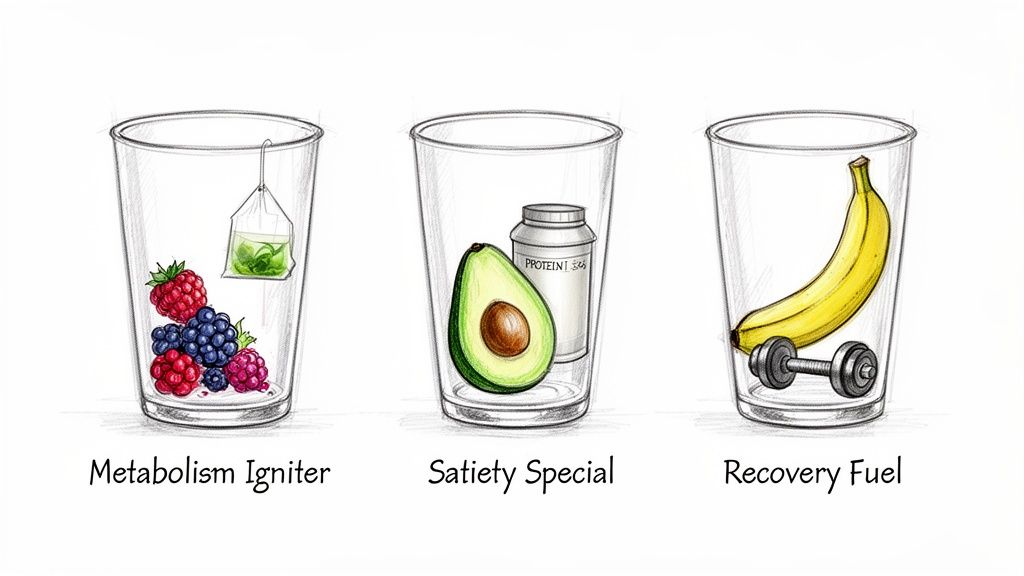
Use these recipes as a template. Once you are familiar with their composition and effects, feel free to experiment with other ingredients based on the guidelines provided.
The Metabolic Support Smoothie
This recipe is designed for morning consumption to support metabolic function and provide sustained energy. It incorporates ingredients with known thermogenic and energy-regulating properties.
- Ingredients:
- 1 cup mixed berries (frozen)
- 1/2 cup brewed green tea (chilled)
- 1 scoop vanilla protein powder
- 1 tablespoon chia seeds
- A dash of cinnamon
The catechins present in green tea, particularly epigallocatechin gallate (EGCG), have been studied for their potential to support a modest increase in metabolic rate. Combined with the low-glycemic, high-fiber berries and satiating protein, this smoothie provides a foundation for controlled appetite throughout the day.
Approximate Nutrition: Calories: 280 | Protein: 25g | Carbs: 28g | Fat: 7g | Fiber: 12g
The Satiety-Maximizing Smoothie
This formulation is intended to combat midday hunger and cravings. It is rich in healthy fats and protein, which work synergistically to promote long-lasting satiety.
- Ingredients:
- 1 cup unsweetened almond milk
- 1 large handful of spinach
- 1/2 cup plain Greek yogurt (full-fat or low-fat)
- 1/4 avocado
- 1 tablespoon flax seeds
The monounsaturated fats from the avocado and the omega-3 fatty acids from flax seeds significantly delay gastric emptying. Paired with the protein from Greek yogurt, this combination sends potent satiety signals to the brain. This smoothie serves as an excellent example of a 200-400 calorie meal replacement that can prevent overconsumption later in the day.
The Post-Workout Recovery Smoothie
This smoothie is formulated for consumption after physical exercise. Its purpose is to replenish glycogen stores and provide the necessary amino acids for muscle protein synthesis and repair. The use of higher-glycemic fruit here is intentional and strategic.
- Ingredients:
- 1 cup water or coconut water
- 1/2 frozen banana
- 1/2 cup frozen pineapple chunks
- 1 scoop unflavored or vanilla protein powder
- 1 teaspoon ginger (fresh, grated)
Following intense exercise, muscle cells are highly receptive to glucose for glycogen replenishment. The carbohydrates from the banana and pineapple provide a rapid source of energy. The protein is essential for repairing muscle micro-tears, and ginger contains gingerols, which have anti-inflammatory properties that may help reduce exercise-induced muscle soreness. We explore the nuanced role of bananas in our guide on the benefits of bananas in your diet.
Approximate Nutrition: Calories: 310 | Protein: 24g | Carbs: 45g | Fat: 4g | Fiber: 7g
The popularity of such functional smoothies is understandable. With fruit-based beverages projected to constitute 55.72% of the smoothie market, they represent a significant tool in public health efforts. In the US, where over 42% of adults live with obesity, simple dietary substitutions like incorporating a nutrient-dense smoothie can yield substantial long-term health benefits. You can learn more about the growing smoothies market on mordorintelligence.com.
Optimizing Smoothie Timing and Portion Control
The timing of smoothie consumption and adherence to appropriate portion sizes are as critical as the ingredients themselves. A strategic approach is necessary to integrate smoothies effectively into a weight loss plan.
Consuming a smoothie for breakfast can help stimulate metabolism and provide steady energy for the morning. This can prevent the mid-morning energy dip that often leads to consumption of high-sugar, low-nutrient snacks.
Alternatively, a protein-rich smoothie consumed within an hour post-workout can optimize muscle recovery and glycogen resynthesis, enhancing the benefits of the exercise session.
Avoiding Caloric Overload: The Portion Size Pitfall
A major error in smoothie preparation is excessive portioning, which can inadvertently turn a healthy meal into a high-calorie beverage. It is easy to overconsume calorie-dense "healthy fats" such as nuts, seeds, and avocado.
As a general guideline, a meal-replacement smoothie should be approximately 12-16 ounces (350-450ml) and contain between 300-450 calories.
Due to their liquid form, it is possible to consume a large number of calories from a smoothie without experiencing the same level of physical fullness as a solid meal of equivalent caloric value. Therefore, measuring ingredients is advisable, at least initially, to calibrate portion sizes accurately.
Implement these practices to maintain portion control:
- Use a designated glass: Never consume a smoothie directly from the blender pitcher. Pouring it into a standard-sized glass provides a clear visual cue for serving size.
- Measure calorie-dense ingredients: Use measuring spoons for nut butters, seeds, and oils. This prevents the unintentional addition of hundreds of calories.
- Monitor liquid volume: Even unsweetened plant milks contain calories. Limit the liquid base to approximately one cup per serving to maintain caloric balance.
Mastering portion control is a fundamental skill for successful weight management. For visual aids, refer to our guide on how to measure food without a scale.
Quantifying the Impact of Smoothies on Your Progress
While creating nutritionally sound smoothies is a positive step, consistency and monitoring are key to achieving weight loss goals. Tracking your nutritional intake allows you to objectively assess the impact of your dietary changes.
Manual logging of individual ingredients can be tedious and is a common reason for abandoning nutritional tracking. Modern technological solutions can automate this process, removing a significant barrier to consistency.
Transitioning from Manual Logging to Automated Tracking
Imagine preparing your morning smoothie and, instead of manually entering each ingredient into an application, you simply take a photo. Within seconds, the complete nutritional data is logged. This is the functionality offered by tools like BiteKit.
This streamlined approach removes the friction associated with traditional food logging, transforming it from a chore into a seamless part of your daily routine.
The screenshot below illustrates the clarity and simplicity of a modern nutritional tracking interface.
This is more than a food diary; it is a visual representation of your daily intake, making it easy to understand how your smoothie contributes to your overall caloric and macronutrient targets.
Correlating Dietary Intake with Measurable Results
Consistent tracking enables you to establish a direct correlation between your dietary choices and your weight loss progress. You can precisely quantify how substituting a high-calorie breakfast with a balanced smoothie affects your total daily energy intake. This data empowers you to make informed adjustments to maintain a caloric deficit. A calorie deficit calculator can help you establish your initial targets.
This approach is particularly beneficial for those new to structured nutrition. For example, a typical 300-calorie berry and banana smoothie can provide 10g of fiber. Research suggests that this level of fiber intake can reduce levels of ghrelin, a key hunger hormone, by 15-20%.
By using a tool like BiteKit to log your smoothie with a photo, you can easily see how this single dietary change can reduce your weekly calorie intake by 1,500-2,000 calories. For more on market trends, see the smoothie market's growth on factmr.com.
Removing the friction from nutritional tracking provides a clear, motivating feedback loop. You are no longer relying on hope; you are observing empirical evidence of your progress daily.
Frequently Asked Questions About Smoothies for Weight Loss
Adopting a new dietary strategy often raises questions. Addressing these common concerns about fruit smoothies for weight loss can help you proceed with confidence.
Will the Sugar in Fruit Cause Weight Gain?
This is a valid and frequent concern. The answer is no, provided the smoothie is constructed correctly. The apprehension regarding fruit sugar often stems from commercially prepared smoothies that contain fruit juice concentrates, sweetened yogurts, and sherbet, which are nutritionally equivalent to milkshakes.
A weight-loss smoothie must be based on whole fruit. The dietary fiber present in whole fruit significantly slows the absorption of its natural sugar (fructose). This mitigates the rapid spike in blood glucose and subsequent insulin response that can promote fat storage. When this fiber is combined with protein and healthy fats, the result is a balanced, metabolically favorable meal.
Can a Smoothie Function as a Complete Meal Replacement?
Yes, a smoothie can serve as a meal replacement, but it must be nutritionally complete. A simple blend of fruit and milk is a snack, not a meal, and will not provide lasting satiety.
To qualify as a meal replacement, a smoothie should contain the core components of a balanced meal:
- A substantial protein source (at least 20g from protein powder, Greek yogurt, etc.).
- A source of healthy fats (e.g., a tablespoon of chia seeds or a quarter of an avocado).
- Ample fiber from fruit and vegetables (e.g., spinach, berries).
A smoothie formulated with these components will typically fall within the 300-500 calorie range and provide the same level of satiety as a solid meal.
A smoothie earns its "meal replacement" status when it provides the same satiety signaling and sustained energy release as a balanced plate of food. This is achieved through the synergistic action of protein, fat, and fiber.
How Can I Increase Sweetness Without Adding Sugar?
It is possible to achieve a sweet flavor profile without resorting to added sugars like honey or maple syrup. Over time, reducing your intake of refined sweeteners will increase your sensitivity to the natural sweetness of whole foods.
For additional sweetness without added sugar, consider these methods:
- A small portion of ripe banana: A quarter of a very ripe banana adds significant sweetness and creaminess with a minimal impact on the overall sugar content.
- Spices: Spices like cinnamon and nutmeg can create a perception of sweetness without adding any sugar.
- Vanilla extract: A few drops of pure vanilla extract can enhance the existing flavors and contribute a sweet aroma and taste.
By utilizing these techniques, you can create delicious fruit smoothies for weight loss that satisfy sweetness cravings while supporting your health objectives.