Huevos Rancheros Nutrition: A Complete Macro Guide
Explore huevos rancheros nutrition with our complete guide. See calorie and macro breakdowns for restaurant vs. homemade versions and learn how to track it.
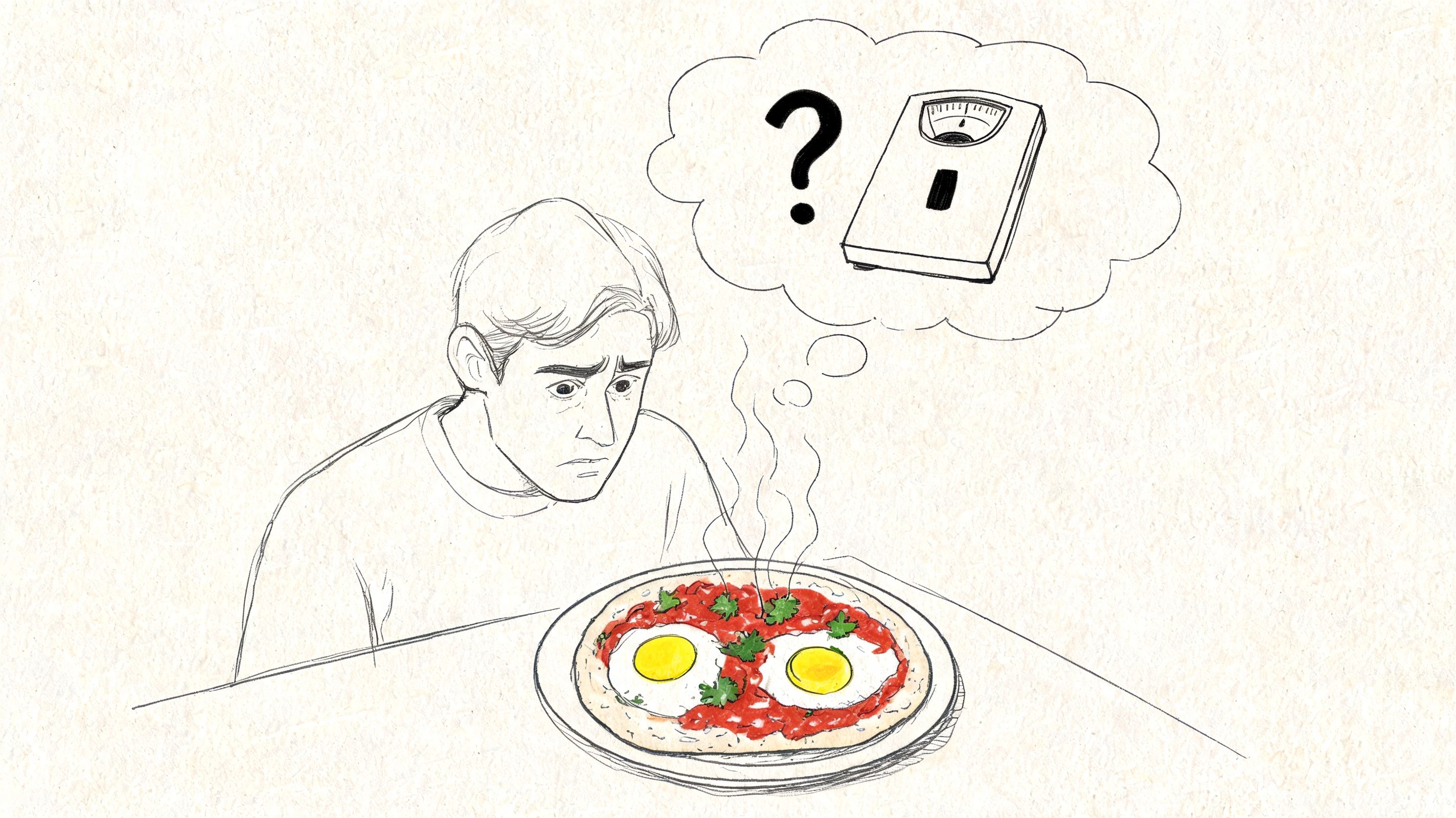
You order huevos rancheros because it sounds like a strong breakfast choice. Eggs, beans, salsa, corn tortillas. Nothing about it feels like junk food. Then the doubt shows up once the plate lands. Is this a balanced meal, or a calorie bomb hiding under a healthy reputation?
That uncertainty makes sense. Huevos rancheros nutrition can swing a lot depending on where you eat it, how the eggs are cooked, how much oil goes into the tortillas, and whether the plate includes extras like cheese, avocado, crema, or a heavy side of beans.
A home version can fit neatly into a calorie-conscious or high-protein plan. A restaurant version can be a very different story. The dish itself isn't the problem. The details are.
Your Guide to Huevos Rancheros Nutrition
If you're trying to lose weight, build muscle, or eat with more intention, huevos rancheros can absolutely stay on the menu. You just need a better way to read the plate.
Most people get tripped up because this isn't a single food. It's a layered meal. Tortillas bring starch. Beans add fiber and extra protein. Eggs add protein and fat. Salsa can be light or salty. Toppings can keep things fresh or push the meal into restaurant-brunch territory.
That same kind of ingredient swap changes the nutrition of drinks too. If you’ve ever compared plant milks for your coffee or smoothie, this guide to almond or soy milk differences is a useful reminder that small choices can change protein, calories, and how filling a meal feels.
Practical rule: Don’t ask whether huevos rancheros is “healthy.” Ask which version you’re eating.
Some readers want the macro numbers. Others want a simpler answer like, “Will this keep me full?” or “Can I eat this on a fat-loss plan?” Both questions matter. A smart breakfast should help with satiety, steady energy, and consistency. Huevos rancheros often does that well when the ingredients stay close to the basics.
You'll see how to judge a standard plate, how restaurant servings change the picture, and how to tweak the dish for lower calories, higher protein, or lower sodium without ruining what makes it good.
Deconstructing the Classic Huevos Rancheros
Before you can estimate the nutrition, it helps to separate the dish into parts. Once you do that, huevos rancheros gets much easier to understand and log.
The base ingredients
Huevos rancheros usually starts with corn tortillas, eggs, ranchero-style salsa, and beans. That combination is what gives the meal its mix of carbs, protein, fat, and fiber.
Corn tortillas matter more than many people think. They’re not just a base. They set the carb structure of the dish and can keep it gluten-free when the meal stays traditional. If you want a deeper look at how tortillas contribute to the meal, this guide to corn tortilla nutrition helps clarify what they bring to the plate.
What each part does nutritionally
A simple way to look at it:
- Eggs give the dish its main breakfast protein and a good share of the fat.
- Beans add fiber, plant protein, and extra staying power.
- Salsa adds flavor with relatively little energy, unless it’s heavily salted or oil-based.
- Corn tortillas provide the main starch and make the meal feel substantial.
This is why huevos rancheros often feels more satisfying than toast and eggs alone. You’re not getting just protein or just carbs. You’re getting a mixed meal that digests more gradually.
The toppings that change everything
Common add-ons include avocado, cheese, sour cream, cilantro, and extra beans. These can be great, but they’re also where two plates that look similar stop being nutritionally similar.
A light homemade version might use a spoonful of beans, a cooked salsa, and eggs over corn tortillas. A richer version might include fried tortillas, a larger pile of beans, cheese, crema, avocado, and extra oil in the pan.
A plate can still be built from wholesome foods and end up much heavier than you expected.
That’s where confusion starts. Readers often assume traditional means predictable. It doesn’t. Huevos rancheros is a flexible dish, and that flexibility is exactly why the nutrition varies so much from one kitchen to another.
The Nutritional Profile of a Traditional Serving
A strong benchmark comes from a healthy preparation detailed by 2harvest.org. That version uses low-sodium canned diced tomatoes, reduced-sodium black beans, two 6-inch yellow corn tortillas, and two large eggs. It provides 328 calories, 9.5g total fat, 239mg sodium, 39g carbohydrates, 9.5g fiber, and 19.5g protein per serving according to the 2harvest huevos rancheros recipe.
That’s a useful reference point because it looks like a real breakfast, not a tiny “diet” serving. It also sits close to the American Heart Association version noted in the same source material, which helps confirm that a lighter huevos rancheros can still feel normal and satisfying.
What those macros mean in practice
The 19.5g of protein is a big reason this meal works so well in the morning. Protein supports fullness and helps make breakfast feel like a real meal rather than a quick carb hit. If you train regularly, it also fits nicely into a routine built around recovery and muscle maintenance.
The 9.5g of fiber is just as important. Fiber from beans and tortillas slows digestion and makes the meal more satisfying over time. That can help prevent the mid-morning crash that often follows lower-fiber breakfasts.
If you want to understand how the egg portion of the dish contributes to the overall meal, this breakdown of fried egg nutrition is a helpful companion.
Why this version works for many goals
This kind of plate is balanced. It isn’t ultra-low-carb, but it also isn’t a carb overload. It isn’t fat-free, but it keeps fat moderate. It gives you a meaningful amount of protein without turning breakfast into a meat-heavy meal.
Here’s the nutritional snapshot in a simple format:
| Nutrient | Healthy homemade serving |
|---|---|
| Calories | 328 |
| Protein | 19.5g |
| Carbohydrates | 39g |
| Fiber | 9.5g |
| Fat | 9.5g |
| Sodium | 239mg |
That profile makes huevos rancheros easier to place in a day of eating than many brunch dishes. You can pair it with fruit if you need more carbs for training, or keep the rest of the day lighter if your breakfast is your main anchor meal.
A common point of confusion
People often expect “healthy” breakfasts to be either high-protein and bland, or filling and heavy. This dish shows that you don’t have to choose one extreme.
Key insight: A good breakfast isn’t only about low calories. It’s about a mix of protein, fiber, and enough food volume to keep you from hunting for snacks an hour later.
Restaurant Portions vs Homemade Reality
The biggest huevos rancheros nutrition mistake usually happens away from home. People picture eggs, tortillas, beans, and salsa. Restaurants often serve something much richer.
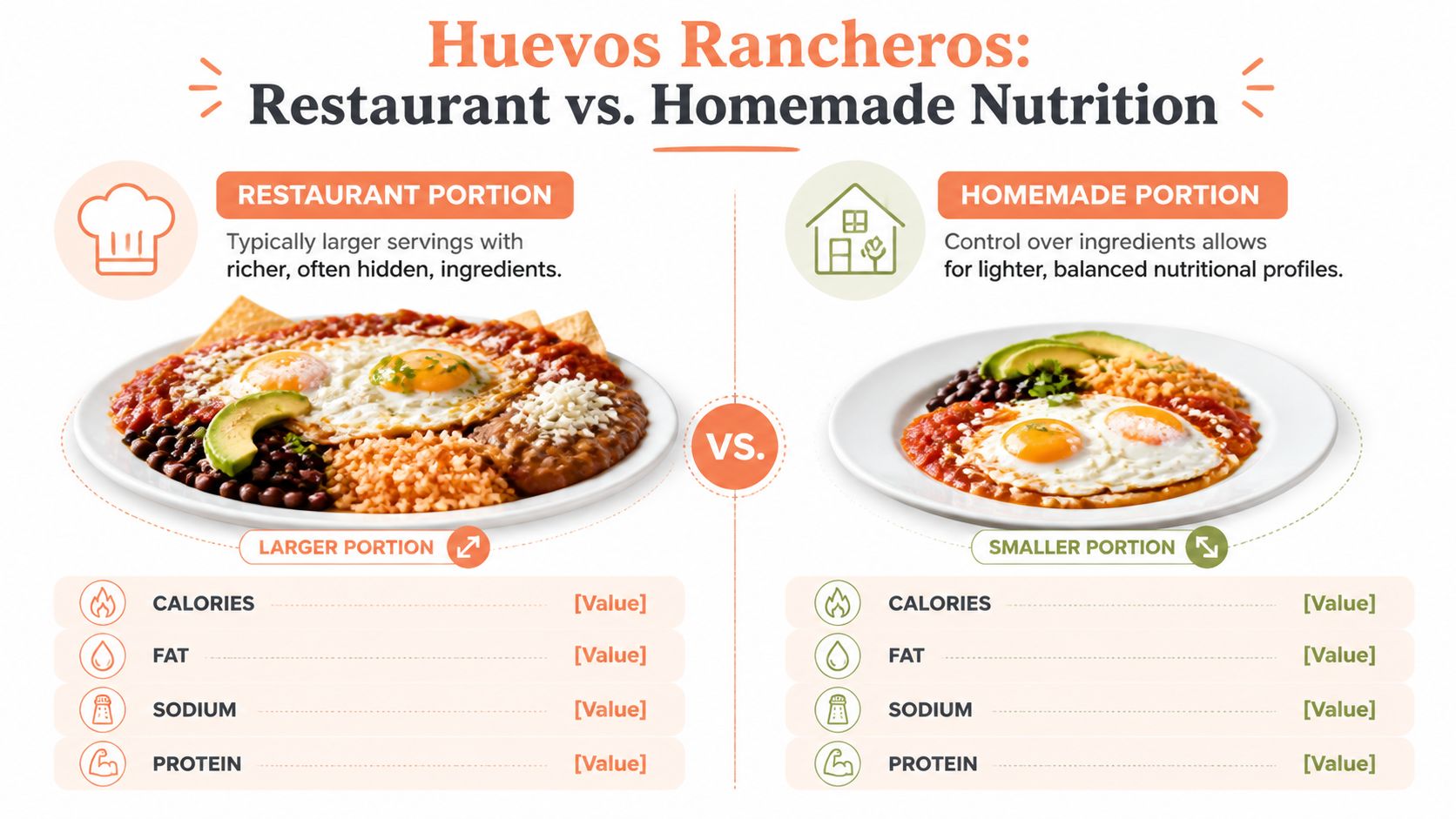
Health-focused recipes tend to land in a much tighter, more manageable range. Skinnytaste notes that health-focused huevos rancheros recipes consistently deliver 17g to 22.5g of protein per serving, while some restaurant meals climb dramatically higher in calories and fat. In the same source, Reds’ version is listed at 2,519 calories and 209g fat, and Another Broken Egg’s version at 960 calories and 63g fat. The article also notes that home versions can cut calories by 60% to 87% and sodium by 75% compared with restaurant plates in those examples, according to Skinnytaste’s huevos rancheros nutrition details.
Why the gap gets so large
Restaurants aren’t trying to match your macro targets. They’re building flavor, consistency, and visual impact.
That usually means:
- More oil: Tortillas may be fried more heavily, eggs may be cooked in extra fat, and beans may include added fat.
- More toppings: Cheese, crema, avocado, and sauces can all pile up fast.
- Larger portions: You may get more tortillas, more beans, and bigger side servings than you’d use at home.
The result is a plate that still looks familiar, but behaves very differently in your daily calorie budget.
Side by side comparison
| Nutrient | Typical Restaurant Serving | Healthy Homemade Serving |
|---|---|---|
| Calories | 960 to 2,519 | 328 |
| Fat | 63g to 209g | 9.5g |
| Sodium | Often much higher | 239mg |
| Protein | 33g in one listed example | 19.5g |
The table makes an important point. Restaurant versions don’t just contain “a little more.” They can become a different category of meal entirely.
How to think about dining out without panic
You don’t need to avoid ordering huevos rancheros at restaurants. You just need a different mindset.
Start by assuming the plate may include hidden fats and bigger portions. If the tortillas look fried, the beans seem rich, or there’s a lot of cheese and crema, you’re likely not eating the same dish as the balanced home version.
A practical restaurant strategy:
- Look at the tortilla treatment. Lightly warmed or lightly crisped is different from heavily fried.
- Check the toppings. Cheese and crema often matter more than the salsa.
- Notice portion spread. Extra sides can turn breakfast into a brunch feast.
- Don’t let the ingredient list fool you. The same words can describe a very different macro profile.
Restaurant huevos rancheros can still fit your plan. You just can’t judge it by the name alone.
Customizing Your Huevos Rancheros For Any Goal
This dish is surprisingly easy to modify once you know which ingredient controls which part of the nutrition.
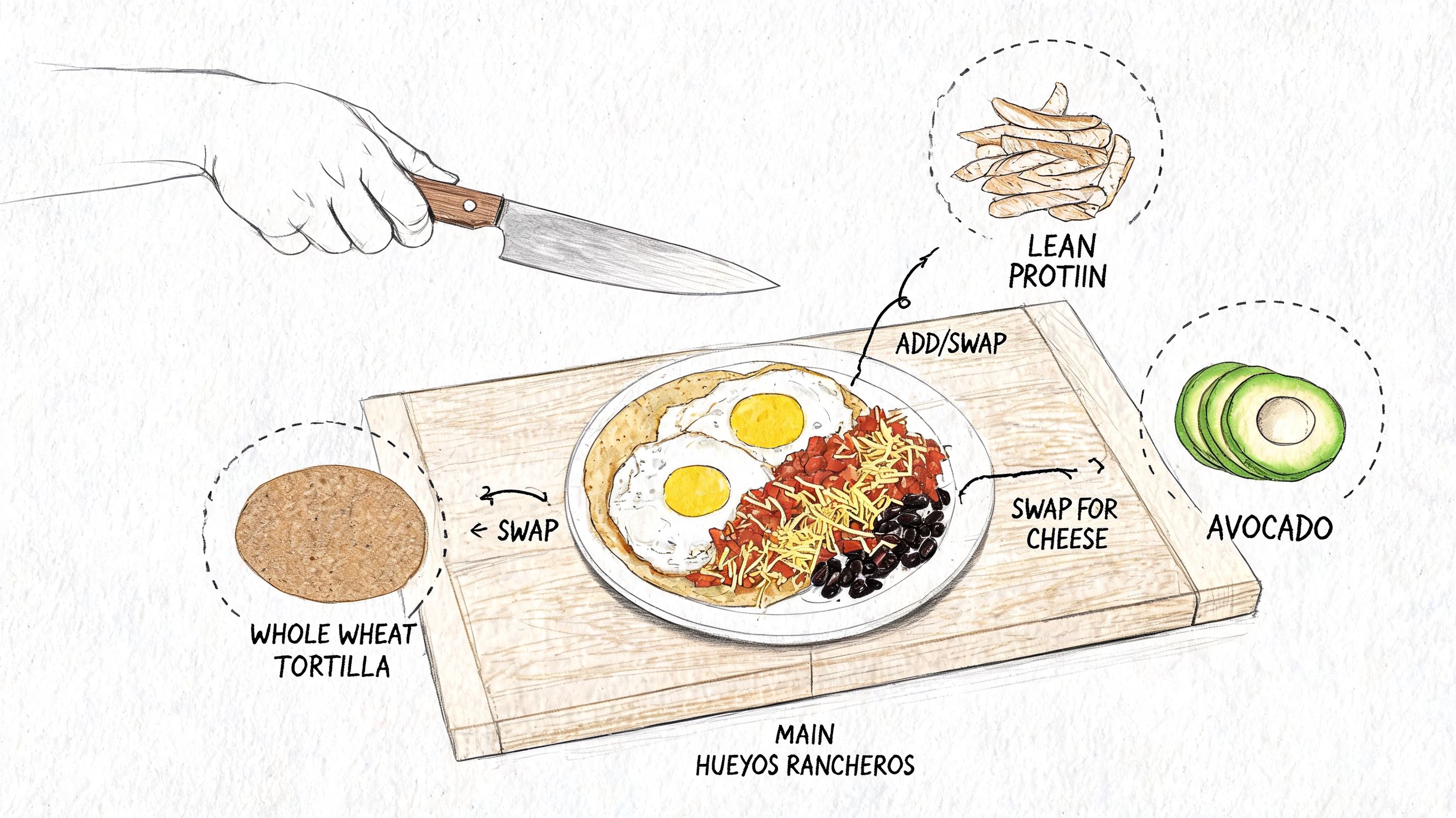
The eggs, tortillas, beans, and toppings each act like a dial. Turn one dial and you change protein. Turn another and you lower sodium or carbs. That makes huevos rancheros one of those rare meals that works for very different eaters without losing its identity.
The science is interesting too. The American Heart Association recipe notes that eggs contribute about 70% of the cholesterol in a standard serving, but the phosphatidylcholine in egg lecithin helps form micelles that can boost lycopene absorption from tomatoes by 2 to 3 times in the cited discussion of nutrient absorption, according to the AHA huevos rancheros recipe page. In plain language, the fat in the eggs can help your body use some of the beneficial compounds in the tomato-based salsa more effectively.
If your goal is lower calories and fat
The first place to look is cooking method and toppings.
- Change the egg style: Poached or lightly cooked eggs usually need less added fat than pan-fried eggs.
- Lighten the tortillas: Warm or lightly toast them instead of frying.
- Trim the rich extras: Use less cheese or skip sour cream when you want a lighter plate.
This keeps the meal recognizable while taking down the heaviness that often sneaks in through preparation, not the core ingredients.
If your goal is more protein
Protein seekers often assume they need to abandon traditional breakfasts and start eating plain egg whites or chicken. You don’t.
Huevos rancheros already gives you a strong foundation because eggs and beans work together well. If you want more, lean into the bean portion, adjust the egg balance, or pair the meal with another protein-rich side that fits your overall day.
If your goal is lower carbs
For some eaters, the tortillas are the easiest lever to pull. You can reduce the tortilla portion or turn the dish into more of a ranchero bowl built around eggs, beans, and salsa.
If you’re experimenting with a lower-carb pattern, it can help to understand how those approaches fit into broader strategies. This explainer on BionicGym for keto enthusiasts gives useful context on how people structure lower-carb eating without treating every meal as all-or-nothing.
Here’s a cooking demo if you want visual inspiration before making your own version:
If you care about cholesterol and sodium
Some people don’t need to stress over dietary cholesterol. Others prefer a more cautious approach. The same AHA material offers a practical adjustment: substitute one whole egg with egg whites if you want to lower cholesterol while keeping much of the protein value in place.
For sodium, the lower-sodium versions show the path clearly. Choosing no-salt-added tomatoes and reduced-sodium beans changes the dish without changing its character.
The smartest customization is the one that changes the nutrition you care about most, while leaving the meal satisfying enough to repeat.
Effortless Tracking with Photo and Voice Logging
Huevos rancheros is exactly the kind of meal that exposes the weakness of old-school tracking methods. You’re not scanning a barcode. You’re estimating tortillas, eggs, beans, salsa, maybe avocado, maybe cheese, maybe oil, and all of it can vary by plate.
That variability isn’t small. One reviewed summary notes a 4x calorie variance across huevos rancheros entries and points out that this lack of standardization makes precise macro tracking harder, especially for busy professionals and beginners trying to log custom meals. That same discussion highlights why AI tools are useful for analyzing custom plates, according to the fatsecret overview of huevos rancheros variability.
Why manual logging gets messy fast
With a meal like this, the friction adds up:
- You have to split the dish into parts: eggs, tortillas, beans, salsa, toppings.
- Database entries rarely match your plate: one listing may assume fried tortillas, another may not.
- Portion estimates are shaky: especially when the meal is served at a restaurant.
If you’ve ever typed in five separate foods just to log breakfast, you already know how easy it is to give up or guess.
A more practical way to log complex meals
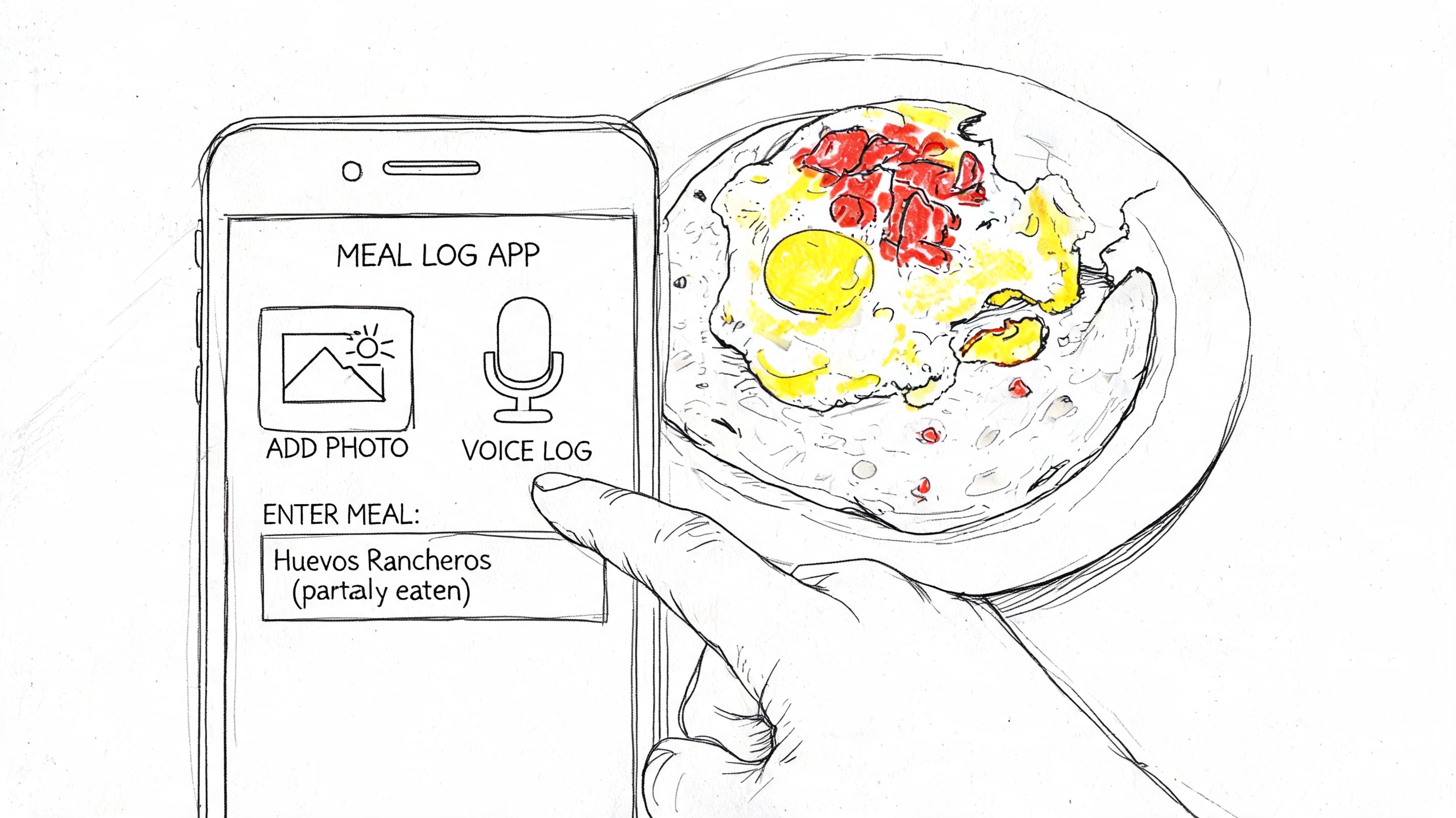
Modern logging works better when it starts with the actual plate in front of you. A photo-based tool can identify the meal components and estimate portions more naturally than a search-only approach. Voice input helps too, especially when you can say something close to how you think about the meal, instead of forcing it into database language.
If that style of tracking sounds easier, this explanation of a photo calorie counter shows how image-based logging can reduce the usual friction.
A good rule for huevos rancheros is simple: log what you see, not what you hope it was. If there’s visible avocado, cheese, or extra oil, count it. If the portions look larger than your normal home plate, treat it that way.
Advanced Tips for Dialing In Your Nutrition
The people who do best with nutrition usually don’t rely on willpower. They reduce guesswork ahead of time.
Make the components easier than takeout
Meal prep works especially well here. Cook the salsa ahead, portion the beans, and keep tortillas ready. Then breakfast becomes assembly, not a project. That makes the lighter home version much easier to repeat on busy mornings.
Get serious about sodium when needed
Underexplored low-sodium adaptations matter, especially because some versions can get much saltier than they need to be. One lower-sodium version reaches 239mg sodium by using no-salt-added tomatoes and beans, and the same source notes that swaps like fresh salsa and omitting cheese can reduce sodium further, according to the Prospre huevos rancheros ingredient overview.
If sodium is a priority, focus on the ingredients that tend to carry it. Fresh salsa instead of canned shortcuts can help. Skipping salty cheese can help. Building flavor with herbs, chiles, and acidity often works better than trying to “eat less sodium” in the abstract.
Think beyond the plate
A breakfast doesn’t need to do everything. It just needs to fit the rest of your day. If your huevos rancheros is higher in carbs, your later meals can lean more protein-forward and produce-heavy. If breakfast is rich, lunch can be simpler.
For readers who like learning how food combinations affect uptake, this guide on how to improve nutrient absorption gives useful practical context.
The best version of huevos rancheros isn’t the lightest one. It’s the one you can repeat consistently while staying aligned with your goals.
If you want to make meals like huevos rancheros easier to track without digging through database entries, BiteKit makes the process simple. You can log with a photo, voice, or natural language text, get instant calories and macros, and keep a clear running view of your day without turning breakfast into paperwork.