D'Anjou Pear Nutrition: Calories, Fiber, & Benefits
Get the complete D'Anjou pear nutrition facts. Discover calories, fiber, health benefits, and how it compares to other fruits for weight loss.
A medium D'Anjou pear gives you 100 calories and 6 grams of fiber, which is 22% of the daily recommended value when eaten with the skin, according to this D'Anjou pear nutrition handout. That single detail changes how many people think about fruit.
Pears are often seen as ordinary produce. For anyone paying attention to hunger, workout fuel, and food logging, D'Anjou pears are more useful than they look. They’re easy to eat, naturally sweet, and filling in a way many snack foods aren’t.
This matters if you're trying to lose weight without feeling deprived, or if you're trying to hit carb targets with better food quality. It also matters if you're building habits and want foods that are simple to remember and easy to log consistently.
Why D'Anjou Pears Deserve a Spot on Your Plate
D'Anjou pears sit in a sweet spot between convenience and nutrition. They don't need prep, they travel well, and they fit into a busy day without much thought. Yet their nutrition profile makes them more than just a grab-and-go fruit.
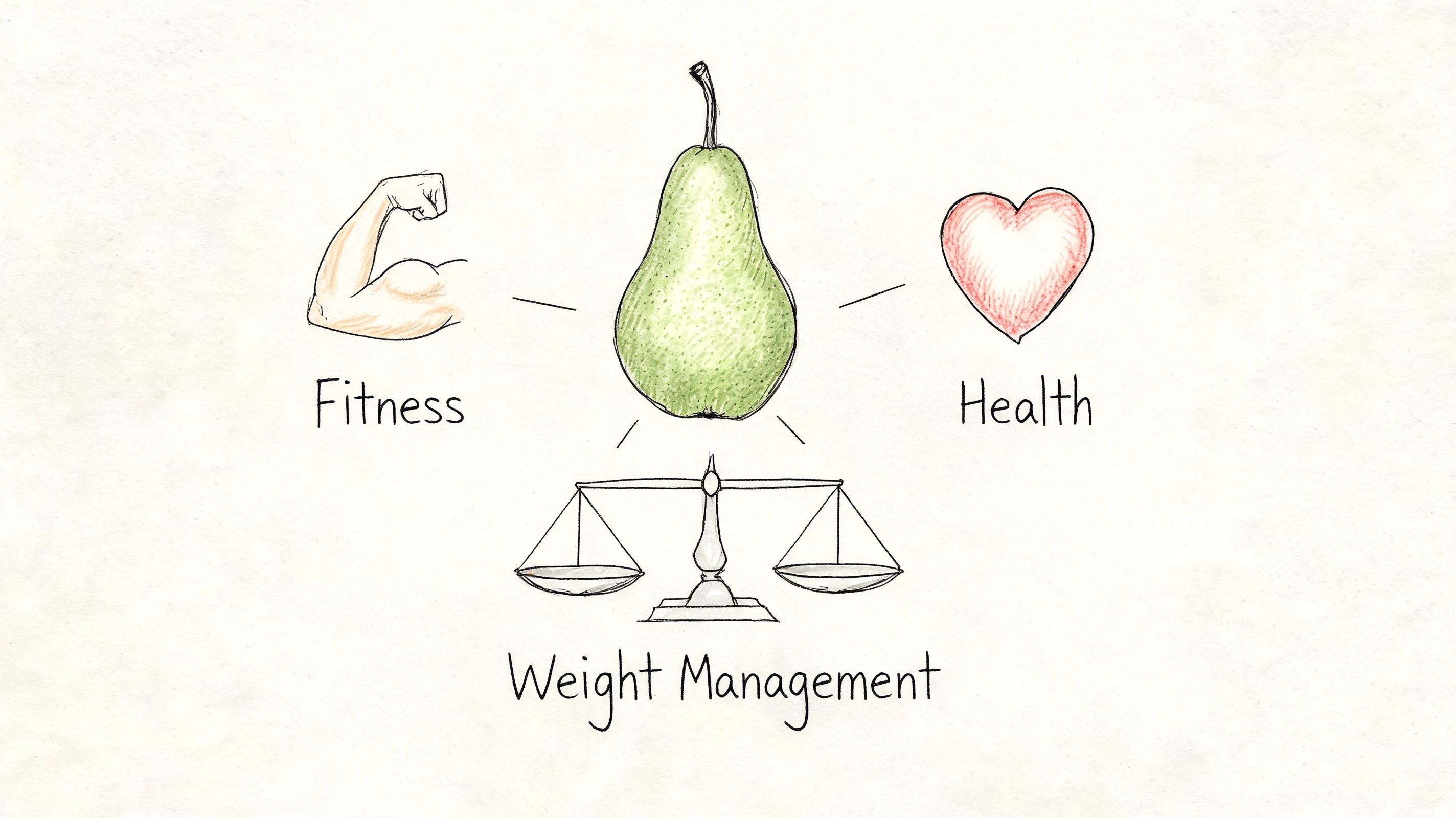
A lot of healthy eating advice stays too broad. "Eat more fruit" is fine, but it doesn't help much when you're standing in the kitchen hungry and trying to choose something that will keep you satisfied. D anjou pear nutrition is practical because it connects directly to common goals: more fiber, steady energy, and better food choices that don't feel restrictive.
Why this fruit works in real life
Three things make D'Anjou pears especially useful:
- They support fullness: Their fiber content helps a snack feel more substantial than its calorie count suggests.
- They fit weight-conscious eating: They offer sweetness and texture without moving your daily intake too far.
- They simplify planning: Pears work as a snack, breakfast addition, salad topper, or pre-workout carb source.
Practical rule: If a food is nutritious but inconvenient, most people won't eat it consistently. Pears pass the convenience test.
They also pair well with higher-protein foods. A pear next to yogurt, cottage cheese, or a handful of nuts creates a more balanced snack without much effort. If you're already trying to build a more filling eating pattern, high-fiber meal ideas like these delicious high-fiber meals can make the transition easier.
An underrated tool for common goals
People often focus on flashy "superfoods" and skip the basics. That's a mistake. A D'Anjou pear won't solve your diet on its own, but it can make your day easier. It helps when your goal is to eat more produce, improve regularity, manage appetite, or replace a less satisfying packaged snack.
That's why this fruit deserves more attention than it gets.
A Detailed Breakdown of D'Anjou Pear Nutrition
A medium D'Anjou pear gives you a simple package to track: 100 calories, 28 grams of carbohydrates, 6 grams of dietary fiber, 17 grams of natural sugars, 15% of the daily value for vitamin C, and 0 grams of fat and sodium, as noted earlier.
For anyone logging food intake, that matters. A pear is easy to recognize, easy to portion, and easy to enter. You are not estimating sauce, guessing serving spoons, or decoding a long ingredient list. For weight loss and fitness goals, that kind of clarity helps you stay accurate without making tracking feel like homework.
What 100 calories looks like in real life
One hundred calories for a full medium fruit is useful because the portion is built in. You are holding the serving in your hand. That makes D'Anjou pears easier to manage than foods where a small visual mistake can shift your intake more than expected.
There is also a practical hunger benefit. A whole pear takes time to chew and contains water and fiber, so it usually feels more substantial than a fast snack with the same calories. If your goal is to stay within a calorie target and still feel reasonably satisfied, that tradeoff is worth paying attention to.
In a food log, this is the difference between a snack that disappears and a snack that pulls its weight.
Why the fiber number stands out
The 6 grams of fiber is one of the most useful numbers in this section. Fiber helps slow the pace of eating and can make a snack or meal feel like it lasted longer. For someone trying to reduce grazing between meals, that matters more than flashy nutrition claims.
It also matters for digestion. If you are trying to increase fiber intake and support regularity, pears can be a practical addition alongside other habits such as fluids, movement, and an overall higher-fiber eating pattern. Some readers also find value in understanding natural remedies for constipation while they work on the bigger picture.
A simple way to use this in tracking is to stop looking at calories alone. Log the pear, then ask a better question: did this snack also move your fiber total in the right direction?
Carbs and sugar, explained without the fear
The 28 grams of carbs in a D'Anjou pear often raise questions, especially for readers focused on fat loss. The helpful frame is context. Fruit carbs are paired with fiber, water, and volume, which changes how the food feels and functions compared with sweets made mostly from added sugar.
The 17 grams of natural sugar is part of that same package. You are eating it in whole-fruit form, not drinking it quickly. For everyday activity, a pre-workout bite, or an afternoon snack, that can be a useful source of energy.
If you use BiteKit to track meals, pears are a good example of why single foods should be judged by more than one number. Calories tell you the cost. Fiber, carbs, and micronutrients tell you what you got for it.
A smart food to pair, not a complete meal by itself
Because a pear has 0 grams of fat and sodium, its main role is straightforward: it is mostly a carb-and-fiber food. That makes pairing easy. Add Greek yogurt for protein, peanut butter for fat, or cottage cheese for both protein and staying power.
Tracking becomes more useful than vague advice. Instead of asking whether a pear is "good" or "bad," ask what your meal still needs. If your day is low in fiber, the pear helps. If your pre-workout meal needs quick, easy carbs, the pear helps. If your snack is low in protein, pair it with one.
If you want to see whether foods like pears are filling nutrient gaps in your day, a micronutrient gap analyzer for your food log can make that easier.
Unpacking the Micronutrient Benefits
Calories and carbs get most of the attention, but they aren't the whole story. D'Anjou pears also contribute minerals that support everyday function, especially if you're active or trying to improve overall diet quality.
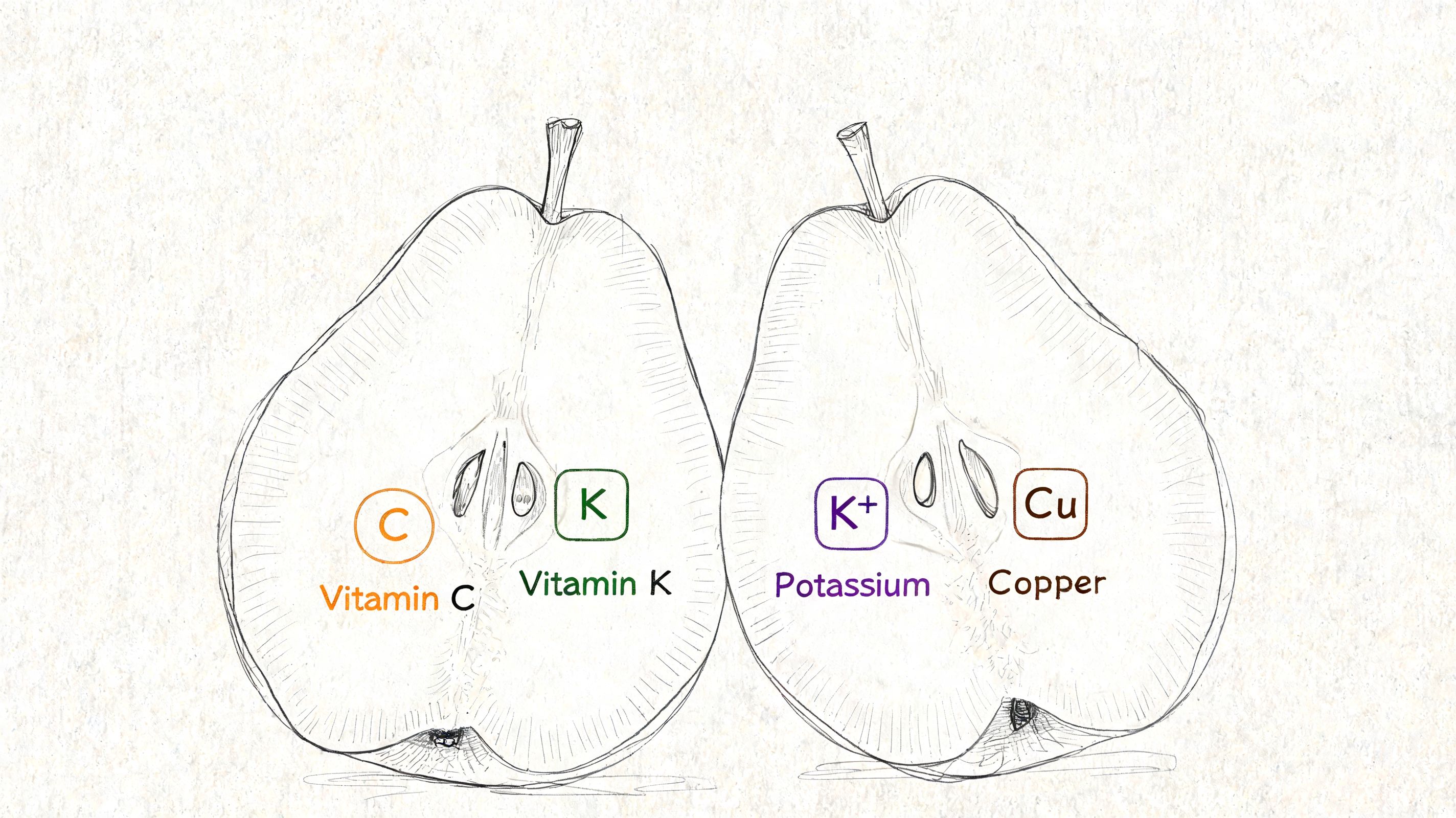
Each medium D'Anjou pear provides 127 milligrams of potassium, 11 milligrams of calcium, and 0.24 milligrams of iron, and one medium pear counts as 1 cup in the MyPlate.gov Fruit Group, according to this USDA-aligned D'Anjou pear nutrition entry.
Why potassium deserves attention
Potassium often gets overlooked because it isn't flashy. In real life, it's tied to important functions like heart health and muscle function, which the nutrition entry explicitly notes. That gives pears a practical role for people who exercise, sweat regularly, or want to build a more balanced diet.
If you think of macros as fuel, potassium is part of the support system that helps the body use that fuel well. It belongs in the "vitally important" category.
More than a source of calories
The calcium and iron amounts in a pear aren't massive, but they still add to your overall intake. That's how strong diets usually work. Most nutrient goals are met through many foods adding up across the day, not through one perfect item.
This is also where fruit can support digestive comfort. The fiber in pears is one reason they often show up in conversations about regularity. If that's a concern for you, this guide to understanding natural remedies for constipation offers broader context on food-based approaches.
Whole foods rarely help in only one way. A pear can support fruit intake, digestion, and diet quality at the same time.
A simple planning shortcut
One medium pear counts as 1 cup in the MyPlate fruit group. That makes planning easier because you don't have to guess whether a pear is a "real serving" or just a small add-on. It counts cleanly.
If you're trying to identify foods that help close nutrient gaps across the week, a tool like this AI micronutrient gap analyzer can make patterns easier to spot. Sometimes the problem isn't that you're eating too much. It's that your routine keeps repeating the same foods and missing variety.
D'Anjou Pear vs Apple Banana and Orange
Fruit comparisons can go wrong fast because people mix serving sizes, focus on one nutrient, or treat one food as universally "best." A better question is: best for what?
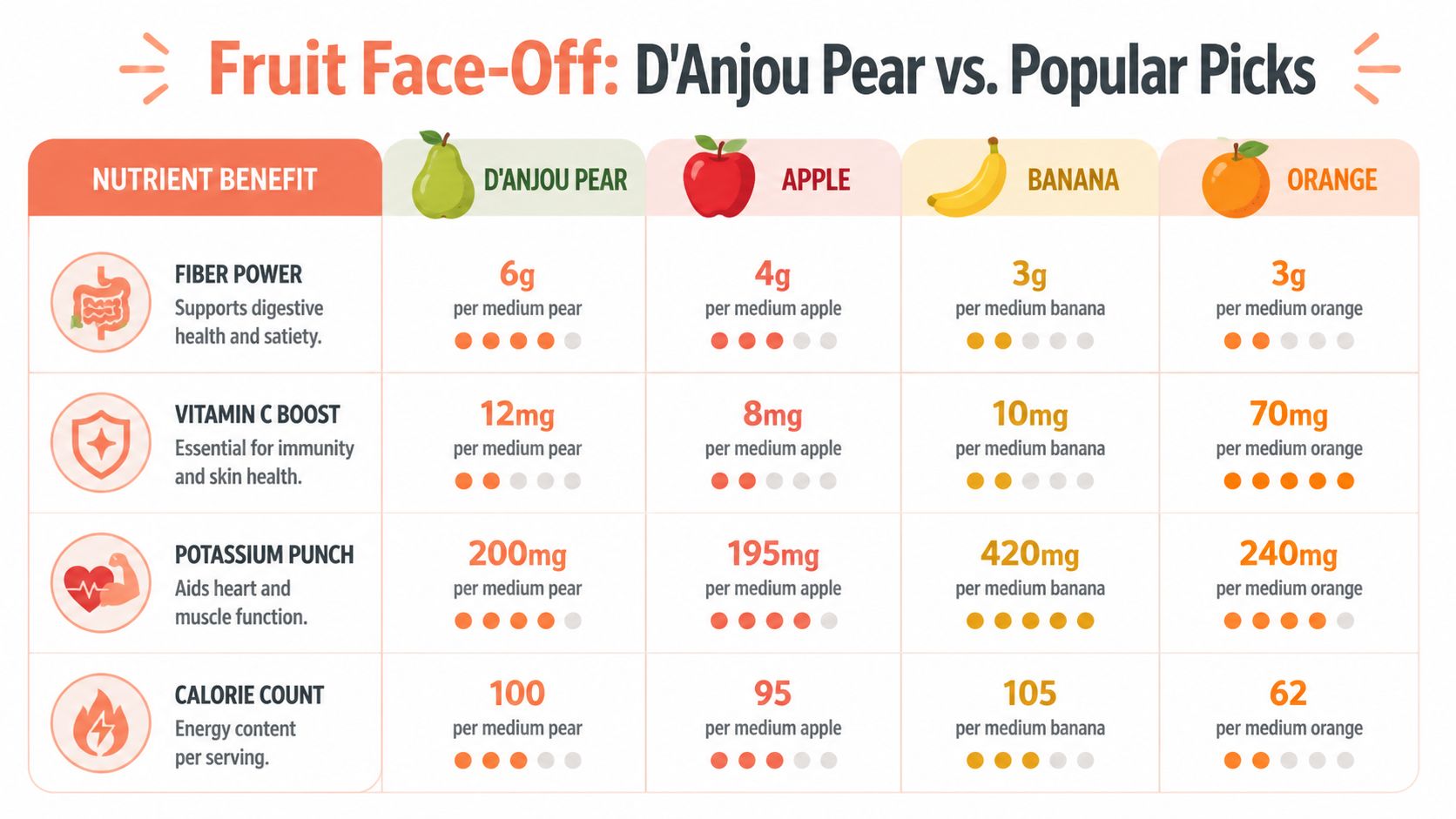
D'Anjou pears are especially strong when fiber and satiety are priorities. The verified nutrition data states that a single medium pear provides more fiber than both an apple and a banana, which gives pears a distinctive edge for people trying to stay full longer from a fruit snack.
What the pear does better
If you're trying to manage hunger, pears have a clear advantage. Their texture is dense enough to feel substantial, and their fiber content supports that fuller feeling after eating. Apples are also crisp and convenient, but the verified D'Anjou data specifically says the pear gives more fiber than an apple. Bananas are useful and portable, yet the same source says a pear also beats a banana on fiber.
That doesn't make apples or bananas poor choices. It means a D'Anjou pear may fit better when your main goal is "I need something sweet that will hold me over."
When another fruit might fit better
Oranges are often the fruit people reach for when they're thinking about Vitamin C. Bananas are a familiar pre-workout option because they're soft, easy to digest, and widely available. Apples are popular because many people like their sharper crunch and tartness.
Choice often comes down to context:
- Pick a pear when fullness is the priority.
- Pick a banana when you want soft, simple fuel and convenience.
- Pick an orange when you're in the mood for a juicy, refreshing snack.
- Pick an apple when you want crisp texture and broad availability.
Nutritional Showdown D'Anjou Pear vs Other Fruits per 100g
Because the verified dataset only includes precise comparative numbers for the D'Anjou pear, a full numeric side-by-side table for all four fruits would require inventing data. Instead, this table shows what can be stated accurately without guessing.
| Nutrient | D'Anjou Pear | Gala Apple | Banana | Navel Orange |
|---|---|---|---|---|
| Fiber | Verified data says a medium D'Anjou pear provides more fiber than an apple | Lower than D'Anjou pear based on verified pear reference | Lower than D'Anjou pear based on verified pear reference | Not quantified here |
| Vitamin C | Present in meaningful amount in verified pear data | Not quantified here | Not quantified here | Commonly associated with Vitamin C, but not quantified here |
| Potassium | Present in verified pear data | Not quantified here | Not quantified here | Not quantified here |
| Calorie Count | Verified for D'Anjou pear in medium serving form | Not quantified here | Not quantified here | Not quantified here |
Comparisons are only useful when they're honest. If the data isn't verified, it's better to stay qualitative than to pretend precision.
If you're specifically weighing a pear against an apple for everyday tracking decisions, this apple nutrition page can help you think through how each fruit fits your preferences and goals.
Leveraging D'Anjou Pears for Weight Loss and Fitness
The best foods for weight loss and fitness are not always the trendiest ones. They are the foods people will consistently keep eating because they work in daily life. D'Anjou pears belong in that category.
For weight loss goals
Weight loss gets easier when meals and snacks help control hunger instead of triggering more of it. Pears can help here because they combine sweetness with a filling texture and meaningful fiber. For many people, that's a better trade than reaching for something ultra-processed that tastes good but disappears in a few bites.
This doesn't mean a pear is magic. It means it can make the rest of the day easier.
Try these uses:
- As a bridge snack: Eat a pear in the late afternoon to avoid arriving at dinner overly hungry.
- As a sweet swap: Use pear slices when you're craving dessert-like sweetness but want a whole-food option.
- As part of a plate: Add a pear to a protein-based breakfast or lunch to make the meal more satisfying.
There's also a gut-health angle worth noting. Since fiber and prebiotic-rich foods often come up in appetite and digestion discussions, this article on how prebiotics support weight adds useful context.
For training and active lifestyles
Athletes and recreational exercisers don't always need elaborate sports nutrition. Sometimes they need a reliable carb source they can eat consistently. Pears work well when you want natural carbohydrates from real food and don't need anything heavy.
A few examples make this easier to picture:
-
Before activity
A pear can work as a light pre-workout snack when you want energy without feeling too full. -
After training with protein
Pair it with Greek yogurt, cottage cheese, or a protein shake to combine carbs with recovery-focused protein. -
On busy workdays
Keep one in your bag so you don't end up relying on vending-machine food between meetings and training.
A quick visual can help if you're thinking about smarter snack structure and energy balance:
The bigger advantage
The core strength of pears isn't that they're extreme in any one direction. It's that they fit. They fit calorie-aware eating. They fit balanced snacks. They fit meal plans that need more produce and more fiber. Foods that fit are the ones people repeat, and repeated choices are what shape results.
Your Practical Guide to Enjoying D'Anjou Pears
Knowing the nutrition is useful. Knowing how to buy, store, and eat the fruit is what turns that information into a habit.
D'Anjou pears can confuse shoppers because they don't always signal ripeness as clearly as some other fruits. Many people wait for a dramatic color change and end up disappointed. With this variety, touch matters more than color.
How to choose a good pear
Use the "check the neck" approach. Gently press near the stem. If that area gives slightly, the pear is usually ready to eat. If it feels very firm, it likely needs more time at room temperature.
Keep a few basic rules in mind:
- Look for smooth skin: Minor surface marks can be normal, but avoid fruit with obvious damage or leaking spots.
- Buy at different stages: Pick some ready now and some firmer pears for later.
- Don't rely on color alone: D'Anjou pears can stay green as they ripen.
A pear that feels hard all over may taste flat. A pear that yields gently near the neck is usually much more enjoyable.
How to store them without waste
Leave firm pears on the counter if you want them to ripen. Move ripe pears to the refrigerator to slow things down. That simple switch can help you avoid the common pattern of buying fruit with good intentions and watching it pass its best eating window.
If you're meal prepping, pears are flexible:
- Slice one into oatmeal or yogurt.
- Add thin wedges to a salad with cheese and nuts.
- Bake pear halves for a softer dessert-like option.
- Eat one whole with a protein-rich side for a balanced snack.
The easiest ways to log them in BiteKit
Consistency matters more than perfection in food tracking. The easier logging feels, the more likely you are to keep doing it.
With BiteKit, you can log a D'Anjou pear in ways that match real life:
- Type naturally: Write "one medium anjou pear" and let the app interpret the food.
- Use voice input: Say your snack out loud when your hands are full.
- Snap a photo: If the pear is part of a larger plate, a quick image can be faster than searching manually.
That matters most on busy days. If a snack takes too much effort to record, people skip the log. A simple fruit should stay simple from kitchen to tracking.
Frequently Asked Questions About D'Anjou Pears
Do red and green D'Anjou pears differ nutritionally
They are generally treated very similarly in everyday nutrition planning. This article focuses on the verified data provided for green D'Anjou pears, so it's best not to assume exact equivalence without a matching nutrition entry. In practice, both varieties are usually used in similar ways.
Should you eat the skin
Yes, if you tolerate it well and the pear is washed. The verified nutrition data provided here is for a medium pear with skin, which is important because the skin contributes to the full fiber value. Peeling the fruit may make it softer and easier to eat, but you'll give up some of what makes the pear so filling.
Are D'Anjou pears good for weight loss
They can be a strong fit for weight loss because they combine modest calories with meaningful fiber and satisfying texture. They work best as part of an overall eating pattern that includes enough protein, regular meals, and realistic portions.
When are D'Anjou pears in season
D'Anjou pears are widely available for much of the year. They store well compared with some other pear varieties, which is one reason they're so common in grocery stores. Availability can still vary by region and retailer.
What's the easiest way to eat them
Start simple. Wash the pear, keep the skin on, and eat it whole as a snack. If plain fruit doesn't appeal to you, pair slices with yogurt, cheese, oats, or a salad so the pear becomes part of a fuller meal.
If you want food tracking to feel as simple as eating a pear, BiteKit is worth trying. You can log meals with a photo, voice, or plain text, keep calories and macros organized, and build consistency without digging through a giant database every time you eat.