Your Guide to hardees biscuit and gravy calories
Get the full breakdown of hardees biscuit and gravy calories and macros. Learn how to log it accurately and fit this savory breakfast into your diet plan.
A standard Hardee’s Biscuit ’N’ Gravy has about 500 calories, with 27g fat, 54g carbs, and 10g protein. If you’re trying to decide whether it fits your day, the honest answer is yes, sometimes, but only if you treat it like an intentional, calorie-dense breakfast instead of a throwaway grab-and-go.
That’s the core tension with comfort fast food. You want something warm, savory, and easy on a rushed morning, but you also don’t want to spend the rest of the day wondering if breakfast wrecked your calorie target. Hardees biscuit and gravy calories matter less as a morality test and more as a planning tool.
The better question is this. What are you getting, why is it so calorie-dense, and how do you log it accurately enough that the rest of your day still makes sense?
The Real Score on Your Favorite Comfort Breakfast
Busy mornings create predictable choices. You’re heading to work, maybe you slept badly, maybe you trained hard the day before, and a biscuit covered in sausage gravy sounds a lot better than another protein bar. That choice doesn’t make you undisciplined. It just means convenience and comfort won that round.
The issue is that this breakfast is easy to underestimate. It feels like one item, but nutritionally it acts more like a compact meal made of two rich components: the biscuit and the gravy. The biscuit brings refined carbs and added fat. The sausage gravy adds more fat, plenty of flavor, and a lot of the heaviness people notice afterward.
Practical rule: If a fast-food breakfast feels soft, rich, and easy to eat quickly, it’s usually denser than it looks.
That’s why hardees biscuit and gravy calories deserve a closer look than a casual app search. If you track macros, this isn’t just a “breakfast item.” It’s the kind of food that can take a meaningful bite out of your daily budget before lunch, especially if the rest of your day is also built around convenience foods.
What works is planning around reality. If you know you’re choosing this breakfast, log it, accept the trade-off, and make the next meals cleaner and more protein-forward. What doesn’t work is pretending gravy-heavy fast food is negligible because it came in a small container.
Hardees Biscuit and Gravy Calories A Complete Breakdown
Hardee’s puts Biscuit ’N’ Gravy at approximately 500 calories, with 54g carbohydrates, 27g fat, and 10g protein per serving. The standard serving is a Made from Scratch™ biscuit topped with sausage gravy, and Hardee’s notes that it represents 25% of a 2,000-calorie diet on its Biscuit ’N’ Gravy nutrition page.
Nutritional profile
| Nutrient | Amount | % Daily Value |
|---|---|---|
| Calories | 500 | 25% |
| Carbohydrates | 54g | |
| Total Fat | 27g | |
| Saturated Fat | 14g | |
| Trans Fat | 0.5-2g | |
| Protein | 10g | |
| Serving Size | 241g |
The headline number is 500 calories, but the more useful coaching point is how those calories are built.
A biscuit like this pulls calories up fast because refined flour and added fat make it dense before the gravy even goes on top. Then the sausage gravy adds another layer of fat, plus a modest amount of protein that sounds helpful on paper but does not change the meal into a high-protein breakfast. That combination explains why the meal tastes rich and comforting while still leaving many people hungry again sooner than expected.
The macro split also matters. With 54g carbs, 27g fat, and 10g protein, most of the calories come from carbohydrate and fat, not protein. In practice, that means this breakfast fits better as an intentional indulgence than as a default choice during a fat-loss phase.
For clients who track closely, I suggest logging this as two components in your app or AI food tool: one biscuit, one sausage gravy portion. That gives you a cleaner record if the store is heavy on gravy or the biscuit runs larger than average. In BiteKit, the easiest method is to enter the menu item first, then add a note such as “light gravy,” “extra gravy left in container,” or “ate three-quarters of biscuit” so the log matches what exactly happened.
That detail matters because the weak spot here is protein efficiency. You are spending a meaningful chunk of breakfast calories for only 10g protein. If the rest of the day is light on protein, this meal can make it harder to hit macro targets without pushing total calories higher than planned.
Used occasionally, it can fit. Used casually, it crowds out better protein options fast.
How Add-Ons and Portions Change the Numbers
The baseline number is useful, but restaurant food rarely stays baseline. One scoop of extra gravy, a side item, or a heavier hand during prep can change the meal more than people expect.
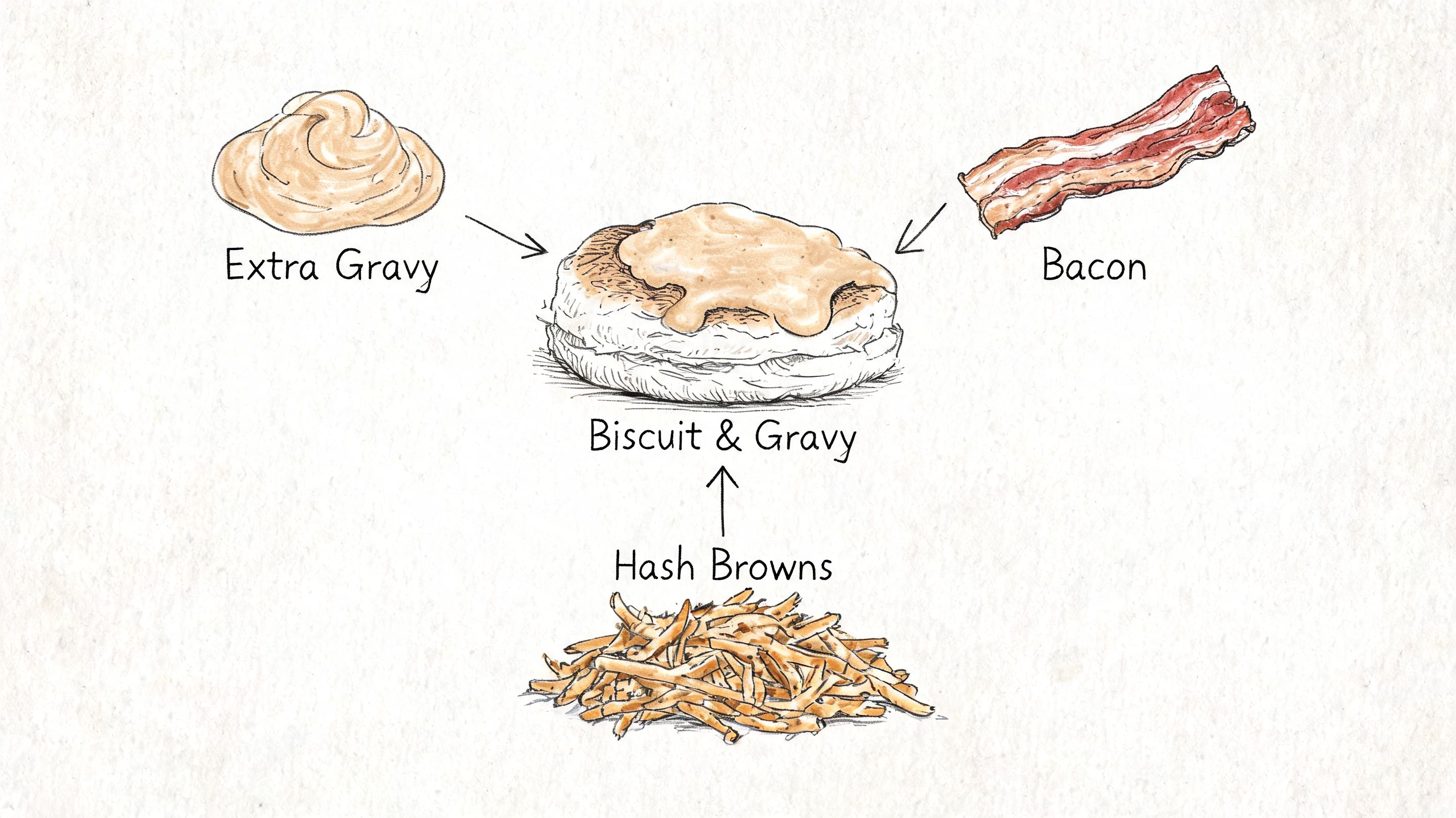
Different nutrition databases report Hardee’s Biscuit ’N’ Gravy anywhere from 458 to 620 calories, with the most common figure still landing around 500 calories, and serving size reported around 227g to 241g on Carb Manager’s Hardee’s biscuit and gravy entry. That doesn’t mean the official number is wrong. It means preparation differences and database methods can shift the final entry.
What usually changes in real life
A few things push the total upward fast:
- Extra gravy adds more richness and usually more sodium and fat.
- Larger biscuit or heavier gravy portion changes the actual serving, even if the menu name stays the same.
- Combo thinking turns one item into a much bigger breakfast without you mentally counting it that way.
The most overlooked issue isn’t calories. It’s sodium. Carb Manager lists the sodium at 1,390mg per serving, or about 60% of the recommended daily intake, which is the part I’d flag first for anyone who’s monitoring blood pressure or trying to keep the rest of the day less processed.
Best way to think about the number
Use the standard menu listing as your anchor. Then adjust upward mentally if your portion looks especially gravy-heavy or larger than usual. That’s a more honest method than pretending every restaurant serving is identical.
If the biscuit is bigger, the gravy cup is fuller, or you added sides, your logged entry should reflect that the standard serving is just the floor, not the ceiling.
Logging Hardees Accurately with BiteKit
Biscuits and gravy are awkward to log manually because they aren’t neat. It’s not a clean chicken breast with a label and a clear gram weight. It’s a soft biscuit, a ladled topping, and a portion that can vary by who assembled it.
That’s exactly where AI logging is useful. Instead of hunting across multiple fast-food database entries, you can use BiteKit’s AI fast food macro finder to capture the meal the way you eat.
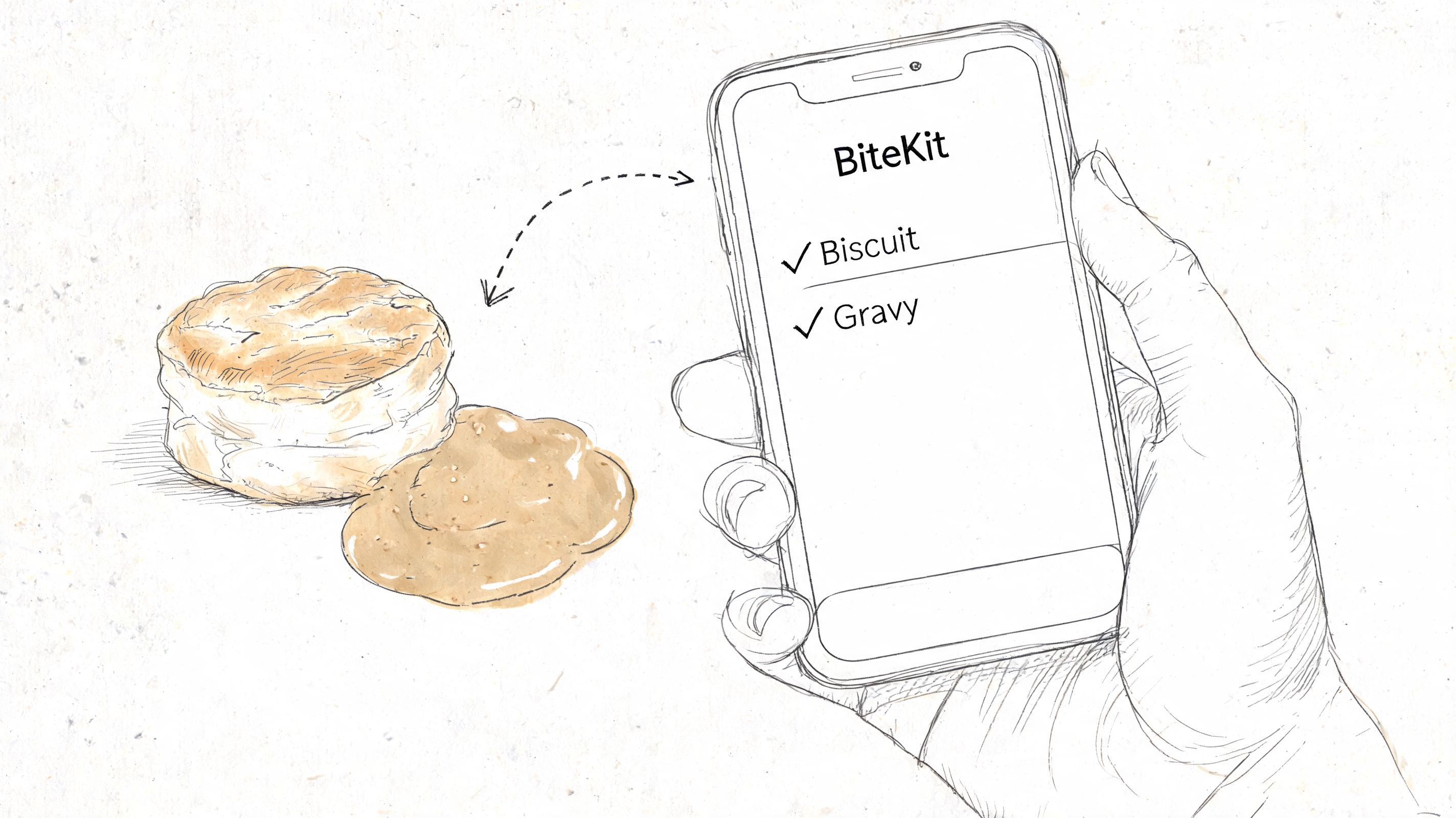
Photo logging
Photo logging works best when the portion looks messier than the menu photo.
- Open the app before you start eating.
- Take a clear picture that shows the full biscuit and the amount of gravy.
- Check the returned entry against what’s in front of you.
- If your serving looks heavier than standard, edit the note to reflect extra gravy or a large portion.
This method is useful because visual meals are where people undercount most often. A photo gives you a practical record of what you consumed, not what you think you had.
Voice logging
Voice is the fastest option when you’re in the car or walking into work.
Say: “Hardee’s biscuit and gravy.”
That simple entry is enough for a standard order. If your meal wasn’t standard, say that too. Add “extra gravy” or mention any side item in the same log so you don’t have to reconstruct breakfast later when memory is already fuzzy.
Logging right away beats logging perfectly from memory hours later.
Text logging
Text is still the cleanest option for people who like control. Type something simple like:
- Standard order “1 Hardee’s biscuit and gravy”
- Heavier portion “1 Hardee’s biscuit and gravy, extra gravy”
- Combo meal “1 Hardee’s biscuit and gravy plus side”
Success isn’t speed alone. It’s consistency. A lot of people don’t fail because they lack motivation. They fail because multi-component meals are annoying to enter, so they skip them. Removing that friction changes adherence more than most macro tweaks ever will.
Comparing Alternatives Homemade and Healthier Options
If you love biscuits and gravy, you don’t need to swear them off. You just need to recognize that the fast-food version is one expression of the dish, not the only one.
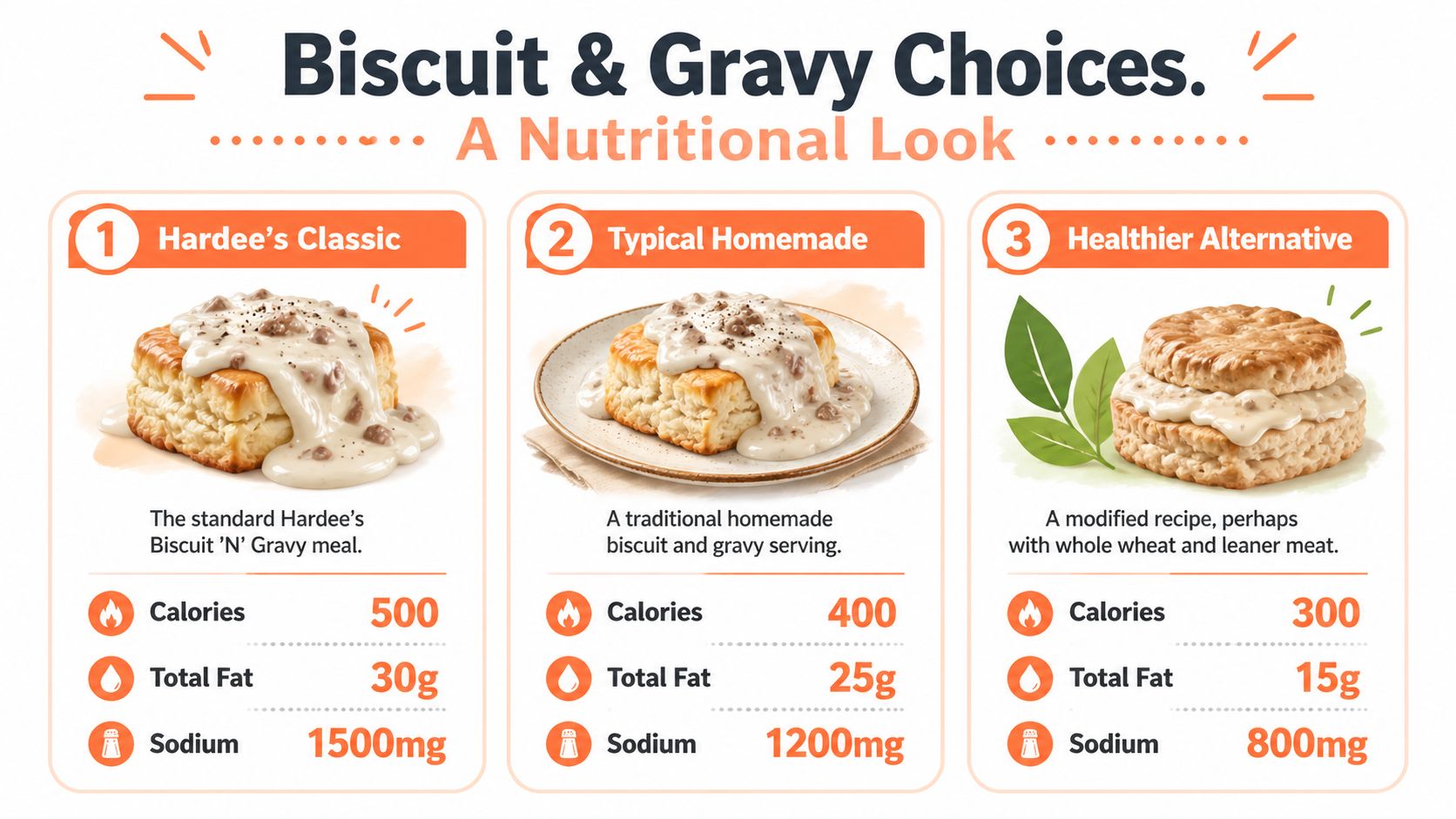
The infographic above gives a useful comparison view. The numbers shown for the homemade options are directional in the graphic, not a universal rule, because homemade versions vary a lot based on recipe and portion. That’s the whole point. At home, you control the variables that restaurants don’t optimize for, especially fat, sodium, and protein balance.
What changes at home
A typical homemade biscuit and gravy can still be rich. If you use traditional sausage, butter, flour, and a large biscuit, it may not be dramatically lighter. The advantage is control. You can use a smaller biscuit, leaner meat, or make a gravy that’s less fat-heavy.
A healthier version usually improves the meal in three ways:
- Leaner protein source shifts the dish away from being mostly fat and refined carbs.
- Smaller biscuit or different flour choice changes the carb load and portion feel.
- More deliberate seasoning can lower sodium while keeping the savory profile.
If you cook this at home often, it’s worth learning how to calculate calories in homemade food. That matters more than chasing a generic “healthy biscuit and gravy” label online.
The trade-off that actually matters
Fast food wins on convenience and consistency. Homemade wins on customization. If your priority is pure comfort and zero effort, Hardee’s does the job. If your priority is macro control, your own kitchen gives you far more room to improve the protein-to-calorie ratio.
Fitting Biscuits and Gravy Into Your Macro Goals
The smartest way to handle hardees biscuit and gravy calories is to treat them like a budget decision, not a dietary mistake. This breakfast can take 25% to 30% of a 2,000-calorie day, and the dish has a glycemic load of around 30 from 54g of carbs, while the 10g of protein is a poor fit for muscle protein synthesis needs according to CalorieKing’s breakfast biscuit and gravy listing.
When it fits and when it doesn’t
This meal fits better on days when you can keep lunch and dinner simpler. Think lean protein, vegetables, fruit, and less added fat later. It fits worse on days when breakfast is only the start of a string of restaurant meals.
It also isn’t ideal if you’re trying to stay very low carb. The carb load is high enough to disrupt that approach. And if your goal is a protein-forward breakfast that carries hunger well into the afternoon, this probably won’t be your best tool.
A practical balancing strategy
Use a simple framework for the rest of the day:
- At lunch, go lighter and protein-centered. Grilled chicken salad works well.
- At dinner, choose lean fish or another lean protein with vegetables.
- For snacks, keep them straightforward instead of trying to “reward” the indulgent breakfast with more indulgent food.
If you’re not sure what your daily targets should be in the first place, it helps to calculate your macro needs before you force specific foods into your plan. Then track the day against those targets with a method you’ll stick to, whether that’s meal planning, meal repetition, or a more flexible system like macro tracking for weight loss.
One rich breakfast doesn’t derail progress. Repeating the same untracked decision over and over does.
There’s also a training angle. If you want to offset the meal, 45 minutes of resistance training can burn approximately 300 kcal from the same CalorieKing entry. I wouldn’t use exercise as punishment for breakfast, but it can be part of the bigger weekly picture if you already train consistently.
The practical answer is simple. Enjoy biscuits and gravy occasionally. Log them accurately. Then let the rest of your day do the balancing instead of trying to “fix” the meal with guilt.
If you want calorie and macro tracking to feel less like admin work, BiteKit makes it easy to log messy meals like biscuits and gravy with a photo, voice note, or simple text entry. That kind of low-friction tracking is what helps indulgent meals stay occasional and intentional instead of becoming blind spots in your diet.