Corn Tortillas Calories: A Complete Nutrition Guide (2026)
Uncover corn tortillas calories and macros. Compare corn vs. flour, find healthy meal ideas, and learn to track them accurately for your diet.
You’re trying to log tacos, enchiladas, or a quick lunch wrap, and the numbers don’t match. One app says a corn tortilla is light. A package at home says something else. A restaurant serving looks bigger than both. That’s where people get stuck with corn tortillas calories.
The good news is that corn tortillas are one of the easier foods to understand once you know what changes the number. Size matters. Brand matters. Cooking method matters. Once you can spot those three variables, calorie tracking feels a lot less like guessing.
The Calorie Profile of a Standard Corn Tortilla
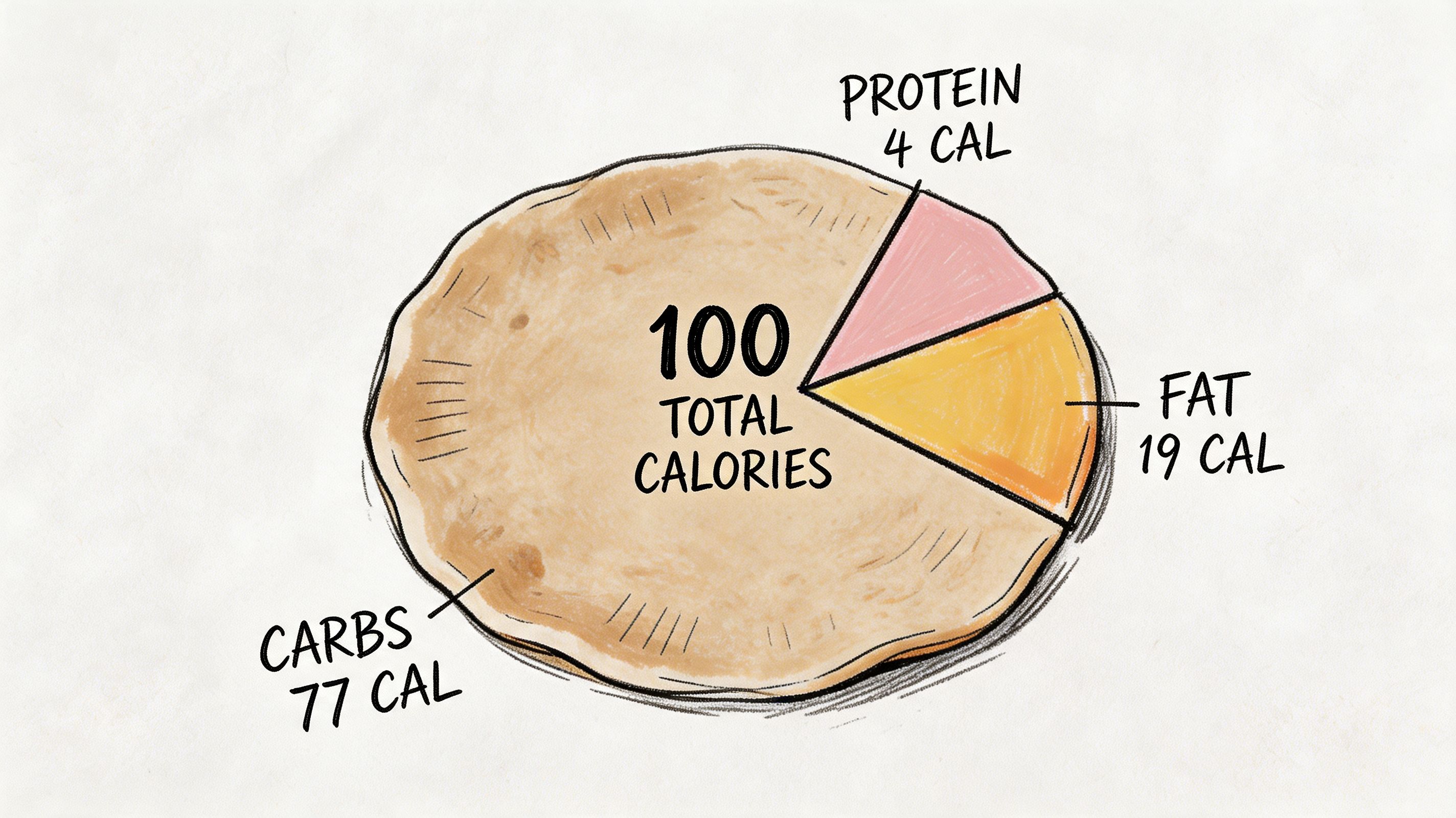
Say you’re building two tacos for lunch and want a starting number you can trust. For a standard 6-inch corn tortilla, about 50 to 60 calories per tortilla is a practical baseline, and Eat This Much’s 6-inch corn tortilla entry shows the usual pattern behind that total: mostly carbohydrates, a little protein, very little fat, and a modest amount of fiber.
That matters because calories are only part of the picture. A corn tortilla is usually a simple, compact source of energy from corn. It acts like the foundation under the rest of the meal, so the toppings and fillings often determine whether lunch stays light, balanced, or more calorie-dense.
What you’re really getting
The easiest way to read a tortilla label is to ask where the calories come from. With corn tortillas, most come from carbohydrates in the corn itself, not from added oils. That is one reason they often fit neatly into a meal built around beans, eggs, chicken, fish, salsa, or vegetables.
Using the common 50 to 60 calorie range, two tortillas usually land around 100 to 120 calories before fillings. That gives you a clear starting point for tacos, enchiladas, or a quick wrap. Then you can add the ingredients on top, rather than guessing at the whole meal in one shot.
A simple breakdown looks like this:
- Carbohydrates are the main source of calories and support everyday energy.
- Fiber adds a little staying power, which can help the meal feel more filling.
- Fat stays low in plain corn tortillas, so oils, cheese, crema, or frying usually change the total more than the tortilla itself.
- Protein is modest, which is why tortillas work best alongside a protein-rich filling.
One useful rule is to log the tortilla as the base, then check what the filling adds. That approach is more accurate and usually feels less frustrating.
Why this baseline matters
A baseline helps because calorie tracking often breaks down at the first guess. If you know a plain corn tortilla often starts near 50 to 60 calories, you have an anchor point. From there, it gets easier to notice when a restaurant tortilla looks thicker, when a street taco tortilla looks smaller, or when a packaged brand lists a different number.
That is also why a single calorie number can mislead people. “One tortilla” sounds precise, but tortillas vary in diameter, thickness, and density. The more useful question is, “What kind of tortilla is this, and how close is it to the standard starting point?”
If you want a clearer label-by-label reference, BiteKit’s guide to corn tortilla nutrition gives more detail on what to compare before you log.
Why Corn Tortilla Calorie Counts Vary So Much
Many trackers find this frustrating. You look up “corn tortilla,” and the results aren’t even close. That isn’t because you’re doing anything wrong. It’s because corn tortillas aren’t one fixed product.
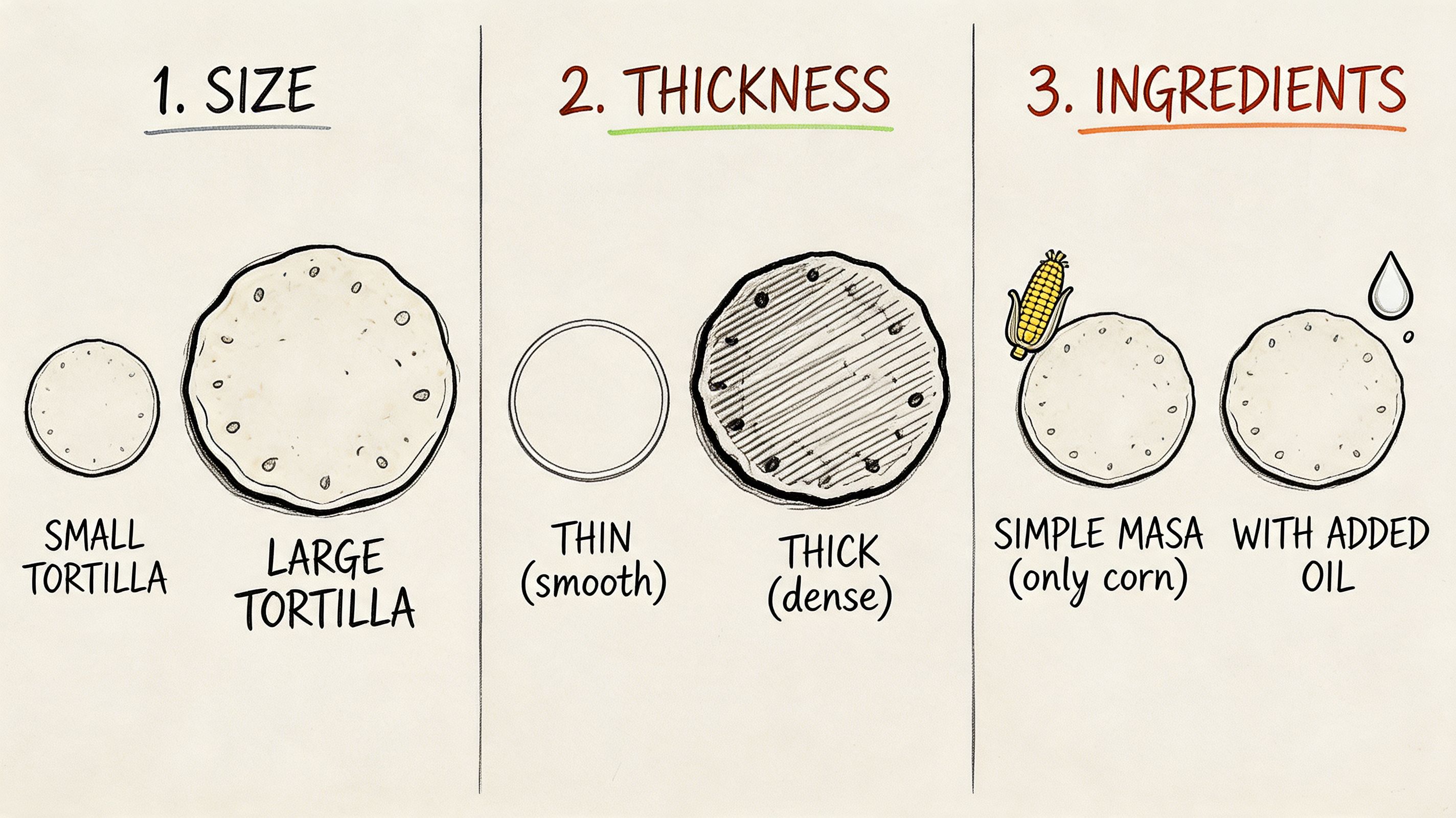
Calorie counts can range from Mission’s low-calorie yellow corn tortillas at 25 calories to other brands reaching 90 calories per tortilla, according to this USDA-linked FatSecret entry for corn tortillas without added salt. That same verified data also notes that users can misestimate tortilla calories by over 30% when brand and preparation differ.
Size changes everything
A tortilla isn’t just “one tortilla.” A small, thin street taco tortilla and a thicker deli-style tortilla can look similar in a quick glance, but they won’t log the same.
When the tortilla is wider or denser, calories rise because there’s more food there. That sounds obvious, but it’s easy to miss when tortillas are stacked, folded, or hidden under fillings.
Brand formulas differ
Some brands make tortillas that are thinner, lighter, or higher in added fiber. Others make heartier tortillas with a denser texture. That’s why one package can be surprisingly low and another much higher.
Here’s the practical takeaway:
- Check the serving size if you have the package.
- Notice diameter and thickness if you’re eating out.
- Don’t assume restaurant tortillas match grocery-store tortillas.
If your app gives several tortilla entries, the best match usually comes from the label in your hand, not the most common database result.
Preparation changes the number fast
The biggest jump happens in the pan or fryer. A soft corn tortilla and a crisp fried shell may start from the same base, but they don’t end in the same calorie range.
If reading labels still feels messy, a basic skill like understanding serving lines and portion language makes a real difference. This guide on how to read nutrition labels can help you catch the details that affect tortilla logging most.
Corn Tortillas Versus Flour Tortillas
You are standing at a taco counter, deciding between corn and flour. Both can fit into a balanced meal, but they do not behave the same in your calorie log.
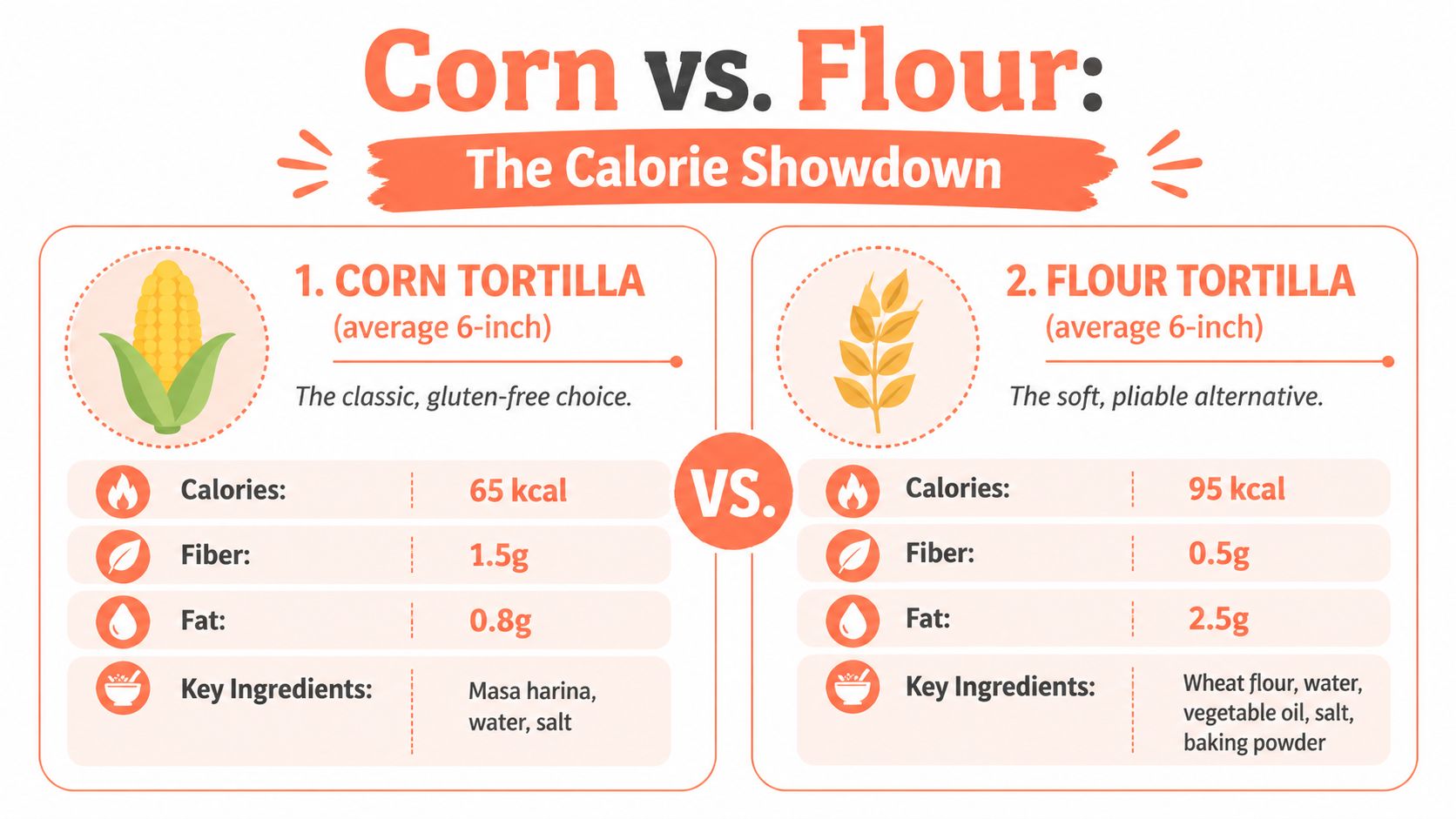
Corn tortillas are often the lighter choice. Flour tortillas are often softer, larger, and more likely to carry added fat from oil or shortening. That is the big reason the numbers usually separate.
As noted earlier, a typical corn tortilla often lands lower in calories and fat than a similar flour tortilla. It can also provide a bit more fiber. The easiest way to picture it is to compare them like two different containers. Corn is usually the smaller, simpler container. Flour is usually the stretchier one that holds more, and that extra flexibility often comes with extra calories.
What usually changes between them
A corn tortilla is commonly made from masa and water. A flour tortilla usually includes flour, fat, and ingredients that make it softer and easier to fold. That recipe difference matters because calories come from ingredients, not just size.
That helps explain a pattern many people notice:
| Compare | Corn Tortillas | Flour Tortillas |
|---|---|---|
| Texture | Firmer, less stretchy | Softer, more flexible |
| Typical use | Tacos, tostadas, enchiladas | Burritos, wraps, quesadillas |
| Calorie pattern | Often lower per tortilla | Often higher per tortilla |
| Logging challenge | Size and thickness vary by brand | Size can range from taco to burrito very fast |
The practical lesson is simple. Comparing one corn tortilla to one flour tortilla is not always fair unless they are close in weight and diameter. A small corn tortilla and a large burrito tortilla are not rivals. They are different portions.
Which one makes more sense for your goal
If you want a lighter base for tacos, corn usually makes tracking easier. The portions are often smaller and more predictable. If you need a tortilla that bends around a large filling, flour may work better, but the total meal can climb quickly.
This is where people get tripped up. They focus on the tortilla type and miss the tortilla size. A flour tortilla can be a reasonable choice in one meal and a calorie jump in another, simply because one is taco-sized and the other is wrap-sized. A portion size guide for weight loss can make those visual differences easier to spot before you log the meal.
A coach's honest rule of thumb
Choose corn when you want simpler tracking, a lighter taco base, or a naturally gluten-free option if the label confirms it. Choose flour when the meal needs flexibility and structure.
Neither tortilla is automatically "good" or "bad." The better choice is the one you can measure accurately and fit into the meal you are currently eating.
If planning meals ahead helps you stay consistent, Everblog's meal planner app guide offers ideas for organizing meals before busy days make logging harder.
BiteKit helps with the last mile. Instead of guessing from a generic database entry, you can match the tortilla to the meal in front of you, which is usually the difference between a close log and a misleading one.
Healthy Meal Ideas and Portion Control Tips
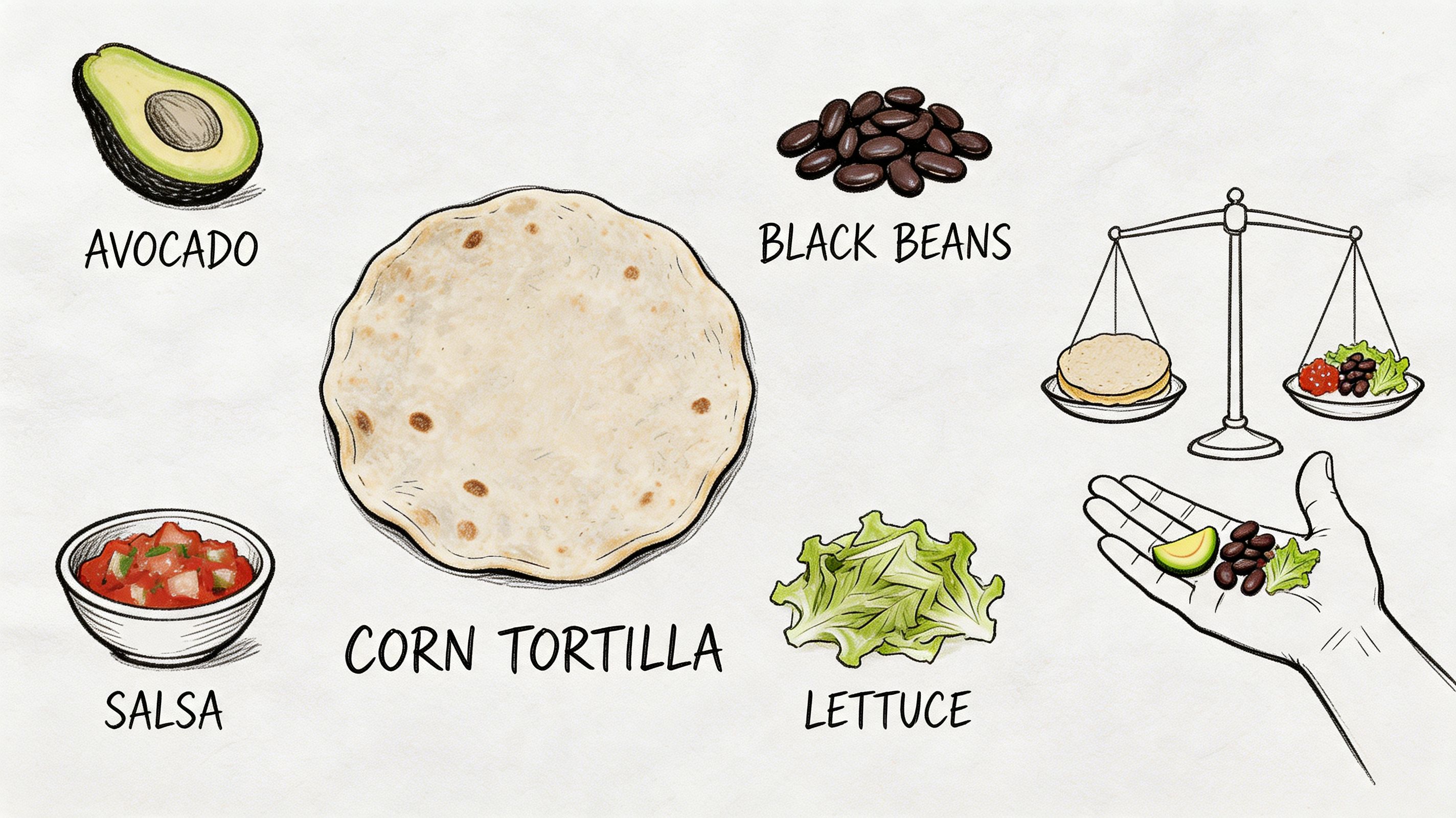
Corn tortillas work best when you use them as a frame, not the main event. Build around protein, vegetables, beans, salsa, or a flavorful sauce, and the meal feels generous without needing a huge tortilla stack.
Four meal patterns that work well
Breakfast tacos are one of the easiest examples. Use soft corn tortillas with eggs or egg whites, beans, salsa, and a handful of vegetables. You get a balanced meal that feels more satisfying than eating the filling alone.
Chicken taco plates work well for lunch. Use a couple of tortillas, then add grilled chicken, cabbage, pico de gallo, and a squeeze of lime. The plate feels full because the vegetables create volume.
Fish tacos are another strong option. Baked fish keeps the meal lighter than fried fish, and crunchy slaw adds texture without needing a heavy sauce.
Simple black bean tacos are great for busy nights. Beans, salsa, lettuce, and a little avocado can make a very practical dinner when you don’t want to cook much.
Portion control without feeling restricted
People often overcomplicate things. You don’t need a perfect system. You need a repeatable one.
- Use soft tortillas when possible. A traditional soft corn tortilla has about 60 calories and under 1g of fat, while deep-frying it into a tostada can raise it to 107 to 150 calories with 5 to 10g of fat, according to Socarrat’s comparison of corn and flour tortillas.
- Add bulk with vegetables so the meal feels larger.
- Let protein do the heavy lifting for fullness.
- Count the tortillas you eat, including extra ones grabbed during cooking or at the table.
For people who like planning meals ahead of time, Everblog's meal planner app guide is a solid roundup of tools that can help organize meals and grocery lists without making the process feel rigid.
A simple visual cue helps too. Learning practical serving estimates reduces under-logging. BiteKit’s portion size guide for weight loss can help you build that eye for portions.
Here’s a quick cooking visual if you want inspiration for using tortillas in everyday meals:
How to Accurately Track Tortillas with BiteKit
Tortillas are a classic example of why food logging gets messy. The food sounds simple, but the details aren’t. One tortilla may be thin and light. Another may be dense, larger, or fried. That’s a problem for manual database searching because the entry that looks “close enough” may not be close at all.
BiteKit makes this easier by reducing the amount of guessing you have to do. If you snap a photo of tacos, the app can identify the foods in the meal and estimate portions based on what’s visible. If you type or speak something like “two small corn tortillas with chicken and salsa,” it can parse the meal in plain language instead of forcing you through a long search flow.
A practical way to log better
Use the simplest method that matches the situation:
-
At home with packaging
Use the label if you have it. Brand-specific entries are usually your best option. -
At a restaurant
Log by size, thickness, and preparation. “Small soft corn tortillas” is more useful than just “tortillas.” -
For mixed meals
Log the plate as a whole, then review the tortilla estimate. This is often easier than trying to split every ingredient first.
The goal isn’t perfect logging. The goal is consistent logging that’s close enough to guide better decisions.
That’s especially true for foods like tortillas, where the same name can describe very different portions.
Frequently Asked Questions About Corn Tortillas
People usually ask these questions after they realize one taco night can look very different in a food log than another. That confusion makes sense. “Corn tortilla” sounds like one simple food, but in real life it behaves more like a category, with small changes in size, thickness, and cooking method that can shift the numbers.
Why are corn tortillas considered nutritionally valuable
A corn tortilla can offer more than starch because traditional preparation changes the corn itself. The nixtamalization process helps make certain nutrients, especially calcium and niacin, easier for the body to use.
That matters for a practical reason. If calories tell you how much energy a food provides, nutrients tell you what else comes along for the ride. Corn tortillas are often chosen for both.
Does toasting change the calories
Usually, no, if you warm or toast them on a dry skillet.
Heat changes texture much more than calories. The count starts to climb when oil, butter, or other added fat goes into the pan, because the tortilla can absorb some of it like a sponge picking up water.
Are all corn tortillas the same nutritionally
No. Two tortillas can look similar on the plate and still log differently.
Some are small and thin. Others are thicker, larger, or made with extra ingredients that change fiber, sodium, or texture. Restaurant tortillas are often the trickiest because you usually do not have a label to check, which is exactly why logging consistency matters more than chasing perfect precision.
Are corn tortillas good for weight loss
They can fit well into a calorie-conscious meal, especially when paired with filling foods like beans, chicken, fish, vegetables, or salsa. Portion size still does the heavy lifting.
A helpful way to look at it is by building the whole plate. Two corn tortillas with lean protein and vegetables can be a very different meal from several tortillas filled with cheese, sour cream, and fried toppings. The tortilla is one piece of the math, not the whole equation.
A tortilla rarely makes or breaks a nutrition plan. Your usual portions and meal patterns matter more.
What is the best way to log corn tortillas accurately
Start with the most specific information you have. If you have the package, use the brand and serving size on the label. If you are eating out, estimate based on details you can see, such as whether the tortillas are street taco size, standard size, thick, thin, soft, crisp, or lightly fried.
BiteKit helps reduce the guesswork. You can log with a photo, voice note, or simple text, then adjust the tortilla entry based on what was served instead of picking the first database match that looks close. That approach makes tracking feel more consistent, which is usually what people need most. If you want calorie and macro tracking to feel faster and less obsessive, BiteKit can help.