Calories in Massaman Curry: The Full Breakdown
Confused about the calories in massaman curry? Our guide breaks down restaurant vs. homemade portions, ingredient swaps, & how to track accurately.

You finish a bowl of massaman curry, open your tracking app, type in the dish name, and get a mess of answers. One entry looks light enough for a weekday lunch. Another looks like half your daily calories. Both claim to be right.
That confusion isn't user error. It's built into the dish.
Massaman curry is one of those meals where the calories can swing wildly based on coconut milk, oil, protein choice, portion size, and whether you're eating a measured homemade serving or a restaurant plate built for maximum richness. Online databases flatten all that into one label, which is why calories in massaman curry are so often mislogged.
As a nutrition coach, I see the same pattern with curries, stews, and mixed dishes. People assume the problem is that they're bad at tracking. Usually the problem is that the food itself is variable. Once you understand what changes the numbers, logging gets a lot easier. If you cook often, this guide on how to calculate calories in homemade food helps with the same challenge from the recipe side.
The Massaman Curry Calorie Mystery
You eat massaman curry at a restaurant, open your tracker, and get five entries that all look plausible. One sounds like a light homemade bowl. Another looks closer to a rich takeout portion with rice. If you pick by dish name alone, your log can be off by hundreds of calories before you finish the meal.
That gap happens because massaman curry is a recipe category, not a standardized food.
Online databases often group together very different versions: vegan packaged meals, home recipes, restaurant curries made with extra coconut cream, and large beef portions served with potatoes and rice. Those entries share a name, but they do not share the same calorie profile. I see this with clients all the time. Curries are one of the easiest foods to underlog because the bowl looks consistent even when the recipe is not.
A useful comparison is any food with multiple valid builds. A detailed calorie breakdown for eggs changes depending on preparation and add-ins. Massaman curry has that same problem, except the swings are larger because sauce, oil, protein, and serving size all move at once.
Why the numbers vary so much
Two bowls can look similar from above and still be very different nutritionally. A homemade version might use diluted coconut milk, moderate oil, and a measured amount of chicken or tofu. A restaurant version often pushes richness on purpose. More curry paste fried in oil, a heavier pour of coconut milk or cream, a larger cut of beef, and a generous scoop of rice all drive calories up fast.
Portion size adds another layer. Home cooks usually work from a recipe and can estimate how much the pot made. Restaurants build plates for satisfaction and consistency, not for tracking. That means the bowl in front of you may be much larger than the serving attached to the app entry you picked.
The issue is the recipe format
Massaman curry can include chicken, beef, tofu, potatoes, peanuts, palm sugar, coconut milk, and varying amounts of oil. Small changes in any of those ingredients shift the total. The practical questions matter more than the dish name:
- Which protein is in the curry
- How much coconut milk or cream was used
- Whether potatoes and peanuts are included
- How large the serving is
- Whether rice is part of the meal or logged separately
That is why calorie tracking gets messy with mixed dishes. If you cook at home, a guide to calculating calories in homemade food gives you a more reliable starting point than guessing from a generic database entry.
For restaurant meals, visual context matters just as much as the label. BiteKit helps close that gap by analyzing the meal you consumed, which is far more useful than pretending every massaman curry is the same bowl.
Deconstructing Massaman Curry's Calorie Profile
A bowl of massaman curry can look moderate and still land much higher in calories than a tracker entry suggests. The reason is simple. The dish packs a lot of energy into the sauce, and the sauce is the least visible part to estimate by eye.
Massaman curry is usually a fat-heavy meal because coconut milk, peanuts, and cooking oil do a lot of the work. At home, that can stay fairly controlled if the recipe uses measured ingredients and a known yield. In a restaurant kitchen, the same dish often gets richer for flavor, texture, and consistency. That is why two bowls with similar amounts of chicken or potatoes can track very differently.
Where the calories usually come from
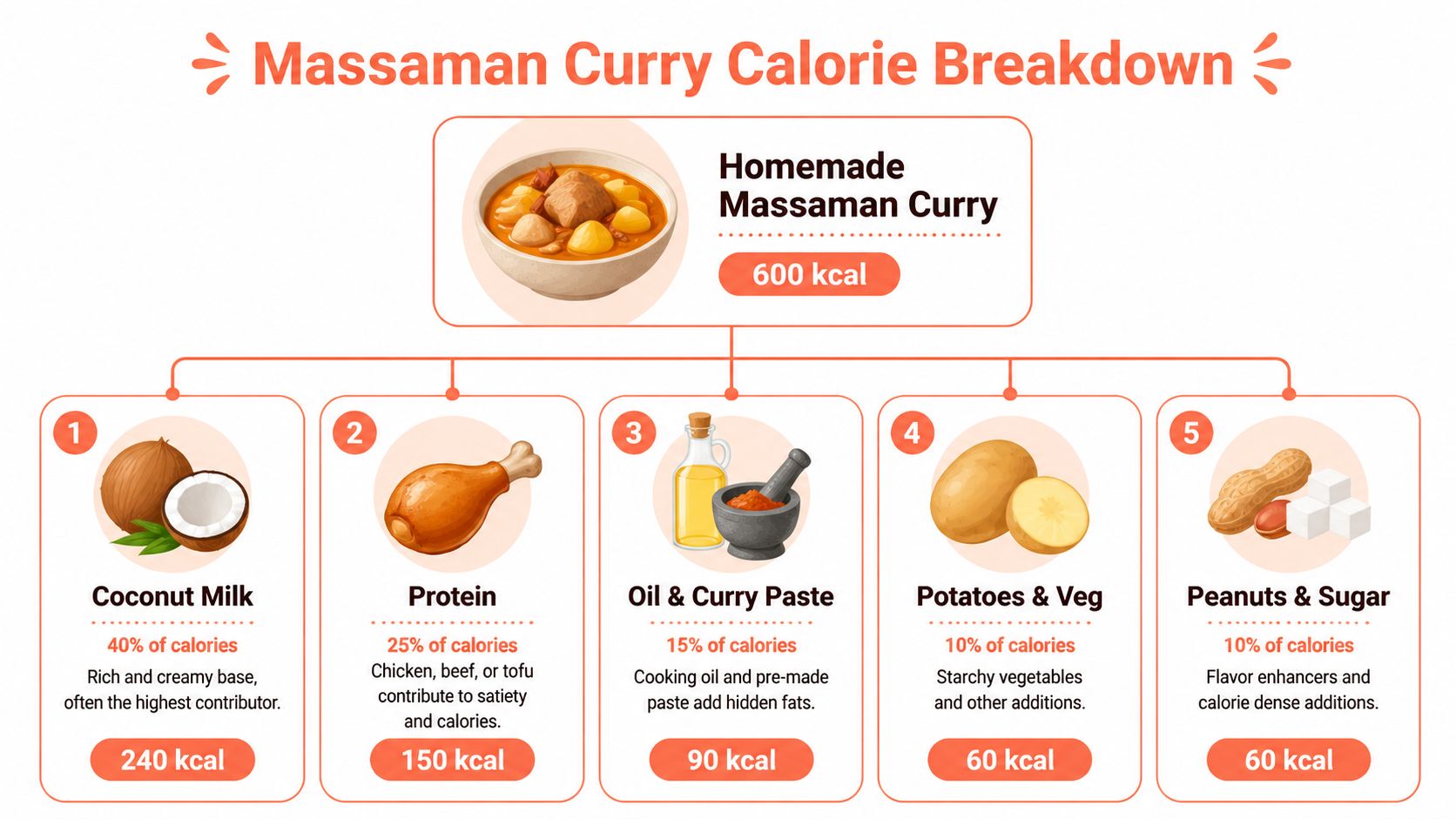
The biggest calorie driver is usually the sauce base. A curry made with a generous amount of full-fat coconut milk, extra spoonfuls of peanut butter or peanuts, and oil used to fry the paste will climb quickly. If you want to sanity-check that part of the recipe, a cooking oil calorie calculator makes it easier to see how fast a few tablespoons change the total.
Protein matters, but not in the same way. Chicken breast, chicken thigh, beef, tofu, and chickpeas all shift the calorie count differently. Beef usually raises the total faster because it brings more fat along with the protein. Tofu can go either way depending on how much oil it absorbed during cooking.
Then there are the ingredients people tend to undercount. Potatoes seem light because they are bulky. Peanuts feel like a garnish even when they add a meaningful amount. Palm sugar or brown sugar does not dominate the bowl, but it stacks on top of an already rich base.
What the macros mean in practice
For tracking, the useful takeaway is not a single perfect calorie number. It is understanding that massaman curry often gets a large share of its calories from fat, which makes portion size less forgiving than the volume of the bowl suggests.
I coach clients to look for texture cues. A thin, brothy curry and a silky, glossy curry should not be logged the same way, even if both are labeled "massaman curry" in an app. The thicker one usually contains more coconut fat, more oil, or both.
That is also why online database entries create so much confusion. Many are built from packaged products, recipe sites, or standard servings that do not match the bowl in front of you. Accurate logging starts with the meal itself. Ingredient density, sauce thickness, and serving size all matter. BiteKit helps close that gap by analyzing the portion you consumed instead of forcing you to pick a generic entry and hope it fits.
For anyone trying to get better at estimating mixed dishes, this detailed calorie breakdown shows the same core principle. Better estimates come from breaking a food into parts, not trusting the label alone.
How Your Ingredient Choices Impact Calories
Two bowls of massaman curry can look close enough to log the same way and still end up far apart in calories. The reason is simple. The calories are concentrated in a few decisions that are hard to judge from the name alone: protein choice, coconut milk richness, oil used in the pan, and whether the cook builds a thick reduced sauce or a looser one.
A recipe analysis from Verywell Fit's massaman curry recipe breakdown shows how quickly the total shifts once coconut milk, curry paste, oil, and protein stack together in one dish. That is the practical problem with online calorie counts. One entry may reflect a lighter home recipe, while another reflects a richer restaurant version, even though both are labeled "massaman curry."
Side by side comparison
| Curry variation | What usually drives the calories up | What usually keeps them lower |
|---|---|---|
| Plant-based version | Full-fat coconut milk, generous oil, peanut-heavy sauce | Tofu or vegetables, lighter coconut base, less finishing oil |
| Standard homemade serving | Recipe can swing based on how much coconut milk and oil go into the pot | Measured oil, moderate sauce, leaner protein |
| Beef restaurant serving | Richer cuts, more rendered fat, thicker sauce, larger meat portion | Smaller portion, trimmed beef, less oil in the base |
That variability matters more than the label.
In practice, four ingredient choices do most of the work:
- Protein changes the floor and the ceiling: Chicken breast, tofu, and vegetables usually leave more room in your calorie budget than short rib, fatty beef, or extra peanut garnish.
- Coconut milk sets the tone of the bowl: Full-fat coconut milk creates the silky texture people love, but it also makes calorie totals climb fast. Light coconut milk lowers calories, though the sauce will taste thinner unless you build flavor elsewhere.
- Oil disappears into the dish: A free pour into the pan can add far more than people expect across a full pot. If you cook at home, use a spoon or check a cooking oil calorie calculator before logging the recipe.
- Sugar and peanuts matter, but less than the base: They still count, especially in a sweeter, nuttier massaman, but the bigger swing usually comes from fat in the sauce and the cut of meat.
This is why I tell clients to log the version they ate, not the version they hoped it was. If the curry is glossy, thick, and clings to the spoon, treat it as a richer entry. If it is brothy with modest oil on the surface and a lighter protein, a lower-calorie estimate is more reasonable.
That approach gets you closer to reality than picking the first database match. BiteKit helps bridge that gap because it analyzes the actual portion and visual density of the meal instead of forcing a generic entry onto a dish with very different ingredients.
The Restaurant Portion vs Homemade Reality
Order massaman curry at a Thai restaurant one night, then make it at home the next, and you may log two meals with the same name that land very differently in your calorie budget. That gap is one of the biggest reasons curry gets tracked poorly.
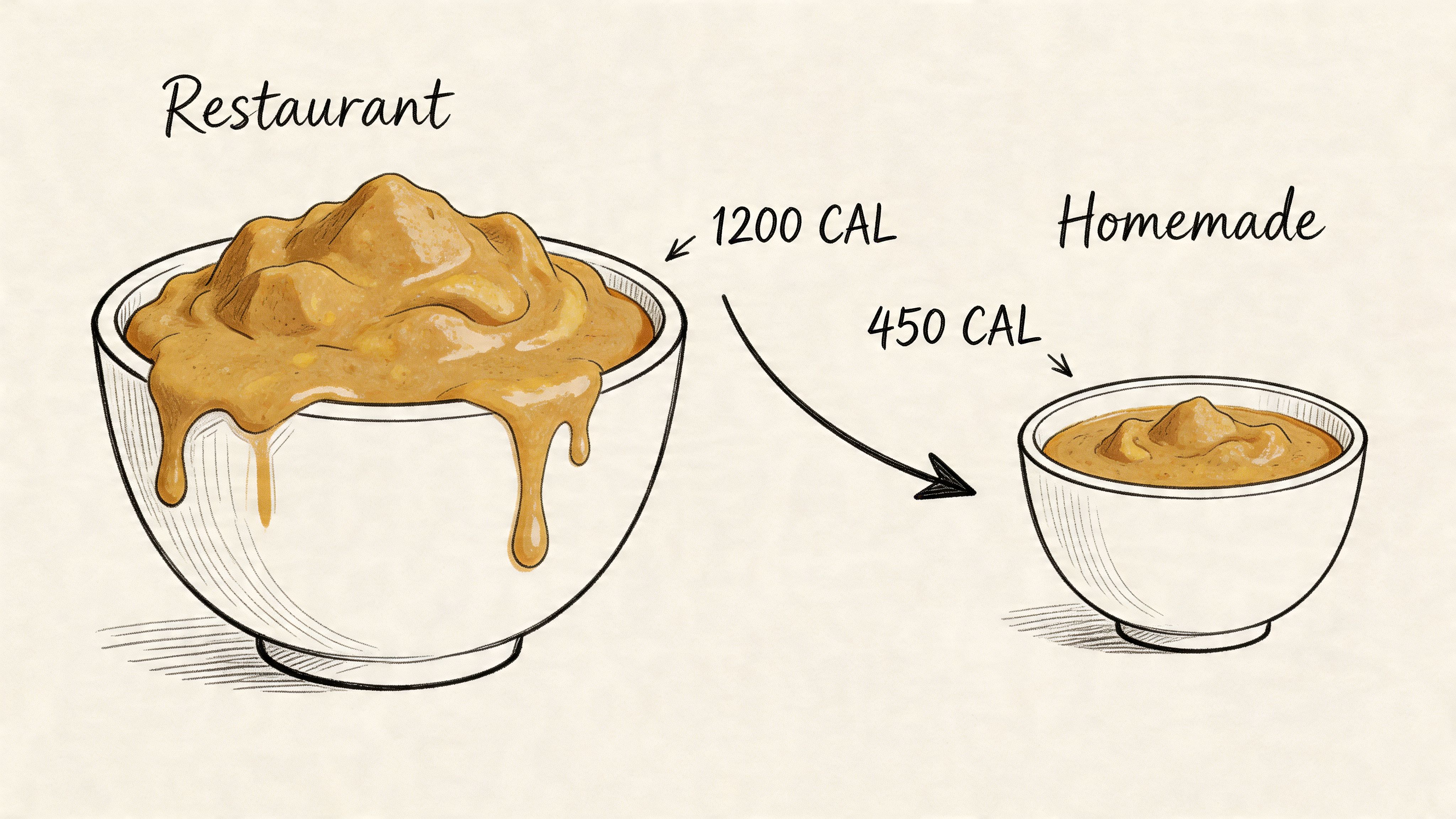
Restaurant versions usually run higher for practical reasons. Kitchens often use a heavier hand with coconut milk, more oil in the pan, a larger ladle of sauce, and a standard rice portion that many people would split into two servings at home. Homemade versions tend to be more variable, but they are easier to control because you decide how much fat goes into the pot and how much ends up in the bowl.
Why restaurant estimates are often off
The hard part is not the recipe name. It is the serving reality.
A restaurant bowl can include extra sauce, fattier cuts of meat, potatoes that soak up the curry, and rice packed tightly into a side container. Online database entries often miss those details. They may reflect a test kitchen portion, a chain restaurant spec, or a user-submitted estimate that looks nothing like the dish in front of you. In practice, that means a generic "massaman curry" entry can undershoot a real restaurant order by a wide margin.
Home cooking creates a different problem. People remember the chicken and forget the oil, or they log coconut milk but skip the peanuts and sugar. If you cook from scratch, using an AI recipe calorie calculator for homemade curries gets you closer than picking a broad restaurant entry from a database.
Practical cues for estimating a restaurant portion
Use the bowl in front of you as evidence.
- Check the sauce level: If the curry is deep enough to cover most of the protein and potatoes, assume more coconut milk and more total calories.
- Look at the rice as its own item: A generous scoop of jasmine rice can shift the meal total substantially even if the curry itself looks moderate.
- Notice the container shape: Deep takeaway tubs and oversized bowls make portions harder to judge than a flat plate.
- Watch for finishing fat: A glossy surface or separated oil around the edges usually signals a richer preparation.
- Count dense add-ins: Potatoes, peanuts, and fatty beef change the numbers faster than extra onions or a few carrots.
I usually coach clients to treat restaurant massaman as a range, then tighten that range with visual details from the actual meal. BiteKit helps because it analyzes the portion you ate instead of forcing you into a generic listing that may describe a very different curry.
How to Log Massaman Curry Accurately in BiteKit
Massaman curry is exactly the kind of dish that breaks old-school tracking methods. Search-based logging struggles because the meal name doesn't capture the variables that matter.
Verified nutrition data shows the dish can vary from 82 to 747 calories per serving, with a standard 1-cup serving averaging 300 calories, and notes that sauce type and portion size can create a plus or minus 40% calorie swing in this nutrition database entry. That's why simple labels like "massaman curry" are rarely enough.
What to include in your entry
The goal isn't to describe the dish perfectly. It's to include the variables that move the numbers.
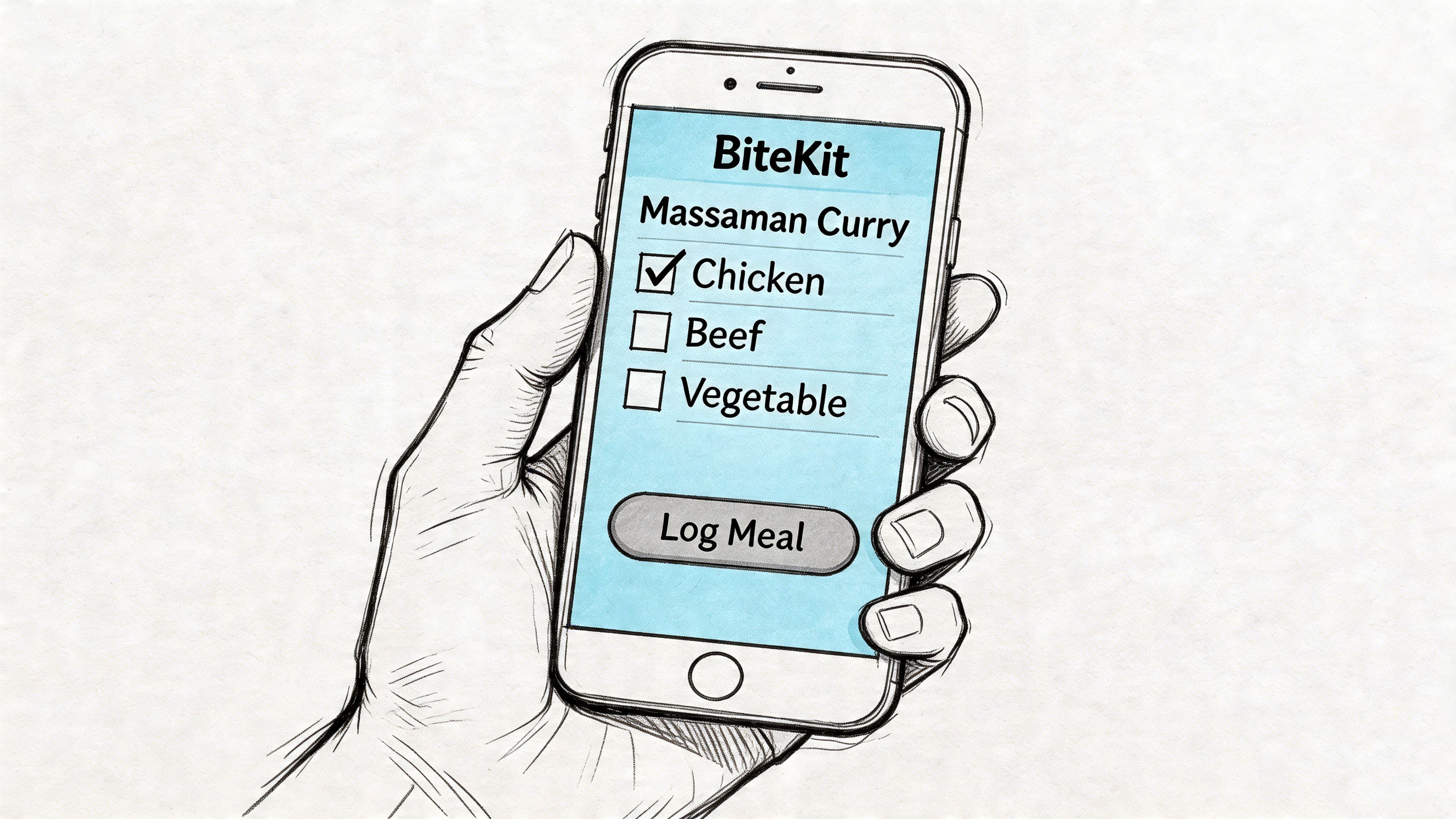
Use natural language that answers these questions:
- Homemade or restaurant
- Protein type
- Sauce richness
- Approximate portion
- Rice included or separate
These are the kinds of entries that work well:
- Homemade chicken massaman curry, about 1.5 cups, lighter coconut sauce, 1 cup white rice on the side
- Restaurant beef massaman curry, rich coconut sauce, large bowl, rice included
- Tofu massaman curry, moderate sauce, about 1 cup, no rice
- Takeaway massaman curry with potatoes and peanuts, medium container, half the rice portion eaten
Better inputs produce better estimates
A useful default is to start near the benchmark of 300 calories per cup when the details are unclear, then adjust based on portion size and whether the sauce is coconut-heavy or thinner. That's consistent with the verified guidance above.
A dish this variable should never be logged with the name alone if you can avoid it.
If you're cooking from a saved recipe, a tool like this AI recipe calculator helps turn the full ingredient list into a more realistic per-serving estimate. If you're eating out, a photo-based estimate is often more honest than pretending a generic database match is accurate.
The biggest mistake isn't being slightly off. It's being confidently off because the app gave you a tidy number for a messy real-world dish.
Smart Swaps to Reduce Calories While Preserving Flavor
Order massaman curry in two different places and "the same dish" can land hundreds of calories apart. The practical fix is to change the parts that drive energy density most, while keeping the flavor cues that make massaman worth eating in the first place.
The biggest calorie swings usually come from coconut richness, protein choice, added fats, peanuts, and how much rice ends up on the plate. Potatoes matter, but they are rarely the main reason a bowl gets heavy.
Swaps that move calories down without flattening the dish
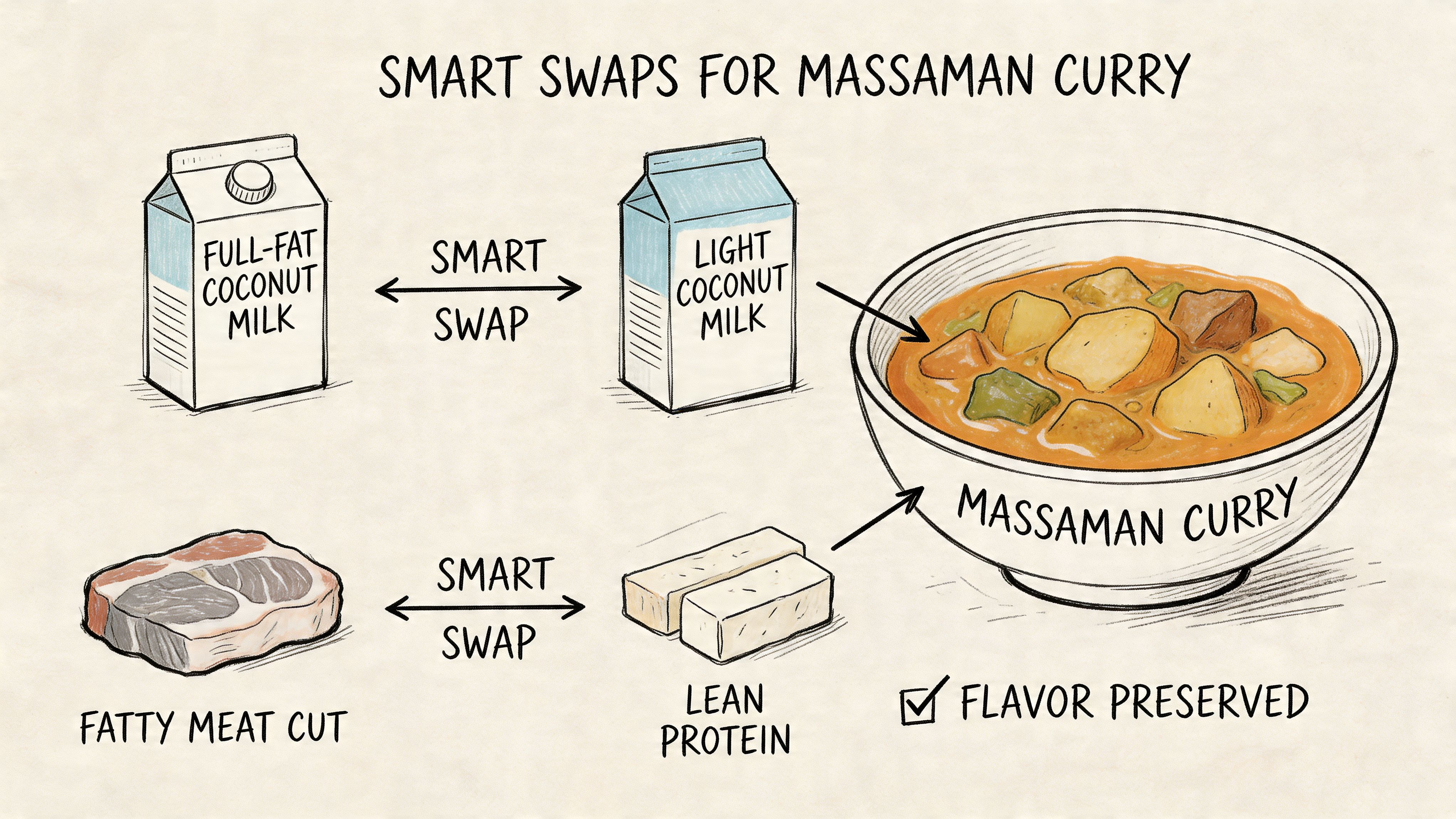
A lighter coconut strategy gives the largest payoff in many homemade versions. Use less full-fat coconut milk, cut it with stock, or use a mix of light and regular coconut milk. You keep the aroma and body, but the sauce stops carrying quite so much fat per ladle.
Protein is the next easy lever. Chicken breast, chicken thigh with visible fat trimmed, shrimp, or tofu usually make calorie control easier than a fatty beef cut. Beef can still fit, but it works better when the portion is deliberate and the sauce is not equally heavy.
The extras add up fast.
- Measure peanuts instead of scattering freely: a small garnish keeps the nutty finish without turning the bowl into a calorie surprise.
- Serve rice separately: this makes the curry easier to portion and log, especially if you do not need a full restaurant-style mound.
- Add onions, carrots, or green beans for volume: the bowl feels generous without relying on more sauce and rice.
What tends to work in real life
The best edits preserve satisfaction. In practice, that usually means keeping the curry paste, spices, alliums, and a modest amount of coconut richness, then trimming the pieces that are easiest to overpour or overserve.
At restaurants, ask for less sauce or sauce on the side if the place can do it. That one change gives you control over the richest part of the dish. At home, weigh or measure the coconut milk once or twice and you will quickly see why one recipe comes out far lighter than another.
What backfires
Trying to make massaman curry fat-free usually produces a meal that does not scratch the same itch. Then the common rebound is a second serving, extra rice, or ordering the richer takeaway version a day later.
Cutting every dense ingredient at once also tends to fail. A better trade-off is to keep one indulgent element, such as the full-flavor curry paste or a small peanut topping, and lighten the rest.
That repeatable approach matters more than chasing the lowest number on paper. This guide on making healthy meals you'll actually want to eat lines up well with that mindset.
A good swap keeps the dish recognizable. If it no longer tastes like massaman curry, adherence usually suffers.
Enjoying Massaman Curry on Your Terms
Calories in massaman curry aren't hard because the dish is unhealthy. They're hard because the dish is variable.
The useful shift is to stop asking for one universal number and start asking better questions. How rich was the sauce. What protein was used. Was this a home portion or a restaurant plate. Was rice included. Those details matter more than the dish name.
Once you understand that, the meal stops being a tracking nightmare. It becomes a dish you can estimate with much more confidence. Some days that means choosing a lighter homemade version. Other days it means ordering the rich restaurant bowl and logging it accurately.
That's the goal. Not perfection. Not fear around food. Just better decisions with the meals you enjoy.
Massaman curry can fit a fat-loss phase, a maintenance phase, or a higher-calorie training plan. The difference is awareness. When you know what drives the calories, you stay in control without giving up the food.
BiteKit makes this kind of tracking much easier. Instead of guessing from generic database entries, you can log mixed meals with photos, voice, or natural language and get a faster estimate of calories and macros for what was on your plate. If you want a simpler way to track curries, homemade meals, and restaurant food, try BiteKit.