How To Stop Overeating At Night For Good
Learn how to stop overeating at night with science-backed strategies. Covers meal timing, emotional triggers, sleep, and tools to break the cycle.
You finish dinner. An hour later, you’re back in the kitchen, opening cabinets without much thought, telling yourself you’ll just have something small. Then it turns into crackers, cereal, leftovers, or whatever feels easiest to grab. By the time you go to bed, you’re full, frustrated, and already promising yourself you’ll “be better tomorrow.”
That pattern is common. It also doesn’t mean you lack discipline.
Night eating usually has a reason behind it. Sometimes it’s simple under-fueling during the day. Sometimes it’s stress, boredom, or a habit loop tied to the couch and the TV. Sometimes it points to a real clinical pattern that deserves treatment, not self-blame. The good news is that how to stop overeating at night usually has less to do with forcing willpower and more to do with fixing the conditions that keep driving the behavior.
If you need a practical place to start, keep this grounded. Your evenings improve when your meals, sleep, stress load, and routines improve. If planned snacks help you feel more in control, a list of healthy late-night protein snacks can be useful, and so can simple ideas for healthy snacks for weight loss when your goal is structure instead of grazing.
The Late-Night Kitchen Call You Need to Stop Answering
Most nighttime overeating feels impulsive in the moment, but it usually isn’t random. The urge tends to show up at the intersection of biology, emotion, and routine. You’re tired, your guard is down, food is available, and the day’s stress finally catches up.
That’s why generic advice fails. “Just use willpower” doesn’t help if you skipped lunch, ate too little protein, slept badly, or trained your brain to expect food every time you sit down at night. A better approach is to identify what kind of eating is happening and respond to that specific driver.
You don’t need a stricter food plan first. You need a more accurate explanation for why the eating keeps happening.
Some people need meal timing changes. Others need better evening coping tools. Others need help recognizing that what they call “bad habits” may fit a treatable pattern.
Diagnosing the Root Cause of Your Nighttime Eating
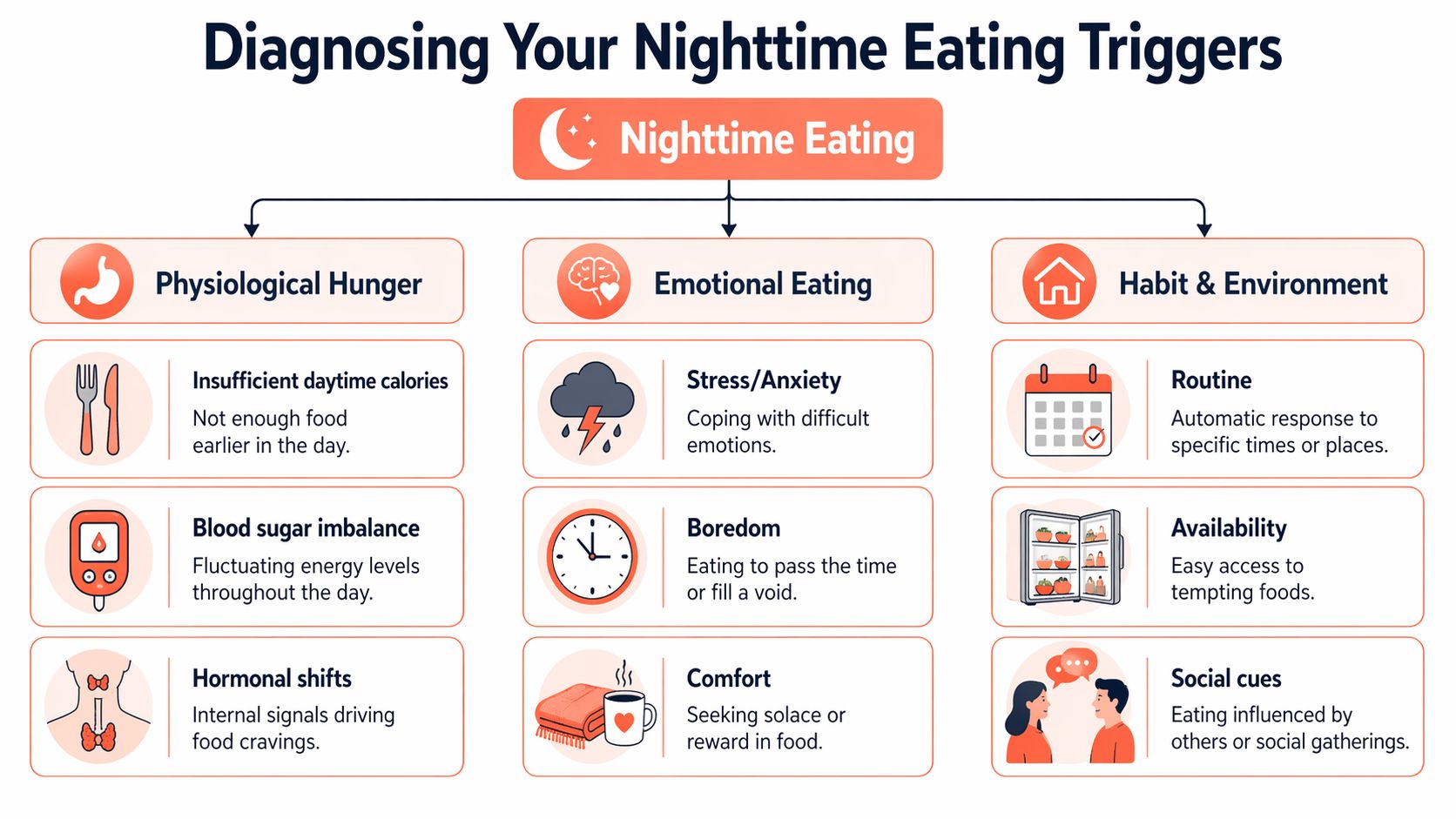
If you want to stop the cycle, identify which bucket your eating falls into most often. Night eating usually comes from physical hunger, emotional regulation, or habit and environment. Some people have a mix.
When it’s real hunger
A lot of late-night eating starts earlier in the day. You may have coffee for breakfast, a light lunch, and a “healthy” dinner that wasn’t enough. By night, your body is trying to catch up.
Signs this is your pattern:
- You’re busy all day: Meals get delayed, skipped, or kept too small.
- You feel better after a balanced snack: Hunger settles when you eat enough protein, carbs, and fat.
- The cravings feel urgent: Not because you’re weak, but because your intake was too low.
This version needs nutrition repair, not tighter restriction.
When it’s emotional eating
If the urge hits when the house gets quiet, stress is high, or you feel lonely, food may be working as a coping tool. That doesn’t mean the hunger is fake. It means emotion is steering the behavior.
Ask yourself:
| Question | What it may suggest |
|---|---|
| Do I want food right after conflict, work pressure, or overstimulation? | Stress-linked eating |
| Do I eat mostly when I’m bored at night? | Stimulation-seeking habit |
| Do I keep eating after I’m physically full? | Emotional soothing, numbness, or avoidance |
When this is the pattern, adding structure helps, but so does building alternatives that calm you down. If the emotional load is heavy, working with professional counselling services can be a practical next step.
When it’s habit and environment
Some nighttime eating has almost nothing to do with hunger. The cue is the routine itself. You sit on the couch, open a streaming app, and your brain expects a snack because that sequence has been repeated so many times.
Look for these clues:
- Same time, same place: The urge shows up predictably.
- Specific triggers: TV, scrolling, cleaning the kitchen, finishing work.
- Automatic movement: You find yourself in the pantry before you’ve made a conscious choice.
This kind of eating changes fastest when you change cues, not when you argue with yourself.
When it could be Night Eating Syndrome
There’s also a clinical pattern worth knowing about. Night Eating Syndrome, or NES, affects about 1.5% of the U.S. population and is defined by eating at least 25% of daily calories after dinner and/or waking to eat more than four times per week, according to Cleveland Clinic’s overview of Night Eating Syndrome. That same source notes that people with NES tend to consume double the carbohydrates and four times the fat in evening meals compared with people without the syndrome.
Important distinction: If your eating includes nighttime awakenings, distress, a feeling that evenings are hard to control, or a long-running pattern that disrupts sleep, treat it as a health issue, not a character flaw.
NES deserves proper support. You don’t need to diagnose yourself, but you should take the pattern seriously.
Rebalance Your Daily Meals to Prevent Night Cravings
The most reliable way to reduce nighttime overeating is to make evenings less biologically loaded. That starts during the day, not after dinner.
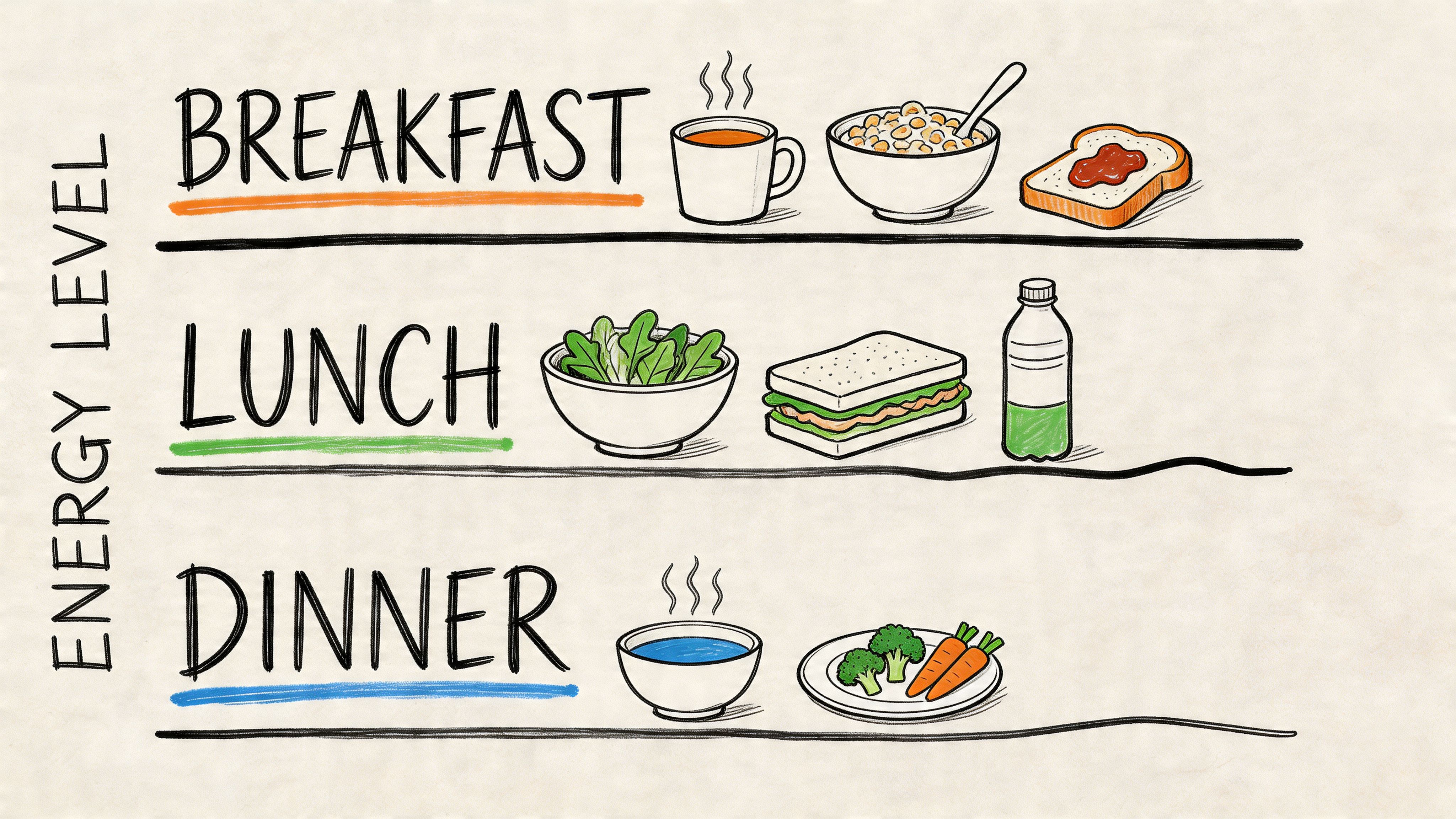
Research from UC San Diego CHEAR on binge eating at night causes and treatment states that eating small, frequent meals every 3–4 hours helps stabilize blood sugar and reduce total daily caloric intake, and that higher-protein diets reduce evening hunger and the desire to overeat.
Build meals that actually hold you
Many people eat meals that look healthy but don’t satisfy. A salad with minimal protein, a yogurt that functions more like a snack, or a dinner that’s mostly vegetables can leave you chasing food later.
A better target is simple:
- Protein at each meal: Eggs, Greek yogurt, tofu, chicken, fish, beans, cottage cheese, or similar options.
- Carbs with structure: Oats, rice, potatoes, fruit, beans, whole grains.
- Fats that slow things down: Nuts, seeds, avocado, olive oil, cheese.
- Fiber-rich produce: Vegetables, fruit, legumes.
If your protein intake tends to drift low, this guide on how to eat more protein can help you spread it across the day instead of trying to cram it in at dinner.
Stop “saving calories” for later
A common mistake is eating too lightly all day because you’re trying to be good. Then nighttime appetite surges and your body takes over. That cycle feels like loss of control, but it often starts with over-control.
Here’s what usually works better:
-
Eat breakfast if mornings are chaotic
Even a simple meal can interrupt the under-eat, overeat loop. -
Don’t let lunch become an afterthought
If your workday is packed, plan an easy default lunch instead of relying on motivation. -
Make dinner balanced, not tiny
A skimpy dinner often sets up the “I still need something” feeling an hour later. -
Use a planned snack when needed
If there’s a long gap between dinner and bed, a structured snack can prevent random grazing.
Practical rule: Your evening appetite becomes much easier to manage when your daytime eating stops sending your body mixed signals.
A quick reality check
If you’re hungry at night every single day, don’t assume the problem is nighttime. Check whether breakfast is missing, lunch is too small, or protein is back-loaded into dinner. It is often more effective to fix the first half of the day than to police the last two hours before bed.
Master Your Mindset and Environment
The food itself usually isn’t the whole problem. The pattern sticks because your brain has learned that nighttime eating brings relief, reward, distraction, or comfort.
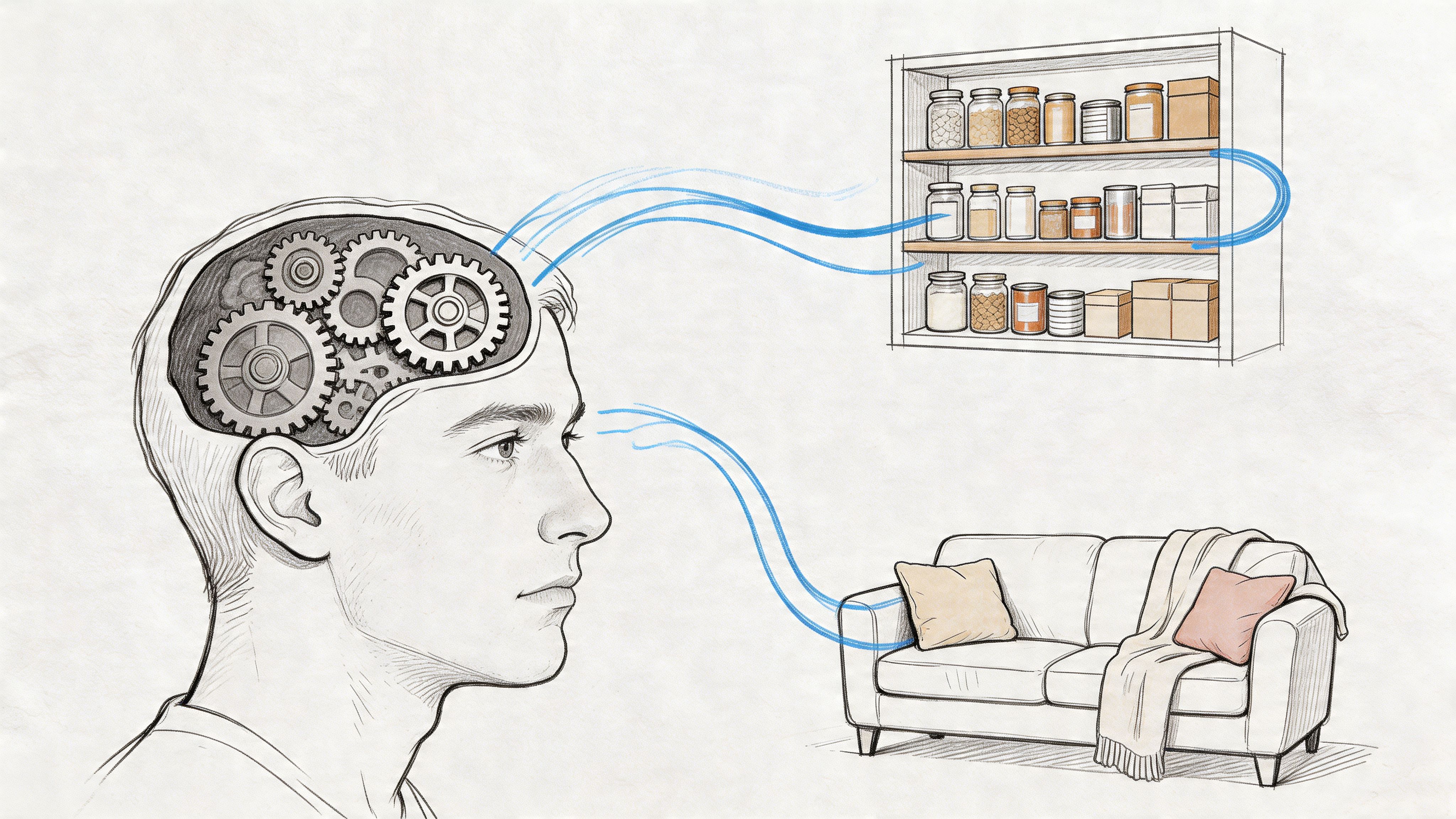
A summary of CBT approaches for night eating syndrome in the NCBI Bookshelf reports that a 12-week CBT intervention showed a 67% response rate, with reductions in evening calories and nocturnal eating episodes. That matters because CBT doesn’t rely on white-knuckle restraint. It changes the thoughts, routines, and coping skills that keep the behavior in place.
Catch the moment before the eating starts
Most overeating episodes have a short window where the behavior can still be redirected. The key is learning to spot the opening.
Use this sequence:
- Name the trigger: stress, boredom, loneliness, fatigue, reward-seeking
- Rate hunger accurately: physically hungry, emotionally activated, or both
- Choose the next action on purpose: eat a planned option or use a non-food response first
If you want a simple reset, ask: “What problem am I trying to solve with food right now?”
Create if-then plans
The brain likes prepared answers. That’s why vague intentions fail at night.
Try plans like these:
| If this happens | Then I do this |
|---|---|
| I want to snack the second I sit on the couch | I make tea and wait ten minutes before deciding |
| I’m stressed after work and want to eat nonstop | I shower, change clothes, and eat dinner at the table |
| I’m still hungry after dinner | I have a planned snack instead of grazing from packages |
| I wake up and want to eat | I pause, check whether I’m actually hungry, and note the pattern for follow-up |
These plans work because they remove negotiation in the moment.
Change the room, not just your intentions
You don’t need a perfectly clean kitchen. You do need fewer frictionless cues.
Helpful changes include:
- Put trigger foods out of sight: Visibility drives mindless eating.
- Plate snacks instead of eating from bags: That creates a stopping point.
- Move eating out of the bedroom and off the couch when possible: Context matters.
- Close the kitchen mentally after dinner: Lights dimmed, counters cleared, tea made, dishwasher started.
Later in the evening, a short reset video or guided reflection can help replace autopilot behavior with a deliberate pause.
Drop the shame script
The thought pattern matters. “I already messed up” often causes more damage than the first snack did. CBT works partly because it teaches people to interrupt all-or-nothing thinking.
A rough night is data. It isn’t proof that you can’t change.
When you remove the drama, you can learn from the behavior.
Harness Sleep and Stress to Regulate Hunger Hormones
If your cravings intensify at night after poor sleep, that isn’t in your head. It’s biological.
According to Sleep Foundation’s review of sleep and overeating, sleep deprivation increases appetite by 24%. After just one night of 4-hour sleep, ghrelin rises by 28% and leptin drops by 18%, which can lead to 300 to 500 extra calories the next day. The same source also notes that eating within 3 hours of bedtime can worsen sleep disruption.
Why tired people want more food
When sleep is short, your brain becomes more interested in fast reward and less interested in restraint. That usually means high-fat, high-sugar, or highly processed foods feel harder to resist. Add a stressful day on top of that, and the evening urge to keep eating makes perfect sense.
Stress makes this worse because many people use food to downshift. The problem is that eating for relief teaches the brain to expect that same relief again tomorrow night.
Fix the night before you fix the snack
Start with sleep basics you can repeat:
- Keep a consistent bedtime: Irregular sleep pushes hunger signals around.
- Build an evening shutdown routine: Lower lights, stop work, and reduce stimulation.
- Leave a gap after eating: Going to bed right after a heavy meal often backfires.
- Make your room sleep-friendly: Cool, dark, quiet, and boring works better than scrolling in bed.
If your sleep setup needs work, this guide on how to sleep better at night naturally gives practical ideas for your environment and routine.
Reduce stress before the craving peaks
You don’t need a perfect meditation practice. You need a reliable off-ramp between the stress of the day and the eating of the night.
Useful options include:
-
A transition ritual after work
Change clothes, step outside, stretch, or wash your face. Give your nervous system a cue that the workday ended. -
A short brain dump
Write down tomorrow’s tasks so your mind stops carrying them into the kitchen. -
A simple calming habit
Tea, reading, breathing drills, a shower, or light mobility can all work if repeated often enough. -
A nutrition check-in
If stress and energy swings tend to collide for you, a tool like the stress and cortisol nutrition calculator can help you notice patterns between how you’re eating and how you’re feeling.
You’ll handle cravings better when you stop arriving at the evening both depleted and overstimulated.
How BiteKit Makes Habit Change Effortless
Awareness-based tracking can help when nighttime eating feels vague, repetitive, or hard to describe. The value isn’t punishment. The value is seeing the pattern clearly enough to interrupt it.
The Eating Recovery Center resource on night eating syndrome notes that awareness-based photo logging tools can support sustainable habits without guilt, and it highlights that about 12% of weight-loss-seeking women meet criteria for Night Eating Syndrome, with 60% undiagnosed. That matters because many people assume their issue is failed willpower when they’re dealing with a pattern they haven’t named yet.
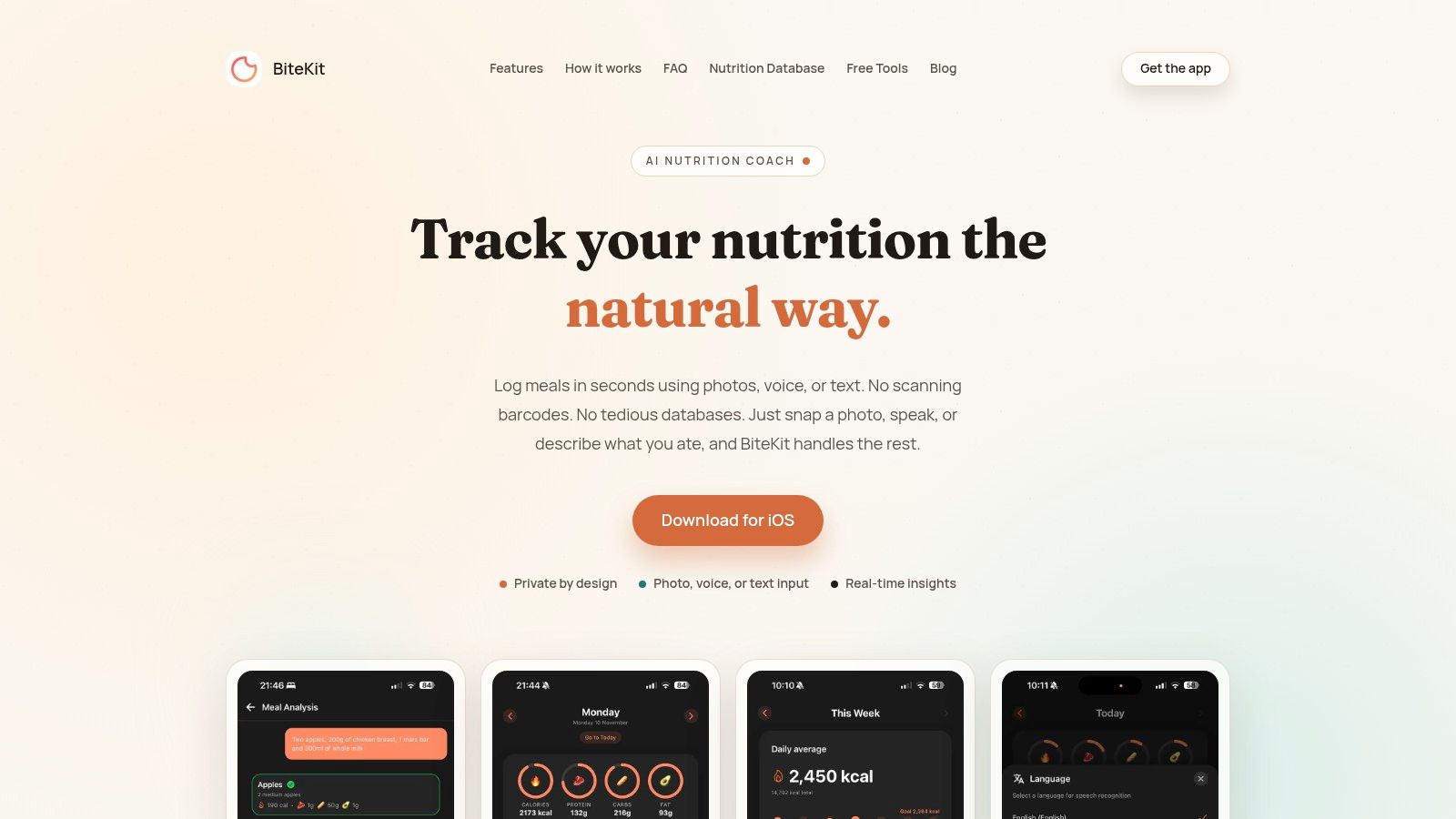
A tool like BiteKit can be useful here because it lets you log meals by photo, voice, or text, then review your day without doing database gymnastics. For someone trying to stop overeating at night, that changes the job from “be perfect” to “notice what happened.”
What to look for in your logs
Instead of obsessing over single meals, review patterns such as:
- Long gaps without food
- Very light breakfasts or skipped lunches
- Protein clustered only at dinner
- Night snacks that appear after stressful workdays
- Repeated eating tied to certain times or places
That kind of review helps you connect cause and effect. You may notice that your toughest nights follow under-eating, poor planning, or emotionally loaded evenings.
Use tracking for awareness, not control
If tracking makes you more rigid, the tool is being used the wrong way. The goal is not to micromanage every bite. The goal is to answer practical questions:
- Was I under-fueled today?
- Did I go too long without eating?
- Was I actually hungry at night, or overwhelmed?
- What time does the pattern usually start?
Logging works best when it lowers confusion, not when it raises guilt.
That’s the right frame for sustainable change.
Your Questions on Nighttime Eating Answered
Is it okay to eat at night if I’m genuinely hungry
Yes. The target isn’t “never eat after dinner.” The target is to stop unplanned, disconnected, repetitive eating that leaves you feeling worse. If you’re hungry, a planned snack can be more helpful than trying to resist until you eventually overeat.
Good nighttime snacks are usually simple, portioned, and satisfying. Think protein plus a carb, or something small that takes the edge off without turning into a second dinner.
How do I know if it’s hunger or just a craving
Start with three questions:
- When did I last eat a balanced meal?
- Would a basic meal or snack sound good, or do I only want a specific comfort food?
- What am I feeling besides hunger right now?
Physical hunger tends to be more flexible. Emotional cravings are often more specific and urgent. Sometimes it’s both, which means you may need food and a different coping tool.
Should I keep trigger foods out of the house
Sometimes, yes. Not forever in every case, but at least while you’re disrupting a strong habit loop. If a food reliably leads to mindless overeating at night, reducing access is practical, not dramatic.
That said, don’t rely on food removal alone. If you never address under-eating, stress, sleep, or routine, the urge often just shifts to another food.
What if I mess up after a good streak
Then you had one rough night. That’s all.
Don’t skip breakfast the next day to compensate. Don’t punish yourself with extra exercise. Return to normal meals, review what likely triggered the episode, and keep going.
A useful post-slip note looks like this:
| What to review | Example |
|---|---|
| Daytime intake | Lunch was too small |
| Emotional state | I was anxious and overstimulated |
| Environment | Ate on the couch from the package |
| Better next move | Eat dinner earlier and plate a snack |
That response builds skill. Shame builds repetition.
When should I get professional help
Get support if nighttime eating is frequent, distressing, disrupting sleep, involving awakenings to eat, or making you feel out of control. Also get help if you notice the pattern is worsening or tied closely to anxiety, depression, or rigid daytime restriction.
Support can come from a registered dietitian, therapist, or another qualified clinician with experience in eating behaviors. You do not need to wait until it feels severe enough.
If you want a low-friction way to spot the eating patterns behind your evenings, BiteKit can help you log meals with a photo, voice note, or simple text entry and review your day with less effort. Used as an awareness tool, it can make it easier to notice under-eating, skipped meals, and recurring nighttime triggers before they turn into another frustrating loop.