Unlock How to Stay Consistent with Diet
Struggling with how to stay consistent with diet? Discover a step-by-step plan using habit science, smart meal prep, & frictionless tracking.
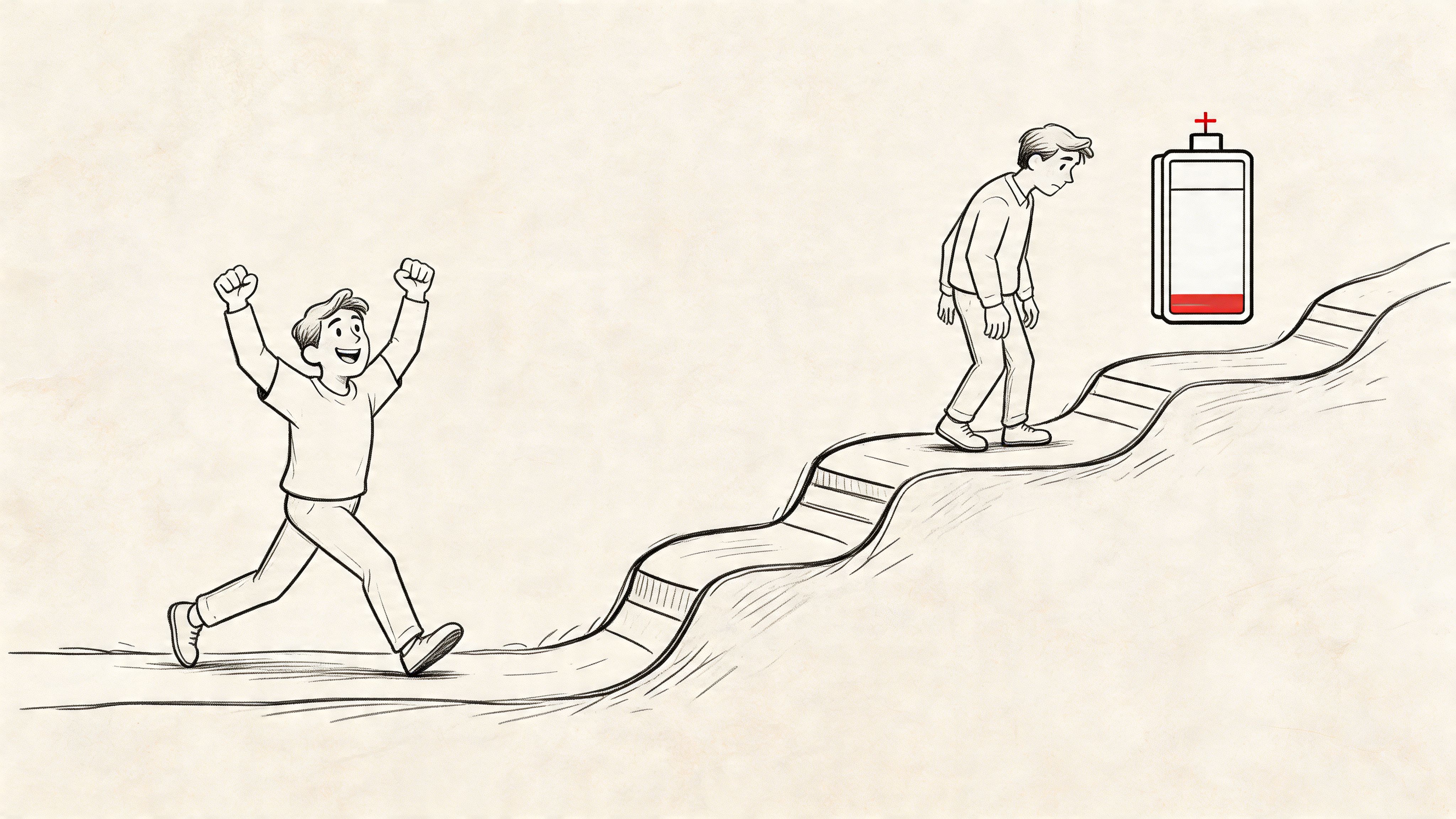
You start the week with a plan. Breakfast is solid, lunch is packed, dinner is mapped out in your head. By Thursday, work runs late, your gym session shifts, you're hungry, and the plan collapses under a pile of small decisions.
That’s the moment most diets fail. Not at the grocery store. Not because someone “has no discipline.” They fail when eating well asks too much effort from a tired brain.
If you want to learn how to stay consistent with diet, stop treating consistency like a personality trait. Treat it like a design problem. The less friction between intention and action, the easier it is to repeat the behaviors that matter.
Why Most Diets Fail Before They Start
A diet rarely falls apart in one dramatic moment. It fades. First you skip one planned meal. Then you stop logging because you’ll “catch up later.” Then the routine feels broken, so you tell yourself you’ll restart Monday.
That pattern is common because individuals often build a diet around motivation. Motivation helps you begin, but it’s unreliable when you’re busy, stressed, traveling, socializing, or just tired. If your plan depends on making perfect choices all day, it’s built to fail under normal life.
The predictable part is what should change how you think about it. A digital epidemiological study of diet adherence found 5–25% of dieters dropped out in November and 15–30% in December, showing how easily holidays and disrupted routines pull people off track, as summarized in this diet persistence research from Public Health Nutrition.
Friction is usually the real problem
Most struggling dieters don’t need harsher rules. They need fewer obstacles.
Common friction points look like this:
- Meals require too many decisions so takeout becomes the default.
- Tracking takes too long so awareness disappears after a few hectic days.
- The plan is too rigid so one restaurant meal feels like failure.
- Healthy options aren’t visible or ready so convenience wins.
Most people can follow a hard plan for a short time. Very few can follow a high-friction plan for long.
What works better than trying harder
Consistency improves when the desired action becomes easier than the old one. That means keeping repeat meals simple, reducing logging effort, planning for messy days, and giving yourself a structure you can return to quickly after a slip.
A good diet system doesn’t ask you to be perfect. It gives you a low-effort way to keep going when life gets inconvenient.
Define Your Why and Set Sustainable Goals
If your only goal is “lose weight fast,” you’ll quit the first week the scale stalls. Surface goals don’t carry much weight when cravings hit or your schedule blows up.
A stronger reason is more personal and more useful. Maybe you want steady energy at work. Maybe you want to stop grazing at night because you’re exhausted by dinner. Maybe you want to train hard without constantly feeling behind on nutrition. Those reasons hold up better because they connect your diet to daily life, not just an outcome.
Start with the reason that matters on hard days
Write down one answer to each of these:
- What improves if I eat well consistently? Energy, confidence, recovery, digestion, mood, sleep.
- Who benefits besides me? Family, training partner, patients, clients, coworkers.
- What problem am I tired of repeating? Weekend overeating, skipping lunch, random snacking, all-or-nothing thinking.
Then turn that into a single sentence. Keep it plain. “I want a way of eating I can maintain during work stress.” That’s better than a dramatic promise you won’t keep.
Practical rule: If your reason only sounds motivating on a good day, it isn’t deep enough yet.
Choose goals you can repeat, not goals that impress you
The most important question is not “Which diet is best?” It’s “Which approach can I still follow when I’m busy?” Research summarized by the USDA found that adherence, not diet type, is the strongest predictor of weight loss success, and that program completion explains 20–30% of weight loss variance, according to this USDA summary on dieting success and consistency.
That means a moderate plan you can repeat beats an ambitious plan you abandon.
Useful goals usually fall into process goals, not outcome goals:
-
Anchor one reliable meal Build one breakfast or lunch you can repeat without thinking.
-
Add, don’t just remove Aim to include protein, produce, or a planned snack rather than only banning foods.
-
Set a consistency target Focus on following your plan most days, then adjust based on results.
A few examples work well in practice:
-
Instead of “I’ll never eat dessert.” Use “I’ll build balanced meals first and decide intentionally after dinner.”
-
Instead of “I need the perfect macro split.” Use “I’ll hit my main meals before evening hunger gets out of hand.”
-
Instead of “I have to overhaul everything.” Use “I’ll start with the meals that usually go off the rails.”
If you need a simple place to begin, this guide on how to start eating better is a useful reset because it keeps the focus on manageable behavior rather than extreme rules.
Keep goals flexible enough to survive real life
A sustainable goal has room for restaurants, travel, bad sleep, and social meals. Rigid plans often feel clean on paper and chaotic in reality.
The test is simple. If your goal breaks the moment your day changes, it’s too brittle. Tighten your system, not your restrictions.
Build Your Diet Around Habits Not Rules
Rules create pressure. Habits create repeatability.
That’s why people who know exactly what they “should” eat still struggle. Knowledge isn’t usually the missing piece. The missing piece is a routine that happens with less thought.
The simplest model for building that routine is the cue, routine, reward loop. Something triggers a behavior, you perform the behavior, and your brain learns whether it’s worth repeating.
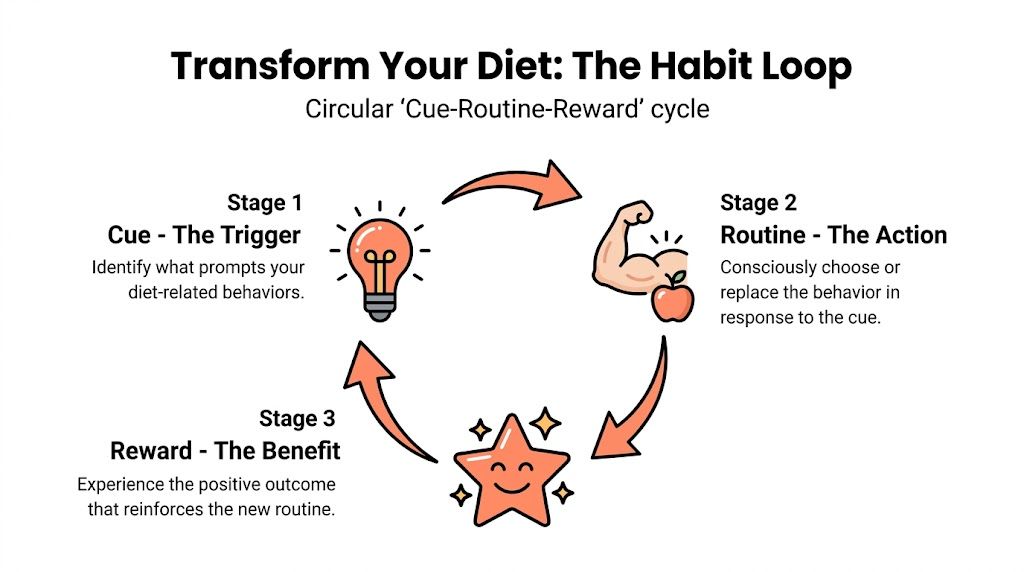
Use existing cues instead of waiting for motivation
Don’t invent a new routine out of thin air. Attach a nutrition behavior to something that already happens.
Examples:
- After making coffee, eat your planned breakfast before opening email.
- After finishing a workout, have your recovery meal or snack.
- When you walk in the door after work, start dinner before sitting down.
- When you pack your laptop, pack tomorrow’s lunch too.
This works because the cue is already stable. You aren’t relying on memory alone.
Make the routine small enough to win often
A lot of people sabotage consistency by making the habit too big. “Cook every meal from scratch” sounds admirable and falls apart fast. “Prep two proteins and wash fruit” has a much better chance.
Small habits create momentum because they’re easier to repeat even when your day is messy.
Here’s a practical set of starter habits:
| Habit Area | Micro-Habit Example | Potential Cue | Potential Reward |
|---|---|---|---|
| Breakfast | Eat a planned protein-based breakfast | After making coffee | Less mid-morning hunger |
| Hydration | Drink water before your main meal | When you sit down to eat | You feel more settled and less rushed |
| Lunch | Pack lunch the night before | After cleaning up dinner | Easier next morning |
| Snacking | Put one planned snack in your bag | When you grab your keys | Fewer vending machine decisions |
| Training nutrition | Eat a recovery snack after exercise | When you finish your workout | Better energy later |
| Dinner | Build the plate from a simple template | When you start cooking | Less guesswork |
| Awareness | Log the meal right after eating | When you put down your fork | Clear daily totals |
Engineer rewards that matter in the real world
The reward doesn’t have to be dramatic. In nutrition, the most useful rewards are immediate and practical:
- Less decision fatigue
- Stable afternoon energy
- Fewer “I blew it” moments
- A visible sense of progress
- Less evening overeating
A habit sticks faster when the payoff shows up today, not only months from now.
Replace weak rules with stronger defaults
Rules often sound like this:
- No carbs at night
- No eating out
- No snacks
- No treats during the week
Defaults sound different:
- Keep a balanced lunch ready for workdays
- Build dinner with protein, vegetables, and a planned carb
- Keep one satisfying snack available
- Decide indulgences on purpose, not from exhaustion
Defaults are easier to live with because they guide action without turning every choice into a moral test.
When people ask me how to stay consistent with diet, this is usually the turning point. Stop asking whether you can be stricter. Ask whether your current routine is easy enough to repeat.
Master Meal Planning and Preparation
Meal planning matters because hunger narrows your thinking. Once you’re tired and hungry, convenience tends to beat intention.
That doesn’t mean you need a color-coded spreadsheet and a fridge full of identical containers. Good planning is lighter than that. It gives you enough structure to avoid last-minute chaos while keeping meals flexible.
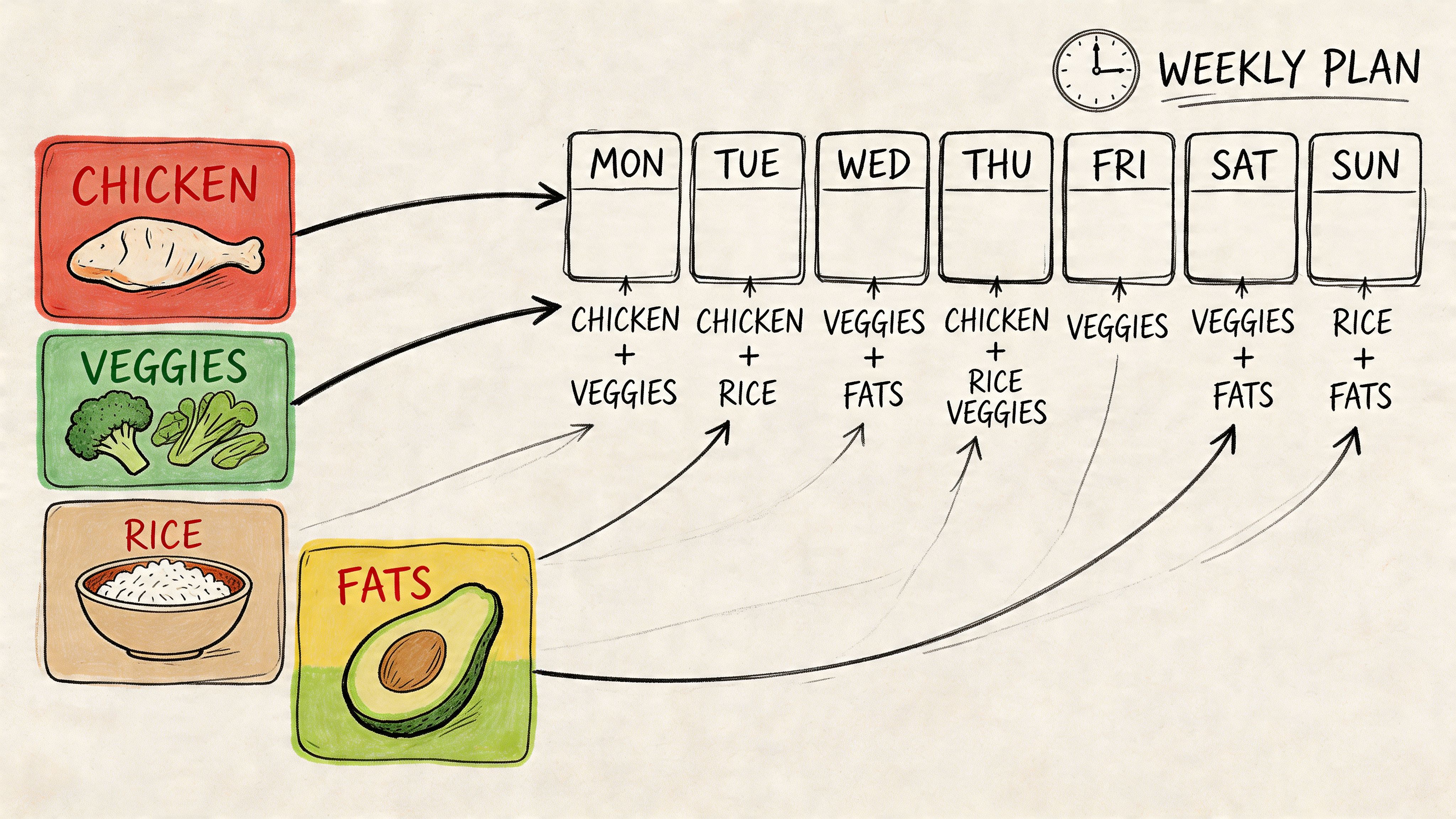
Pick the prep style that matches your life
One of these three approaches often proves more effective.
Batch cooking for predictable weeks
This works well if your schedule is stable and you don’t mind repetition. Cook full meals in advance, portion them, and use them for several lunches or dinners.
Best for people who:
- Like routine
- Work long days
- Need fewer food decisions during the week
Component prep for flexibility
This is the method I use most often with busy clients. Prepare building blocks instead of finished meals. Cook a protein, wash and chop produce, make a carb source, and keep sauces or fats ready.
Then each meal becomes a simple assembly job.
A reliable template looks like this:
- Protein
- Vegetable or fruit
- Smart carb
- Healthy fat
- Optional flavor booster, such as salsa, yogurt sauce, herbs, or seasoning
If you want more examples of flexible setups, these meal prep ideas for weight loss are useful because they focus on simple combinations rather than rigid menus.
Planned leftovers for people who hate prepping
You don’t need a separate prep session if you cook intelligently. Make dinner with tomorrow’s lunch in mind. Double the protein. Roast extra vegetables. Cook enough rice or potatoes for another meal.
This approach feels less like dieting and more like reducing future effort.
A simple planning checklist
If you tend to overcomplicate meal prep, use this short checklist before the week starts:
- Choose your anchor meals for the times you’re most likely to go off plan.
- Buy convenience on purpose like washed greens, frozen vegetables, rotisserie chicken, yogurt, or pre-cooked grains.
- Cover your risky windows such as late afternoons, post-workout, or evening drives home.
- Keep one backup dinner in the house for the nights you don’t want to cook.
For a broader framework on planning your diet effectively, it helps to think in patterns and food availability rather than chasing a perfect weekly script.
Keep emergency meals ready
The strongest plans include a rescue option. If there’s no backup, stress usually picks for you.
Good emergency meals are fast, decent, and available. Examples include:
- Greek yogurt, fruit, and nuts
- Eggs with toast and cut vegetables
- Rotisserie chicken with microwave rice and salad
- Protein smoothie with fruit and oats
- Tuna or salmon packets with crackers and cucumber
- Cottage cheese with fruit and a side of cereal or toast
A short visual demo can help if you want practical prep ideas in motion:
The trade-off people often miss
Over-planning creates boredom. Under-planning creates impulsive eating. You want the middle ground.
That usually means repeating enough meals to lower effort, while leaving enough flexibility that you don’t feel trapped by the plan. Consistency improves when meals are easy to assemble, easy to adjust, and satisfying enough that you don’t immediately start looking for extras.
Track Your Progress Without The Friction
Self-monitoring works. The problem is that most tracking methods are annoying enough to quit.
That is the core issue. People don’t usually stop tracking because they suddenly think awareness no longer matters. They stop because searching databases, estimating portions manually, and logging every ingredient feels like unpaid admin work.
Still, tracking has a clear role in long-term success. Data summarized by Harvard notes that in the National Weight Control Registry, 75-80% of people who maintained significant weight loss for over a year reported consistent food tracking, and a separate trial found daily logging groups lost 5-6kg compared with 2-3kg in non-trackers, with compliance predicting 70% of the variance, as outlined in this Harvard review of successful weight loss maintenance.
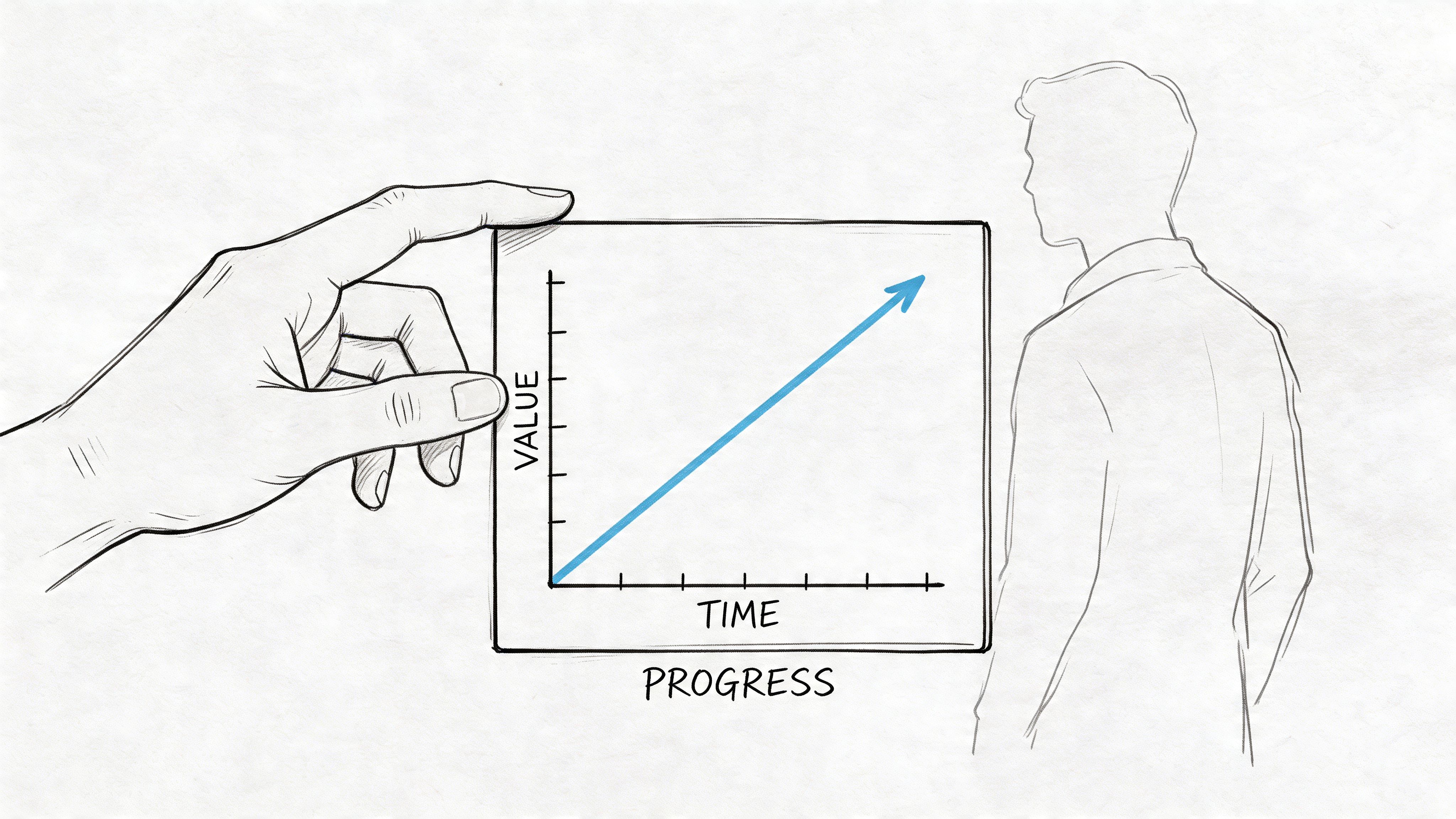
What makes tracking fail
Manual tracking tends to break down in a few predictable situations:
- Mixed meals like restaurant dishes, casseroles, bowls, or family-style dinners
- Busy workdays when you mean to log later and forget
- Travel or social events where precise entry feels unrealistic
- Perfectionism that turns one missed log into a full dropout
The answer isn’t to abandon tracking. It’s to make it lighter.
Reduce the work so tracking can survive real life
Low-friction tracking is what keeps the practice alive. If you can log a meal in seconds, you’re much more likely to do it consistently when your day gets noisy.
That’s where tools built around speed are useful. BiteKit’s easy food tracking app lets users log with photos, voice, or natural language instead of relying only on barcode scanning or database searches. In practice, that means you can snap a picture of a mixed meal, say something like “chicken, rice, and avocado bowl,” and get a quick estimate of calories and macros without turning lunch into a project.
What to pay attention to when you track
Tracking is most useful when it answers a decision question. You don’t need to stare at numbers all day. You need enough visibility to adjust before the day gets away from you.
Look for patterns like:
- Are you starting the day underfed and overeating later?
- Does dinner carry too much of your intake because breakfast and lunch are inconsistent?
- Do weekends look completely different from weekdays?
- Are your meals satisfying enough to reduce random snacking?
Track to learn, not to judge. The log is feedback, not a report card.
The people who stay consistent usually treat tracking as a neutral check-in. They use it to notice trends, tighten routines, and recover quickly after less structured days. That mindset matters as much as the method.
Troubleshoot Barriers and Adjust Your Plan
A consistent diet still has restaurant meals, travel days, cravings, poor sleep, and weeks when your routine shifts. The goal isn’t to remove every obstacle. It’s to respond without spiraling.
For social meals, decide in advance what matters most. Sometimes that means eating normally earlier in the day instead of “saving up” and arriving ravenous. During travel, the basic play is simpler than people think: keep meal timing reasonably steady, prioritize filling meals, and build in backups you can get almost anywhere.
Stop treating one off-plan meal like a broken system
A lot of diet inconsistency comes from overreaction. One large meal becomes a reason to skip breakfast the next day. One missed workout becomes a reason to abandon the week.
A better response is boring on purpose:
- Return to your next planned meal
- Keep protein and produce visible
- Drink fluids and normalize your schedule
- Review what made the day harder than expected
Watch for the overlooked problem of undereating
Many people assume the only threat to consistency is eating too much. That’s incomplete.
A study cited by Trinity Health Michigan reported that 68% of dieters who track intake unintentionally undereat by 20-30% on training days, and that this was associated with a 42% higher dropout rate from fatigue, as discussed in this article on consistent nourishment and undernourishment risk.
This matters for busy professionals and active people in particular. They train hard, keep calories too low, then wonder why energy crashes, recovery slips, and cravings get louder later in the week.
If you’re constantly tired, unusually hungry at night, or dragging through workouts, the problem may not be lack of discipline. It may be lack of fuel.
If you need help setting a reasonable intake target, a tool like this macro calculator for weight loss can give you a starting point. The number isn’t the goal by itself, but it can help you notice when your plan is far more aggressive than your life can support.
Review weekly and adjust lightly
A useful weekly review asks only a few questions:
- Where did my plan work with little effort?
- Where did it break under stress?
- Did I eat enough to support energy and training?
- What’s one adjustment for next week?
That last question matters most. One adjustment. Not a full reset.
If you want a simpler way to stay aware without turning food logging into another daily task, BiteKit is built for that. You can log meals with a photo, voice, or plain text, see calories and macros update against your goals, and review your eating history in one place so consistency becomes easier to maintain.