10 Proven Meal Prep Ideas for Weight Loss to Master in 2026
Discover 10 science-backed meal prep ideas for weight loss. Get recipes, tips, and weekly plans to make your fitness journey easier and more effective.
Embarking on a weight loss journey often feels like a constant battle of willpower, but sustained success is less about sheer determination and more about strategic planning. This is where meal prepping becomes your most effective tool. Beyond simply saving time, a well-executed meal prep routine creates an environment where healthy, calorie-controlled choices are the easiest option available. This guide provides 10 actionable meal prep ideas for weight loss, moving past generic advice to give you complete, practical systems for success.
Scientific evidence supports this approach. Constantly deciding what to eat creates decision fatigue, a state of mental exhaustion that makes you more susceptible to high-calorie, low-nutrient impulse buys. By planning and preparing your meals in advance, you eliminate these daily decisions, preserving your cognitive resources for other challenges. Furthermore, meal prepping allows you to consciously apply the principle of energy density, a concept researched by Dr. Barbara Rolls. You can proactively design meals rich in high-volume, low-calorie foods like vegetables and lean proteins, which promote satiety and prevent overeating.
Successful weight loss isn't about having perfect willpower; it's about building a system that makes healthy eating your default setting.
Each of the 10 ideas that follow is a complete blueprint. You'll find specific recipes, batch-cooking instructions, and estimated calorie and macro breakdowns per serving. To make tracking effortless, we'll also show you how to log these meals using BiteKit. Its simple photo and text-based logging removes the typical friction of calorie counting, helping you stay consistent without the tedious data entry. Get ready to build a sustainable routine that delivers real results.
1. Protein-Packed Bowl Prep
The protein-packed bowl is a cornerstone of effective meal prep for weight loss, popular with fitness professionals and nutrition coaches for its simplicity and macro-control. This method involves pre-portioning a lean protein, a complex carbohydrate, and a generous serving of non-starchy vegetables into individual containers. The goal is to create balanced, calorie-controlled meals that promote satiety and preserve lean muscle mass during a caloric deficit.
This approach is highly effective because it directly addresses the key drivers of successful weight loss: protein intake and calorie management. A high-protein diet has been shown to increase feelings of fullness and slightly boost metabolism. By building each meal around a lean protein source, you naturally create a more satisfying meal that helps prevent overeating later.
How to Implement Protein-Packed Bowls
Start by batch-cooking each component separately to maintain the best texture and flavor. For a week's worth of lunches (5 meals), you might prepare:
- Protein (select one): 750g (raw weight) of diced chicken breast, 600g of salmon fillets, or 600g of firm tofu.
- Carbohydrate (select one): 2 cups (dry) of quinoa or brown rice.
- Vegetables (select one or mix): 1 kg of broccoli florets, asparagus, or a mix of bell peppers and onions.
Once cooked, portion each component into five airtight containers. A typical bowl might contain 150g of cooked chicken, 150g of cooked quinoa, and 200g of roasted vegetables, landing around 450 calories.
Pro Tip: Keep vegetables slightly undercooked when you prep. They will finish cooking perfectly when you reheat the meal, preventing a mushy texture. Label each container with the date and contents for easy tracking.
Managing your calorie targets is critical for weight loss. For a deeper understanding of your individual energy requirements, you can learn how to calculate your daily calorie needs and adjust your bowl portions accordingly. With BiteKit's photo logging, a single picture of your prepared bowl can be logged daily, making tracking consistent and effortless.
2. Freezer-Friendly Breakfast Burritos
Freezer-friendly breakfast burritos are a game-changer for busy mornings, offering a high-protein start to the day without the decision fatigue. This popular meal prep idea involves batch-making customized burritos with whole wheat tortillas, eggs, lean protein, and vegetables, then freezing them individually. This approach ensures you have a satisfying, macro-friendly meal ready in minutes, setting a positive tone for your daily nutrition.
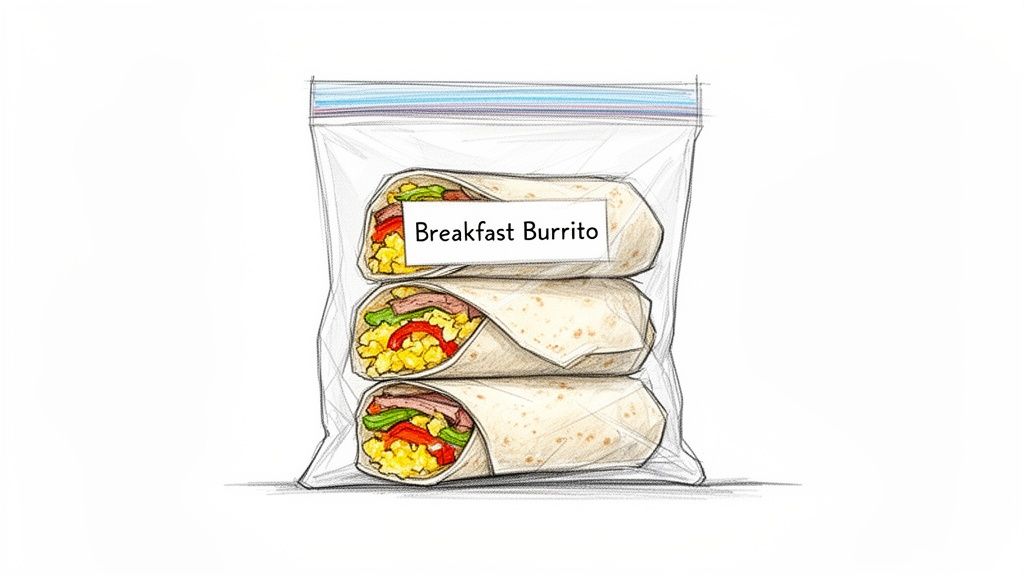
The effectiveness of this method lies in its convenience and its ability to support weight loss goals. Starting the day with a high-protein breakfast, typically 25-35g per burrito, is scientifically linked to increased satiety and reduced cravings throughout the day. This helps control overall calorie intake, a fundamental component of any successful weight loss strategy. By preparing these in advance, you eliminate the temptation to grab high-calorie, low-nutrient breakfast options on the go.
How to Implement Freezer-Friendly Breakfast Burritos
The key is to assemble a large batch at once. For a week's worth of breakfasts, you can create a variety of combinations to keep things interesting.
- Classic: Whole wheat tortilla with 2 scrambled eggs, 40g turkey sausage, diced bell peppers, and a sprinkle of low-fat cheddar.
- Lean & Green: Spinach tortilla with 3 scrambled egg whites, 30g lean bacon, sautéed mushrooms, and onions.
- High-Protein: High-protein tortilla with scrambled eggs, 30g chorizo-seasoned ground turkey, and 50g black beans.
Cook all fillings, let them cool completely to prevent soggy tortillas, and then assemble. Wrap each burrito tightly in parchment paper or foil before placing them in a large freezer bag.
Pro Tip: Slightly undercook the scrambled eggs during prep. They will finish cooking to a perfect, fluffy texture when you reheat the burrito, avoiding a rubbery consistency. Use spray oil instead of butter for cooking to minimize added calories.
This is an excellent meal prep idea for weight loss because of its consistency. Once you've made and logged a burrito in BiteKit, you can save it as a favorite meal. This allows for one-click logging each morning, making daily tracking nearly effortless and helping you stay on top of your calorie and macro targets.
3. Slow Cooker/Instant Pot Batch Cooking
Slow cooker and Instant Pot batch cooking is a time-saving strategy for anyone serious about meal prep for weight loss. This method involves preparing large quantities of lean proteins and vegetable-rich dishes with minimal active effort. The "set it and forget it" nature of these appliances means you can produce tender, flavorful meals that are easy to portion for the week, ensuring you always have a healthy option ready.
The effectiveness of this approach lies in its efficiency and consistency. By cooking 8-12 servings at once, you lock in your meals for several days, reducing the temptation for takeout or unhealthy choices. These appliances are perfect for breaking down tougher, leaner cuts of meat into delicious, shreddable protein and creating nutrient-dense chilis, soups, and stews that support a calorie-controlled diet. The large batch size simplifies tracking, as the nutritional profile per serving remains constant.
How to Implement Slow Cooker/Instant Pot Batch Cooking
Focus on recipes that combine a lean protein, legumes, and plenty of vegetables. A single cooking session on a Sunday can provide lunches or dinners for most of the week.
- Salsa Pulled Chicken (Slow Cooker): Combine 500g of chicken breast, a jar of salsa, and a can of black beans. Cook on low for 6-8 hours. A single serving is approximately 270 calories and 35g of protein.
- Turkey Chili (Instant Pot): Sauté 400g of ground turkey, then add beans, diced peppers, onions, and canned tomatoes. Cook on high pressure for 15 minutes. This yields servings around 300 calories with 28g of protein.
- Lean Pot Roast (Slow Cooker): Sear a 600g lean beef roast, then place it in the slow cooker with root vegetables like carrots and potatoes. Cook on low for 8 hours for a meal that provides about 280 calories and 32g of protein per serving.
Pro Tip: Use slow cooker liners for almost zero cleanup. Freeze extra portions in 1-2 cup servings and label them with the date and contents. When you're ready to eat, you can quickly defrost a single, perfectly portioned meal.
Accurately planning your batch recipes is key to hitting your goals. You can optimize your ingredient quantities for specific calorie and macro targets by using a dedicated tool. To make this process even simpler, you can explore our Meal Prep Optimizer to calculate the right amounts for your batch-cooked recipes. Logging is just as easy with BiteKit; simply say, "two cups of turkey chili," and let voice logging handle the rest.
4. Lean Protein + Vegetable Snack Packs
Lean protein and vegetable snack packs are a strategic tool for successful weight loss, favored by performance athletes and corporate wellness programs alike. This method involves pre-portioning lean proteins with raw or lightly cooked vegetables into grab-and-go containers. The purpose is to have low-calorie, high-satiety snacks ready to prevent energy crashes and curb cravings between meals.
This approach is highly effective because it directly combats unplanned, high-calorie snacking, a common pitfall in weight loss journeys. Protein is the most satiating macronutrient, meaning it keeps you feeling full longer. By creating 150-200 calorie snacks centered around protein, you support muscle maintenance and stabilize blood sugar levels, preventing the afternoon slump that often leads to poor food choices.
How to Implement Lean Protein + Vegetable Snack Packs
Preparation is simple and can be done in under 30 minutes for an entire week. Batch-prep each component and assemble the packs, keeping wet and dry ingredients separate until the day of consumption if needed. For a week's worth of snacks, you could prepare:
- Example 1: 150g of 2% Greek yogurt + 80g of mixed berries. Total: ~160 calories, 17g protein.
- Example 2: 2 hard-boiled eggs + 14g of raw almonds. Total: ~220 calories, 13g protein.
- Example 3: 100g of deli turkey slices rolled up with 3 tablespoons of hummus and a side of bell pepper strips. Total: ~175 calories, 18g protein.
Once prepped, assemble five to seven identical packs for consistent tracking and easy grabbing. This consistency is a key component of effective meal prep ideas for weight loss.
Pro Tip: For optimal freshness, prepare vegetables on Sunday but hold off on portioning wet proteins like yogurt or cottage cheese until mid-week. Keep veggies in airtight containers with a paper towel to absorb excess moisture and prevent them from becoming soggy.
Managing your daily intake is central to achieving your goals. For more specific guidance on your energy needs, you can learn how to calculate your daily calorie needs and ensure your snack packs align with your targets. With BiteKit, logging is as simple as using the text feature to enter "1 protein snack pack," making daily tracking accurate and effortless.
5. Vegetable-Heavy Stir-Fry Prep Kits
The stir-fry prep kit is a smart and flexible meal prep idea for weight loss, championed by advocates of volume eating. This technique involves pre-chopping all your vegetables, portioning a lean protein, and preparing a sauce, storing each component separately. When it’s time to eat, you can assemble and cook a fresh, sizzling stir-fry in just 10-15 minutes. The focus is on maximizing food volume with low-calorie vegetables, which promotes a feeling of fullness.
This method is particularly effective for weight loss because it keeps vegetables crisp and flavorful, avoiding the soggy texture that can come from pre-cooked and reheated meals. The high vegetable content boosts fiber and nutrient intake while keeping the overall calorie count low. This approach aligns with research showing that diets rich in low-energy-density foods, like vegetables, are effective for managing weight by increasing satiety.
How to Implement Stir-Fry Prep Kits
On your prep day, wash and chop all your vegetables and portion out your protein for the week. Store them in airtight containers. Prepare your sauce and keep it in a small jar or container.
- Protein (select one): 120g of chicken breast, 100g of shrimp, or 150g of firm tofu per meal.
- Vegetables (mix and match): Broccoli, snap peas, carrots, mushrooms, bok choy, bell peppers, and onions are excellent choices. Aim for at least 2 cups of chopped veggies per meal.
- Sauce (select one): A simple mix of low-sodium soy sauce (or coconut aminos), a touch of sesame oil, and grated ginger and garlic.
When ready to cook, heat a wok or large pan over medium-high heat, add a little oil, and cook your protein. Add the vegetables and stir-fry until tender-crisp, then pour in the sauce and cook for another minute until everything is coated.
Pro Tip: Place a folded paper towel in the container with your pre-cut vegetables. It will absorb excess moisture and keep them fresh and crisp for several days.
This method makes daily tracking with BiteKit exceptionally easy. You can either take a quick photo of your final delicious stir-fry or use voice logging to say, "120g chicken, mixed vegetables, and teriyaki sauce," and let the app handle the rest.
6. Salad Jar Layering with Protein
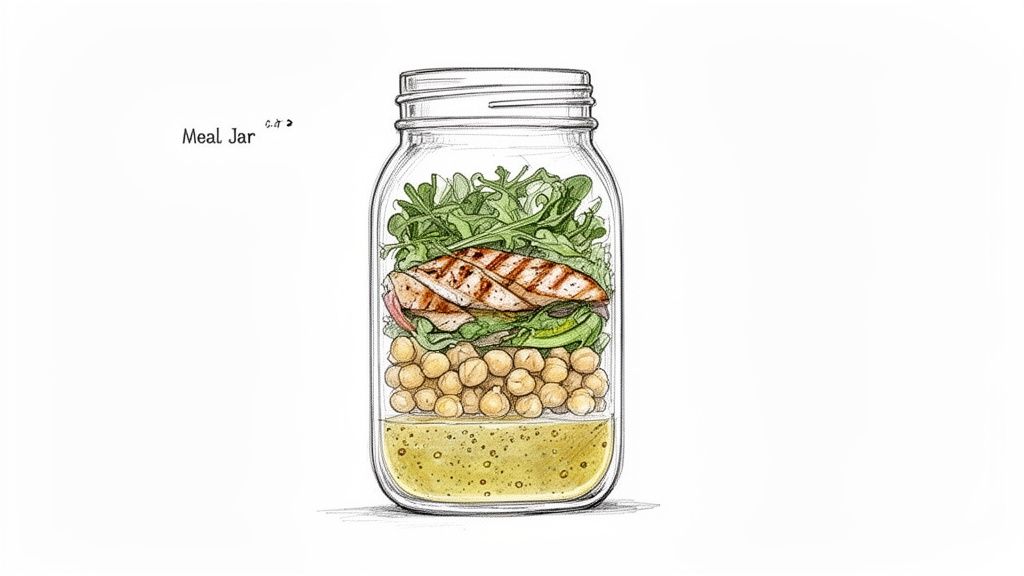
The mason jar salad is a classic among meal prep ideas for weight loss, championed by health communities for its grab-and-go convenience and ability to keep greens fresh for days. The method relies on a specific layering technique that separates the dressing from delicate ingredients, preventing sogginess. This creates a high-volume, nutrient-dense meal that is both satisfying and calorie-controlled, making it a perfect tool for a weight loss journey.
This approach is powerful because it supports weight loss through high satiety from fiber-rich vegetables and protein. Foods with high water and fiber content, like leafy greens and cucumbers, have lower energy density, allowing you to eat a larger, more filling portion for fewer calories. Adding a substantial protein source ensures the meal sustains you for hours, curbing snack cravings and helping preserve muscle mass.
How to Implement Salad Jar Layering
The key is the precise order of ingredients in a quart-sized (32 oz) mason jar. For a week's worth of lunches, prepare your ingredients and layer them in this order from bottom to top:
- Layer 1 (Bottom): Dressing: 2 tbsp of your chosen dressing (e.g., Balsamic Vinaigrette, Lemon Tahini).
- Layer 2: Hardy Vegetables: Add ingredients that can marinate without getting mushy (e.g., 100g chickpeas, bell peppers, carrots, red onions, cucumbers).
- Layer 3: Protein: 120g of grilled chicken, 100g of salmon, or 120g of ground turkey.
- Layer 4: Grains & Softer Items: Cooked quinoa, corn, beans, or softer fruits and vegetables.
- Layer 5: Delicate Greens & Toppings: Spinach, arugula, kale, and toppings like nuts, seeds, or feta cheese go last.
A well-constructed jar like this can easily stay fresh for up to five days. For example, a jar with balsamic vinaigrette, 100g chickpeas, cucumbers, tomatoes, 120g grilled chicken, and spinach comes to approximately 420 calories and 28g of protein.
Pro Tip: When you're ready to eat, just shake the jar vigorously for about 15 seconds to distribute the dressing evenly, then pour it into a bowl. This simple action transforms the layers into a perfectly dressed, crisp salad.
Tracking these meals is straightforward. You can use an app like BiteKit to photograph your assembled jar once and save it as a custom meal. Then, you can log it with a single picture each day, ensuring your calorie and macro tracking remains consistent with minimal effort.
7. Egg Muffin Cups with Vegetables
Egg muffin cups are a game-changer in meal prep ideas for weight loss, championed by low-carb, keto, and paleo diet advocates. These crustless, mini-quiches are made by baking a mixture of beaten eggs, chopped vegetables, and optional lean protein or cheese in a muffin tin. The result is a batch of perfectly portioned, portable, protein-rich snacks or breakfasts.
This method is powerful because it provides a high-protein, low-calorie food that is easy to grab and go, preventing less-healthy breakfast or snack choices. A diet rich in protein, especially at breakfast, has been shown to improve appetite control and reduce daily calorie intake. These muffin cups offer a simple way to front-load your protein intake and stay satisfied.
How to Implement Egg Muffin Cups
The process involves mixing your ingredients and baking them in a single batch. For a week's worth of portions (12-24 cups), you could try one of these combinations:
- Spinach & Mushroom (makes 24): 8 eggs, fresh spinach, sautéed mushrooms, diced onions, and ¼ cup low-fat cheese. This yields about 95 calories and 11g of protein per cup.
- Sausage & Peppers (makes 24): 10 eggs, diced bell peppers, chopped broccoli, and 60g crumbled turkey sausage. This version provides around 115 calories and 12g of protein per cup.
- Asparagus & Feta (makes 12): 6 eggs, chopped asparagus, sun-dried tomatoes, and 20g feta cheese. Each cup contains roughly 110 calories and 10g of protein.
Whisk eggs, fold in your chosen fillings, and pour into a prepared muffin tin. Bake until set.
Pro Tip: Sauté vegetables like mushrooms or spinach before adding them to the egg mixture. This removes excess water and prevents the cups from becoming soggy. Fill each muffin cup only about 3/4 full to allow for expansion as they bake.
Proper tracking is a key part of any weight loss plan. You can learn how to calculate your daily calorie needs to determine how many muffins fit your goals. When using BiteKit, simply take a photo of one muffin cup to log its nutritional information, then multiply it by the number you eat for quick, accurate tracking.
8. Zucchini Noodle and Shirataki Pasta Prep
Substituting traditional pasta with low-carbohydrate alternatives is a powerful strategy for reducing calories and carbs, making it one of the most effective meal prep ideas for weight loss. This method involves using zucchini noodles (“zoodles”), shirataki noodles, or legume-based pastas as a base for lean proteins and vegetable-heavy sauces. The result is a satisfying, pasta-like meal for just 250-350 calories, supporting a caloric deficit without sacrificing volume.
This approach is highly successful because it dramatically lowers the calorie and carbohydrate density of a meal. A standard serving of wheat pasta can contain over 40 grams of carbs and 200 calories, while zucchini or shirataki noodles provide a similar volume for under 10 grams of net carbs and a fraction of the calories. This swap facilitates significant calorie savings, which is fundamental to weight loss.
How to Implement Low-Carb Pasta Prep
Prepare your sauce and protein in a batch, but keep the noodle alternatives separate until serving to maintain the best texture. For a week of low-carb pasta meals, you might prepare:
- Noodle Alternative (select one): 1.5kg of spiralized zucchini, 5 packs (200g each) of shirataki noodles, or 400g (dry) of black bean pasta.
- Protein & Sauce (select one): A large batch of marinara sauce made with 500g of ground turkey, or a garlic-oil sauce with 400g of pre-cooked shrimp.
- Add-ins: Sautéed mushrooms, steamed broccoli florets, or fresh spinach.
Assemble a meal by combining one serving of your prepped components. For instance, a bowl with 300g of zucchini noodles, 100g of ground turkey with low-sugar marinara, and a sprinkle of mozzarella comes in around 280 calories with 28g of protein.
Pro Tip: To prevent soggy zucchini noodles, store them raw in a container lined with paper towels to absorb excess moisture. When ready to eat, sauté them for only 1-2 minutes until just tender. Rinse shirataki noodles thoroughly under hot running water to remove their natural odor before use.
Accurate tracking is key to capitalizing on these calorie savings. With BiteKit's text-based logging, you can simply type "1 serving zoodle bolognese" each day, making it easy to record your low-calorie, high-volume meals consistently and stay on track with your weight loss goals.
9. Sheet Pan One-Pan Dinners with Roasted Proteins and Vegetables
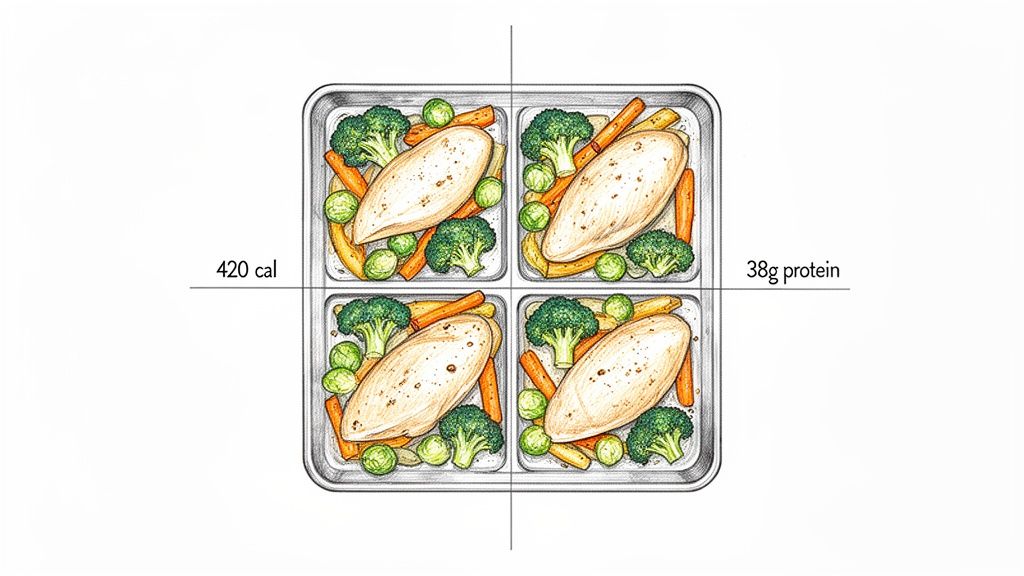
Sheet pan dinners are praised by busy professionals and nutrition coaches for their incredible efficiency and minimal cleanup. This method involves arranging a lean protein, an assortment of non-starchy vegetables, and a minimal amount of healthy fat onto a single sheet pan and baking it. The result is a complete, balanced meal that can be portioned out for several days, making it one of the most practical meal prep ideas for weight loss.
This approach is highly effective because it simplifies portion control and calorie management while maximizing flavor through roasting. Baking at high temperatures like 400-425°F (200-220°C) caramelizes vegetables and creates a delicious browning on proteins with very little added oil. This yields 4-6 complete, satisfying portions that are typically between 380-450 calories and packed with 30-40g of protein.
How to Implement Sheet Pan One-Pan Dinners
To create a week's worth of meals, you combine everything on one or two pans and bake. Season generously with herbs and spices for flavor without adding calories.
- Chicken & Root Veggies: Combine 4 x 150g chicken breasts with chopped broccoli, carrots, and bell peppers. Drizzle with 1 tsp of olive oil per portion. This combination comes to about 420 calories and 38g of protein per serving.
- Fish & Greens: Arrange 4 x 140g white fish fillets (like cod or tilapia) with zucchini, asparagus, and cherry tomatoes. A squeeze of lemon juice provides flavor for around 380 calories and 35g of protein.
- Turkey Patties & Cruciferous Veggies: Form 6 x 130g lean ground turkey patties and place them on a pan with Brussels sprouts and cauliflower florets for approximately 410 calories and 36g of protein per meal.
Pro Tip: Pat proteins completely dry before seasoning to encourage browning and prevent the vegetables from steaming. For the easiest cleanup, always line your sheet pan with parchment paper.
Accurately tracking calories is essential for achieving weight loss. You can discover how to calculate calories in your homemade food to tailor your sheet pan recipes to your specific energy needs. With BiteKit, a quick photo of the finished sheet pan allows you to log the ingredients once and apply it to your meals all week, ensuring tracking is fast and accurate.
10. Smoothie Prep Packs with Protein
Smoothie prep packs are a game-changer for anyone seeking fast, nutrient-dense meal prep ideas for weight loss. This method involves pre-portioning all dry and frozen smoothie ingredients into individual bags or containers. When you're ready for a meal, simply dump the contents into a blender, add your liquid of choice, and blend for a perfect, calorie-controlled meal or snack in under a minute.
This approach is especially effective for weight loss because it provides a high-protein, high-fiber meal with minimal effort, promoting satiety. A well-constructed smoothie can deliver 20-30 grams of protein, which is critical for preserving muscle mass during a caloric deficit and managing hunger. Its convenience makes it a powerful tool for preventing impulsive, unhealthy food choices when time is short.
How to Implement Smoothie Prep Packs
The key is to batch-prepare your packs for the week. This ensures consistency in portion sizes and macronutrients. For a week's worth of quick meals or snacks, assemble 5-7 individual packs.
- Green Berry Blast: In each bag, combine 150g of frozen mixed berries, 50g of spinach, and one 25g scoop of vanilla protein powder. When ready to blend, add 240ml of almond milk and 1 tbsp of almond butter. (Approx. 280 calories, 28g protein).
- Tropical Green Power: Combine 150g of frozen mango and pineapple, 40g of kale, a 25g scoop of vanilla protein, and 1 tbsp of chia seeds. Blend with 120ml of light coconut milk. (Approx. 310 calories, 26g protein).
- Chocolate Blueberry Delight: Mix one frozen banana, 100g of blueberries, a 25g scoop of chocolate protein powder, and 15g of almonds. Blend with 100g of plain Greek yogurt and a splash of water. (Approx. 290 calories, 30g protein).
Pro Tip: Freeze your fruit on a baking sheet for an hour before bagging it. This prevents the pieces from freezing into a solid, hard-to-blend clump. Always add your protein powder directly to the prep bag to save time and ensure precise measurement.
Logging these quick meals is just as simple. With BiteKit's text logging feature, you can quickly type a description like, "chocolate berry smoothie: protein powder, berries, milk, almond butter," and save it as a favorite meal. This allows you to track your intake accurately with just a few taps each day.
10 Meal-Prep Ideas for Weight Loss: Comparison
| Item | Implementation complexity | Resource requirements | Expected outcomes | Ideal use cases | Key advantages |
|---|---|---|---|---|---|
| Protein-Packed Bowl Prep | Moderate upfront (2–3 hr batch prep) | Refrigerator space, glass containers, basic kitchen tools | Balanced macros, 400–500 kcal meals, high satiety | Weekday lunches, macro tracking, weight-loss plans | High adherence, flexible customization, weekday time savings |
| Freezer-Friendly Breakfast Burritos | Moderate (assembly + freezing) | Freezer space, tortillas, freezer bags, microwave for reheating | 25–35g protein per burrito, grab-and-go breakfasts, long freezer life | Commuters, early workouts, busy mornings | Eliminates morning decisions, portable, very shelf-stable |
| Slow Cooker / Instant Pot Batch Cooking | Low hands-on, requires advance planning (4–8 hr cook) | Slow cooker/Instant Pot, freezer/refrigerator, basic pantry staples | 8–12 servings per batch, consistent macros, tender results | Family batch cooking, budget meal prep, set-and-forget prep | Economical, minimal active time, large yields |
| Lean Protein + Vegetable Snack Packs | Low (simple portioning) | Small containers, fridge space, prepared proteins/veggies | 150–200 kcal, 15–20g protein per pack, reduces cravings | Afternoon snacks, office days, on-the-go fueling | Prevents impulse snacking, portable, quick to log |
| Vegetable-Heavy Stir-Fry Prep Kits | Moderate (vegetable prep; cook fresh daily) | Stovetop/wok, pre-cut vegetables, sauce containers | 320–450 kcal meals, high vegetable volume, preserved texture | Dinner with high veg intake, volume-focused eating | High nutrient density, maintains crispness, fast cook time |
| Salad Jar Layering with Protein | Moderate (requires layering technique) | Mason jars, varied produce, fridge space | 400–500 kcal meals, 20–30g protein, 5-day stability | Work lunches, portable meals, fiber-focused plans | Extended freshness, portable, high-fiber and visually consistent |
| Egg Muffin Cups with Vegetables | Low–moderate (bake once, freeze) | Muffin tin, freezer, eggs and vegetables | 80–120 kcal per portion, 10–12g protein, long freezer life | Breakfasts, snacks, monthly batch prep | Exceptional freezer longevity, customizable, cost-effective |
| Zucchini Noodle & Shirataki Pasta Prep | Low (quick cook; moisture control needed) | Spiralizer or pre-made noodles, proteins, sauces | 250–350 kcal, low net carbs (8–12g), high-volume meals | Low-carb diets, pasta cravings, rapid initial weight loss | Low carbs, pasta-like satisfaction, high volume-to-calorie ratio |
| Sheet Pan One-Pan Dinners | Low–moderate (chop, arrange, bake) | Sheet pan, oven, fridge/freezer, basic seasonings | 380–450 kcal, 30–40g protein, 4–6 servings per pan | Family dinners, minimal-cleanup meal prep, busy cooks | Minimal cleanup, consistent macros, efficient batch portions |
| Smoothie Prep Packs with Protein | Low (bagging + blending) | Freezer, blender, protein powder, freezer bags | 200–300 kcal, 20–30g protein, rapid prep and consumption | Pre/post-workout, breakfast-skippers, on-the-go nutrition | Exceptional convenience, micronutrient boost, highly customizable |
Integrating Meal Prep and Effortless Tracking for Long-Term Success
Throughout this guide, we've explored ten distinct and powerful meal prep ideas for weight loss, moving far beyond generic advice to provide you with complete recipes, actionable plans, and the nutritional data you need to succeed. You now have a full toolkit of strategies, from the quick assembly of Protein-Packed Bowls and Salad Jars to the set-it-and-forget-it convenience of Slow Cooker Batch Cooking. The goal was to arm you with systems, not just recipes, so you can conquer your week with confidence, knowing a healthy, portion-controlled meal is always within reach.
However, the most meticulously prepped meal plan can only lead to sustainable weight loss if it's paired with consistent and accurate tracking. This is where the effort often breaks down. Manually entering every single ingredient of a complex recipe into a tracking app is tedious and a significant barrier to long-term adherence. This is precisely why bridging the gap between preparation and tracking is the final, crucial step to mastering your nutrition.
From Prep to Plate: Building Sustainable Systems
Think of the meal prep ideas we've covered not just as individual recipes, but as customizable systems you can adapt to your lifestyle. They can be grouped by the primary benefit they offer, allowing you to mix and match based on your weekly needs.
- Maximum Convenience System: For those extra-busy weeks, rely on Freezer-Friendly Breakfast Burritos, Smoothie Prep Packs, and Egg Muffin Cups. These are your grab-and-go solutions that prevent you from resorting to unhealthy, last-minute choices.
- Maximum Freshness System: When you crave fresh-cooked flavors, the Stir-Fry Prep Kits and Sheet Pan Dinners are your go-to. All the chopping is done, so a delicious, hot meal is only 15-20 minutes away, faster than ordering takeout.
- Maximum Variety System: Combine Zucchini Noodle Prep, Protein-Packed Bowls, and Salad Jars to keep your taste buds engaged. The base is prepped, but the final assembly allows for creative combinations, preventing flavor fatigue.
The common thread is proactivity. By investing a couple of hours on a Sunday, you are making a series of smart decisions for your future self. You're removing guesswork, controlling portions, and ensuring your nutritional targets are met. This proactive approach is a cornerstone of successful, long-term weight management, supported by research showing that planning meals is associated with a healthier diet and lower obesity rates.
The Missing Link: Effortless Tracking with BiteKit
Here is where the strategy comes full circle. You’ve done the prep; now you need a tracking method that honors that effort, rather than adding to it. This is where a tool like BiteKit becomes your indispensable partner. It's designed specifically to remove the friction associated with logging homemade, prepped meals.
Imagine you've just portioned out your Sheet Pan One-Pan Dinner with roasted chicken, broccoli, and sweet potatoes. Instead of typing each item into a database, you simply:
- Snap a photo of one portion with BiteKit.
- The app's AI visually recognizes the chicken, broccoli, and sweet potato, automatically populating your log with accurate calorie and macro estimates.
- You can then save this meal as a "Favorite" named "Sheet Pan Chicken Dinner."
The next time you eat this meal, logging it is a single tap. This turns a five-minute data-entry task into a five-second confirmation. For other prep styles, BiteKit offers similarly simple solutions.
- For Smoothie Packs: Use the voice logging feature. Simply say, "Logged one berry protein smoothie," and BiteKit records it.
- For Breakfast Burritos: Once logged the first time, save it as a "Favorite." Each morning, it’s just one tap to log your prepped breakfast.
- For Protein-Packed Bowls: The barcode scanner is perfect for quickly adding individual components you might use to top your bowl, like a specific brand of Greek yogurt or a pre-packaged sauce.
By making the act of tracking nearly effortless, you build the unbreakable consistency required for seeing real results. You're no longer just "on a diet"; you're building a seamless system where healthy eating and accurate tracking are integrated into your daily routine. This fusion of smart meal prep ideas for weight loss and even smarter technology is what transforms a short-term effort into a lifelong, healthy habit.