Tired Always Hungry? Reclaim Your Energy
Feeling tired always hungry? Discover the science behind this cycle, from hormones to diet. Get an actionable plan to reclaim energy & control cravings.
You eat lunch. For a little while, you feel fine. Then mid-afternoon hits and everything changes.
Your eyelids get heavy. Your focus slips. You start thinking about something crunchy, sweet, salty, or all three. You might even wonder, "How am I hungry again? I just ate." If this sounds familiar, you're not lazy, weak, or failing at nutrition. When people feel tired always hungry, there's usually a real body-level reason behind it.
That reason often sits at the intersection of sleep, blood sugar, stress, meal balance, and sometimes hidden nutrition issues. Your body isn't trying to sabotage you. It's sending signals. The problem is that those signals can get noisy, mixed up, or exaggerated.
A lot of people respond by blaming calories alone. Others try to use more caffeine, more discipline, or stricter food rules. Usually that backfires. When your brain and body think energy is unstable, hunger gets louder.
Let's make this simpler. If you understand why the cycle happens, you can start interrupting it with a few targeted changes instead of guessing.
The 3 PM Crash Why You Feel Tired and Hungry
By 3 PM, many people feel like a different version of themselves.
The morning person who answered emails quickly is now staring at the screen. The healthy lunch they thought would "be good" somehow didn't last. They start roaming the kitchen, office snack drawer, or delivery app. They want food, but what they really want is relief.
That afternoon crash can feel random, but it usually isn't. Sometimes it's a short night of sleep catching up with you. Sometimes it's a lunch that digested too fast. Sometimes it's hard training, poor recovery, or a day of under-eating earlier and over-snacking later. If you train regularly, some of what feels like extreme hunger and fatigue can overlap with glycogen depletion symptoms, especially after intense workouts or long gaps between meals.
A lot of people also underestimate how much sleep debt shapes appetite. If you've been shaving time off your sleep night after night, a simple tool like a sleep debt calculator can help you see why your body feels like it's running on emergency power.
You don't need more shame. You need a better explanation for what your body is asking for.
What this crash usually feels like
- Mental fog: You reread the same sentence and can't stay locked in.
- Sudden food urgency: Hunger feels intense, even if lunch wasn't that long ago.
- Cravings over logic: Chips, sweets, pastries, and fast carbs sound far better than a balanced meal.
- Low motivation: Cooking, training, or even basic tasks feel harder than they should.
When this happens often, people assume they need more willpower. Most of the time, they need more stability. Hunger and fatigue are both regulation signals. When they show up together, your body is often telling you that something about energy supply, appetite control, or recovery isn't working smoothly.
The Science Behind the Tired and Hungry Brain
Your brain has a control room for appetite and energy. When things are running well, it gets clear information. It knows when you've eaten enough, when you're rested enough, and when to keep cravings in check.
When sleep gets cut short, that control room gets messy.
A summary from GoodRx on why sleep loss can make you hungry explains that insufficient sleep raises ghrelin by 15-30% and lowers leptin, while also impairing the prefrontal cortex and increasing preference for high-fat, high-calorie foods by about 40%. It also raises cortisol, which can amplify hunger signals and keep the cycle going.
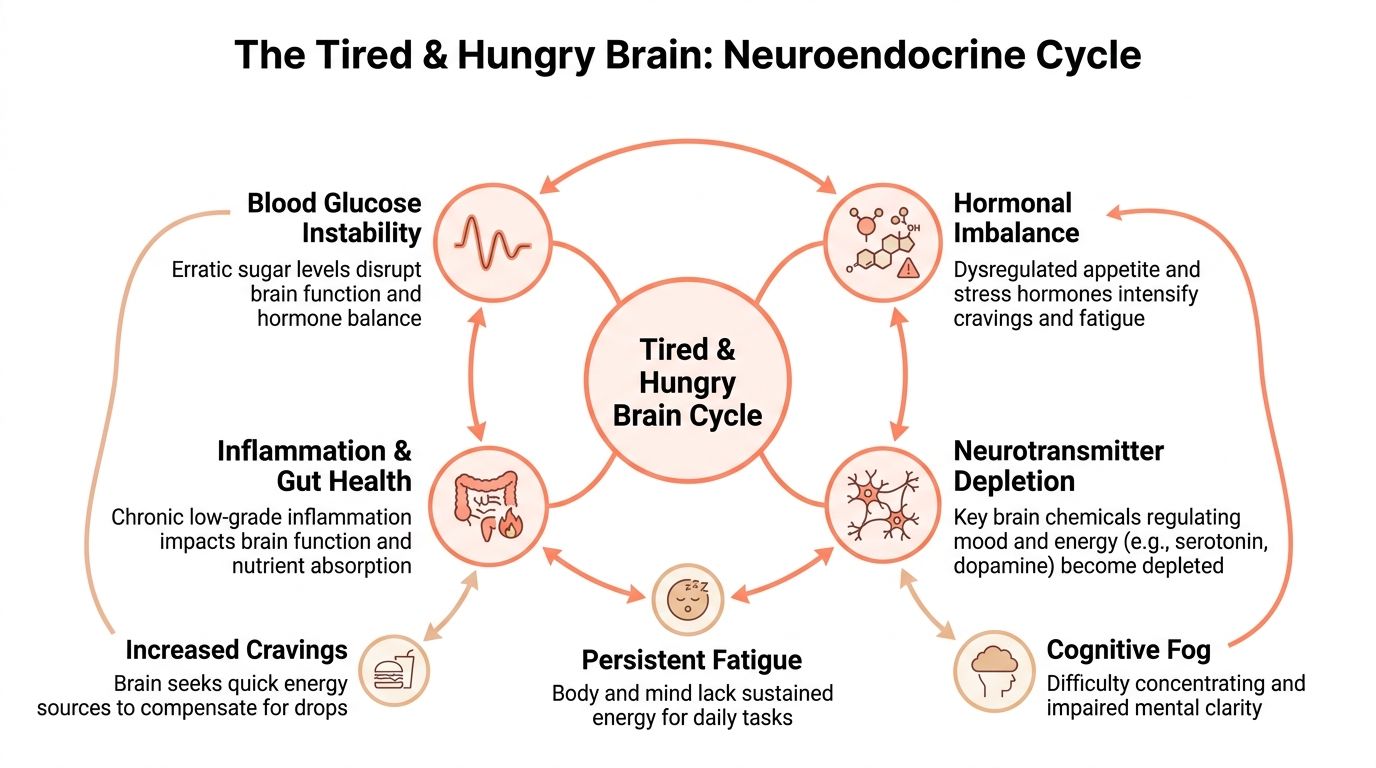
Ghrelin and leptin in plain language
Think of ghrelin as the gas pedal for hunger. It tells you to seek food.
Think of leptin as the brake. It tells your brain, "We've had enough. You can stop now."
After poor sleep, the gas pedal gets pushed harder while the brake gets weaker. That's why tired hunger can feel so different from ordinary mealtime hunger. It often feels louder, faster, and much more specific. You don't want just any food. You want rewarding food.
Your brain's decision-maker gets tired too
The prefrontal cortex helps with planning, impulse control, and choosing long-term goals over short-term comfort. When you're sleep-deprived, that part of the brain doesn't perform as well.
An analogy can be drawn to an overworked manager at the end of a long shift. Normally, that manager approves balanced choices. After too little sleep, the manager is slower, less organized, and more likely to say yes to whatever solves the problem quickest.
That doesn't mean you're broken. It means your decision-making system is operating with less support.
Practical rule: If evening cravings feel much stronger after a poor night's sleep, treat that as biology, not a character flaw.
One short night can change how hungry you feel
A crossover study published in Nutrients found that even one night of moderate sleep curtailment in women increased tiredness from 24.8 to 58.5 and hunger from 53.7 to 60.8 on a 100-point scale after time in bed was reduced by 33%, from 8.19 hours to 5.45 hours. Participants also reported more cravings and selected larger portions, according to the 2019 study in Nutrients.
Many readers often get confused at this point. They think, "If I'm hungry, I must need food." Sometimes yes. But sometimes your brain is reacting to lost sleep by turning up appetite and turning down restraint.
Why fatigue and hunger often travel together
Sleep loss doesn't just make you sleepy. It also changes stress signals and reward signals. Cortisol rises. Cravings get louder. Foods that promise quick relief become more appealing.
That creates a loop:
- Less sleep makes hunger signals louder
- Louder hunger nudges you toward quick-energy foods
- Quick-energy foods can leave you less stable later
- Less stability can make sleep and appetite harder to regulate the next day
Once you see the loop, the pattern becomes less mysterious. You stop asking, "Why am I so bad at this?" and start asking, "Which signal got thrown off first?"
How Your Diet Fuels the Fatigue-Hunger Cycle
Sleep is one side of the puzzle. Food is the other side.
A lot of meals that look normal on paper can still set you up for an energy crash. The usual culprit is the blood sugar rollercoaster. You eat a meal that's heavy in refined carbs or light on protein and fiber. Blood sugar rises quickly. Insulin responds. Then energy drops fast and your body starts asking for more food.
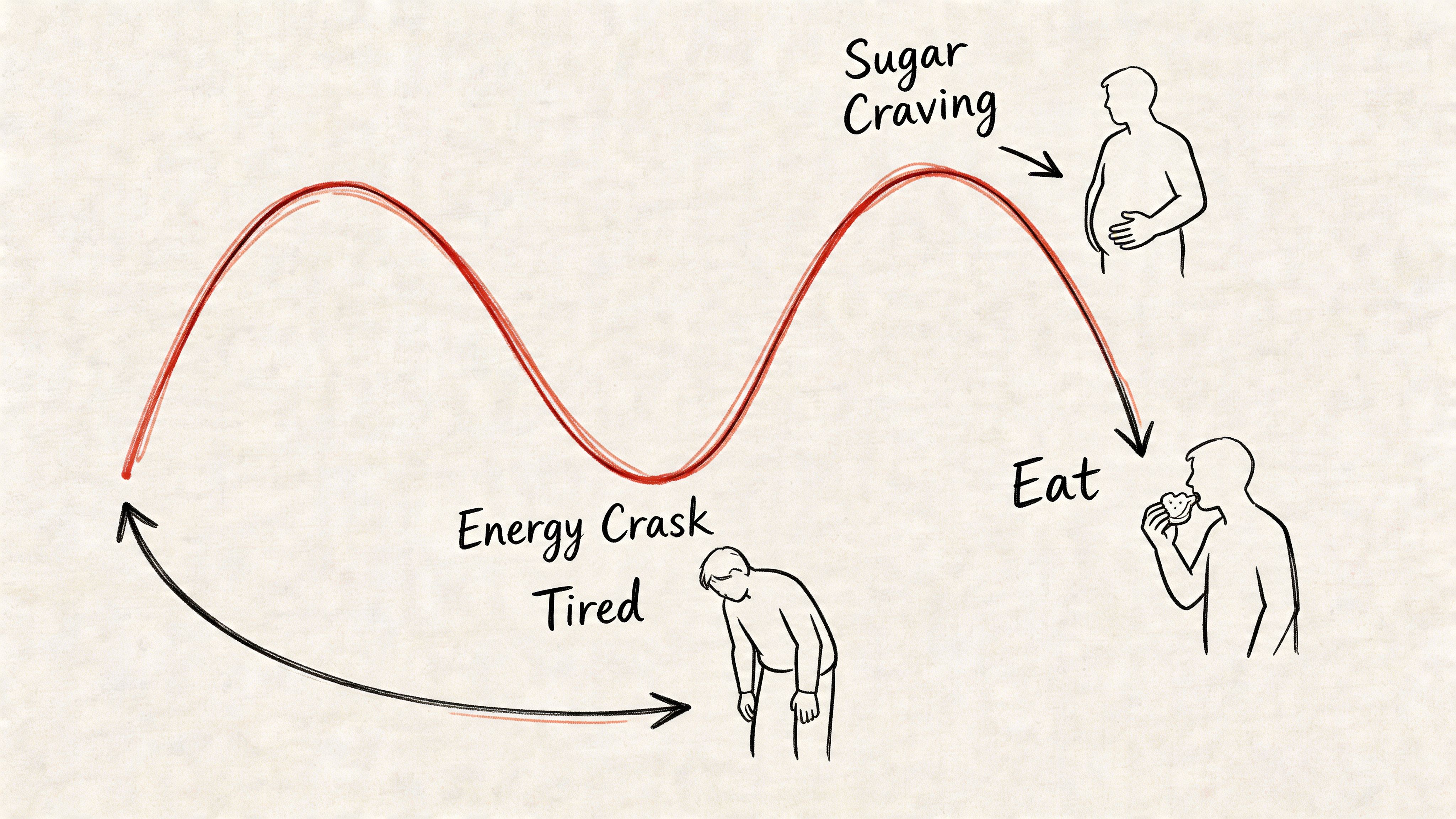
The result can feel confusing because you've eaten enough volume, maybe even enough calories, but you still feel tired and hungry soon after.
The blood sugar rollercoaster
According to Pearland Healthcare's explanation of tiredness and hunger after meals, meals high in refined carbs can cause blood glucose to spike and then crash 60-90 minutes later, which can trigger both hunger hormone release and drowsiness. The same source notes that meals low in adequate protein and fiber can digest too quickly, leaving you without sustained satiety. It also references a daily fiber range of 25-38g.
That means lunch can look like this:
- Pasta or white rice with not much protein
- A sandwich on refined bread without much fiber
- A pastry and coffee that felt fast and convenient
- A smoothie that was mostly fruit and not very filling
At first, these meals may feel energizing because they give quick fuel. But quick fuel doesn't always mean steady fuel.
Why a meal can make you sleepy
Part of the crash is blood sugar. Part of it is digestion. Large meals can also leave you feeling sluggish because your body shifts attention toward processing what you just ate.
The bigger issue, though, is balance. A meal without enough protein, fiber, and healthy fat is like building a fire with paper. It flares up, then disappears.
A more stable meal burns like wood. It releases energy more gradually and keeps you fuller longer.
Here's a useful visual explanation before we go deeper:
What steadier meals tend to include
You don't need perfect eating. You need meals that digest at a calmer pace.
- Protein first: Eggs, Greek yogurt, chicken, fish, tofu, beans, cottage cheese, or lentils help slow the meal down.
- Fiber support: Vegetables, fruit, beans, oats, and whole grains help stretch out energy release.
- Fat for staying power: Nuts, seeds, avocado, olive oil, and fatty fish can improve satiety.
- Smarter carb structure: Carbs aren't the enemy. Refined carbs by themselves are just more likely to create that spike-then-drop pattern.
A good test is simple. If a meal leaves you sleepy and scavenging for snacks soon after, it probably wasn't balanced enough for your body.
Why calories alone don't explain this
People often say, "But I ate enough." That's possible. Yet the body responds not only to total intake, but also to timing, composition, and how fast that meal is absorbed.
So yes, you can eat lunch and still feel tired always hungry later if your meal gave you a fast rise, a fast fall, and weak satiety signals. That's not a motivation issue. That's a meal-design issue.
Uncovering Hidden Causes Like Deficiencies and Intolerances
You eat lunch. It seems filling enough. An hour or two later, your energy sinks, your focus gets fuzzy, and you start hunting for something sweet or salty. If that pattern keeps repeating even after you have improved sleep and built more balanced meals, calories may not be the full story.
A body can be fed and still be undernourished in specific ways.
One reason is micronutrient gaps. Iron helps carry oxygen. B12 supports nerve function and red blood cell production. Vitamin D affects mood, immunity, and muscle function. Magnesium helps with energy production, blood sugar regulation, and muscle relaxation. If your usual meals miss one or more of these for long enough, the result can feel vague but frustrating. Low energy, poor recovery, brain fog, and appetite that never feels fully settled.
This is one place where tracking becomes more useful than guessing. If you tend to rotate the same breakfasts, lunches, and snacks, patterns show up fast. An AI micronutrient gap analyzer can help you review your usual intake and spot repeated weak areas, instead of relying on memory or broad advice like "eat healthier."
Food intolerances can create a different kind of confusion. Some foods do not cause a classic allergy, but they still leave certain people bloated, uncomfortable, foggy, or wiped out. That stress can blur your hunger cues. You may read the aftermath as "I need more food," when the bigger issue is that the meal did not sit well in your system.
A simple way to picture it is this. Hunger from true fuel needs is like a gas tank getting low. Hunger that shows up after an irritating or poorly tolerated meal can act more like a dashboard warning light. Both get your attention, but they do not point to the same problem.
Renown's discussion of chronic exhaustion causes notes that hidden food sensitivities can contribute to ongoing fatigue in some people. That does not mean you need to remove gluten, dairy, or anything else on suspicion alone. It means repeated reactions are worth observing carefully.
A few clues can justify a closer look:
- Your meals seem adequate, but your energy never feels steady
- The same foods or meals keep leading to a crash
- Fatigue comes with bloating, stomach discomfort, or brain fog
- Hunger feels urgent soon after eating, even after a substantial meal
- Basic fixes helped somewhat, but the pattern keeps returning
The goal is not to become fearful of food. The goal is to collect evidence.
Start with one repeating problem. Maybe it is the sandwich lunch that leaves you sleepy, or the afternoon yogurt snack that somehow makes you hungrier. Log the meal, the time, your symptoms, and what happened over the next two to three hours. Tools like BiteKit are useful here because they help connect symptoms with food patterns over time, which is much harder to do from memory alone.
If your notes suggest recurring fatigue, digestive symptoms, or possible nutrient shortfalls, it can also help to read more about how to cure chronic fatigue by fixing its root causes. That kind of root-cause approach fits this stage well. You are not chasing random fixes. You are narrowing down what your body may be reacting to or missing.
Your Action Plan for Stable Energy and Appetite Control
When tiredness and hunger team up, you need a plan that supports both. You'll often find better results by working on meal structure, sleep protection, and daily rhythm at the same time.
A University of Chicago study summarized by Vice's report on sleep loss and munchies found that restricting sleep from 8.5 to 4.5 hours led participants to eat an average of 559 extra calories per day, mostly from late-night, high-carb snacks. That tells us something important. If you only try to "eat less" while ignoring fatigue, you're fighting biology uphill.
Start with the PFF rule
The simplest meal rule is PFF, which means protein, fat, fiber.
You don't need to calculate everything perfectly. Just build your meals around those three anchors first, then add carbs in a way that works for your activity level and appetite.
Why this works
- Protein helps with satiety and steadier energy
- Fat slows digestion and adds staying power
- Fiber helps stretch fullness and improve meal stability
If your lunch is mostly carbs, your afternoon often pays for it. If your lunch contains all three anchors, your odds of staying alert improve.
A simple meal template
Here is a practical structure you can use and repeat.
| Meal | Protein Source (20-30g) | Healthy Fat Source | Fiber/Complex Carb Source | Example |
|---|---|---|---|---|
| Breakfast | Greek yogurt, eggs, cottage cheese, tofu | Nuts, seeds, avocado | Berries, oats, whole grain toast | Greek yogurt with berries, chia, and oats |
| Lunch | Chicken, tuna, lentils, turkey, tempeh | Olive oil, avocado, tahini | Brown rice, quinoa, beans, vegetables | Chicken bowl with quinoa, roasted vegetables, and olive oil |
| Snack | Protein shake, edamame, boiled eggs, yogurt | Nut butter, nuts, seeds | Apple, carrots, crackers with fiber | Apple with Greek yogurt or peanut butter |
| Dinner | Salmon, lean beef, tofu, shrimp, beans | Olive oil, avocado, pesto | Sweet potato, lentils, vegetables | Salmon with sweet potato and broccoli |
If your afternoons are rough, change lunch first
You don't need to overhaul your whole diet in one day. Most readers get the biggest payoff by fixing the meal before the crash happens.
Try this decision filter at lunch:
- If the meal is mostly beige and fast-digesting, add protein and vegetables.
- If the meal is light but not filling, increase protein or add a fat source.
- If you rely on coffee and a pastry, turn that into coffee plus a real meal or snack with structure.
- If training leaves you flat later, include enough carbs, but don't let them stand alone.
Lunch should carry you, not knock you out.
Build snacks that prevent panic eating
Snacks work best when they act as bridges, not entertainment. A strong snack usually combines at least two of the three anchors.
Examples that often work well:
- Greek yogurt with fruit
- Apple with peanut butter
- Cottage cheese with berries
- Boiled eggs with crackers and carrots
- Edamame with fruit
- A protein shake plus nuts
A weak snack is mostly quick sugar. It may give relief, but often not for long.
Protect sleep like it's part of your nutrition plan
If you're serious about appetite control, sleep isn't optional. It's part of the strategy.
You don't need a flawless bedtime routine. You do need consistency.
Helpful sleep supports
- Keep a regular sleep window: Going to bed and waking up at similar times helps your body anticipate rest.
- Get morning light: Light early in the day helps regulate your body clock.
- Stop treating late-night hunger as a mystery every time: Sometimes it's true hunger. Sometimes it's sleep loss and overstimulation.
- Create a softer landing at night: Dim lights, reduce mental input, and give yourself a calmer final hour.
If fatigue has been going on for a long time, broader recovery work can matter too. This guide on how to cure chronic fatigue by fixing its root causes offers a useful root-cause lens that fits well with a nutrition-first approach.
Watch your stress signals
Stress doesn't just affect mood. It changes food decisions.
When you're tense, rushed, or mentally overloaded, eating gets more reactive. You may skip meals, eat too fast, or chase energy with sugar and caffeine. Later, that often shows up as the exact tired-and-hungry state you're trying to avoid.
A few low-friction tools help:
- Walk after meals if you can
- Eat sitting down instead of while multitasking
- Pause before the second coffee and ask whether you're underfed
- Notice your crash window and plan ahead for it
A realistic day of steadier eating
This isn't a rigid plan. It's an example of how stability can look.
Morning
Breakfast with eggs and whole grain toast, plus fruit and avocado. Coffee alongside food, not instead of food.
Midday
Lunch with a clear protein source, vegetables, a complex carb, and some fat. Think salmon with rice and greens, or lentils with roasted vegetables and tahini.
Afternoon
A planned snack before the crash gets dramatic. Something like yogurt and berries, or an apple with nut butter.
Evening
Dinner that's satisfying enough that you don't end the night prowling for random snacks.
What to expect when you make changes
You may not feel different overnight. But many people notice patterns quickly once they stop swinging between under-fueling and chasing fast relief.
Look for these signs:
- Hunger feels calmer instead of urgent
- Cravings become more specific and less chaotic
- The afternoon slump softens
- Evening snacking feels less automatic
- Workouts and recovery feel more predictable
The point isn't to eat perfectly. The point is to make your body feel safe enough that it stops sounding the alarm all afternoon.
Become Your Own Nutrition Detective with Smart Tracking
You eat lunch, get back to work, and by mid-afternoon you are tired, hungry, and wondering what went wrong. The hard part is that the trigger is often not obvious in the moment. A meal can look fine on paper and still set up a crash because of timing, low protein, a missing nutrient, poor sleep the night before, or a food that does not sit well with you.
That is why tracking helps. The goal is not to create a perfect diary. The goal is to collect clues.
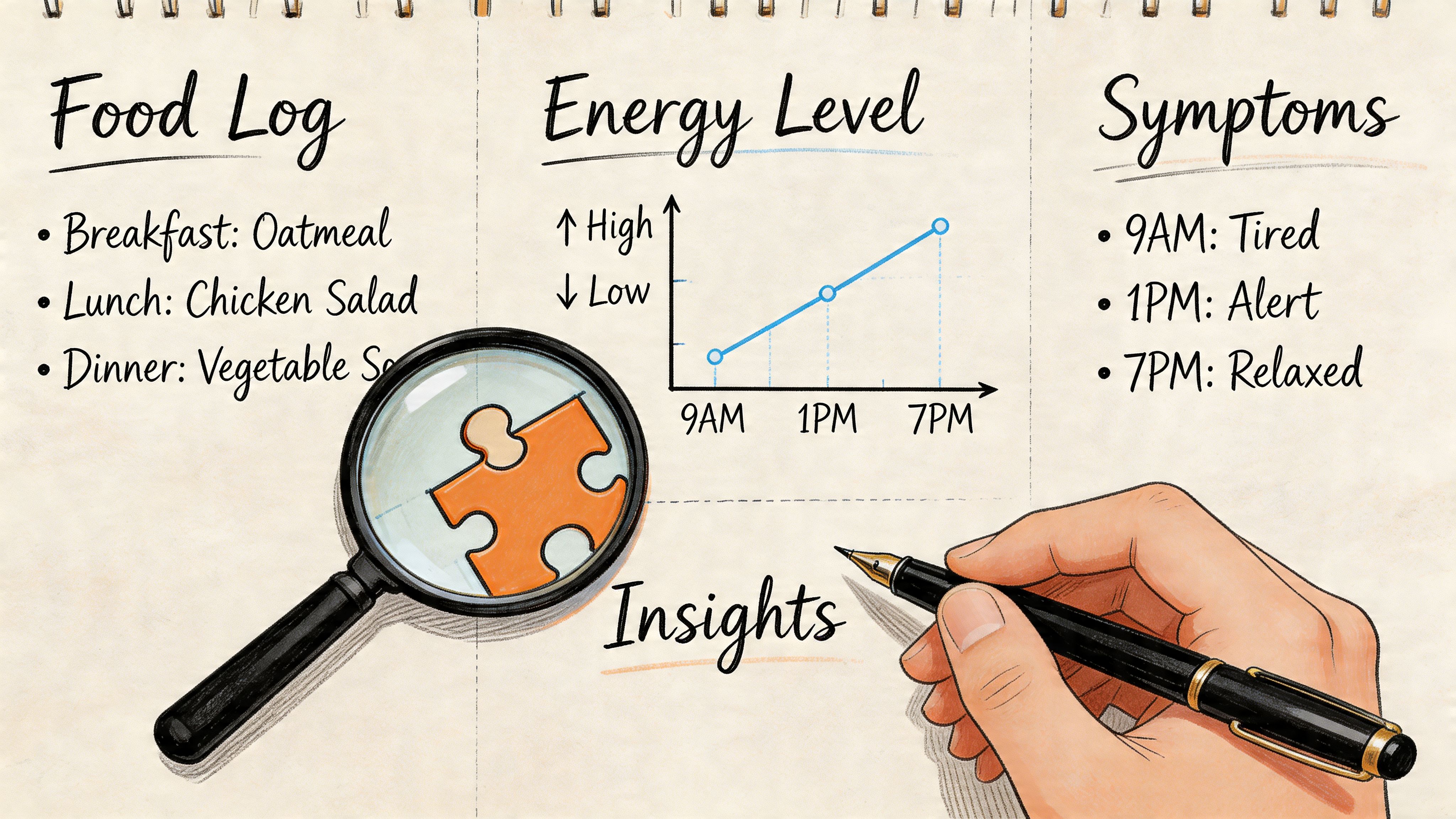
What smart tracking can reveal
Your body leaves patterns, but they are easy to miss when every day feels busy and slightly blurred together. Once meals, symptoms, and timing are written down in one place, the pattern often stops looking random.
You may notice that the 3 PM crash shows up after lunches with very little protein. Or that hunger feels unusually strong the day after short sleep. Or that a certain food keeps showing up before bloating, brain fog, or heavy fatigue. Those details matter because they help you separate a general problem from your specific problem.
This is also where modern tools can be more useful than generic food logs. An AI nutrition coach such as BiteKit can help you spot repeats you would probably miss on your own, such as a stretch of low iron-rich foods, a fiber drop on busy weekdays, or a possible intolerance pattern linked to energy dips and digestive symptoms. Many articles stop at "track your meals." A better approach is to use tracking to investigate cause and effect.
How to track without making life harder
Tracking only works if you can keep doing it.
Long searches, barcode scanning, and building every recipe from scratch wear people out fast. A simpler system is to log meals by photo, voice, or a short plain-language note, then add a few symptom tags. If you want a practical example, this guide to an easy food tracking app shows how low-friction logging can fit into a normal week.
If you use a medication that affects appetite or energy, include that in your notes too. For example, changing meal size, nausea, or unusual tiredness can change your pattern enough to confuse the picture. This article on Does Mounjaro Make You Tired? explains why that question comes up for some people.
What to log besides food
Food is one clue. The full pattern usually needs a few more.
Track these for a week:
- Sleep quality: rested, broken, short, or poor
- Meal timing: especially long gaps between meals
- Energy dips: what time the crash starts
- Hunger type: gentle hunger, urgent hunger, cravings, shakiness
- Digestive response: bloating, reflux, heaviness, urgency, or no symptoms
- Context: workout day, high stress day, travel, alcohol, or medication changes
Hormones and blood sugar work a bit like a thermostat and a fuel gauge together. If your meals are inconsistent, the thermostat keeps overcorrecting and the fuel gauge keeps flashing low. Logging helps you see what happened before the alarm went off.
A more useful question is not "What is the perfect diet?" It is "What keeps happening before I get tired and hungry?"
A simple detective method
Try a one-week experiment.
-
Log meals close to real time
A fast note right after eating is better than guessing later. -
Add one energy rating each afternoon
Use simple words such as steady, foggy, sleepy, jittery, or crashed. -
Mark any digestive symptoms
This helps you tell the difference between a blood sugar issue and a possible food reaction. -
Review for repeats after seven days
Look for combinations, not single events. Poor sleep plus pastry breakfast. Long meeting plus skipped lunch. Yogurt plus bloating. Salad lunch plus intense hunger an hour later. -
Test one change at a time
Add protein at breakfast. Move lunch earlier. Swap one suspected trigger food. Keep the experiment small so the result is clear.
Why this matters more than generic advice
Two people can both say, "I get tired after lunch," and have completely different reasons.
One person may be under-eating earlier in the day. Another may be missing key nutrients often enough to feel run down. Another may be reacting to a food that creates inflammation or digestive stress. Smart tracking gives you control because it turns vague frustration into something you can examine, test, and improve.
Taking the Next Step When to See a Doctor
You clean up breakfast, stop skipping lunch, get more sleep, and still hit the same wall by afternoon. You are tired, hungry, maybe shaky or foggy, and it keeps happening even when you are trying to do the right things.
That is a good point to stop guessing.
As noted earlier, even short-term sleep loss can push hunger and fatigue higher. If that wired-and-drained feeling keeps showing up after you have worked on the basics, a clinician can help check whether something deeper is driving it.
Signs it's worth booking an appointment
Book a visit if the pattern feels persistent, intense, or hard to explain, especially if you notice any of these:
- Fatigue that lingers: sleep or rest does not bring you back to normal
- Hunger that feels out of proportion: you eat enough, but still feel ravenous soon after
- Weight changes you cannot explain: up or down without a clear shift in habits
- Extra symptoms: dizziness, shakiness, headaches, hair shedding, shortness of breath, digestive changes, or unusual weakness
- Repeated crashes after meals: especially if you feel sleepy, jittery, sweaty, or unfocused
These clues do not automatically mean something serious. They do mean your body may need more than generic advice.
Medication and treatment changes can matter too
Food is not always the whole story. Appetite, digestion, blood sugar, and energy can all shift after starting a new medication, changing a dose, or using a weight-loss treatment. If that sounds familiar, a practical read like Does Mounjaro Make You Tired? can help you prepare better questions for your prescriber.
What to bring to the appointment
A short record can make a doctor visit much more useful. It turns "I feel off" into a clearer pattern.
Bring notes on:
- what time the fatigue usually hits
- how long the hunger lasts
- what you ate before the crash
- whether poor sleep makes the pattern worse
- any bloating, stomach pain, nausea, or bowel changes
- recent medication or supplement changes
Smart tracking becomes more than a habit. It becomes evidence. An AI nutrition coach like BiteKit can help you log meals, symptoms, and timing in real life, then review the pattern for possible triggers such as low protein intake, missed meals, micronutrient gaps, or repeat reactions to certain foods. That gives your clinician a more useful starting point than memory alone.
Doctors may then look into possibilities such as iron deficiency, low B12, thyroid problems, glucose regulation issues, sleep disorders, or food intolerance patterns. The goal is not to label every symptom. The goal is to rule out what needs treatment and identify what you can change.
Feeling tired and hungry all the time is common. Living with it without answers does not have to be.