Your AI Nutrition Coach: The Future of Food Tracking
Discover what an AI nutrition coach is, how the tech works, and how to pick the right one. Effortlessly track calories and macros for your fitness goals.
You open a calorie app with good intentions. Breakfast takes three searches because the brand name isn’t listed. Lunch is a homemade bowl, so now you’re guessing portion sizes. Dinner happens late, you’re tired, and the idea of typing every ingredient feels worse than the meal itself. That’s where most nutrition tracking breaks down. Not because people don’t care, but because the process asks for too much attention at the exact moment they have the least to give.
An ai nutrition coach tries to solve that friction problem first. Instead of forcing you to become a part-time data entry clerk, it turns logging into something closer to a quick conversation or a photo. That sounds small, but it matters. When tracking feels easier, people stick with it longer, notice patterns faster, and make better decisions with less effort.
The End of Tedious Food Logging
The friction of manual tracking shows up in ordinary moments. You are standing in line for coffee, eating a mixed lunch between meetings, or cleaning up dinner while trying to get on with your evening. A basic food log turns each of those moments into clerical work. Search the database. Pick the closest match. Guess the amount. Repeat tomorrow.

That workload matters because consistency matters more than perfection. A tracking method can be accurate on paper and still fail in real life if it asks for too many tiny decisions at the worst possible time. It is the same reason people stop budgeting when every purchase needs five categories. The problem is not motivation alone. The system has too much drag.
Why the old method wears people down
Traditional food logging asks one person to play four roles in rapid succession:
- Searcher: hunt for the closest food match in a crowded database
- Estimator: judge portion size from memory, packaging, or a quick glance
- Translator: turn a real meal into calories, protein, carbs, and fat
- Record keeper: do the same routine every day, even when life is messy
Each step sounds small. Together, they create enough friction to break the habit.
That is why an ai nutrition coach feels different. It works like a smart assistant that handles the repetitive sorting and math, so you can focus on the decision itself. You describe the meal in plain language, snap a photo, or use voice input. The app does the first draft.
There is another benefit many guides skip. Privacy. Typing every snack and meal into a generic app can feel oddly exposed, especially if you are sharing devices, using public screens, or worried about where your health data goes. A better system reduces input friction and makes it easier to choose a tool with clear controls around storage, permissions, and account settings. Convenience matters. So does knowing who can access your eating data.
Practical rule: The best tracking system is the one you can keep using on a busy Wednesday.
For many people, easier logging is what makes habit building finally stick. If you have ever abandoned tracking because it felt like homework, a simpler setup can help. This guide to an easy food tracking app shows what that lower-friction experience can look like in practice. And if your goal is broader than calorie counting, an AI coach can support a more personalised nutrition plan while still leaving room for advice from a dietitian or clinician when your needs are more complex.
What Exactly Is an AI Nutrition Coach
An ai nutrition coach is not just a food diary with a smarter search bar. It’s closer to a digital assistant for nutrition habits. You give it a meal in a natural format, and it helps turn that input into something useful. Calories, macros, meal patterns, and feedback against your goals.
An AI nutrition coach functions as a helpful nutrition assistant beside you during the day. Not a clinician. Not a replacement for a dietitian. More like someone who handles the repetitive busywork so you can focus on choices and routines.
What it actually does
A good ai nutrition coach usually combines a few core jobs:
- Logs meals quickly: It accepts photos, voice, or plain text instead of relying only on barcode scans and database searches.
- Translates meals into nutrition data: It estimates what’s on the plate, how much there is, and how that fits your goals.
- Shows progress in real time: You can see whether your protein, carbs, fat, or calories are on track while the day is still happening.
- Finds patterns over time: It helps you notice repeated habits, like low protein at breakfast or late-night snacking after stressful workdays.
That last part is where many people get confused. They assume the value is just faster logging. Speed matters, but pattern recognition matters more. A single meal entry tells you very little. A month of low-friction entries can show trends you’d never catch from memory alone.
Why this matters more than another meal plan
Many people don’t need more nutrition advice in theory. They already know the basics. Eat more protein, get enough fiber, stop relying on random snacks, and be more consistent on weekends. The hard part is turning that knowledge into something repeatable.
That’s why a tool can be useful even if you already have a personalised nutrition plan. A plan tells you what to aim for. An ai nutrition coach helps you follow it in daily life when breakfast changes, lunch is rushed, and dinner isn’t perfectly measured.
The real value isn’t perfect nutrition math. It’s reducing the gap between intention and action.
A simple example helps. If you type “grilled chicken wrap and yogurt,” a basic tracker might force you into separate searches and rough guesses. An ai nutrition coach tries to understand that as a real meal, estimate it more smoothly, and place it in the context of your day. That’s the shift. Less database work. More practical guidance.
How AI Makes Meal Tracking Effortless
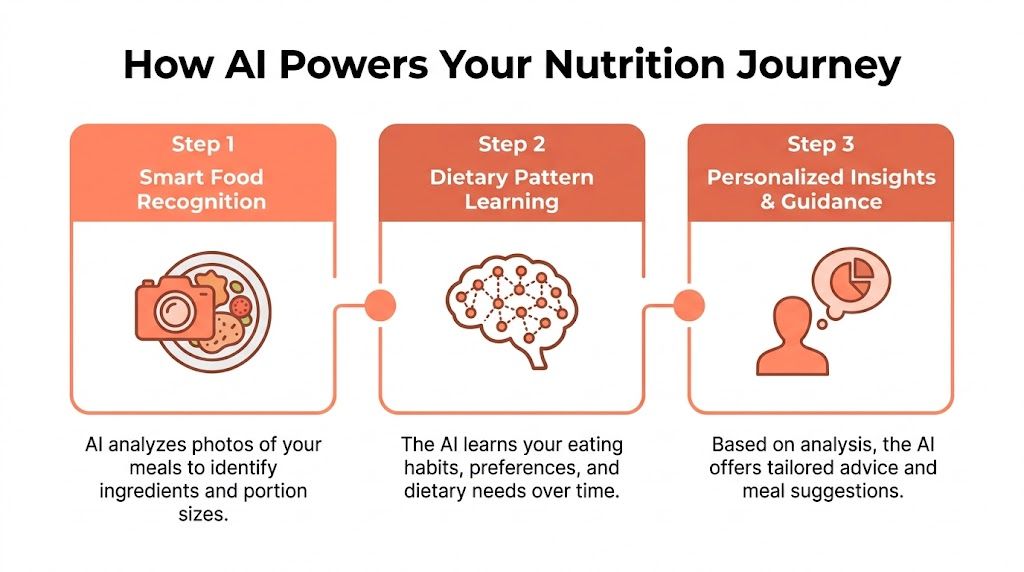
The “magic” of an ai nutrition coach usually comes from three technical layers working together. You don’t need to understand the code to use it well, but knowing the basics helps you judge whether a tool is useful or just dressed up with AI branding.
Computer vision for photo logging
Photo logging is often the first feature noticed. You point your phone at a plate, and the app identifies foods and estimates portions. The easiest analogy is “Shazam for meals.” Instead of recognizing a song from audio, it recognizes food from an image.
According to Fitia’s overview of AI nutrition apps, photo-based meal analysis can identify foods and estimate portion sizes with 85% to 95% accuracy for common dishes. That matters because mixed meals are where manual tracking usually becomes tedious.
A salad with chicken, rice, dressing, and avocado is annoying to log by hand. A photo-based system tries to break that plate into parts and estimate each one much faster.
Natural language for voice and text
The second layer is natural language processing, often shortened to NLP. This is what lets an app understand normal human phrasing instead of forcing exact database keywords.
You might say:
- “200g chicken and two apples”
- “Greek yogurt with berries”
- “Salmon, quinoa, and broccoli”
- “Coffee with milk and sugar”
A rigid tracker often struggles with that kind of input. An ai nutrition coach uses language models to interpret what you meant, not just match exact words. Fitia’s summary also notes that multi-modal input using NLP can parse voice and text commands with over 92% intent accuracy in these systems.
That phrase, “intent accuracy,” can sound abstract. In plain language, it means the app is better at understanding what you were trying to log.
If a tracker only works when you speak like a database, it isn’t saving you much time.
For people who are busy, voice input is especially useful. Talking into your phone after a meal is often more realistic than hunting through menus and dropdowns.
If you want a closer look at how image-based logging works in practice, this guide to a photo calorie counter shows why visual input feels so much faster than manual entry.
Nutrition databases and context
The third layer is the least visible but arguably the most important. Once the app identifies the food, it has to match that input to a nutrition database and calculate calories and macros in a way that stays coherent across the day.
Here’s the simplified flow:
| Step | What happens |
|---|---|
| Meal captured | You snap, speak, or type your meal |
| Food interpreted | The system identifies likely foods and portions |
| Nutrition calculated | It matches the meal to verified nutrition data |
| Daily totals updated | Your calories and macros adjust instantly |
This is also where context starts to matter. “Salmon” isn’t just salmon. Portion size, cooking method, and what came with it all change the result. Better systems don’t just detect objects. They connect your input to real nutrition records and update your totals in a format you can act on.
That’s what makes the experience feel effortless. Not because the system is simple, but because it hides complexity instead of pushing it onto you.
Benefits of Using an AI Nutrition Coach
An ai nutrition coach earns its place by making the healthy choice easier to repeat on an ordinary Tuesday. That matters more than fancy features. If logging feels quick and low-effort, people are far more likely to keep using it after the first burst of motivation wears off.
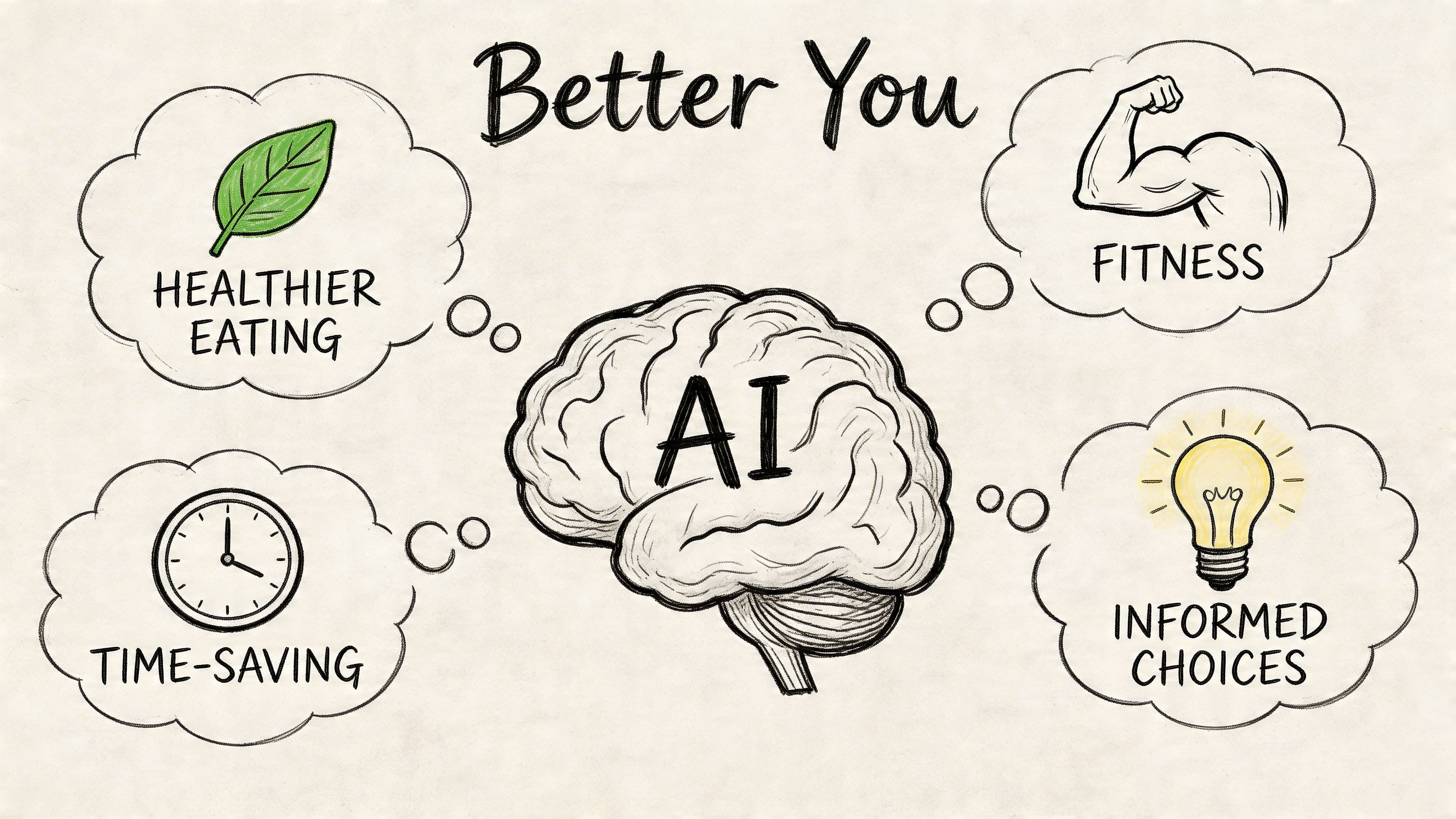
The practical benefit is simple. You spend less energy recording meals and more energy noticing patterns.
That shift is bigger than it sounds. Manual tracking often fails for the same reason handwritten budgeting fails. The math is not the hardest part. The repeated effort is. An ai coach reduces that day-to-day friction, so the habit has a better chance of surviving work stress, travel, takeout, and the meals you forget to plan.
Consistency is what changes outcomes
Nutrition progress usually comes from repeated, boring actions done well enough over time. A perfect week followed by ten days of silence is not very useful. A decent log that you can maintain for months is far more valuable.
That is why easier tracking often improves more than food awareness alone. Once people stop treating logging as a chore, they tend to stay engaged with the rest of their routine too. The benefit is behavioral. Less resistance at one step makes the whole system easier to keep running.
Better visibility leads to better decisions
A coach is only helpful if it shows you what is happening. Many people are not struggling with effort. They are struggling with blind spots. Cooking oils, dressings, liquid calories, snacks grabbed between meetings, and oversized portions can blur the picture quickly.
An ai nutrition coach clears some of that fog by capturing more of real life with less manual cleanup. It works like autopay for your nutrition data. You still need to review what happened, but you no longer have to rebuild the whole record from memory later.
That can help in very practical ways:
- For fat loss: you can spot calorie-heavy habits that look harmless in the moment
- For muscle gain: you can catch low-protein weekdays before they become a weekly pattern
- For general health: you can see whether weekends keep undoing your weekday routine
This walkthrough shows how behavior and tracking fit together in practice:
The best tools remove friction without asking for trust you did not mean to give
Speed matters, especially for people with irregular schedules. If an app expects perfect manual input at every meal, many users will abandon it. A fast ai coach fits around your life instead of demanding that your life pause for logging.
Privacy matters just as much. Food logs can reveal routines, medical concerns, religious practices, and other personal details. Before committing to any app, read their privacy policy and check what happens to meal photos, voice entries, and health data. Convenience is valuable, but it should not come at the cost of sharing more than you intended.
Used well, an ai nutrition coach acts like a reliable assistant. It helps you capture meals, notice habits, and stay honest with yourself. It does not replace a dietitian or clinician, but it can make their guidance much easier to follow in everyday life.
Understanding Limitations Accuracy and Privacy
AI nutrition tools are useful, but they’re not automatically trustworthy in every situation. In such situations, marketing often gets too confident. Fast meal logging and broad nutrition support are one thing. Complex health guidance is another.
Where accuracy starts to break down
For generally healthy people tracking calories and macros, an ai nutrition coach can be practical and efficient. But medical nutrition guidance is a different standard.
Independent research discussed by AI Nutrition Coach found that AI systems reached only 55.5% to 73.3% appropriateness in dietary guidance for chronic diseases, and that they were often “unable to provide recommendations in more complex cases.” That’s the line many users need to understand.
If someone has type 2 diabetes, dyslipidemia, obesity, multiple conditions at once, or medication-related nutrition concerns, an app should not be treated as a clinician. It may help with logging. It may support habit awareness. It should not replace individualized medical judgment.
A better role for AI
The healthiest way to think about these tools is as assistants. They can help you capture meals, monitor habits, and stay engaged between appointments. They’re much weaker when they try to act like a full medical authority.
That distinction is useful because it lowers the chance of overtrust. If your question is, “Did I hit my protein goal today?” AI may be very helpful. If your question is, “How should I manage nutrition across several medical conditions?” that’s where a registered dietitian or physician belongs.
Use AI for tracking and routine guidance. Use qualified professionals for diagnosis, treatment, and complex dietary decisions.
Privacy is not a side issue
Nutrition data is personal. Meal photos, weight goals, eating patterns, and health notes can reveal more about your life than many people realize. Yet privacy often gets only a sentence or two in app reviews.
When comparing tools, read the privacy policy before you trust the interface. A clear policy won’t tell you everything, but it will tell you whether a company explains what it collects, how it stores data, and whether information is shared. Even looking at an unrelated example, like their privacy policy, can help you see the kind of details to look for in any digital product.
Here are the questions that matter most:
-
Where is your data stored
Some apps rely heavily on cloud storage. Others keep more data on your device. -
Is an account required
Mandatory accounts can be convenient, but they also create another layer of personal data handling. -
What gets uploaded
A tool may analyze photos online, store logs remotely, or both. Those are different things. -
Can you delete your data easily
If the process is vague, that’s a warning sign.
Privacy-first design usually feels less flashy in marketing. It’s still one of the most important product choices.
How to Choose Your AI Coach and Get Started
Picking an ai nutrition coach gets easier when you ignore the buzzwords and focus on daily use. Many individuals don’t need the app with the loudest claims. They need the one they’ll open after lunch, after dinner, and on a tired Thursday night.
What to check before you commit
A short checklist helps.
-
Input flexibility
Choose a tool that matches how you live. If you eat homemade meals, photo and natural language input often matter more than barcode scanning. -
Goal clarity
The app should make it obvious how meals affect your daily targets. You shouldn’t have to dig through menus to see protein, carbs, fat, or calorie progress. -
Privacy posture
Read the policy. Look for plain-language explanations of storage, sharing, and deletion. -
Interface speed
If the app feels slow in the first two days, it probably won’t become more appealing in week three. -
History and pattern review
Daily logging is useful. Review is what turns logs into habits.
Don’t use it as a replacement for human care
This point matters most for anyone with medical needs or a long history of struggling with food. Stanford reports that AI-powered coaching works best when it complements human interaction, not when it tries to replace it, as explained in this Stanford Graduate School of Business article.
That model makes sense in real life. Let the app handle frequent tracking, reminders, and daily visibility. Let a dietitian, coach, or physician handle interpretation when the situation is more nuanced.
A simple way to start
You don’t need to log perfectly from day one. Start with the easiest wins.
-
Log one meal format consistently
Breakfast is often the easiest because it repeats. -
Use the fastest input every time
If speaking is easier than typing, use voice. If photos are easier than speech, use photos. -
Review at the same time each day
Evening review helps many people see where protein, calories, or snacking drifted. -
Choose one goal first
Don’t chase everything at once. Pick adherence, protein, or calorie awareness.
If you’re comparing options for macro-focused tracking, this roundup of the best macro tracking app can help you narrow the field based on how you prefer to log.
An ai nutrition coach is most useful when it becomes almost boring to use. Fast in, clear feedback, done. That’s usually the sign you picked well.
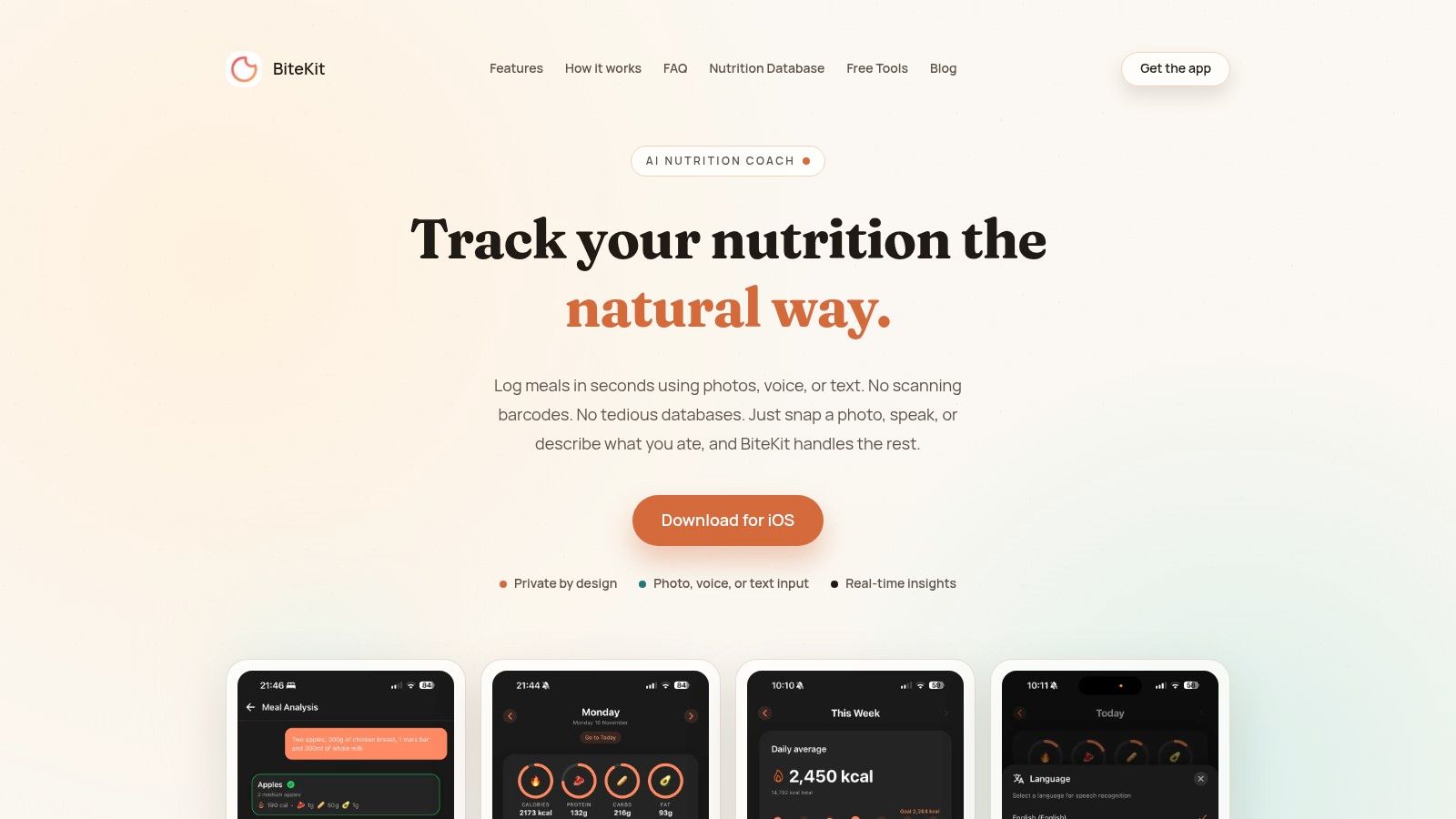
If you’re tired of turning every meal into a manual entry task, BiteKit is built for the low-friction version of nutrition tracking. You can log food by photo, voice, or natural language text, review your macros in a clean interface, and keep your data stored locally on your device without accounts or cloud sync.