How to Eat More Protein for Weight Loss and Muscle Gain
Discover how to eat more protein with practical strategies, food swaps, and meal prep tips. A guide to hitting your protein goals for real results.
Eating more protein isn't just about slamming a shake after the gym. It’s about making smart, strategic choices throughout your day to support your body's needs—from building muscle to keeping hunger in check. Think of it less like a diet rule and more like a powerful, evidence-backed tool for transforming your body composition.
Why Protein Is Your Ultimate Ally for Body Composition
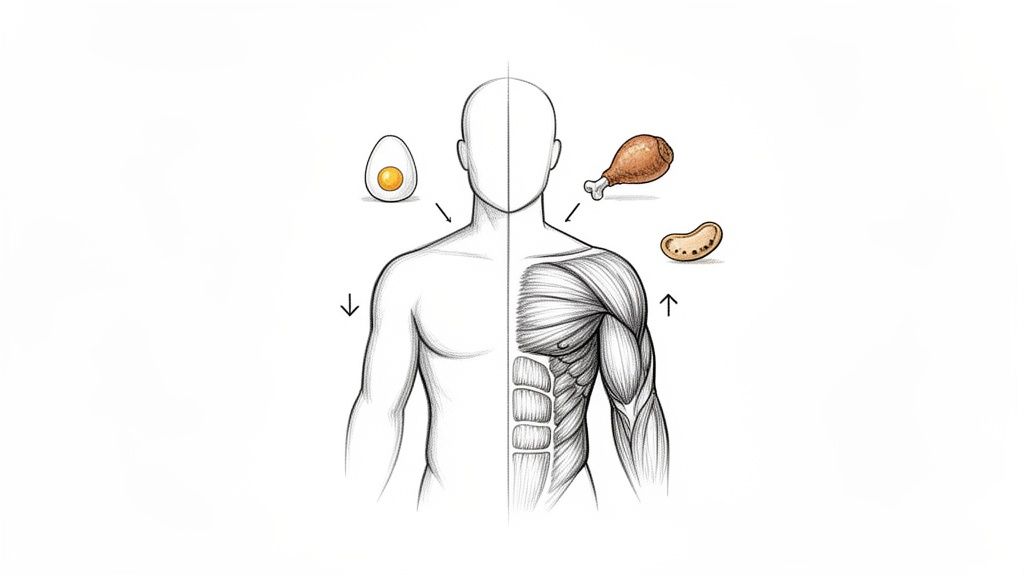
If you're serious about improving your physique, protein is non-negotiable. This powerhouse macronutrient is the literal building block for muscle, but its impact goes way beyond that, influencing everything from your metabolism to your appetite.
This isn't a fleeting fitness trend. A recent 2024 report showed that 61% of American consumers are now actively trying to eat more protein, a significant increase from 48% in 2019. It's a clear sign that people are recognizing protein's role in satiety, health, and even taste. You can dive deeper into these consumer insights with Cargill's 2025 Protein Profile.
Boost Your Metabolism Effortlessly
One of the most compelling benefits of a high-protein diet is its effect on metabolism, thanks to the Thermic Effect of Food (TEF). Simply put, your body expends energy to digest and process the food you eat.
Protein has the highest TEF by a significant margin. Your body burns up to 30% of the calories in protein during digestion. Compare that to carbohydrates (5-10%) and fats (0-3%). This metabolic advantage means that by swapping some of your carbohydrate or fat sources for lean protein, you increase your daily calorie expenditure without any extra physical effort.
Preserve Muscle While Losing Fat
A common challenge in weight loss is that when you reduce calories, your body can break down muscle tissue for energy, not just fat. A higher protein intake is your primary defense against this muscle loss.
By providing a steady stream of amino acids—the building blocks of muscle—protein acts as a protective shield for your lean mass. This scientific principle ensures the weight you lose is primarily fat, helping you achieve a toned, defined physique rather than simply a smaller version of your current self.
Keep Hunger and Cravings at Bay
Ever noticed how a high-protein breakfast keeps you full until lunch? There's a scientific basis for that. Protein is the most satiating macronutrient. It helps you feel fuller for longer, which is a critical advantage when managing calorie intake.
This works through a couple of physiological mechanisms:
- Hormonal Control: Protein influences gut hormones that regulate appetite. It suppresses ghrelin (the "hunger hormone") and boosts peptide YY (the "satiety hormone").
- Slower Digestion: It takes your body longer to break down protein compared to carbohydrates. This slower gastric emptying keeps you feeling satisfied between meals and helps manage cravings.
By prioritizing protein, you’re not just feeding your muscles—you’re setting yourself up for long-term, sustainable success based on well-established nutritional science.
How Much Protein Do You Actually Need? Let's Find Your Target
We've established that protein is crucial, but how much do you need? Forget generic advice. The standard Recommended Dietary Allowance (RDA) of 0.8 grams per kilogram of body weight is merely a baseline to prevent deficiency in a sedentary individual. It is not an optimal target for performance or body composition.
For active individuals with goals like building muscle or losing fat, scientific literature consistently supports a much higher intake. We need to set a specific target that truly supports your efforts.
The Real-World Range for Active People
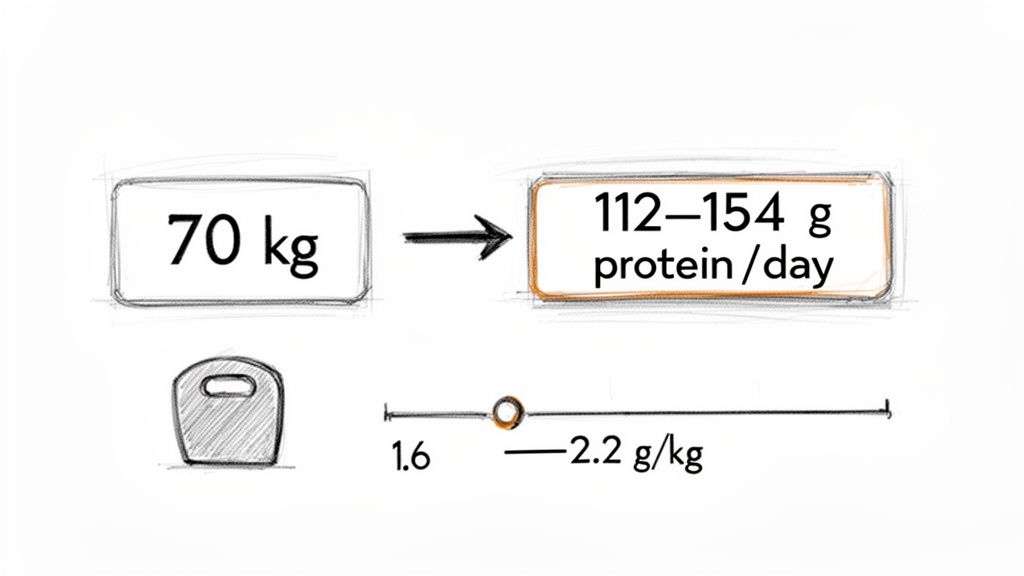
For most active individuals, research consistently points to a protein intake of 1.6 to 2.2 grams per kilogram of body weight. This range is considered the sweet spot for providing the essential amino acids your body needs to repair muscle broken down during training and synthesize new, stronger tissue.
Let's illustrate with a real example. Say you weigh 70 kilograms (around 154 pounds).
- At the lower end of the range: 70 kg x 1.6 g/kg = 112 grams of protein per day
- At the higher end: 70 kg x 2.2 g/kg = 154 grams of protein per day
This provides a clear target range: 112 to 154 grams daily. The lower end is excellent for maintaining muscle and general fitness. If you’re in a dedicated muscle-building phase or a fat-loss diet (where protein is crucial for satiety and muscle preservation), you’ll want to aim for the higher end of that range.
Establishing this target is the single most important first step. It transforms a vague goal of "eating more protein" into a concrete, daily mission that drives measurable results.
If you want to dive deeper into the calculations and the science behind them, we've got a full guide on how to calculate your protein intake that walks you through everything.
Daily Protein Recommendations Based on Your Goals
To simplify further, you can use your primary fitness goal to determine your starting point. This table provides a snapshot of evidence-based recommendations for various objectives.
| Activity Level / Goal | Recommended Protein Intake (g/kg) | Example (for a 70kg / 154lb person) |
|---|---|---|
| Fat Loss & Muscle Preservation | 1.8 - 2.2 g/kg | 126 - 154 grams |
| Muscle Gain (Bulking) | 1.6 - 2.2 g/kg | 112 - 154 grams |
| General Fitness & Maintenance | 1.4 - 1.8 g/kg | 98 - 126 grams |
| Endurance Athlete | 1.2 - 1.6 g/kg | 84 - 112 grams |
Think of this table as your roadmap. Find your goal, perform the simple calculation, and you have a powerful, personalized target. This isn't just about eating more; it's about eating with purpose to fuel your body for recovery, growth, and performance.
Making Smart Swaps to Amplify Your Protein Intake
You don't need a complete dietary overhaul to hit your protein goals. The most sustainable approach involves making small, strategic upgrades that compound throughout the day. Swapping a few everyday foods for higher-protein alternatives can make a massive difference without the feeling of being on a restrictive diet.
This is about working smarter, not harder. You’re still enjoying familiar meals, just slightly modified versions that better serve your goals. The cumulative effect of these simple substitutions can be the key to consistently hitting your protein target.
Start Your Day Strong With Breakfast Swaps
Your first meal of the day sets the metabolic and hormonal stage. A breakfast high in simple carbohydrates can lead to a blood sugar spike and subsequent crash, but a protein-forward start provides sustained energy and promotes satiety.
Consider a common grab-and-go option: a plain bagel with cream cheese. It's quick, but nutritionally offers only about 10-12g of protein.
The Smart Swap: Trade that bagel for a cup of Greek yogurt topped with a handful of almonds and berries. This simple change boosts your breakfast protein to around 25-30g. You've more than doubled your intake and will likely remain full until lunch.
Here are a few other effective breakfast swaps:
-
Instead of: A bowl of sugary cereal (~5g protein)
-
Try: A bowl of oatmeal made with milk, with a scoop of protein powder stirred in (~30g protein).
-
Instead of: Two slices of plain toast with butter (~6g protein)
-
Try: Two scrambled eggs with a slice of whole-wheat toast (~18g protein).
Upgrade Your Lunch and Dinner
Lunch and dinner are prime opportunities for protein, but it's easy to miss potential gains. A common pitfall is focusing on the main protein source while neglecting the contribution of side dishes.
Take a classic chicken salad sandwich on white bread. You have protein from the chicken, but the bread and mayonnaise offer minimal nutritional benefits.
The Smart Swap: Skip the bread and serve a larger portion of chicken salad on a bed of quinoa. Quinoa is a complete protein source, adding both protein and fiber. This single modification can add an extra 8-10g of protein effortlessly.
This strategy works equally well for plant-based diets. Instead of a pasta dish with a simple tomato sauce, try using pasta made from chickpeas or lentils. A serving of chickpea pasta contains about 11-13g of protein, a significant increase from the ~7g in regular wheat pasta—and that's before adding a protein-rich sauce with lentils or tofu. If you need inspiration, using a food swap suggester can provide personalized ideas.
Smarter Snacking for Serious Gains
Snack time is often where nutritional plans falter. Reaching for a bag of chips or pretzels is convenient, but these options provide negligible protein. This is a golden opportunity for a high-impact swap.
A typical single-serving bag of potato chips contains roughly 2g of protein.
The Smart Swap: Replace the chips with a handful of roasted chickpeas or some edamame. A single cup of edamame provides a substantial 17g of protein, transforming an empty-calorie snack into a powerful mini-meal. That simple trade alone adds another 15g of quality protein to your daily total.
Structuring Your Meals for Consistent Protein Intake
Hitting a daily protein target is one part of the equation; how you distribute that intake is another. It’s not merely about the total grams by bedtime; it’s about spacing protein out to maximize its benefits for muscle repair and satiety.
A common mistake is consuming low-protein meals throughout the day, then attempting to consume 80-100 grams of protein in one large dinner. This is both difficult and physiologically inefficient.
A more effective, scientifically supported approach is to spread your protein evenly across three to four meals. This provides your body with a consistent supply of amino acids, which is essential for stimulating muscle protein synthesis (the process of repairing and building muscle). It also plays a key role in appetite regulation.
The Power of Protein Pacing
A practical and effective target is to aim for 30-40 grams of protein per meal. This amount is sufficient to trigger a robust muscle-building response and keep you feeling satiated for hours, without being an excessive portion.
Let's say your daily goal is 140 grams. Viewing that as a single number can be daunting. But when you break it down, it becomes manageable:
- Breakfast: 35g of protein
- Lunch: 40g of protein
- Afternoon Snack: 20g of protein
- Dinner: 45g of protein
Suddenly, the large target seems entirely achievable. Each meal serves a specific purpose, allowing you to consistently work toward your goal.
Anchor Your Day with a High-Protein Breakfast
Starting your day with a protein-rich breakfast is a powerful strategy for appetite control. A carbohydrate-dominant breakfast can cause a rapid rise and fall in blood glucose, leading to a mid-morning energy crash and cravings.
Conversely, scientific studies have shown that a high-protein breakfast reduces hunger and subsequent calorie intake later in the day. You are essentially front-loading your satiety.
A strong rule of thumb is to aim for at least 30 grams of protein in your first meal. This could be three scrambled eggs with a side of Greek yogurt or a protein shake blended with oats and almond butter. This single habit can significantly improve your eating patterns.
Aligning Protein with Your Workouts
While consistent daily intake is the top priority, timing your protein around your workouts can provide an additional advantage for recovery and growth. Consuming protein after a strenuous session supplies your muscles with the immediate raw materials needed for repair and adaptation.
An effective practice is to have a protein-rich meal or snack within a few hours of completing your workout. While the concept of a strict 30-minute "anabolic window" has been revised by recent research, the principle of timely post-exercise nutrition remains valid. A whey protein shake or a solid meal like grilled chicken with quinoa are both excellent options to initiate the recovery process.
This infographic shows a few examples of easy, powerful swaps you can make to boost your protein without a complete diet overhaul.
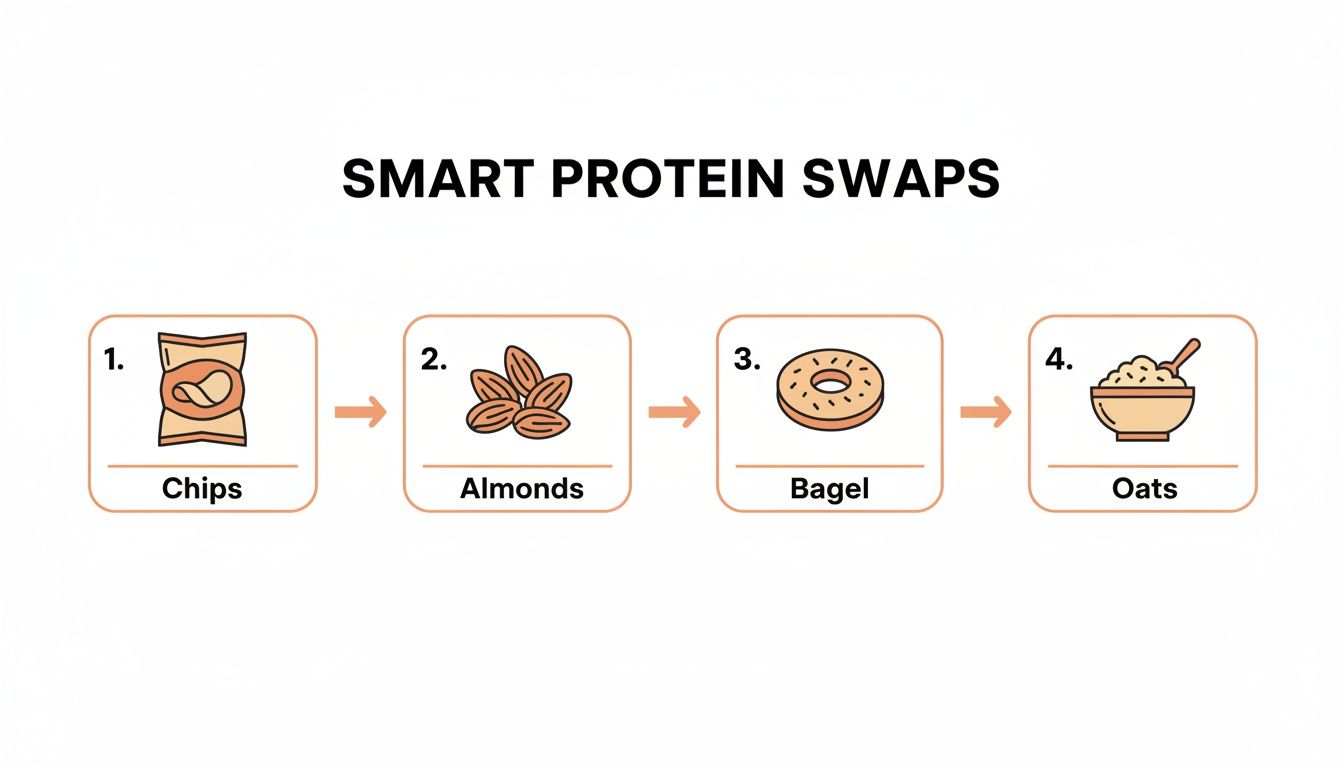
As you can see, you can add a serious amount of protein just by swapping out common low-protein snacks and meals for more nutrient-dense options.
Tracking Your Progress Without the Hassle
You've set your protein target and started making smart swaps, but how do you ensure you're hitting your numbers? Consistency is key, but meticulous food logging can feel like a full-time job. Traditional methods involving spreadsheets or cumbersome apps often lead to burnout.
The goal isn't just data collection; it's to build awareness of your eating habits without excessive effort. This is more relevant than ever. A recent study found that between 58% and 70% of people are actively trying to eat more protein, but nearly half struggle to meet their goals. You can read more about these protein trends on HRA Global. The primary barrier is often the tracking process itself.
Effortless Logging for Real Life
Imagine finishing a meal and logging it in seconds, without wrestling with a complex app or scrolling through endless food databases. This is where more intuitive tools like BiteKit can fundamentally change the experience.
It feels less like data entry and more like a quick, seamless action.
- Just Use Your Voice: You can simply say, "I had 200g of chicken and two apples," and your macros update instantly. No typing needed.
- Snap a Photo: Take a quick picture of your plate, and the technology can identify the food, estimate portions, and perform the calculations for you.
This screenshot from the BiteKit app gives you a clean, visual snapshot of your day. You can see your calories, carbs, fats, and—most importantly—your protein intake at a single glance.
This immediate feedback is powerful. A quick look tells you exactly where you stand, so you can adjust your next meal or snack accordingly to stay on track with your daily target.
Real-Time Feedback Builds Better Habits
The true value lies in the feedback loop. When you see your protein bar fill up in real-time after a meal, you start to develop an intuitive understanding of what a 30-gram serving of protein looks and feels like.
This isn't just about hitting a number for today; it's about building lifelong nutritional literacy. You begin to internalize the protein content of your favorite foods, which is the ultimate goal for creating sustainable, healthy habits.
The tedious nature of old-school tracking is a primary reason for non-adherence. When the process is simplified to snapping a picture or speaking a sentence, you are far more likely to maintain consistency long enough to see meaningful results. That consistency is the foundation of achieving any fitness or body composition goal.
For a deeper dive, check out our guide on the best way to track your food intake to see how making the process easier is the key to getting it done.
Your Top Questions About High Protein Diets, Answered
If you've decided to increase your protein intake, you have likely encountered numerous questions and conflicting advice. Let's address some of the most common concerns with scientific clarity, so you can proceed with confidence.
"Will Eating More Protein Make Me Bulky?"
This is a pervasive myth, particularly among women. Let me be clear: no, simply consuming more protein will not make you "bulky."
Building significant muscle mass (hypertrophy) is a complex physiological process that requires a very specific, intense resistance training program combined with a consistent calorie surplus (consuming more calories than you burn).
For most individuals aiming to get leaner or stronger, a higher protein intake has the opposite effect. It helps preserve existing lean muscle mass during fat loss, which is essential for creating a toned, defined physique.
"Is It Possible to Eat Too Much Protein?"
For the vast majority of healthy adults, a high-protein diet is safe. The outdated concern that it damages the kidneys has been largely debunked in individuals with normal kidney function. The human body is well-equipped to process it.
However, more is not always better. Exceeding the recommended range—well beyond 2.2 grams per kilogram of body weight—offers no additional scientifically proven benefits for muscle growth or fat loss. An excessively high intake may also displace other essential nutrients like fiber from carbohydrates and healthy fats.
The optimal range for most active people is 1.6 to 2.2 grams of protein per kilogram of body weight. This provides all the muscle-sparing and satiety-boosting benefits without being excessive. Of course, if you have any pre-existing health conditions, particularly kidney-related issues, it is always prudent to consult with your physician first.
"How Can I Hit My Protein Goals on a Vegetarian or Vegan Diet?"
It is entirely possible to meet high protein targets on a plant-based diet with strategic planning. The key is to incorporate a wide variety of plant-based protein sources throughout your day.
The best options in your nutritional toolkit include:
- Legumes: Lentils, chickpeas, and black beans are excellent sources. A single cup of cooked chickpeas provides a solid 14.5 grams of protein.
- Soy Products: Tofu, tempeh, and edamame are complete proteins and are incredibly versatile in cooking.
- Whole Grains: Quinoa is a standout as it is a complete protein, containing all nine essential amino acids.
- Nuts and Seeds: Almonds, chia seeds, and hemp seeds are perfect for boosting the protein content of salads, oatmeal, or snacks.
A classic strategy is to combine different plant proteins, such as rice and beans, to ensure a complete amino acid profile. High-quality vegan protein powders (pea, soy, or brown rice) are also a convenient and effective supplement.
"What Are the Best High Protein Snacks for a Busy Schedule?"
In a hectic lifestyle, convenience is paramount. Having easy, grab-and-go protein snacks available can be the difference between meeting your goals and making a poor food choice.
I recommend stocking up on items like Greek yogurt cups, pre-portioned bags of nuts, hard-boiled eggs, and quality beef or turkey jerky. Roasted chickpeas are another excellent crunchy, high-protein alternative.
A quality protein bar with minimal added sugar can be a lifesaver in a pinch. However, it's hard to beat the speed and efficiency of a simple protein shake—just add water or your milk of choice, shake, and consume.