Chuck Roast Calories A Complete Nutrition Guide
Get the real numbers for chuck roast calories and macros. Learn how cooking, trimming, and cut type change the data. Perfect for tracking in BiteKit.
Do you know how many calories are in your chuck roast, or are you logging the first number that looks close enough?
Chuck roast can be tricky because it behaves less like a fixed food and more like a range. Two servings can look similar on the plate but log differently if one piece is heavily marbled, another is trimmed lean, or one weight was taken after cooking and the other before. For a new BiteKit user, that can feel confusing fast.
A good starting point is simple. Chuck roast calories change based on three main factors: how much fat is on the cut, which specific chuck roast you bought, and whether you weigh it raw or cooked.
Water loss is a big reason the numbers shift. As the roast cooks, moisture leaves, the meat weighs less, and the calories become more concentrated per 100 grams. It works like reducing a sauce. The volume drops, but the flavor gets stronger. Meat calories per gram can rise the same way after cooking.
That is why "chuck roast calories" is not a one-number question. The more useful approach is learning what changes the count so you can choose the closest match in BiteKit and build a log that reflects what you ate.
If you are new to tracking, aim for informed consistency first. Precision gets easier once you understand why the number moves.
Your Guide to Chuck Roast Calories
What changes the calorie count in chuck roast the most. The cut itself, the amount of fat left on it, or the number on the package after cooking?
All three matter, and that is why chuck roast is easier to log accurately when you treat it like a range instead of a single fixed value. As noted earlier, USDA-aligned data puts common chuck roast entries on a fairly wide spectrum, especially once cooking method and trimming enter the picture. That is not a flaw in the data. It is a sign that the food changes form.
A roast works a bit like fruit after dehydration. The water drops, the weight shrinks, and the calories become more concentrated in each gram that remains. So if your BiteKit entry for cooked chuck roast looks higher per 100 grams than the raw package label, that is usually measurement context, not a logging mistake.
The three things that change the number
-
Whether you logged it raw or cooked
Raw and cooked weights answer different questions. Raw weight reflects what you bought. Cooked weight reflects what is on your plate after moisture loss. -
How much visible fat was left on the roast
A well-trimmed piece and a heavily marbled piece can start in the same section of the meat case and still log differently. -
The exact chuck cut or store listing
"Chuck roast" is a category, not one perfectly uniform product. Boneless, arm pot roast, choice, and leaner retail trims can each point you toward a different BiteKit match.
Here is the practical takeaway. A single calorie number can be useful for a fast estimate, but it can also hide the reason your log feels off.
For a quick dinner entry, use the closest match you can identify. For a meal where accuracy matters more, match the cut, trimming level, and cooked state before you log it. That small habit gives you cleaner trend data than chasing one "perfect" chuck roast number that may not fit the meat you ate.
Chuck Roast Nutrition A Quick Reference
Need a fast way to log chuck roast without guessing? Use this table as a starting map, then match it to the cut and cooking state you ate. The goal is not to chase one magic number. It is to choose the closest entry with enough detail that your BiteKit log stays useful.
The figures below are drawn from the verified source set already mentioned earlier in the article. To keep this reference credible, the table only includes entries with calories, protein, and fat listed.
Chuck Roast Calories per 100g Approximate
| State | Calories | Protein (g) | Fat (g) |
|---|---|---|---|
| Raw chuck roast, lean and fat | 244 | 17.4 | 18.9 |
| Cooked braised chuck roast | 302 | 30.1 | 19.2 |
| USDA Choice chuck roast, retail cut, lean and fat | 249 | 17.2 | 19.9 |
A quick note on how to read this. Protein and fat work like the two main dials that shift calorie totals in beef. Protein stays fairly steady across similar cuts. Fat changes more, and small differences in fat can push calories up faster than many new trackers expect.
If you want the simplest rule, match the table to the form on your scale.
- Weighed it raw? Use a raw entry.
- Weighed it after braising or roasting? Use the cooked entry.
- Package says USDA Choice and the roast looks well marbled? The Choice reference is usually a better fit than a generic listing.
- Still unsure? Pick the closest match and use that same logic each time you buy a similar roast.
That last point matters. Calorie tracking works a lot like using the same measuring cup each morning. Perfect precision is rare, but consistent measurement gives you trend data you can trust.
Why Chuck Roast Calorie Counts Vary
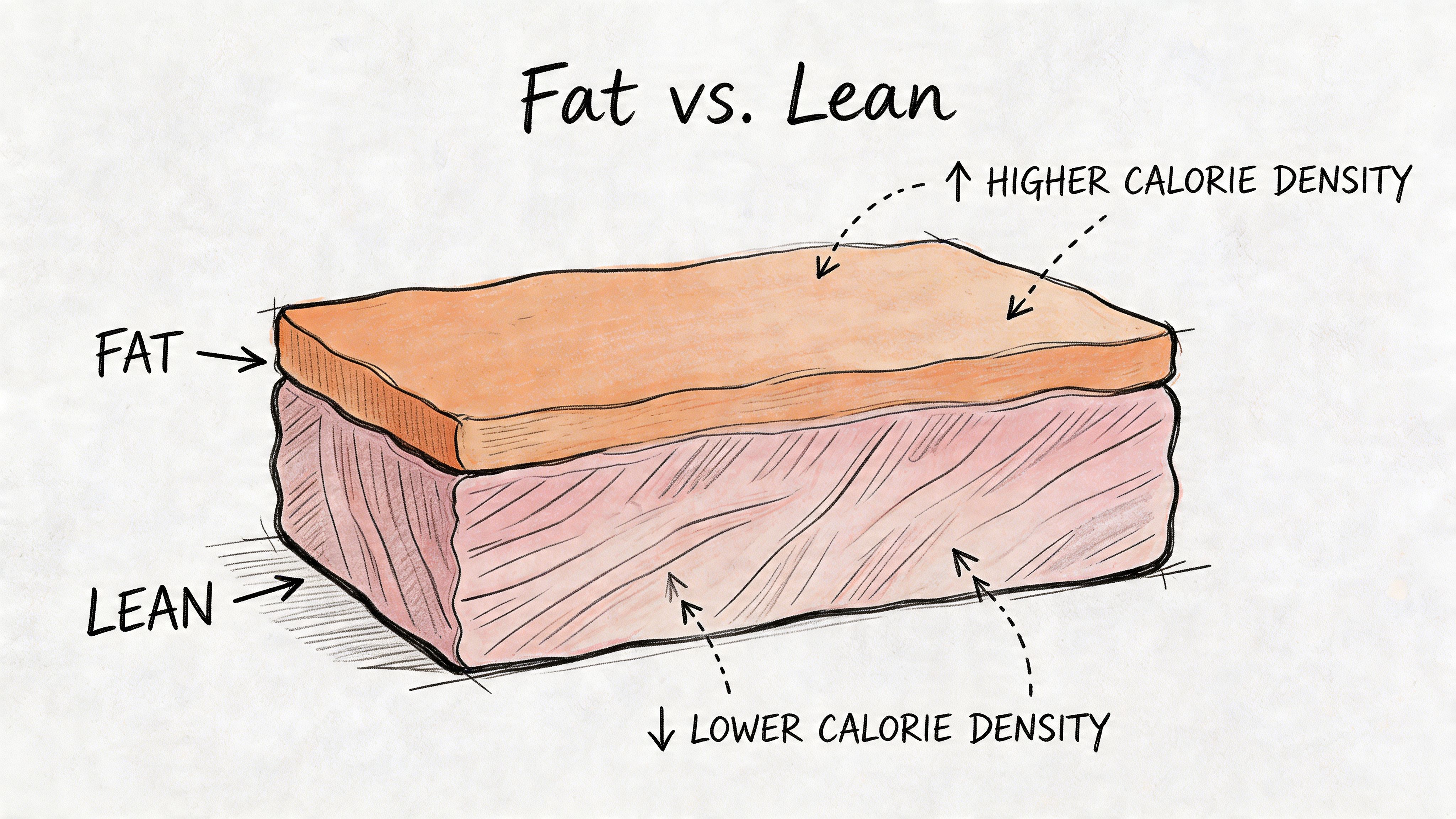
The biggest reason chuck roast calories vary is simple. Fat changes everything. Two roasts can weigh the same, but the one with more marbling and a thicker outer layer of fat will log differently than the one that’s been closely trimmed.
Grade and marbling matter
A common confusion is whether a roast is closer to 200 calories or 300 calories. That confusion is justified. Verified data shows a raw USDA Choice chuck roast at around 249 kcal per 100g, while a cooked USDA Select version can be as high as 295 kcal per 100g. Lean-only versions can drop to 146 to 166 kcal per 85g serving, as shown in this chuck roast grade comparison.
That’s a wide swing for what many people think of as “the same food.”
What to look for on your plate
Use your eyes before you use your tracker.
- Visible fat cap: a thick outer band usually means a higher calorie estimate.
- Heavy marbling: more white streaks through the meat usually means a richer cut.
- Large trimmed sections: if a lot of fat was cut away before cooking, the total changes.
A roast isn’t just “beef.” It’s lean tissue plus varying amounts of fat, and your calorie log should reflect that.
If you meal prep, this matters even more. One container might contain mostly lean slices. Another might have fattier edge pieces. Logging both as identical creates noise in your data.
Calorie Impact Cooked vs Raw Chuck Roast
One of the most common tracking mistakes is logging cooked meat with a raw entry. That error can throw off your totals even when the portion size looks right.
Why cooked meat has more calories per gram
When chuck roast cooks, it loses water. Protein and fat don’t disappear at the same rate, so the remaining meat becomes more concentrated. That’s why braised chuck arm pot roast provides 257 calories per 85g serving, or about 302 calories per 100g, while the raw equivalent is 244 calories per 100g, based on USDA standards summarized here.
The same source notes that cooking can concentrate nutrients and calories through moisture loss of about 5 to 10%. That’s the mechanic behind the higher cooked number.
The logging rule that saves headaches
If you weighed the roast after cooking, use a cooked entry. If you weighed it before cooking, use a raw entry.
That sounds obvious, but it’s where a lot of food logs drift off course.
For mixed meal prep or leftovers, a dedicated cooked vs raw weight converter can help you match your entry to the state you measured.
Don’t “correct” a cooked weight by guessing. Match the database entry to the form of the food in your kitchen.
This is especially important for pot roast, shredded beef bowls, and stews where the meat has been simmered for a long time and changed texture, density, and serving appearance.
Macronutrient Profile Protein Fat and Carbs
Chuck roast isn’t just about calories. For many people, the main reason it earns a place in the meal plan is the macro profile.
Protein is the headline
Cooked chuck roast contains about 30.1g of protein per 100g, according to this verified macro breakdown. The same source lists 25.6g of protein in a 3 oz (85g) serving, which meets 50% of the Daily Value on a 2,000-calorie diet.
That’s a lot of protein in a relatively small serving.
To make that easier to picture, the same verified data notes that 100g cooked chuck roast provides more protein than five large eggs, which total about 25g, and is roughly equivalent to 1.1 medium chicken breasts in protein terms.
Fat and carbs change how it fits your goals
Chuck roast has 0g carbs in the verified entries above, so it can fit low-carb or keto-style eating patterns. The tradeoff is fat. Some versions are much richer than others, which is why trimming and cut selection matter so much.
If you’re trying to balance a day that already includes higher-fat foods, chuck roast may call for leaner sides. If you’re building a high-protein, lower-carb meal, it can work well with vegetables and a lighter dairy choice. If that’s your pattern, this guide to understanding 1 percent milk benefits is a useful companion resource for balancing protein intake with a more moderate fat profile.
Best fit by goal
- Muscle gain: the protein density is appealing.
- Low-carb eating: the zero-carb profile makes planning simple.
- Fat-conscious tracking: choose leaner portions and watch the cut.
Chuck roast can absolutely fit a calorie-controlled plan. You just need to count the version you ate.
How to Log Chuck Roast Portions in BiteKit
Tracking chuck roast gets harder when the meal isn’t a neat slice of meat on a plate. It is often consumed in a stew, pot roast dinner, shredded beef bowl, or leftovers container with vegetables and broth. Portion estimation is where simple calorie counting often breaks down.
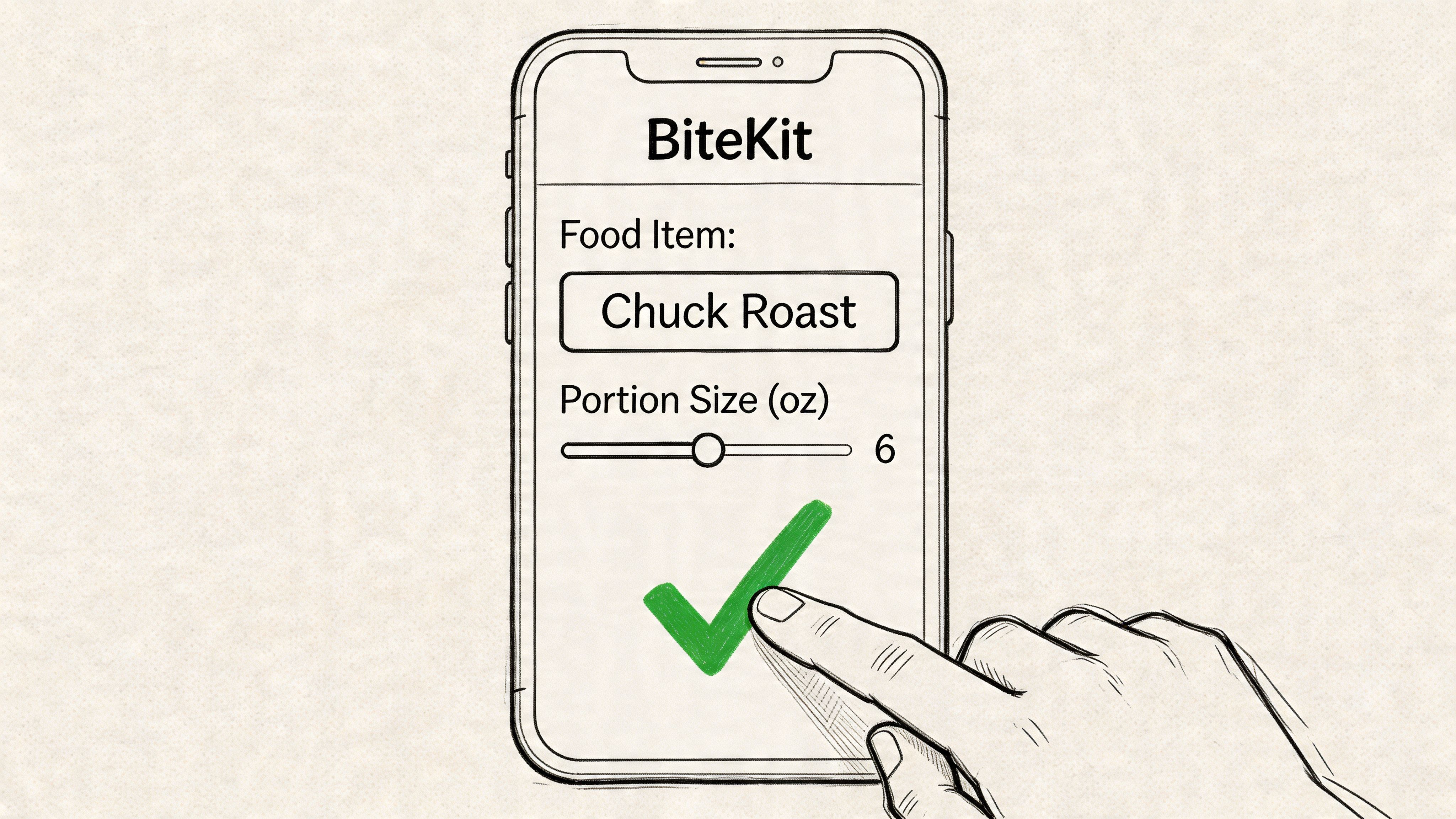
If your chuck roast is a plain portion
The easiest case is a clear serving of meat on its own. You can log by weight and match the state accurately.
Try one of these approaches:
- Photo logging: snap the plated roast after weighing it.
- Voice logging: say the amount and the cooked state.
- Text logging: type something like “braised chuck roast, cooked weight.”
The point is to name the food in a way that captures the biggest variable. Cooked versus raw matters more than adding extra description that doesn’t change the entry.
If your chuck roast is part of a mixed dish
For certain dishes, people tend to undercount or overcount. Pot roast with carrots, potatoes, onions, and cooking liquid doesn’t behave like a plain grilled steak. A mixed dish includes ingredients with different densities, and the meat may be shredded or scattered throughout the serving.
A practical way to improve accuracy is:
-
Estimate the meat portion first Identify how much of the serving is chuck roast.
-
Treat vegetables separately when possible
Potatoes and carrots change the meal total in a meaningful way. -
Be consistent with leftovers
If you portion a stew into containers, try to divide meat evenly.
For visual estimating support, a portion size calculator helps when you didn’t weigh the finished meal.
Three realistic logging examples
“A plate with sliced chuck roast, carrots, and potatoes should be logged as separate components if you want the cleanest numbers.”
- Example one: a weighed portion of cooked roast. Use a cooked chuck roast entry.
- Example two: shredded roast in a bowl with vegetables. Estimate the meat portion first, then add sides.
- Example three: meal prep from a slow cooker. Divide the full dish into equal containers and log each portion consistently.
You don’t need laboratory precision. You need a repeatable method that reflects the actual meal in front of you.
Chuck Roast vs Other Beef Cuts
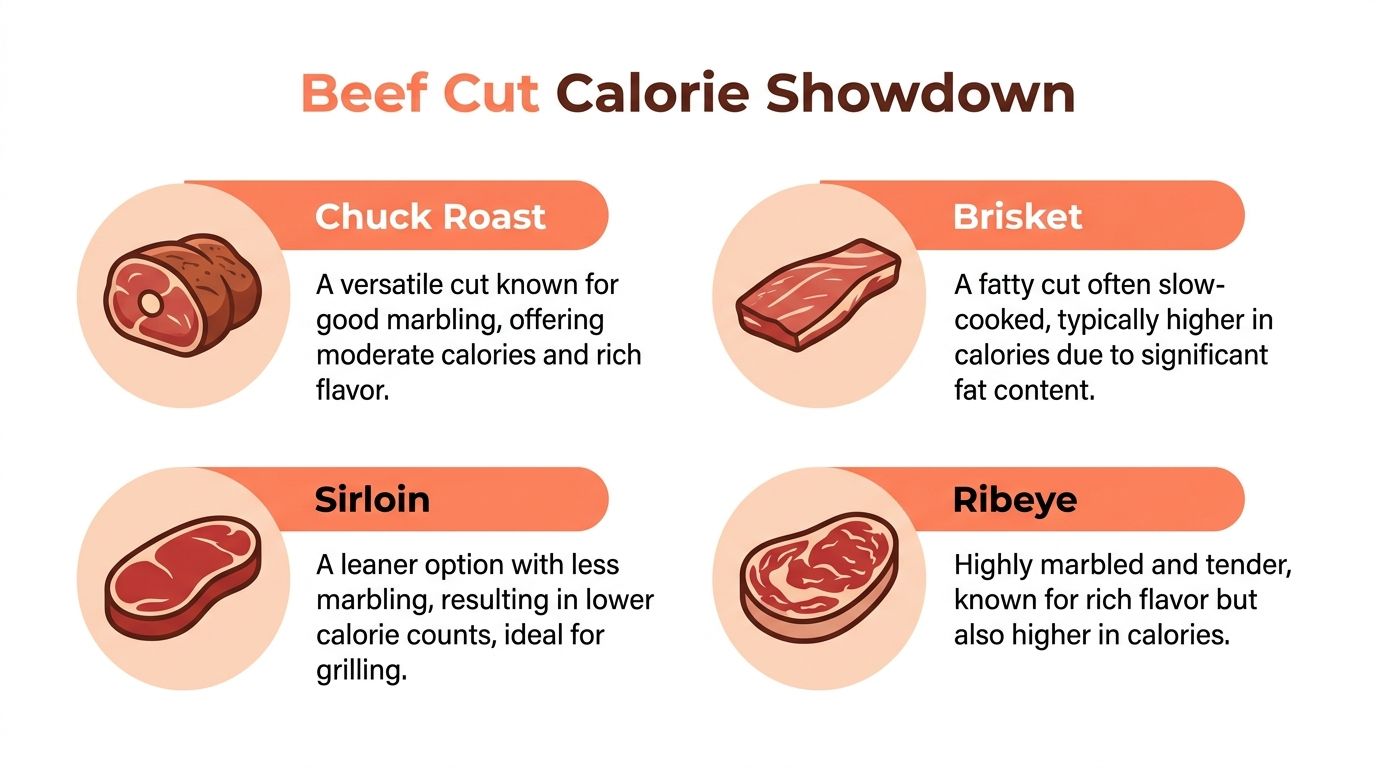
Chuck roast sits in the middle ground of beef choices. It’s usually richer than a lean steak cut and less luxurious than a heavily marbled premium steak, which is exactly why many people like it. You get strong flavor, solid protein, and good texture for slow cooking.
How chuck roast compares in practice
Compared with sirloin, chuck roast is usually less lean and better suited to braising than quick cooking. Compared with ribeye, it’s generally less of a splurge-style cut and often less dominated by visible marbling. Compared with brisket, it shares that slow-cook comfort-food role, though many home cooks find chuck roast easier to portion and use in everyday meals.
For readers comparing prepared beef entries, BiteKit’s roast beef nutrition guide can help you place roast-style beef options in context.
A quick visual can make the differences easier to picture:
When chuck roast makes sense
- For slow cooking: it becomes tender and flavorful.
- For macro tracking: it offers strong protein, but fat can vary.
- For grocery flexibility: you can often find both leaner and richer versions.
That variability is the whole point. Chuck roast can fit different nutrition goals, but only if you log the actual cut and preparation style.
Health Benefits and Dietary Considerations
Chuck roast has a lot going for it nutritionally. It provides complete protein, and the verified cooked data includes iron, potassium, vitamin D, and calcium in smaller supporting amounts, as noted in the earlier verified nutrition breakdown. For someone focused on satiety, recovery, or building meals that feel substantial, that matters.
Where chuck roast can help
Protein supports muscle repair and helps meals feel filling. Iron is another practical benefit, especially for people who want iron-rich foods in rotation. Chuck roast also works well in structured eating plans because it pairs easily with vegetables, potatoes, rice, or lower-carb sides.
What to watch
The caution point is fat, especially in more marbled cuts or servings that include a lot of visible fat. A richer roast can still fit your plan, but it may use up more of your daily calorie budget than expected.
A simple way to make chuck roast work better in a balanced diet is to build the plate around it.
- Choose a trimmed portion when you want better calorie control.
- Pair it with vegetables to make the meal more filling.
- Use richer versions intentionally rather than assuming all chuck roast is the same.
That’s the balanced view. Chuck roast can be nutrient-dense and useful, but it rewards attention to portion size.
Frequently Asked Questions About Chuck Roast
Is chuck roast good for a keto diet
It can be. The verified entries above list chuck roast at 0g carbohydrates, so it fits the low-carb side of keto-style eating. The thing to watch isn’t carbs. It’s the wide variation in fat and calories between different roasts.
How much does chuck roast shrink when cooked
It shrinks because it loses moisture during cooking. That makes the cooked meat denser, which is why cooked entries show more calories per gram than raw entries. If your cooked portion looks smaller than the raw piece you started with, that’s expected.
The weight change doesn’t mean calories disappeared. It usually means water did.
What’s the best way to log chuck roast in a stew
Log the meat and the other major ingredients separately if you can. Potatoes, carrots, onions, broth, and added fat all affect the total meal. If the dish is already mixed, estimate how much of your serving is meat first, then account for the rest of the bowl.
Is chuck roast a good food for high-protein eating
Yes, especially if you choose a cooked entry that matches your portion. The verified data for cooked chuck roast shows 30.1g protein per 100g, so it’s a strong protein source. It’s especially useful for people who want a savory, substantial protein option that isn’t based on poultry or eggs.
Why do food apps show different chuck roast calories
Because they may be listing different things. One entry might be raw. Another might be cooked. One may include more attached fat. Another may reflect a leaner retail cut. The numbers aren’t always conflicting. They’re often describing different versions of chuck roast.
If you want calorie and macro tracking to feel simpler, BiteKit is built for real meals, not just perfect database entries. You can log food with photos, voice, or natural language text, which makes it much easier to track meals like pot roast, shredded beef bowls, and mixed leftovers without getting stuck in manual searches.