Deconstructing the Subway Flatbread: A 2026 Nutritional Analysis
Find out exactly how many carbs in Subway flatbread. Get your complete 2026 nutritional guide to make smart diet choices today!

When making a dietary choice at a fast-food chain like Subway, understanding the nutritional profile of each component is crucial. The choice of bread, in particular, can significantly influence the meal's impact on your health goals. This article provides a scientific analysis of Subway's flatbread, examining its carbohydrate content, its effect on different dietary plans, and how it compares to other bread options.
Subway 6-Inch Flatbread: A Nutritional Overview
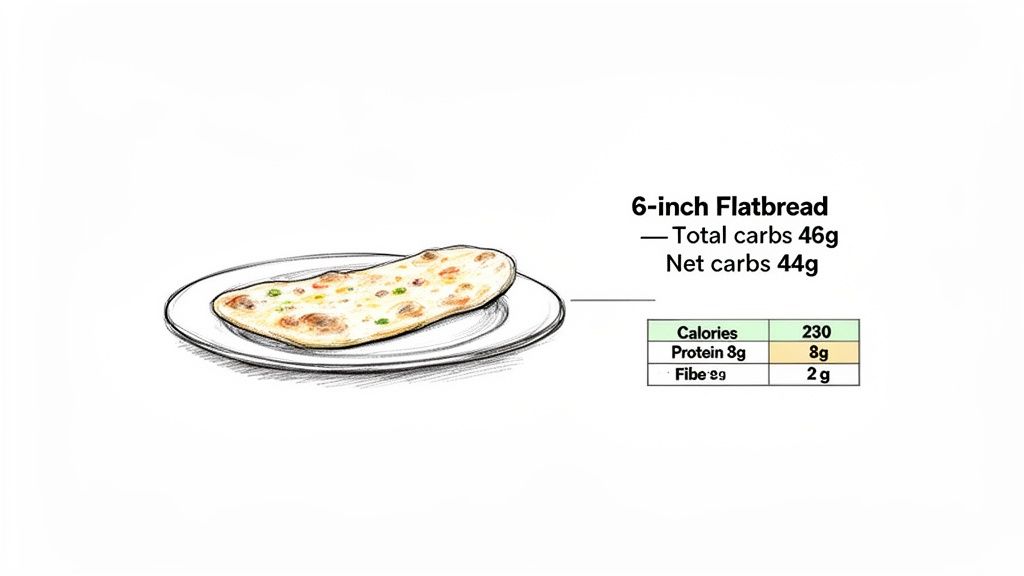
Before any fillings are added, a 6-inch Subway Artisan Flatbread provides approximately 220 calories. A substantial portion of these calories—around 70%—originates from carbohydrates. The remaining macronutrient profile consists of 7 grams of protein and 4 grams of fat. This baseline is the starting point for constructing a meal that aligns with specific nutritional targets.
For a clearer picture, here’s a quick summary of the nutritional facts for just the 6-inch flatbread.
| Nutrient | Amount Per 6-Inch Serving |
|---|---|
| Calories | 220 |
| Total Carbs | 41 g |
| Dietary Fiber | 1 g |
| Net Carbs | 40 g |
| Protein | 7 g |
| Fat | 4 g |
These values, sourced from official nutritional guides, can vary slightly based on preparation. For individuals meticulously tracking their food intake, these base numbers are essential. Tools like the BiteKit AI fast food macro finder can provide quick estimates for various fast-food items.
A Detailed Nutritional Analysis Of Flatbread Carbs
A 6-inch Subway flatbread contains approximately 41 grams of total carbohydrates. However, the type of carbohydrate is as important as the total amount. A deeper dive into understanding macros for weight loss can provide context for how these numbers affect physiology and body composition.
The Role Of Fiber And Net Carbs
The 6-inch flatbread, weighing 87 grams, contains only 1 gram of dietary fiber. This low fiber content indicates that the bread is made from refined flour rather than whole grains. As a result, of the 41 grams of total carbohydrates, approximately 40 grams are simple, digestible carbs that are rapidly absorbed by the body. This information is verifiable through official resources like this Subway nutrition info guide.
For individuals following low-carbohydrate diets, such as ketogenic or Atkins plans, the concept of net carbs is particularly relevant. Net carbs represent the carbohydrates that are digested and absorbed by the body, influencing blood glucose levels.
The calculation is straightforward: Total Carbs - Dietary Fiber = Net Carbs. In this case, that’s roughly 41g - 1g = 40g of net carbs.
A high net carb count, as seen in the flatbread, results in a rapid increase in blood sugar levels. This provides a quick burst of energy but often leads to a subsequent drop, which may not promote sustained satiety.
For those who need to calculate this for other foods, a tool like an Atkins net carb calculator can simplify the process.
How Flatbread Carbs Compare to Other Subway Breads
The choice of bread at Subway significantly impacts the overall macronutrient profile of a meal. Understanding how the Artisan Flatbread compares to other options is key to making an informed decision that aligns with one's dietary objectives.
Let's break down exactly how the Artisan Flatbread compares to the other popular breads on the menu.
A Head-to-Head Bread Comparison
Nutritional values among bread choices vary considerably. For instance, the 6-inch Jalapeño Cheddar bread has just 34 grams of carbohydrates and 190 calories, which is about 15% fewer carbs than the flatbread.
Conversely, some options are higher in carbohydrates. It's always advisable to consult Subway's official nutritional values for the most accurate and up-to-date information.
To make things even clearer, here’s a quick-glance table comparing the most common 6-inch bread options.
Subway 6-Inch Breads Carb Comparison
This table provides a side-by-side comparison of the carbohydrate and calorie content of Subway's primary bread selections, illustrating where the flatbread stands.
| Bread Type | Total Carbs (g) | Fiber (g) | Net Carbs (g) | Calories |
|---|---|---|---|---|
| Artisan Flatbread | 41 | 1 | 40 | 220 |
| Artisan Italian | 37 | 2 | 35 | 200 |
| Jalapeño Cheddar | 34 | 2 | 32 | 190 |
| Multigrain | 37 | 4 | 33 | 210 |
| Hearty Multigrain | 40 | 4 | 36 | 230 |
As the data shows, while the Artisan Flatbread is not the highest-carb option, it is positioned at the upper end of the range and is notably low in dietary fiber.
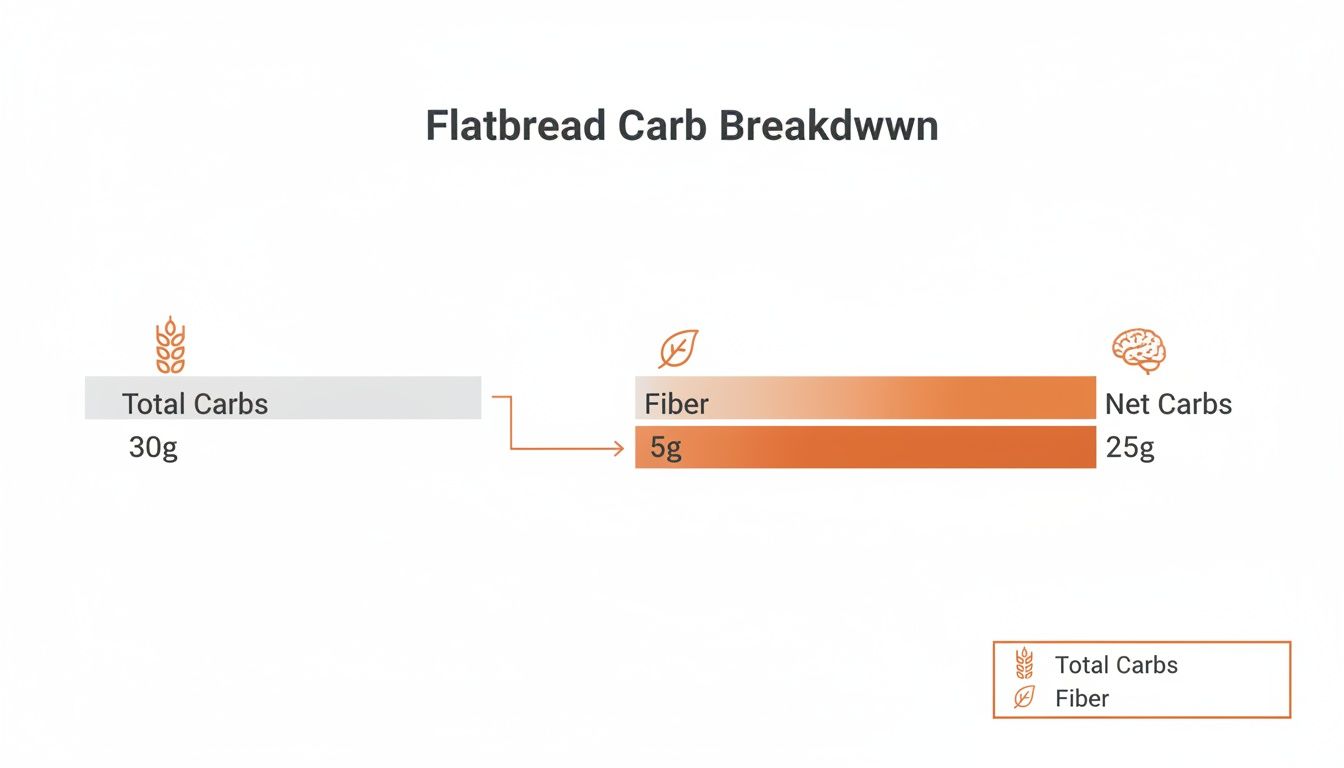
The minimal fiber content means that the majority of its carbohydrates are net carbs. This composition leads to rapid energy provision but may not sustain satiety as effectively as higher-fiber alternatives like the Multigrain or Hearty Multigrain breads.
How Flatbread Carbs Impact Different Diets
The 41 grams of rapidly digesting carbohydrates in a 6-inch Subway flatbread have different implications depending on an individual's dietary regimen and physiological needs.
For individuals on a strict low-carb or ketogenic diet, the flatbread is generally unsuitable. A single 6-inch portion can meet or exceed the typical daily carbohydrate limit of 20 to 50 grams, making it difficult to maintain a state of ketosis.
For Athletes and Fitness Enthusiasts
Conversely, the refined carbohydrates in the flatbread can be strategically utilized by athletes. As a quick-release energy source, consuming a flatbread sandwich approximately 60-90 minutes pre-workout can provide accessible fuel for performance.
Post-workout, these fast-acting carbohydrates are effective for replenishing muscle glycogen stores, a critical component of metabolic recovery. For optimal recovery, pairing the flatbread with a lean protein source, such as grilled chicken, can support both glycogen re-synthesis and muscle protein synthesis.
A foundational understanding of nutrition is beneficial for those serious about fitness. Learning how to calculate macronutrients allows for precise calibration of carb, protein, and fat intake to meet specific goals.
General Wellness and Weight Management
For those focused on general wellness or weight management, the flatbread can be incorporated into a balanced diet with careful planning. The key is to mitigate the rapid digestion of its carbohydrates by pairing it with components that slow gastric emptying and promote satiety.
To construct a more balanced meal with flatbread, consider the following evidence-based strategies:
- Prioritize lean protein: Include sources like turkey, grilled chicken, or roast beef to increase satiety.
- Load up on fiber-rich veggies: Abundantly add spinach, cucumbers, tomatoes, and bell peppers to increase the meal's fiber content.
- Pick smarter sauces: Opt for low-sugar condiments like vinegar or mustard instead of high-sugar dressings.
This approach helps moderate the glycemic response to the meal, making the flatbread a viable choice within a well-rounded diet.
Building A Lower-Carb Subway Sandwich
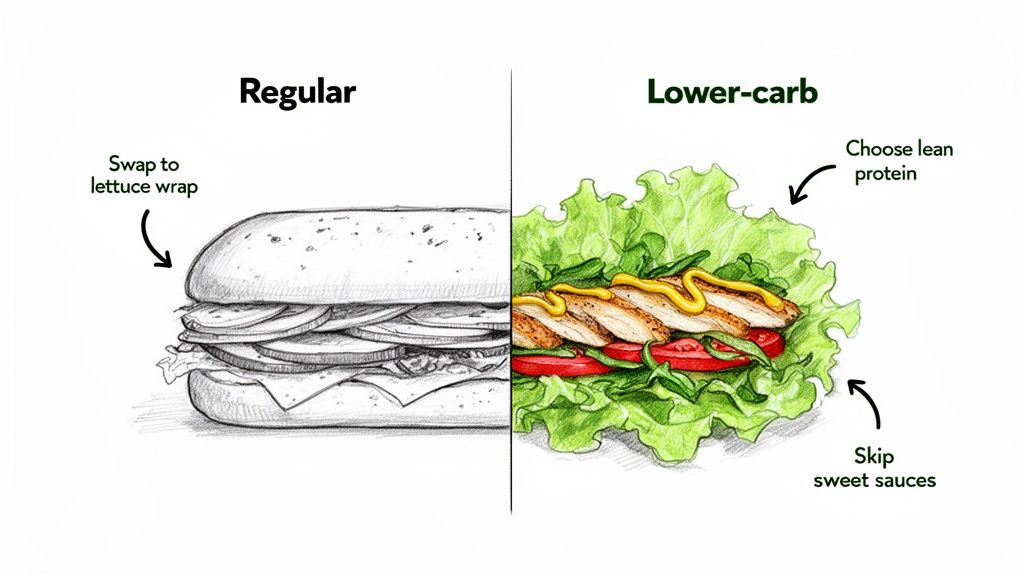
Given the flatbread's high net carbohydrate content, strategic selection of fillings is essential for creating a meal that is more nutritionally balanced. By focusing on protein and fiber, one can slow the digestion of the refined carbohydrates from the bread, thereby mitigating the sharp rise in blood glucose.
Pile On The Right Vegetables
Vegetables are a low-carbohydrate way to add volume, micronutrients, and dietary fiber to the sandwich.
- Leafy Greens: Spinach and lettuce add bulk with negligible carbohydrate content.
- Crunchy Veggies: Cucumbers, green peppers, and raw onions provide texture and fiber.
- Flavor Boosters: Tomatoes and pickles contribute flavor and moisture without significantly increasing the carb load.
A generous portion of these vegetables makes the sandwich more substantial and helps to offset the macronutrient profile of the bread.
Watch Out For Sauces and Extras
Sauces and dressings are a common source of hidden sugars and carbohydrates that can quickly alter the nutritional profile of a meal.
For example, a single serving of Sweet Onion Teriyaki sauce can add approximately 14 grams of carbohydrates, almost entirely from sugar. Substituting this with mustard or red wine vinegar can save nearly all of those carbs.
Choosing sauces like light mayonnaise, oil and vinegar, or simple seasonings is a prudent strategy. It is also wise to be mindful of add-ons like sweet corn. Utilizing a sandwich calorie calculator can help visualize the nutritional impact of different ingredient combinations before ordering.
Frequently Asked Questions About Subway Flatbread
Despite a thorough nutritional breakdown, specific questions often arise regarding the flatbread's place in a healthy diet. Here are answers to some common inquiries.
Does The Footlong Flatbread Have Double The Carbs?
Yes, the nutritional values scale directly. A 12-inch Footlong flatbread consists of two 6-inch portions, resulting in a total of approximately 80-82 grams of carbohydrates.
This also equates to roughly 440 calories, 14 grams of protein, and 8 grams of fat from the bread alone. For accurate tracking, this should be logged as two servings.
Is The Subway Flatbread A Whole Grain Option?
No, the standard Subway flatbread is not a whole grain product. It is produced from enriched white flour, which accounts for its low fiber content of only 1 gram per 6-inch serving.
As a source of refined carbohydrates, it is digested quickly. For a higher-fiber option at Subway, the 9-Grain Wheat or Multigrain breads are more suitable choices.
Key Takeaway: The low fiber content of the flatbread results in a rapid energy spike but less sustained satiety compared to a whole grain alternative.
Are There Different Types Of Flatbread At Subway?
Generally, no. While some international markets or limited-time promotions have featured flavored flatbreads, the vast majority of Subway locations, particularly in the United States, offer a single, standard white flour version. The nutritional information presented in this guide pertains to this common offering. It is always advisable to check the official Subway website for your region for current menu items.
How Do Additions Like Cheese And Sauce Affect The Total Carbs?
Add-ons can significantly increase the total carbohydrate count. While a slice of provolone cheese adds less than one gram of carbs, many sauces are high in sugar. The Sweet Onion Teriyaki sauce, for instance, adds about 14 grams of carbohydrates per serving. To maintain a lower-carb meal, opt for toppings like oil, vinegar, or mustard, and be selective with your choice of vegetables and sauces.