Potato Salad Calories: A Scientific Guide to Healthier Versions
Discover how potato salad calories are counted and how dressing, ingredients, and prep influence the total, plus tips for healthier versions.
At any social gathering, the creamy bowl of potato salad often poses a nutritional question: "How many calories are in that?" A standard one-cup serving of classic, mayonnaise-drenched potato salad contains a wide range, typically between 350 to 450 calories.
This significant variation is primarily due to a single component: the dressing. A deeper understanding of the ingredients and their caloric impact, supported by nutritional science, is the first step toward enjoying this popular side dish without compromising health goals.
The Science Behind Potato Salad Calories
Potato salad is a quintessential comfort food, but its creamy texture can mask a high energy density. While potatoes themselves offer moderate calories and carbohydrates, the nutritional profile of the final dish is defined by the ingredients mixed into it.
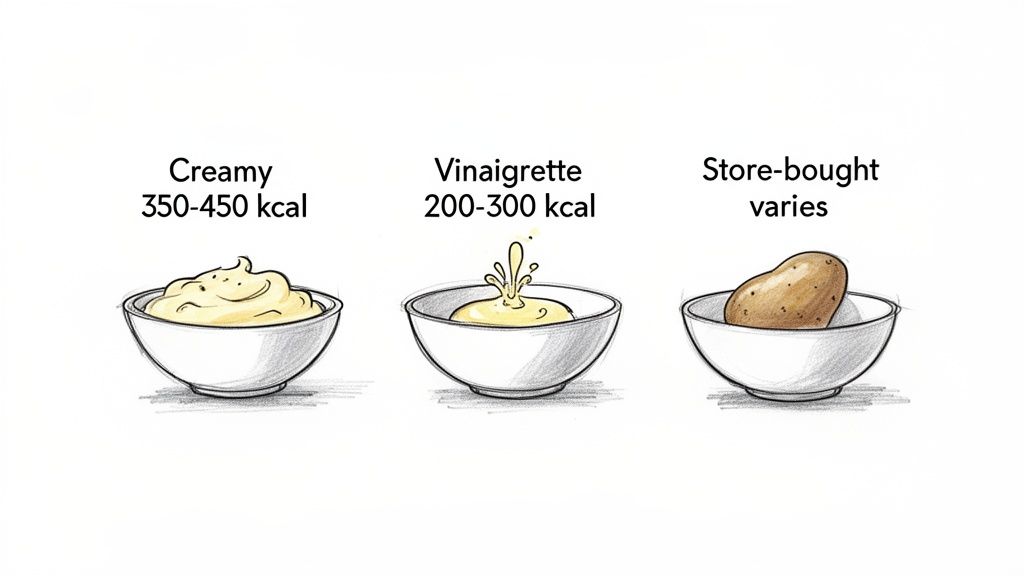
In traditional American-style recipes, the primary contributor to the calorie count is mayonnaise. A single one-cup serving (approximately 240g) made with boiled potatoes, mayo, mustard, celery, and onions falls into that 350-450 calorie range. A substantial portion of these calories comes from fat—typically 25-30 grams per cup, with the mayonnaise alone contributing over 200 of those calories.
For context, a cup of plain boiled potatoes contains only about 150-200 calories. This means the dressing and add-ins can easily double or even triple the final caloric load. For more interesting facts on potato consumption around the world, check out these global potato consumption habits.
Scientific evidence shows the potatoes are not the primary issue. The energy density of potato salad is almost entirely determined by the type and quantity of dressing used.
Potato Salad Calorie Quick Guide
To provide a clearer comparison, here is a quick-reference table outlining the nutritional estimates for common types of potato salad.
| Potato Salad Type | Estimated Calories (1 Cup) | Estimated Fat (grams) |
|---|---|---|
| Creamy (Mayo-Based) | 350-450 | 25-30g |
| Vinaigrette-Based | 180-250 | 10-15g |
| Store-Bought (Avg.) | 300-400 | 20-28g |
As the data indicates, simply switching the dressing style can reduce calorie and fat content by nearly 50%.
A Tale of Two Salads: Creamy vs. Vinaigrette
Understanding the fundamental difference between dressing styles is crucial. It's analogous to choosing between a rich, decadent dessert and a light, refreshing fruit salad—both are satisfying, but their metabolic impacts are vastly different.
-
Creamy, Mayo-Based Salads: These are the classic, hearty salads prevalent in American cuisine. Built on a foundation of full-fat mayonnaise, they are undeniably palatable but carry a significant calorie and fat load that can quickly accumulate.
-
Lighter, Vinaigrette-Based Salads: Often found in German or Mediterranean cooking, these versions substitute mayo for a tangy mixture of oil, vinegar, and herbs. While the oil still contains fat, the overall dish is significantly lighter, offering a zesty flavor profile instead of a heavy, creamy one.
This distinction explains why one potato salad can be a light side dish while another is calorically equivalent to a small meal. By recognizing that the dressing holds the most caloric power, you can make more informed choices.
Mayo vs. Vinaigrette: The Great Calorie Divide
When it comes to potato salad, the dressing you choose does more than just add flavor—it completely rewrites the dish's nutritional story. The choice between a creamy, mayo-based dressing and a sharp, tangy vinaigrette is the single biggest factor determining whether your salad is a heavy indulgence or a lighter side.
Think of traditional, full-fat mayonnaise as a calorie sponge. It's an emulsion made primarily from oil and egg yolks, which are packed with fat and, by extension, calories. Just one tablespoon of standard mayo can bring over 90 calories and 10 grams of fat to the party. You can get the full breakdown in our deep dive into mayonnaise nutrition.
The Calorie Gap Between Creamy and Tangy
When you mix up a classic American-style potato salad, you're usually binding the potatoes in that rich, high-fat emulsion. A typical recipe might call for a half-cup of mayo or more, which can easily pile on 720+ calories before you’ve even added anything else.
On the flip side, a classic vinaigrette is a mix of oil and an acid like vinegar or lemon juice. While the oil itself is pure fat, you tend to use a lot less of it, and the vinegar adds virtually no calories. A tablespoon of a standard vinaigrette usually lands somewhere around 30-45 calories—less than half that of mayonnaise.
This simple swap is incredibly powerful. Opting for a vinaigrette-based dressing instead of a mayonnaise-based one can slash the total calories in your potato salad by as much as 40%, turning a heavy dish into a much more forgiving option.
How Different Traditions Shape Nutrition
You can see this difference play out in potato salads from around the world. Different culinary traditions have naturally created dishes with wildly different calorie counts, all based on their go-to dressing.
For example, a traditional German Kartoffelsalat is often made with a savory dressing of hot broth, oil, and vinegar. A 200g serving of this style usually clocks in around 250-350 calories. Compare that to a classic U.S. Southern potato salad, which can easily top 400+ calories per cup thanks to its generous use of both mayonnaise and hard-boiled eggs. Even a Mediterranean-style salad using an olive oil dressing can hit 300 calories a serving, since a single tablespoon of olive oil brings about 120 calories. You can explore even more fascinating stats about how the world enjoys potatoes on economyinsights.com.
Ultimately, whether your potato salad is a calorie-dense comfort food or a lighter affair comes down to that one key decision: creamy or tangy.
Breaking Down the Bowl: An Ingredient-by-Ingredient Look
It’s easy to think of potato salad as just one thing, but to really understand its calorie impact, you have to look at it like a construction project. Each ingredient is a building block, and some are a lot heavier than others. By pulling it apart, you can see exactly how this simple side dish can become such a calorie-heavy staple.
Let's start with the star of the show: the potato. Many people mistakenly identify the potato as the primary issue, but nutritionally, it is not the main offender. A medium-sized boiled potato contains only about 160 calories with virtually no fat. On their own, they’re actually a great source of potassium and Vitamin C. You can get the full story on their benefits in our guide to the humble potato.
The High-Calorie Players
So if it’s not the potato, what is it? The dressing. This is where the vast majority of calories are hiding. A classic, creamy potato salad gets its richness from mayonnaise, which is incredibly dense in calories. Just a half-cup—a pretty standard amount for a family-sized batch—can load up the bowl with over 720 calories and a whopping 80 grams of fat.
Hard-boiled eggs are another common ingredient that adds up. While they're an excellent source of protein, each large egg brings about 78 calories and 5 grams of fat to the party. If a recipe calls for three or four, you’ve just added another 230–310 calories without even thinking about it.
This chart really puts the dressing situation into perspective.
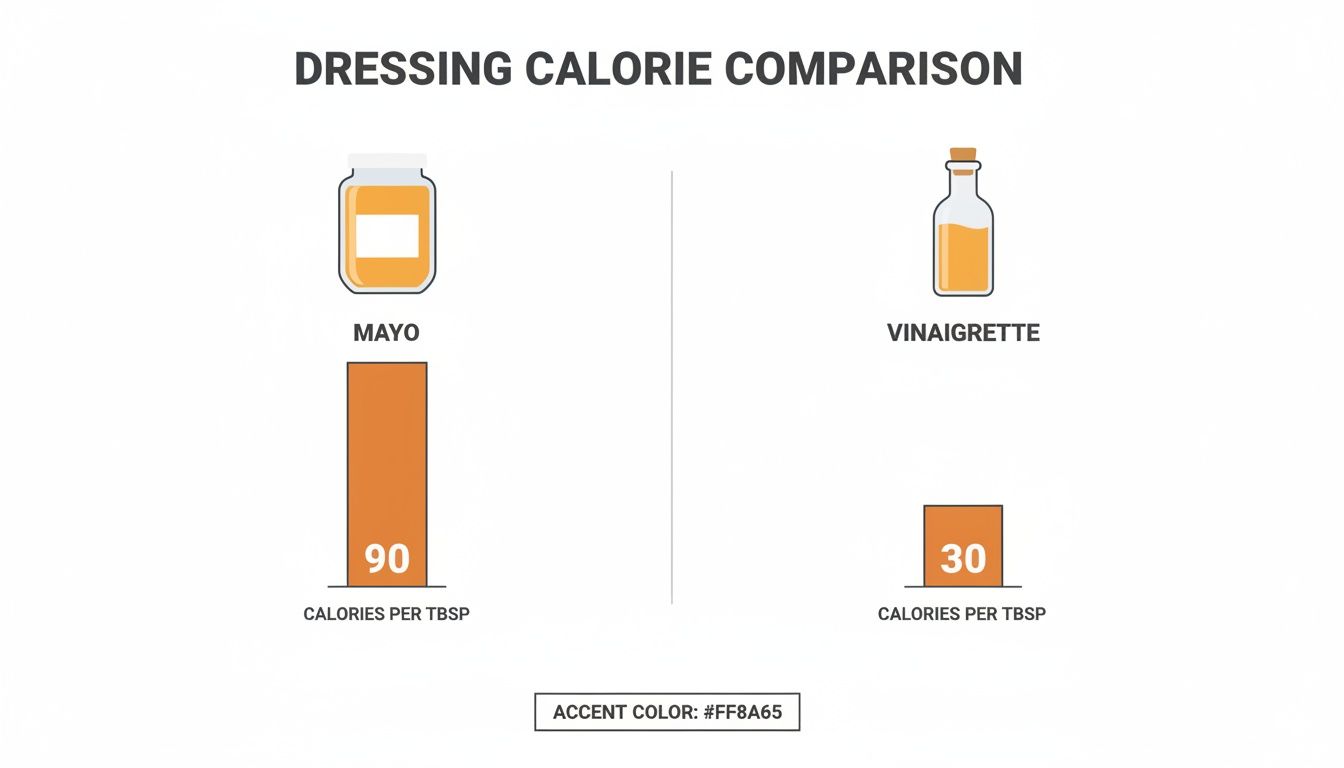
As you can see, swapping mayo for a vinaigrette isn't a small change. The mayonnaise has roughly three times the calories per tablespoon, which shows you exactly where most of the energy in a creamy salad comes from.
Calorie Breakdown of Common Potato Salad Ingredients
To make this even clearer, here’s a table showing how individual ingredients contribute to a typical homemade recipe. Seeing the numbers side-by-side can be a real eye-opener.
| Ingredient | Typical Amount in Recipe | Estimated Calories |
|---|---|---|
| Boiled Potatoes | 2 lbs (about 4 medium) | ~640 |
| Mayonnaise | 1/2 cup | ~720 |
| Hard-Boiled Eggs | 3 large | ~234 |
| Celery | 2 stalks, chopped | ~20 |
| Onion | 1/2 medium, chopped | ~22 |
| Dill Pickle Relish | 2 tbsp | ~15 |
As the table shows, the mayonnaise alone contributes more calories than the potatoes themselves. It’s a powerful reminder that the "add-ins" often define the dish's nutritional profile more than the main ingredient.
Low-Calorie Fillers and Sneaky Extras
Thankfully, not everything sends the calorie count soaring. Many classic ingredients add fantastic flavor and texture for almost no caloric cost. Think of these as your "freebies."
- Celery: That signature crunch comes at a bargain—only about 10 calories per large stalk.
- Onion: A sharp, savory bite costs you around 45 calories for a whole medium onion.
- Pickle Relish: A tablespoon of sweet or dill relish adds a tangy kick for just 5–10 calories.
But you also have to watch out for the "sneaky extras." These are the popular additions that sound innocent but can quickly turn a reasonable side into a high-calorie bomb.
Crispy bacon bits (~50 calories per tablespoon), shredded cheddar cheese (~110 calories per quarter-cup), and dollops of sour cream (~60 calories for two tablespoons) all pile on calories fast.
Once you know the role each ingredient plays—from the starchy potato to the rich mayo and the crunchy celery—you have the power to build a potato salad that fits your goals without giving up the flavors you love.
Store-Bought Versus Homemade: The Calorie Tradeoff
We’ve all been there—standing in the deli aisle, eyeing a tub of potato salad. It’s a tempting shortcut, especially when you’re short on time. But that convenience often comes with a hidden nutritional cost. Commercial recipes aren't just designed for flavor; they're loaded with extra fats, sugars, and sodium that act as preservatives and stabilizers to keep them "fresh" on the shelf.
This is big business. The global potato-processing industry is massive, projected to hit USD 60.08 billion by 2031. In the U.S. alone, 64.5% of all potatoes were processed in 2023. This focus on mass production means that a typical 1-cup serving of store-bought potato salad can easily pack around 359 calories and 22g of fat. That's often 10-20% more than what you'd make at home, thanks to all those additives.
The convenience of pre-made potato salad is undeniable, but that ease often comes at the expense of higher calories, fat, and sodium. Homemade gives you complete control over every ingredient.
Making Healthier Choices In-Store and At Home
So what do you do when you’re in a pinch? If you must buy pre-made, become a label detective. Flip that container over and scan for lower fat and sodium numbers. Be skeptical of long ingredient lists—if it’s full of words you can’t pronounce or includes high-fructose corn syrup, you might want to put it back.
Of course, nothing beats making your own. When you’re in the driver’s seat, you decide exactly how much mayo (or Greek yogurt!) goes in. You control the salt. You have the power to create a version that truly fits your goals. To see just how much of a difference your choices can make, play around with our salad calorie calculator and compare different recipe ideas.
And if you're making a big, healthy batch for the week, good storage is key. Portioning it out into some quality dishwasher safe meal prep containers makes grab-and-go lunches a breeze.
Ultimately, it comes down to what you value more in the moment: quick convenience or total nutritional control. Now you know exactly what the trade-off looks like.
Simple Swaps for a Lighter, Tastier Potato Salad
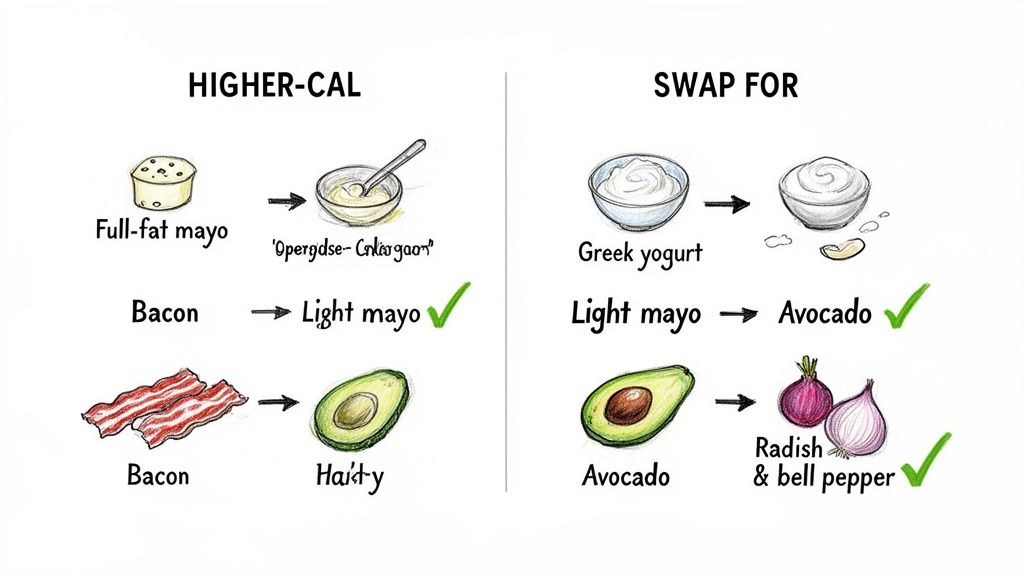
Knowing where the calories are hiding is one thing, but putting that knowledge to use in the kitchen is what really counts. The best part? You absolutely don't have to give up on flavor to make a healthier potato salad. A few simple, clever swaps are all it takes.
The single biggest impact comes from rethinking the dressing. Since full-fat mayonnaise is the main calorie and fat contributor, it's the most logical place to start. The goal isn't to get rid of the dressing, but to swap a heavy, smothering one for something that brightens and complements the potatoes.
Reinvent the Creamy Base
You can get that rich, creamy texture you love without the calorie bomb of traditional mayonnaise. By changing up your base, you’ll slash the final calorie count and often sneak in some extra nutrients, like protein.
Here are a few of my go-to alternatives:
- Plain Greek Yogurt: This is the champion of healthy swaps. It gives you a thick, tangy creaminess, almost like sour cream, but with a huge protein boost. A half-cup of nonfat Greek yogurt lands at just 60 calories, a massive drop from the 700+ calories in the same amount of mayo.
- Light Mayonnaise: If you just can't imagine potato salad without that classic mayo flavor, that's okay! Simply using a light or reduced-fat version will cut the calories by at least half.
- Blended Avocado: For a totally different spin, try blending a ripe avocado with a squeeze of lemon juice and some herbs. It creates a beautiful, vibrant dressing packed with healthy monounsaturated fats.
By just swapping full-fat mayo for nonfat Greek yogurt, you can cut the dressing's calories by over 90%. That one easy change can take a 400-calorie serving down to a much friendlier 200-250 calories.
Bulk It Up with Veggies
Another fantastic trick is to increase the salad's volume with low-calorie, high-fiber vegetables. This "bulking" method makes each portion more filling and adds a ton of nutrients without really moving the needle on the calorie count.
Go beyond the standard celery and onion. These ingredients add flavor and crunch for almost no caloric cost:
- Radishes: Give a wonderful, peppery bite and satisfying crispness.
- Bell Peppers: Add a pop of color, sweetness, and a nice dose of Vitamin C.
- Cucumbers: Bring a cool, refreshing crunch that lightens everything up.
This strategy does more than just lower the calorie density—it adds layers of texture and flavor, making every bite more interesting. When you combine a lighter dressing with more vegetables, you end up with a dish that's both genuinely delicious and much better for you.
Your Top Potato Salad Questions, Answered
Once you understand the fundamentals of potato salad's caloric composition, a few common questions arise. Here are evidence-based answers to help you make informed dietary choices.
How Many Calories Are in Potato Salad with Greek Yogurt?
This is a highly effective modification. Substituting plain Greek yogurt for mayonnaise results in a significant calorie reduction. A cup of a traditional, mayo-heavy potato salad can easily run you 350-450 calories.
By making the same salad with non-fat Greek yogurt, the calorie count drops to approximately 200-250 calories. This substitution not only reduces calories and fat but also increases the protein content of the dish.
Are Potatoes Inherently Fattening?
No, potatoes themselves are not inherently fattening. A single medium-sized boiled potato has about 160 calories, is almost completely fat-free, and is a rich source of nutrients like potassium and Vitamin C.
The perception of potatoes as "fattening" comes from high-calorie preparation methods. The calories skyrocket when we add significant amounts of butter, cream, and, of course, mayonnaise.
The core issue isn't the potato, but how it's dressed. By focusing on healthier preparation, potatoes can be a nutritious part of any diet.
Can I Eat Potato Salad While Trying to Lose Weight?
Absolutely. Successful, long-term weight management is about achieving a negative energy balance over time, not about eliminating specific foods. Potato salad can be included in a weight loss plan with a few strategic adjustments.
Here is how to incorporate it sensibly:
- Practice Portion Control: Sticking to a smaller serving, such as a half-cup, is the most direct way to manage calorie intake.
- Choose a Lighter Recipe: Opt for a vinaigrette-based salad or one made with Greek yogurt. This single modification has a substantial impact.
- Prepare It Yourself: Homemade preparation provides complete control over the ingredients. You can measure the dressing precisely, add more vegetables, and know the exact nutritional content of your meal.
This demonstrates that you don’t have to give up your favorite foods. With a little nutritional awareness and some simple tweaks, you can enjoy a scoop of potato salad and still stay on track with your health and fitness goals.