What Can I Drink While Fasting: A Science-Backed Guide to Hydration
Discover what can i drink while fasting and how it affects autophagy - science-backed drink options and what to avoid.
When you're fasting, the question of what you can drink comes up almost immediately. The simplest answer, supported by scientific principles? Zero-calorie beverages.
This means things like plain water, black coffee, and unsweetened herbal teas are always in the clear. They keep you hydrated and feeling full without providing calories that would trigger a significant insulin response, which is the key mechanism for "breaking" a fast.
Your Quick Guide to Fasting-Approved Drinks
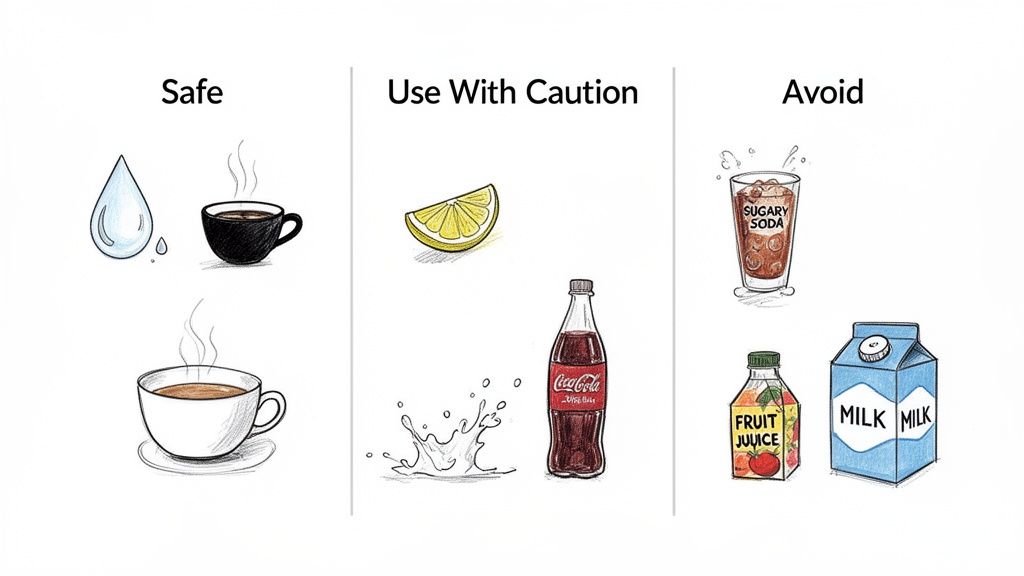
It’s easy to get bogged down in the details when you first start fasting. The most important rule of thumb is to avoid anything that triggers a significant insulin response. In short, that means no calories—especially from sugar or protein, which have the most potent effect on insulin.
To make it simple, here’s a quick rundown of what’s generally safe, what you should be cautious with, and what to steer clear of completely based on current scientific understanding.
Quick Guide to Drinks While Fasting
To give you a clear starting point, we've put together this handy table. Think of it as your cheat sheet for making smart drink choices during your fasting window.
| Drink | Fasting Impact | Recommendation |
|---|---|---|
| Water | Zero calories, zero impact. | Safe. Essential for hydration. |
| Black Coffee | Zero calories, may enhance fat burning. | Safe. Avoid sugar and milk. |
| Herbal Tea | Zero calories, offers flavor and benefits. | Safe. Ensure it's unsweetened. |
| Lemon Water | Minimal calories, generally safe. | Use with Caution. A small squeeze is okay. |
| Diet Soda | Zero calories but has artificial sweeteners. | Use with Caution. May affect insulin for some. |
| Milk | Contains sugar (lactose) and protein. | Avoid. Will break a fast. |
| Fruit Juice | High in sugar and calories. | Avoid. Spikes insulin significantly. |
This table should give you confidence in your basic choices. And if you absolutely can't stand your coffee black, some people find that certain sugar-free syrups can add that touch of sweetness you crave without adding calories and derailing your progress.
Staying properly hydrated is absolutely non-negotiable while fasting, as your body loses water and electrolytes more quickly. You can figure out your personal hydration target using our water intake calculator.
Now that you have the basics, we'll get into the scientific reasoning behind these rules and explore how your drink choices might change depending on whether your goal is weight loss, metabolic health, or autophagy.
Understanding How Drinks Affect Your Fast
To figure out what you can drink while fasting, you first have to know what it means to "break" a fast. It all comes down to a single hormone: insulin.
Think of insulin as your body’s primary metabolic regulator. When you eat or drink things with calories—especially carbs or protein—insulin is secreted to manage the incoming energy. Its job is to tell your cells to absorb glucose from the bloodstream for immediate fuel and, crucially, to signal your body to start storing any extra energy as fat.
When insulin levels are elevated, your body's fat-burning processes (lipolysis) are suppressed. Your body is in "storage mode," not "burning mode."
The Insulin Switch From Sugar to Fat Burning
The physiological goal of fasting is to keep insulin levels low. When you stop consuming calories, your body quickly depletes its readily available glucose stores. With no new fuel coming in and insulin levels dropping, your body must shift its energy source. It’s a lot like a hybrid car that runs out of gas and seamlessly switches over to its electric battery.
Your body’s “battery” is its fat reserves. It starts breaking down fat into molecules called ketones, which then become your new primary source of fuel. This metabolic state, known as ketosis, is what you’re aiming for if you’re fasting for weight loss or metabolic health. Any drink that triggers a significant insulin response will flip that switch right back, bringing your fat-burning to a grinding halt.
The bottom line is this: a drink breaks your fast if it elicits a significant insulin spike. That’s why even a small bit of sugar or protein can disrupt the process—they directly tell your body to stop burning fat and go back to storing energy.
Why Your Fasting Goal Matters
The right answer to "What can I drink?" really depends on why you're fasting in the first place. The rules change based on your goal, and understanding the science behind it is key.
-
For Weight Loss: Here, the main goal is to keep insulin low enough to encourage your body to burn fat. A very small number of calories (think under 50) from something like a squeeze of lemon in your water is generally considered acceptable. It’s just not enough to cause a large enough insulin spike to significantly derail lipolysis.
-
For Autophagy: If you’re fasting for cellular cleanup, or autophagy, the rules get much tighter. Autophagy is a catabolic process where your body degrades and recycles old, dysfunctional cell components. For this, you need a "clean" fast. Evidence suggests that even a tiny amount of calories—or even some non-caloric sweeteners—can interfere with this delicate process by activating pathways like mTOR. You can use our autophagy fasting timer to help you keep track of these more specific fasts.
This focus on clean hydration is seen in cultural practices like Ramadan. One 2022 study on fasting individuals highlighted that plain water was the top choice, proving effective for hydration without interfering with the fast's benefits.
Matching Your Drink to Your Fasting Goal
The truth is, not all fasts are created equal. So when you ask, "What can I drink while fasting?" the only honest answer is: it depends. The right drink for you hinges entirely on your main goal, whether that’s shedding pounds, improving your metabolic health, or kicking off deep cellular repair.
What helps you toward one goal might completely sabotage another. A flexible approach works just fine if you're looking for general weight loss, but you'll need a much stricter game plan for tapping into more advanced biological benefits. Getting this distinction right is the key to making your fast work for you, not against you.
For Weight Loss: A More Flexible Approach
When weight loss is the name of the game, your main job is keeping insulin levels low enough to let your body burn stored fat for energy. From this perspective, a very small number of calories is generally fine.
Something like a splash of lemon juice or a few drops of apple cider vinegar in your water isn't going to cause a major insulin spike. Your body can handle these trace calories without slamming the brakes on fat-burning. The trick is to keep the calorie count incredibly low—think under 50 calories total during your entire fasting window.
Think of your body's fat-burning mode as a busy factory. A tiny delivery of calories is like a single package arriving at the loading dock—it doesn't cause the entire factory to shut down its main production line.
This flowchart lays out the basic rule of thumb: calories trigger insulin, which breaks a fast, while zero-calorie drinks generally don't.
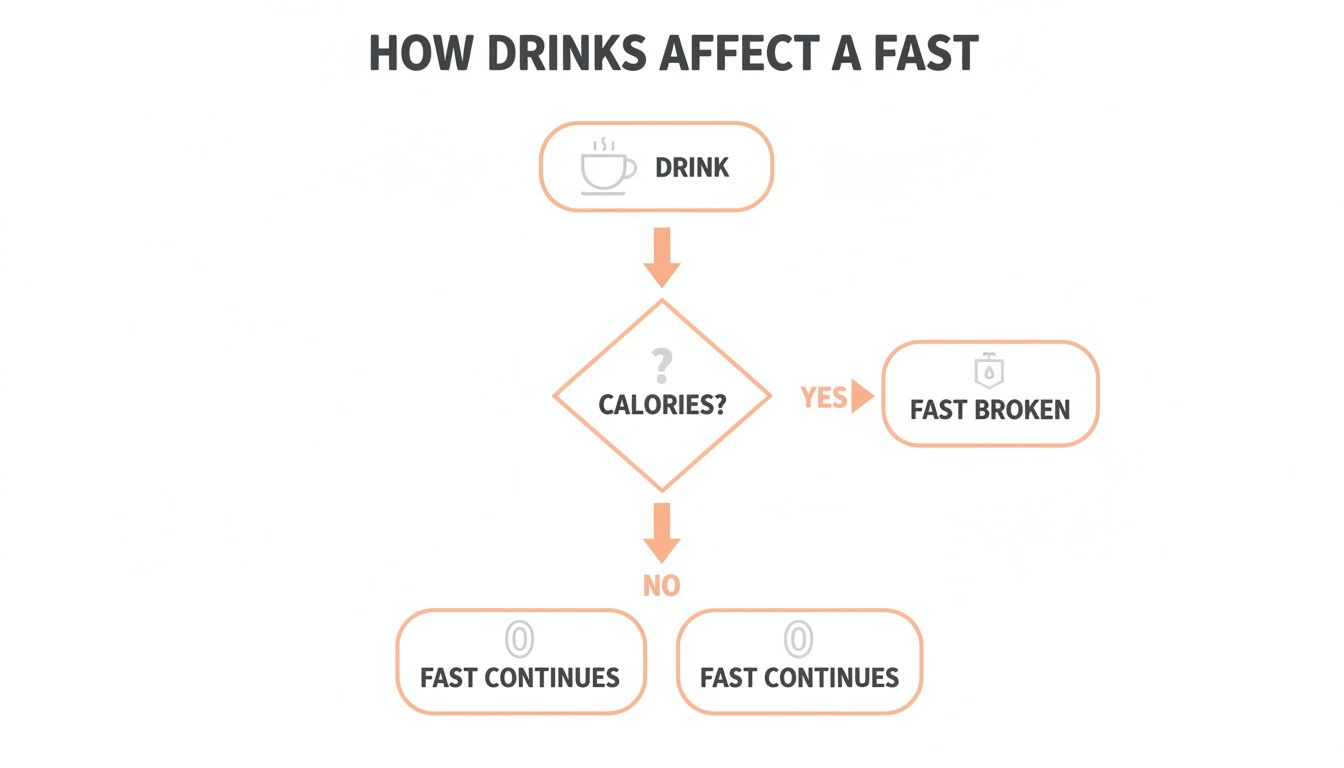
As the chart shows, the decision is pretty clear-cut. If a drink contains calories, it signals the body to release insulin, which effectively tells your body the fast is over.
For Autophagy and Metabolic Health: A Strict Protocol
Now, if your goal is autophagy—your body’s amazing cellular cleanup process—the rules get much tighter. Autophagy is a sensitive state that only kicks in during periods of true energy scarcity. Even a few calories or certain non-caloric sweeteners can stop it in its tracks.
For instance, the artificial sweeteners in diet sodas may be calorie-free, but they can still trigger what's called a cephalic phase insulin response. This is when your brain tastes sweetness, anticipates incoming sugar, and tells your pancreas to release insulin just in case. That tiny insulin bump can be enough to press pause on autophagy. For this reason, a "clean" fast is non-negotiable.
This means you’re sticking to the basics:
- Plain Water: The undisputed champion of a clean fast. It's all you need.
- Black Coffee: No cream, no sugar, no sweeteners. Just pure coffee.
- Unsweetened Herbal Tea: Stick to non-fruity blends like chamomile, peppermint, or ginger.
Even a tiny bit of protein or sugar is enough to signal to your cells that fuel is available, immediately halting that crucial cleanup process.
For those serious about deep metabolic benefits, a water-only fast is the gold standard. A study on supervised prolonged fasts showed participants lost weight at an average rate of 0.9 kg/day at the start, along with significant drops in blood pressure and LDL cholesterol. This approach, relying only on plain water, keeps insulin completely suppressed and maximizes both fat burning and cellular repair. You can explore the powerful results from water-only fasting on PMC.
During a longer or stricter fast, it's vital to stay on top of your minerals. You can use a fasting electrolyte calculator to figure out your specific needs and keep your body running smoothly.
Drinks You Should Always Avoid While Fasting
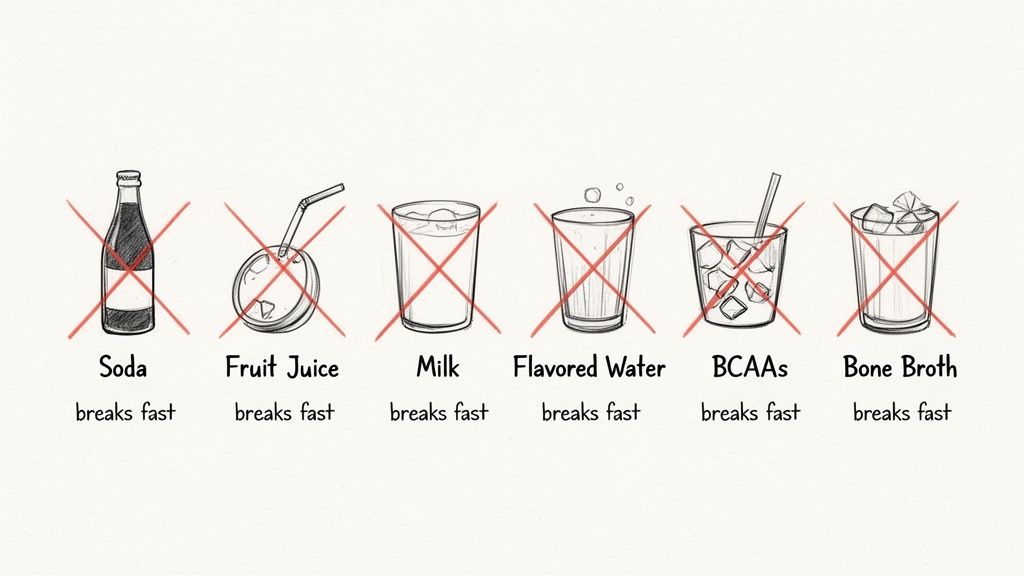
Knowing what you can drink is half the battle. The other half—and arguably the more important part—is knowing what to avoid at all costs. An accidental sip of the wrong beverage can slam the brakes on fat-burning and cellular cleanup, completely undoing all your effort.
Let's make it simple. The most common fasting mistakes come from drinks loaded with sugar and calories. These are the biggest offenders because they trigger a sharp insulin spike, which is basically the metabolic "off switch" for your fast.
The Obvious Fast-Breakers
Some drinks are so clearly off-limits that there's no room for debate. Think of these as a hard "no" because their high sugar and calorie content will instantly end your fast.
- Sugary Sodas and Fruit Juice: It's no surprise these are at the top of the list. A single can of soda or a glass of fruit juice can dump over 30 grams of sugar into your system. That flood of glucose and fructose sends your insulin through the roof, signaling your body to stop burning fat and start storing all that new sugar.
- Milk and Dairy-Based Drinks: Milk contains lactose (a natural sugar) and protein. Both of these macronutrients stimulate insulin, which means lattes, cappuccinos with milk, and dairy-based smoothies are definitely out during your fasting window.
These drinks aren't just a minor slip-up; their impact is immediate and works directly against any fasting goal you might have.
The "Healthy" Impostors to Avoid
This is where things get tricky. Beyond the obvious sugar bombs, a whole category of "healthy" drinks can quietly sabotage your fast. These are the impostors that seem harmless but contain ingredients that wake up your metabolism and halt your progress.
There's nothing more frustrating than thinking you're doing everything right, only to discover a so-called "healthy" drink was the culprit. Anything with calories or a strong sweet taste is a potential risk.
If you want to dig deeper into how even zero-calorie options can cause issues, it’s worth understanding why I'll never drink diet soda, which reveals some of the hidden metabolic effects.
Here are the most common offenders I see people get tripped up on:
- BCAA Supplements: Branched-chain amino acids are a favorite in the fitness world for preserving muscle, but here’s the catch: amino acids are the building blocks of protein. Your body responds to them by releasing insulin, which instantly shuts down fat burning and, more importantly, brings autophagy to a dead stop.
- Bone Broth: While incredibly nutritious, bone broth contains both calories and protein. This makes it a fantastic way to break a fast, but not something to consume during one. It’s especially problematic if autophagy is your main goal, as protein intake signals cellular growth pathways (like mTOR), which is the opposite of cellular cleanup and repair.
- Store-Bought Flavored Waters: Be very careful with these. Many commercial flavored waters have hidden sugars, fruit concentrates, or artificial sweeteners that can still trigger an insulin response. Always flip the bottle over and read the ingredients list—if you see anything beyond water and "natural flavors," it's best to be skeptical.
Simple Recipes for Fasting-Friendly Drinks
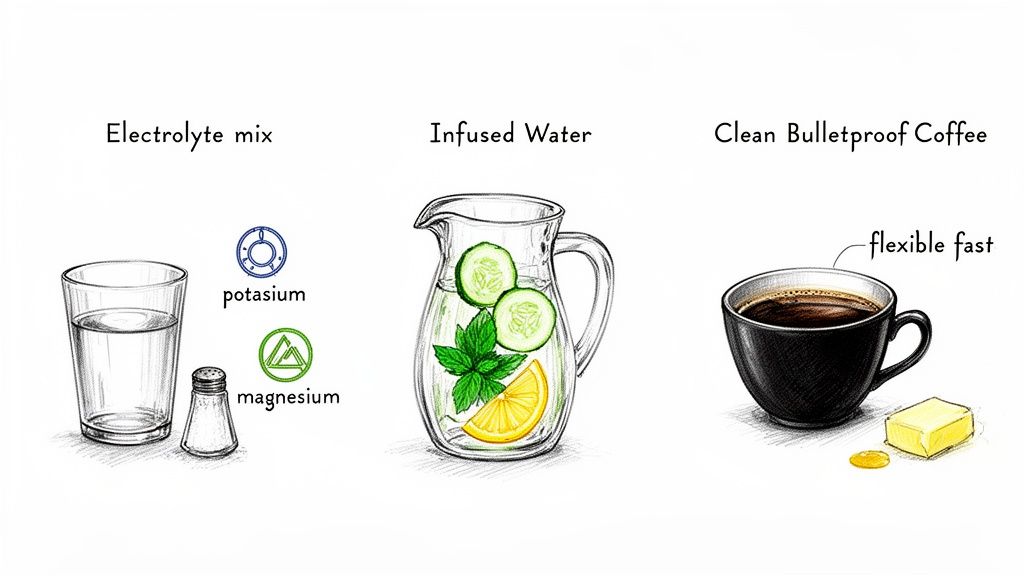
Let's be honest—sticking to a fast can get tough when all you have is plain water. While water is undoubtedly the gold standard for a strict fast, a little bit of variety can be the key to making your fasting routine something you can actually stick with long-term.
These simple recipes are designed to keep your hydration interesting without derailing your main goals.
Even as we explore these options, it’s worth remembering that water is the bedrock of hydration. A fascinating real-world example is the annual Baháʼí fast, where followers abstain from all food and drink from sunrise to sunset. You'd expect them to get dehydrated, but studies show they don't because they hydrate so effectively before the fast begins. It's a powerful reminder that planned water intake is crucial. For those of us not doing a dry fast, this just goes to show why pure water—with its zero calories and zero macros—is the perfect baseline. You can dive deeper into the research on fasting and hydration on PMC.
Homemade Electrolyte Elixir
Ever get that dreaded fasting headache, a random muscle cramp, or a wave of fatigue? That's often your body's signal that it's running low on essential minerals, or electrolytes, which get flushed out along with water when you fast. Mixing up a quick electrolyte drink is a simple and effective way to top them up without breaking your fast.
-
Ingredients:
- 1 liter of water
- ¼ teaspoon of pink Himalayan salt (for sodium)
- ¼ teaspoon of potassium chloride (often sold as a "no-salt" substitute)
- ½ teaspoon of food-grade magnesium powder
-
How to Make It: Just stir everything into your water until it's completely dissolved. Sip on it throughout the day, particularly if you’re feeling sluggish. This simple concoction delivers the minerals you need with virtually no calories, so it's a perfect fit for any type of fast.
Refreshing Infused Waters
If you're craving some flavor but want to keep your fast "clean" for autophagy, infused water is your best friend. The trick is to get the flavor from fruits and herbs without actually extracting any significant calories or sugars.
The goal is infusion, not a smoothie. You want the essence of the ingredients, not the ingredients themselves. Lightly bruise herbs to release oils and slice fruits thinly.
Here are a couple of my favorite combinations:
- Cucumber-Mint: Add a few thin slices of cucumber and a sprig of fresh mint to a pitcher of water. It's incredibly refreshing.
- Ginger-Lemon: Toss a few thin slices of ginger root and a good squeeze of fresh lemon juice into your water bottle.
Let the flavors meld for at least an hour in the fridge. It adds just enough of a twist to make hydration feel like a treat, not a chore.
The ‘Clean’ Bulletproof Coffee
Now, for those on a more flexible fast—maybe your goal is weight loss and you need something to power through the morning—a "bulletproof" style coffee can be a game-changer. Be warned: this absolutely contains calories and will break a strict fast meant for autophagy. Think of it as a tool for extending your fast, not deepening it.
-
Ingredients:
- 1 cup of hot black coffee
- 1 teaspoon of grass-fed butter or ghee
- 1 teaspoon of MCT oil
-
How to Make It: Brew your coffee, then add the butter and MCT oil to a blender and blend until it's creamy and frothy. The healthy fats provide a source of energy that doesn't cause a big insulin spike, which helps you stay in a fat-burning state and keeps hunger at bay.
Just remember to track those calories. A quick entry in a tracking app like BiteKit can help you stay accountable and ensure your "dirty" fast is still perfectly aligned with your goals.
Common Questions About Drinks and Fasting
Alright, we've covered the big rules, but let's be honest—fasting always brings up those nagging "what about..." questions. It's completely normal to wonder about the little things. Let's dive into some of the most common questions I hear and get you some clear, practical answers so you can fast with confidence.
Will a Splash of Milk in My Coffee Break My Fast?
This is probably the number one question people have, and the purist’s answer is yes, it will break your fast. Even a tiny splash of milk contains lactose (a sugar) and protein. As soon as those hit your system, your body gets the signal that fuel has arrived, which prompts an insulin response. That little spike is enough to switch off your body's fat-burning mode and hit the pause button on autophagy.
So, what does that mean for you? If you’re fasting strictly for metabolic health or cellular cleanup, that coffee needs to be black. No exceptions. However, if your main goal is weight loss and you're focused on your total daily calories, a tiny splash is unlikely to wreck your progress. Just be honest with yourself about your goals.
Is Diet Soda Okay While Fasting?
Ah, the diet soda debate. This one is a real hot topic in the fasting world. While it's true that diet sodas are zero-calorie, the trouble comes from the intense artificial sweeteners they use, like aspartame or sucralose.
For some people, that sweet taste alone can trick your brain into thinking sugar is coming. This can trigger something called a cephalic phase insulin response, where your body releases insulin in anticipation of sugar that never even arrives.
Even if you're someone who doesn't get an insulin spike, there's another problem: artificial sweeteners can ramp up your cravings for real sugar, making it a whole lot harder to stick with your fast.
My take? If you're doing a more flexible fast for weight loss, it might be okay in a pinch. But if you’re aiming for a clean fast and autophagy, it’s best to steer clear.
What About Lemon Water?
Good news here! A small squeeze of fresh lemon in your water is perfectly fine for almost any fasting goal. We're talking about a very small amount of carbs (less than a gram) and only a handful of calories in a single wedge.
This amount is so minimal that it’s highly unlikely to cause any meaningful insulin spike or disrupt your fast. In fact, adding a little lemon can be a fantastic way to flavor your water, which often helps you drink more and stay hydrated. It’s a safe and refreshing choice.
Do Herbal Teas Break a Fast?
For the most part, herbal teas are a fantastic fasting-friendly option. They're a great way to add some variety and warmth to your day. Unsweetened teas like chamomile, peppermint, and ginger are calorie-free and definitely won't break your fast.
The only thing to watch out for are some of the fancier, fruit-based tea blends. If you see chunks of dried fruit in your tea mix, be aware that they can leach small amounts of sugar into the water as the tea steeps. If you're doing a strict fast, just take a quick look at the ingredients list to make sure there are no hidden sugars, sweeteners, or fruit pieces.