What to Eat to Lose Belly Fat in 2026
Discover what to eat to lose belly fat with this science-backed guide. Learn about foods, habits, and meal plans to effectively target abdominal fat.
If you're asking "what should I eat to lose belly fat?" you're already asking the right question. The answer isn't a single magical food or endless crunches, but a smart shift in your overall eating habits. While you can't "spot-reduce" fat from just one area, there is a clear scientific consensus: focusing on a diet rich in soluble fiber, lean protein, and healthy fats is the most effective way to shed the dangerous visceral fat that accumulates around your midsection.
The Scientific Approach to Losing Belly Fat
Let's get straight to it. The key to losing belly fat isn't a miracle pill or workout fad. It all comes down to the quality of the food on your plate. Yes, you need to be in a modest calorie deficit (burning more calories than you consume), but that's just the starting line. The real magic happens when you focus on what those calories are made of.
Think of it this way: a calorie deficit is the blueprint for a smaller waistline, but nutrient-dense foods are the high-quality building materials that make it happen. Choosing the right foods sends a powerful signal to your body, telling it to burn stubborn fat more efficiently—especially that deep-set visceral fat that poses the biggest health risks.
The Power of Nutrient-Dense Foods
Supercharging your results comes down to focusing on a few key food groups. These foods don't just fill you up; they work on a physiological level to stabilize blood sugar, reduce inflammation, and keep you feeling full, all of which are crucial for managing belly fat.
Here's what to prioritize:
- Boost Soluble Fiber: Foods like oats, avocados, and beans are fantastic for this. They form a gel-like substance in your gut, slowing down digestion. This keeps you satisfied for hours and prevents the dramatic insulin spikes that tell your body to store fat.
- Prioritize Lean Protein: Chicken, fish, and legumes do more than just build muscle. Your body actually burns more calories digesting protein compared to fats and carbs—this is known as the thermic effect of food. Plus, it's incredibly satiating.
- Embrace Healthy Fats: Don't fear the fat! Sources like olive oil, nuts, and seeds actively fight inflammation, which we now know is a major trigger for visceral fat storage.
By building your meals around these nutrients, you create an internal environment that encourages your body to tap into its stored fat for energy, particularly from your abdomen.
Small Changes, Big Impact
You don't need to completely overhaul your life overnight. Honestly, the most successful changes are the small, sustainable ones. It’s not just about cutting calories, but about making smart additions. For instance, something as simple as incorporating the best green tea for weight loss into your routine can give your metabolism a helpful nudge.
The goal here is to make healthy eating feel natural, not like a chore. Once you understand the "why" behind these food choices, you'll have a clear roadmap not just to a smaller waistline, but to feeling a whole lot better, too.
Why Belly Fat Is Different and More Dangerous
When we talk about body fat, it’s crucial to understand that not all of it is the same. The fat around your belly is a perfect example, and it’s best to think of it like an iceberg. The part you can see and pinch is only the tip.
That soft, pinchable layer right under your skin is called subcutaneous fat. While it's not something we generally want in excess, the real danger is the fat you can't see. It’s what’s lurking below the surface that causes the most trouble.
Hidden deep inside your abdomen is a different kind of fat called visceral fat. It wraps itself around your vital organs—like the liver, stomach, and intestines—and it's this hidden fat that poses the biggest threat to your health.
The Hidden Risks of Visceral Fat
The problem with visceral fat is that it's not just sitting there. It’s incredibly active, almost like a rogue organ. It constantly pumps inflammatory substances and hormones into your system, throwing your body's natural balance completely out of whack.
This isn't just a minor issue. We know that high levels of visceral fat are strongly tied to a greater risk for serious, chronic diseases. The inflammatory compounds it releases, known as cytokines, create a state of low-grade, body-wide inflammation that can quietly wreak havoc for years.
This persistent inflammation gets in the way of how your body uses insulin, the hormone responsible for managing your blood sugar. Over time, your cells can become resistant to insulin's signals, a condition called insulin resistance. This puts your pancreas into overdrive and paves the way for type 2 diabetes.
A higher amount of visceral fat is directly associated with a greater risk for heart disease, type 2 diabetes, high blood pressure, and even certain types of cancer. Targeting this fat is less about aesthetics and more about safeguarding your long-term health.
Hormones That Fuel Belly Fat Storage
So, what tells your body to store this dangerous fat in the first place? Two key hormones are the main culprits: cortisol and insulin. Understanding their function is a key step to figuring out what to eat to lose belly fat for good.
-
Cortisol (The Stress Hormone): Your body releases cortisol in response to stress. In short bursts, it’s a helpful survival mechanism. But when stress becomes chronic—from work, life, or poor sleep—your cortisol levels stay high. Studies consistently show that elevated cortisol tells your body to store fat right where you don't want it: around your organs as visceral fat.
-
Insulin (The Storage Hormone): When you eat a meal high in sugar or refined carbs, your blood sugar spikes. Your body responds by releasing a flood of insulin to move that sugar out of your blood. When this cycle happens over and over, it signals your body to go into fat-storage mode, especially in the abdominal area.
This infographic breaks down how simple food choices can help you manage these hormones.
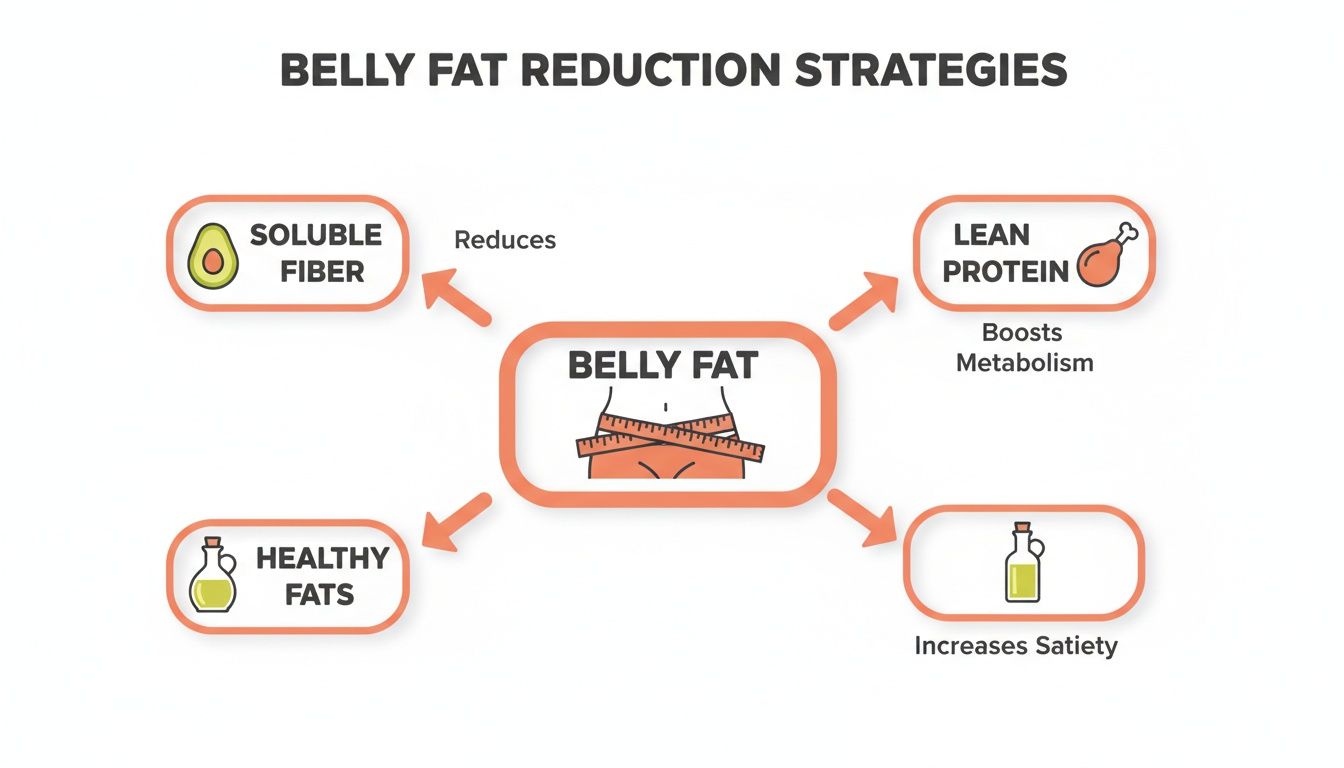
As you can see, shifting your diet to include more soluble fiber, lean protein, and healthy fats directly counteracts the very mechanisms that build visceral fat. Now that you understand the real danger of this hidden fat and what drives it, you can start making targeted changes.
If you're curious about where you stand, you can get a better idea of your personal risk with our visceral fat estimator.
How Soluble Fiber Fights Abdominal Fat
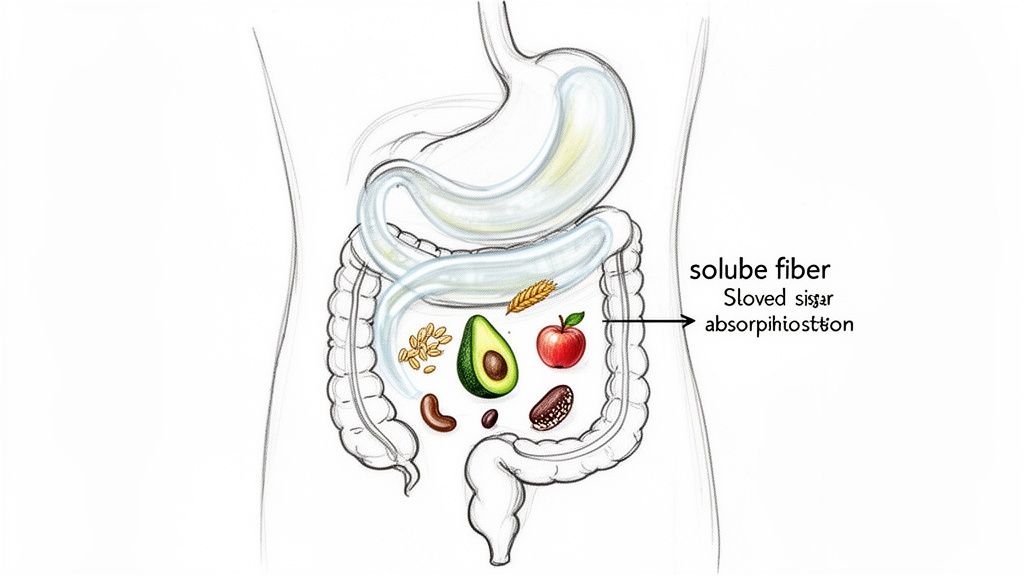
When it comes to losing belly fat, one of the most effective strategies you can put into action today is eating more soluble fiber. Think of it as a secret weapon hidden inside everyday foods that actively works to reduce belly fat from the inside out.
So, what makes it so special? Unlike other nutrients that are quickly digested, soluble fiber dissolves in water and forms a thick, viscous gel in your stomach. It might not sound pretty, but this gel is a game-changer for fat loss.
This gel essentially puts the brakes on your digestive system. By slowing everything down, it helps you feel fuller and more satisfied for hours after a meal. The result is that you naturally eat less throughout the day without the constant battle against hunger and cravings.
The Science of Satiety and Blood Sugar Control
The benefits go much deeper than just feeling full. The real power of soluble fiber is how it influences your hormones, particularly insulin. As we've discussed, insulin spikes are a primary driver of visceral fat storage.
Because the fiber gel slows down digestion, it also slows the release of sugar into your bloodstream. This is crucial. Instead of the sharp blood sugar spikes that trigger a flood of fat-storing insulin, you get a much gentler, more stable release of energy. Your body stays balanced, and you avoid the hormonal signal to pack on fat around your midsection.
This isn't just theory—the science is solid. An influential observational study of over 1,100 adults found that for every 10-gram increase in daily soluble fiber intake, the rate of belly fat accumulation decreased by 3.7% over five years. It's a small change with a significant long-term impact.
Top Soluble Fiber Foods to Add to Your Diet
Getting more soluble fiber is simpler than you might think, and you don't have to eat anything strange or exotic. The key is to consistently include a few of these powerhouses in your daily meals.
Here are some of the best sources to focus on:
- Oats: A bowl of oatmeal is the quintessential high-fiber breakfast. It's a perfect way to start your day on the right foot.
- Avocados: This fan-favorite is packed with healthy fats and a fantastic amount of soluble fiber.
- Legumes: Beans, lentils, and chickpeas are cheap, versatile, and loaded with both fiber and plant-based protein.
- Apples and Citrus Fruits: An apple a day really can help keep belly fat at bay. Pears, oranges, and grapefruit are also excellent choices.
- Brussels Sprouts and Broccoli: These cruciferous veggies are fiber giants and bring a host of other health benefits to the table.
Making simple swaps can have a huge effect. Try adding a half-cup of black beans to your salad, snacking on an apple instead of crackers, or switching from white rice to quinoa. These small adjustments add up quickly.
For more creative ways to get your daily dose, check out some of our favorite high-fiber meal ideas. Start seeing fiber not as just "roughage," but as a strategic tool for reaching your goals.
The Role of Lean Protein in Burning More Fat
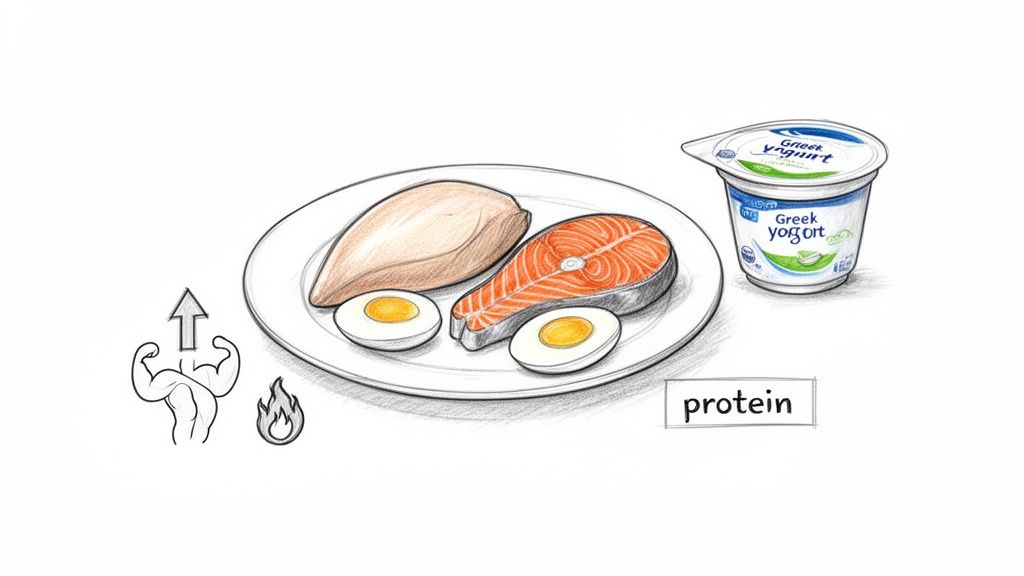
If you think of soluble fiber as your defense against belly fat, then lean protein is your star offensive player. When it comes to what to eat to lose belly fat, protein is hands-down the most powerful tool in your arsenal. It attacks body fat from three different angles, making it an essential part of any smart fat-loss strategy.
First off, protein has a high thermic effect of food (TEF). This is just a scientific way of saying your body has to work harder—and burn more calories—to digest protein than it does for carbs or fats. Think of it as cranking up your body's furnace every time you eat a protein-rich meal.
This built-in metabolic boost means a chunk of the calories you get from protein are essentially canceled out by the energy needed to process it. While it's not a silver bullet on its own, it gives you a small but consistent metabolic advantage every single day.
Taming Hunger and Building Satiety
The TEF is a nice perk, but protein's real superpower is its incredible ability to manage your appetite. It is, by a long shot, the most satiating of the three macronutrients. It makes you feel full and keeps you feeling that way for hours.
This works on a hormonal level. Eating protein fires up the production of satiety hormones like peptide YY and GLP-1, which are the messengers that tell your brain, "Hey, we're full down here!" At the same time, it dials down ghrelin, the "hunger hormone" that sends you rummaging through the pantry.
It’s why a breakfast of eggs and Greek yogurt can carry you all the way to lunch, but a bagel or sugary cereal leaves you hungry an hour later. By keeping hunger in check, protein makes it so much easier to stay in a calorie deficit without feeling miserable or fighting constant cravings. That's the key to making fat loss stick.
Preserving Muscle and Boosting Metabolism
Finally, protein acts as your metabolism's bodyguard when you're cutting calories. When you lose weight, your body doesn't just burn fat—it's also happy to break down muscle for fuel. Losing muscle is a huge setback because it slows your metabolism right down.
Getting enough protein while in a calorie deficit sends a clear signal to your body: "Hands off the muscle!" This encourages your system to preserve that precious, calorie-burning tissue and focus on pulling energy from your fat stores instead.
The science on this is compelling. One major study found that people on a high-protein diet, where 25-30% of calories came from protein, lost 61% more abdominal fat over 12 weeks than those on a standard diet.
Best Lean Protein Sources for Fat Loss
To tap into these benefits, aim to include a quality source of lean protein with every meal. You can't go wrong with these top-tier choices:
- Chicken and Turkey Breast: The gold standard for lean protein. They're incredibly versatile and give you a solid protein foundation for any meal.
- Fish (especially Salmon): Fatty fish like salmon pulls double duty. It delivers high-quality protein and is packed with omega-3 fatty acids, which help lower inflammation and may even give your resting metabolism a nudge.
- Eggs: A true nutritional powerhouse. Eggs are a complete protein, they’re affordable, and they are fantastic for satiety. And don't throw out the yolk—that’s where most of the vitamins are.
- Greek Yogurt (plain): With almost twice the protein of regular yogurt, plain Greek yogurt is an amazing choice for a satisfying breakfast or a quick snack.
- Legumes (Beans, Lentils, Chickpeas): These plant-based wonders offer a powerful one-two punch of protein and soluble fiber, making them a fantastic food for fighting belly fat.
Hitting your daily protein goal can feel like a challenge some days. For more practical strategies, take a look at our complete guide on how to eat more protein.
Using Healthy Fats to Shrink Your Waistline
For a long time, fat was the villain in the nutrition world. We were all told to cut it out, which gave rise to a whole generation of "fat-free" products that were secretly packed with sugar and refined carbs. It’s time we put that myth to rest for good. The truth is, eating the right kind of fat is one of the most effective strategies for losing stubborn belly fat.
The fats you want to focus on are monounsaturated fatty acids (MUFAs) and omega-3 fatty acids. You'll find these powerhouses in whole foods like avocados, extra virgin olive oil, nuts, seeds, and fatty fish.
Unlike the processed trans fats or an overabundance of certain saturated fats, these healthy fats actively help you trim your waistline. They do this by directly targeting two of the biggest culprits behind visceral fat: chronic inflammation and insulin resistance.
How Good Fats Fight Belly Fat
Think of chronic inflammation as an internal alarm system that’s constantly blaring, often triggered by stress, lack of sleep, or a diet high in processed foods. This state of alarm signals your body to store fat, particularly deep in your abdomen. Healthy fats, especially omega-3s, act like a calming agent, turning down the volume on that inflammation and making it much harder for your body to accumulate visceral fat.
At the same time, MUFAs get to work on improving your body's sensitivity to insulin. When your diet is rich in these fats, your cells become more responsive to insulin’s signals, which helps keep your blood sugar stable. This prevents the dramatic insulin spikes that essentially command your body to enter fat-storage mode around your midsection.
The bottom line is that healthy fats help shift your body from a fat-storing state to a fat-burning one. They improve your metabolic health from the inside out, creating the right conditions for your body to let go of stubborn belly fat.
This isn't just a theory; it's the foundation of the incredibly effective Mediterranean diet. A 2020 review of 15 different trials showed that people following a Mediterranean-style diet—which is naturally rich in healthy fats—lost 1.5–2kg more belly fat over a year compared to those on traditional low-fat diets. For more on the specific science, you can explore how MUFAs target abdominal fat in this breakdown from Rush University.
The table below breaks down some of the best food sources for these fats and how you can easily start adding them to your meals.
Top Belly-Fat-Fighting Healthy Fats
| Food Source | Key Fat Type | Primary Benefit | Serving Idea |
|---|---|---|---|
| Avocado | Monounsaturated | Improves insulin sensitivity and reduces inflammation. | Mash ¼ avocado on toast or add slices to a salad. |
| Olive Oil (Extra Virgin) | Monounsaturated | Fights inflammation and improves heart health. | Drizzle over roasted vegetables or use in salad dressings. |
| Almonds & Walnuts | Monounsaturated & Omega-3 | Provides lasting satiety and helps control blood sugar. | A small handful (about 1 oz) for a snack. |
| Chia & Flax Seeds | Omega-3 & Fiber | Reduces inflammation and supports digestive health. | Add 1-2 tbsp to smoothies, yogurt, or oatmeal. |
| Salmon & Fatty Fish | Omega-3 (EPA/DHA) | Potent anti-inflammatory that directly combats visceral fat. | A 4-6 oz fillet, baked or grilled, twice a week. |
By prioritizing these foods, you're not just adding fat—you're adding smart, functional ingredients that work with your body to achieve your goals.
Simple Swaps for a Flatter Stomach
Making these changes doesn't have to be complicated. It’s all about making smarter, more satisfying substitutions that you can actually stick with.
Here are a few easy swaps to get you started:
- Ditch the Mayo: Instead of mayo on a sandwich or in tuna salad, use creamy mashed avocado. You get a better fat profile plus a bonus of fiber.
- Upgrade Your Salad Dressing: Forget the sugary bottled dressings. Whisk together some extra virgin olive oil, lemon juice, and a pinch of salt and pepper for a quick, healthy vinaigrette.
- Choose Smarter Snacks: When you're craving something crunchy, trade the chips or pretzels for a small handful of almonds or walnuts. They deliver healthy fats and protein that will actually keep you full.
- Cook with Olive Oil: Make extra virgin olive oil your go-to for sautéing on low-to-medium heat. It's also perfect for drizzling over soups, grilled fish, or roasted vegetables right before serving.
These small adjustments add up quickly, building a dietary pattern that actively helps you win the battle against belly fat.
Your One-Day Belly Fat Loss Meal Plan
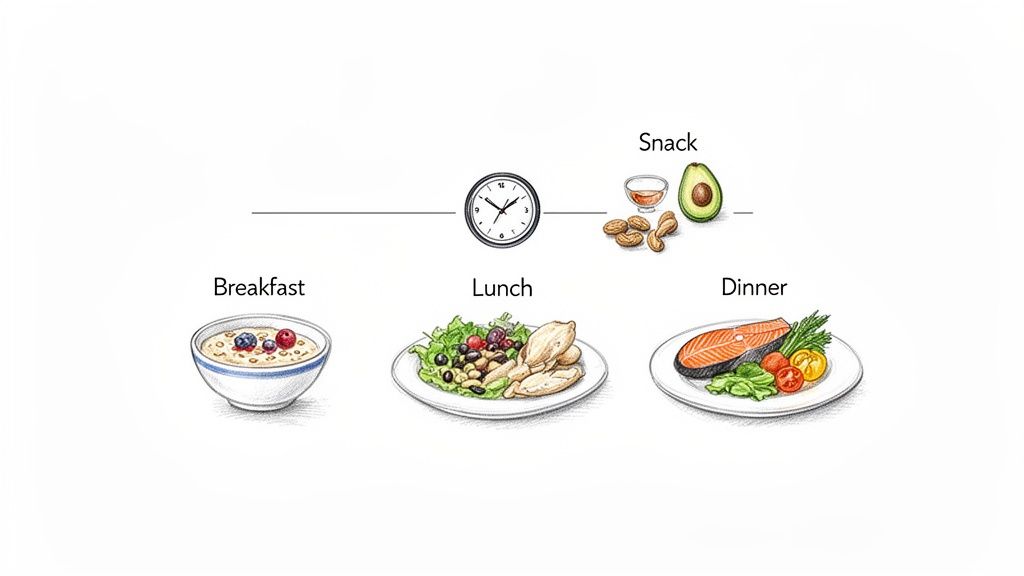
Alright, we've covered the science behind soluble fiber, lean protein, and healthy fats. Now it's time to put that knowledge on a plate. This sample meal plan is all about showing you what a day of eating for belly fat loss actually looks like—no guesswork required.
Think of this as a blueprint, not a strict rulebook. The real goal is to give you a framework for building your own satisfying meals that keep you full, stabilize your energy, and set the stage for your body to start burning stubborn fat.
Breakfast: A Powerful Start
How you start your morning really matters. A breakfast packed with protein and fiber is your best bet for kicking off your metabolism and keeping you full until lunch. This combo helps you avoid that mid-morning energy crash that so often leads to grabbing a sugary snack.
- Example Meal: Scrambled eggs with spinach and a side of avocado.
- Why It Works: A couple of eggs give you a solid protein foundation. The spinach adds fiber and key nutrients, while a quarter of an avocado provides those healthy monounsaturated fats and even more soluble fiber. The result is steady energy, not a blood sugar rollercoaster.
Lunch: A Balanced Midday Refuel
Lunch needs to replenish your energy without making you feel like you need a nap. The trick is to pair lean protein with a hefty serving of non-starchy vegetables and a touch of healthy fat. This formula is perfect for preventing that classic afternoon slump.
Lunch Strategy: Build your plate around a lean protein source, fill at least half of it with colorful vegetables, and add a sprinkle of healthy fats. This simple structure guarantees a nutrient-dense meal that supports your fat-loss goals.
A great real-world example is a big salad with mixed greens, topped with grilled chicken breast, cucumbers, bell peppers, tomatoes, and a tablespoon of olive oil vinaigrette. It's light but incredibly satisfying, giving you exactly what you need to own the afternoon.
Dinner: The Final Fat-Burning Meal
For your last meal of the day, the focus should again be on lean protein and fibrous veggies. This combination helps your body repair muscle tissue overnight and keeps you feeling full, which is key for fighting off late-night snack cravings. A little healthy fat here also helps you absorb all the nutrients from your meal.
- Example Meal: Baked salmon with roasted broccoli and asparagus.
- Why It Works: A 4-6 oz fillet of salmon is a powerhouse, delivering both high-quality protein and anti-inflammatory omega-3 fatty acids. Roasting broccoli and asparagus with a bit of olive oil makes them delicious while loading you up with fiber for great digestive health and lasting fullness.
Smart Snacking
Snacks aren't the enemy—they're a tool for managing hunger and keeping your metabolism humming. A smart, well-timed snack can be the very thing that prevents you from overeating at your next meal.
Just make sure your snack has some protein or fiber. A handful of almonds, an apple with a spoonful of peanut butter, or a cup of plain Greek yogurt are all fantastic choices. They bridge the gap between meals, provide steady energy, and keep cravings from taking over. If you want to make things even easier, looking into structured anti-inflammatory diet meal plans can be a great way to stay consistent.
Common Questions About Diet and Belly Fat
Embarking on a journey to lose belly fat is exciting, but it's natural for questions and a bit of uncertainty to pop up along the way. Let's clear the air and tackle some of the most common sticking points I hear from people, so you can move forward with confidence.
Can I Lose Belly Fat Without Exercise?
So, do you have to live in the gym to see your waistline shrink? The short answer is no. When it comes to shedding fat, your diet is doing most of the heavy lifting.
Creating a calorie deficit through smart food choices is the single most important factor for fat loss. By consistently eating meals built around soluble fiber, lean protein, and healthy fats, you'll prompt your body to burn its overall fat stores, and that includes the stubborn fat around your middle.
That said, think of diet and exercise as a powerhouse duo. Tossing in some physical activity—especially a mix of strength training and cardio—will definitely accelerate your progress. Exercise torches extra calories, sure, but it also builds metabolically active muscle that helps you maintain a leaner, stronger physique long-term.
Think of it this way: Your diet is what gets the scale moving down. Exercise is what reshapes and sculpts your body as the fat comes off.
How Does Alcohol Affect Belly Fat?
Alcohol can be a sneaky saboteur on your mission to lose belly fat. Its impact is a triple-threat that works directly against your goals.
First off, most alcoholic drinks are loaded with "empty" calories. They give you a shot of energy with virtually zero nutritional benefit, and it’s incredibly easy to drink hundreds of calories without feeling full.
Second, alcohol has a knack for lowering your inhibitions and cranking up your appetite. This often leads to late-night snacking or food choices you’d normally skip. But the biggest problem is physiological: when alcohol is in your system, your body slams the brakes on everything else to process it. This effectively pauses your body's fat-burning process until every last drop is metabolized.
Finally, regular heavy drinking has been clearly linked to higher levels of cortisol, the body’s stress hormone, which is known to encourage the storage of visceral fat. If you're serious about results, cutting back on alcohol is one of the most powerful moves you can make.
How Long Until I See a Difference in My Belly?
This is the big one, isn't it? The timeline is different for everyone and depends on your starting point, genetics, and—most importantly—your consistency.
With that in mind, many people start to feel a difference, like less bloating and looser-fitting clothes, within the first 2 to 4 weeks.
More noticeable, visible changes in the mirror usually start to appear after about 6 to 8 weeks of sticking to your plan. Just remember, a healthy and sustainable pace for fat loss is around 1 to 2 pounds per week. The key is patience. Focus on building solid, repeatable habits, and trust that the physical changes will follow.