AI Body Fat Photo Estimator
Upload a physique photo and get an AI-estimated body fat percentage with muscle group assessment — no calipers or DEXA needed.
Privacy: Your photo is sent directly to the AI for analysis and is not stored on our servers.
Upload Physique Photo
Best results with a front or side pose in form-fitting or minimal clothing, good lighting.
Click to upload or drag and drop
JPEG, PNG, or WebP — max 10MB
What Is Body Fat Percentage?
Body fat percentage is the proportion of your total body weight that is fat tissue. The rest — muscle, bone, organs, water — is called lean body mass. Unlike body weight alone, body fat percentage gives you a clearer picture of your actual body composition and fitness level.
Two people with the same height and weight can look and perform very differently depending on their body fat percentage. A person with 15% body fat is leaner and typically more muscular than one at 25%, even if the scale shows the same number.
Body Fat Category Reference
The ranges below are based on widely accepted fitness standards from the American Council on Exercise (ACE):
Males
Females
How AI Photo Estimation Works
The AI analyzes visual cues in your photo that experienced coaches use to estimate body fat:
Skin & Subcutaneous Fat
Visible skin folds, softness around the waist and hips, and overall body roundness.
Muscle Definition
Striations, separation between muscle groups, and vascularity indicate lower body fat.
Fat Distribution
Where fat is stored (abdominal, hip, thigh) relative to overall body frame and sex.
Comparing Body Fat Measurement Methods
DEXA Scan
Gold standard. Measures bone, fat, and lean tissue separately. Requires a clinic visit.
Hydrostatic Weighing
Highly accurate underwater weighing. Requires specialized equipment and a lab.
Skinfold Calipers
Measures subcutaneous fat at specific body sites. Needs a skilled technician for accuracy.
Bioelectrical Impedance (BIA)
Home scales with BIA are convenient but affected heavily by hydration levels.
AI Photo Estimation (This Tool)
Free and instant. Uses AI visual analysis similar to how a trained coach assesses physique.
Tips for More Accurate Results
Use good, even lighting
Harsh side lighting or shadows can exaggerate muscle definition and make body fat appear lower. Natural daylight or even indoor lighting is ideal.
Wear minimal, form-fitting clothing
Loose or baggy clothing hides your actual body shape. Shorts and a fitted top, or swimwear, give the AI the most information to work with.
Take a relaxed, standing pose
Flexing or tensing muscles hides subcutaneous fat and makes the estimate inaccurate. A relaxed front or side stance is preferable.
Be consistent when tracking progress
For tracking changes, use the same time of day (morning after waking), same pose, same lighting, and similar camera distance each time.
Frequently Asked Questions
How accurate is an AI body fat photo estimate?
Visual AI body fat estimation typically has a margin of error of ±3–5 percentage points, similar to trained coaches doing visual assessments. Accuracy improves with better photo quality, appropriate lighting, and minimal clothing.
What type of photo gives the most accurate result?
A front or side-profile standing pose in form-fitting or minimal clothing, under good even lighting. Avoid flexing, harsh shadows, or baggy clothes as these significantly affect the estimate.
Is my photo stored after analysis?
No. Your photo is sent directly to Google Gemini for AI analysis and is not stored on BiteKit servers. The image is processed in real-time and discarded immediately after.
What are the body fat categories?
For males: Essential fat (2–5%), Athlete (6–13%), Fitness (14–17%), Average (18–24%), Obese (25%+). For females: Essential fat (10–13%), Athlete (14–20%), Fitness (21–24%), Average (25–31%), Obese (32%+). These ranges follow American Council on Exercise standards.
How does this compare to DEXA or calipers?
DEXA scans and hydrostatic weighing are the most accurate at ±1–3% error. Skinfold calipers and AI photo estimation are both in the ±3–5% range. Photo estimation is less accurate than lab methods but is completely free and instantly accessible.
Can I use this tool to track progress over time?
Yes — for tracking trends, consistency is key. Use the same lighting, pose, time of day, and camera distance each time. Even with some absolute measurement error, consistent methodology shows you the direction and magnitude of change reliably.
iPhone app · 3-day free trial
You're likely eating 500 calories more than you think
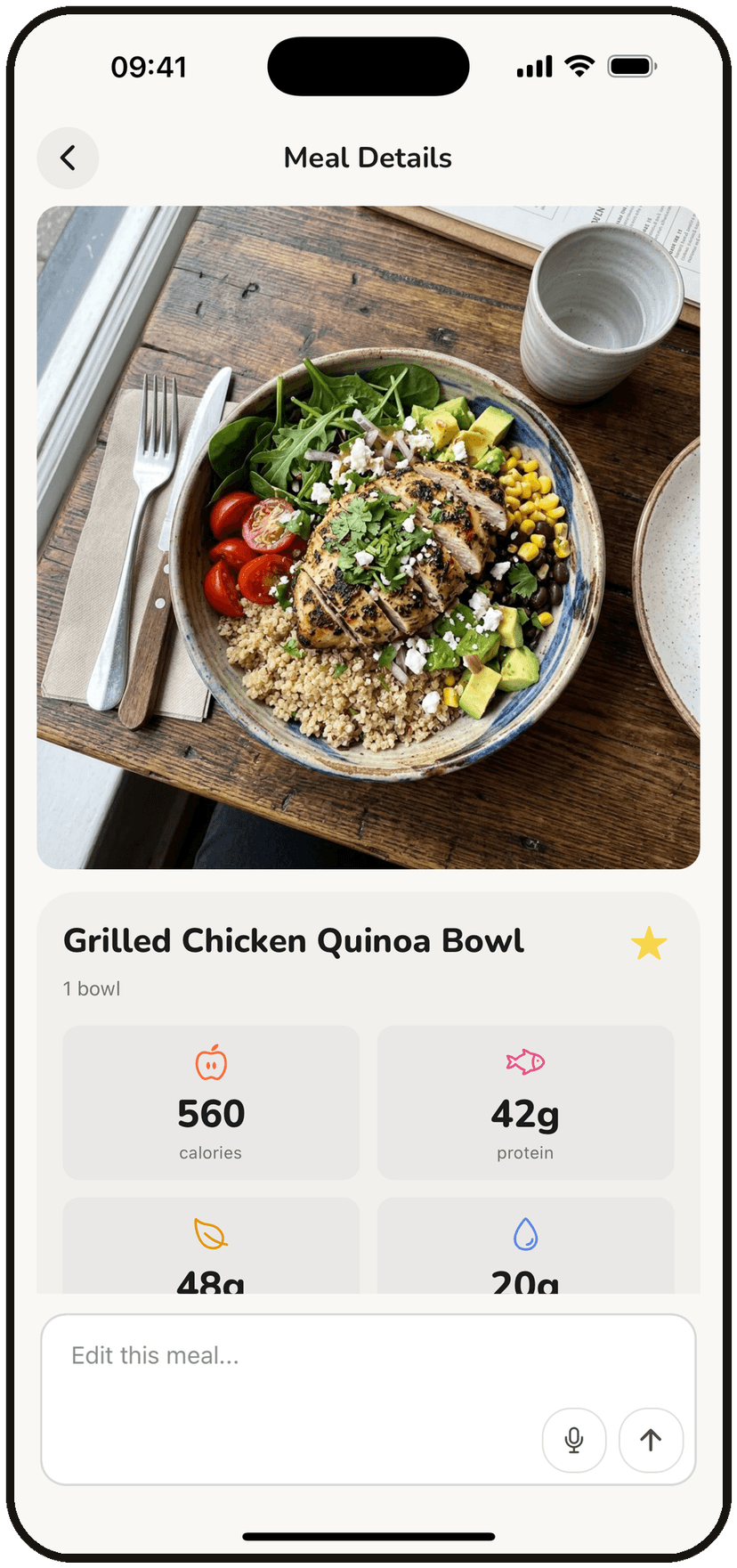
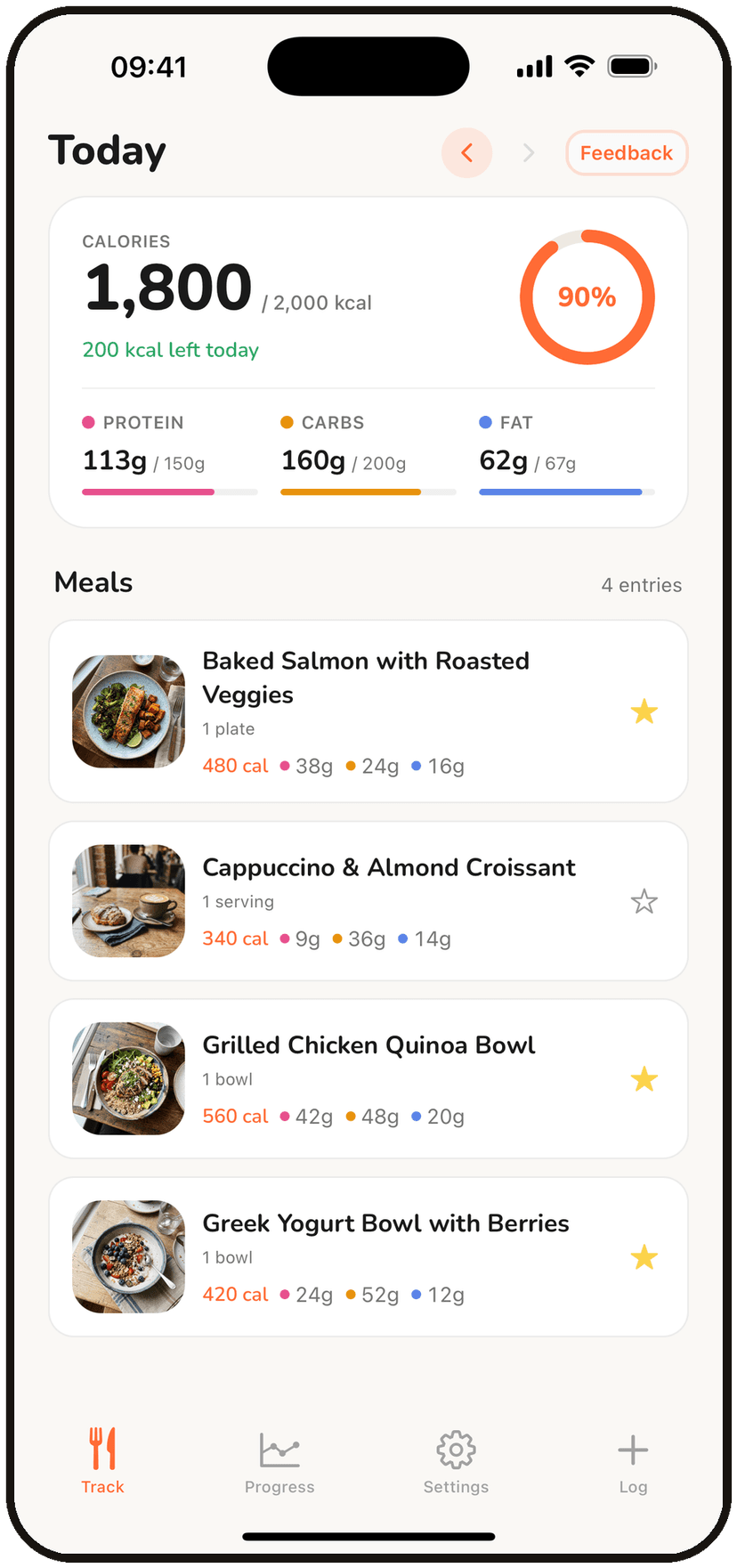
Portion guesses add up fast. BiteKit's AI estimates what's actually on your plate — oils, sides and all — so your log stays close to what you really ate.
- Log meals by photo, voice, or text
- Calories & macros estimated in seconds
- Syncs with Apple Health and Apple Watch
Free download · 3-day free trial, cancel anytime.
Scan with your iPhone camera