AI Budget Meal Planner
Enter your weekly food budget and nutrition goals to get a cost-optimized 7-day meal plan with a complete grocery list and per-meal cost breakdown.
Leave empty for AI to optimize based on your budget
Quick starts:
Why Budget Meal Planning Matters
Food is one of the largest household expenses, and without a plan, it is easy to overspend on impulse purchases, takeout, and food that goes to waste. Budget meal planning solves all three problems at once.
- Reduce food waste: When every ingredient has a purpose across multiple meals, you throw less away. The average household wastes $1,500 worth of food per year.
- Cut impulse spending: Shopping with a list means fewer unplanned purchases. Studies show list-based shoppers spend 20-30% less.
- Eat healthier: Planned meals tend to be more nutritious than last-minute choices. You are more likely to include vegetables and whole foods when you plan ahead.
- Save time: Knowing what you are cooking each day eliminates the daily "what is for dinner?" stress and reduces mid-week grocery runs.
Smart Shopping Strategies
Getting the most nutrition per dollar requires strategy. Here are proven approaches that can cut your grocery bill significantly:
Buy in Bulk
Staples like rice, oats, beans, and lentils cost significantly less when bought in bulk. A 5-pound bag of rice costs around $4 and provides 25+ servings.
Shop Seasonally
Seasonal produce is cheaper and more nutritious. In winter, focus on root vegetables and citrus. In summer, take advantage of affordable berries and stone fruits.
Choose Store Brands
Store-brand staples like canned beans, frozen vegetables, and pantry items are typically 20-40% cheaper than name brands with identical nutrition.
Use Frozen Produce
Frozen fruits and vegetables are flash-frozen at peak freshness, retain most nutrients, and cost 50% less than fresh. They also never go bad before you use them.
Budget-Friendly Protein Sources
Protein is often the most expensive part of a meal, but it does not have to be. These affordable protein sources deliver excellent nutrition per dollar:
Eggs ($0.25 each, 6g protein)
One of the most affordable and versatile protein sources. At roughly $3 per dozen, eggs provide 72g of protein. Scrambled, boiled, fried, or baked into dishes.
Dried Beans and Lentils ($0.15 per serving, 7-9g protein)
A 1-pound bag of dried beans costs about $1.50 and makes 6-8 servings. Lentils cook in 20 minutes without soaking and are packed with protein, fiber, and iron.
Chicken Thighs ($1.50-2.00/lb, 26g protein per serving)
Bone-in, skin-on thighs are the best value in the meat section. More flavorful and harder to overcook than chicken breast, at half the price.
Canned Tuna ($1.00 per can, 20g protein)
Shelf-stable and ready to eat. Mix with beans, put on toast, or toss into pasta for an instant protein boost at one of the lowest cost-per-gram rates available.
Peanut Butter ($0.10 per tablespoon, 4g protein)
A jar lasts weeks and provides protein plus healthy fats. Great on toast, in oatmeal, or as a sauce base for Asian-inspired noodle dishes.
When to Use This Tool
The AI Budget Meal Planner is designed for anyone looking to eat well without overspending:
Tight Budget Weeks
Need to feed yourself or your family on $50-75? Get a realistic plan that prioritizes nutrition without breaking the bank.
College Students
Eating healthy on a student budget is challenging. Get meal plans that use simple ingredients and easy-to-prepare recipes.
Family Meal Planning
Planning meals for a family of 4+ gets expensive fast. The planner scales recipes and reuses ingredients to keep costs down.
Saving While Dieting
Healthy diets do not have to cost more. Get budget-friendly plans that hit your calorie and macro targets without premium-priced diet foods.
Frequently Asked Questions
How does the AI Budget Meal Planner work?
The AI Budget Meal Planner uses advanced AI with access to real food pricing data to create a complete 7-day meal plan within your budget. You enter your weekly food budget, household size, and dietary preferences, and it generates meals that maximize nutrition per dollar, a grocery list with costs, and money-saving tips.
How accurate are the meal cost estimates?
The AI uses average US grocery store prices to estimate costs. Actual prices vary by location, store, season, and brand. The estimates are designed to be realistic for typical grocery shopping, and buying store brands or shopping sales can often bring costs even lower.
Can I use this for a family?
Yes! Select your household size and enter your total weekly food budget for everyone. The AI scales recipes and portions appropriately and generates a grocery list with quantities for your entire household.
What is a realistic weekly food budget?
The USDA suggests $50-60 per person per week for a thrifty budget and $75-90 for moderate. For a family of four, $100-150 per week is achievable. The AI can work with tighter budgets by focusing on staples like beans, rice, eggs, and seasonal produce.
Does it include a grocery list?
Every meal plan comes with a complete grocery list organized by store section (Produce, Protein, Dairy, Grains, Pantry). Each item shows the quantity needed and estimated cost, making it easy to shop efficiently.
Can I get budget meals for special diets?
The planner supports Vegetarian, Vegan, Gluten-Free, Dairy-Free, and Low-Carb preferences. Plant-based diets are often more budget-friendly since beans, lentils, and rice are among the cheapest nutritious foods available.
iPhone app · 3-day free trial
You're likely eating 500 calories more than you think
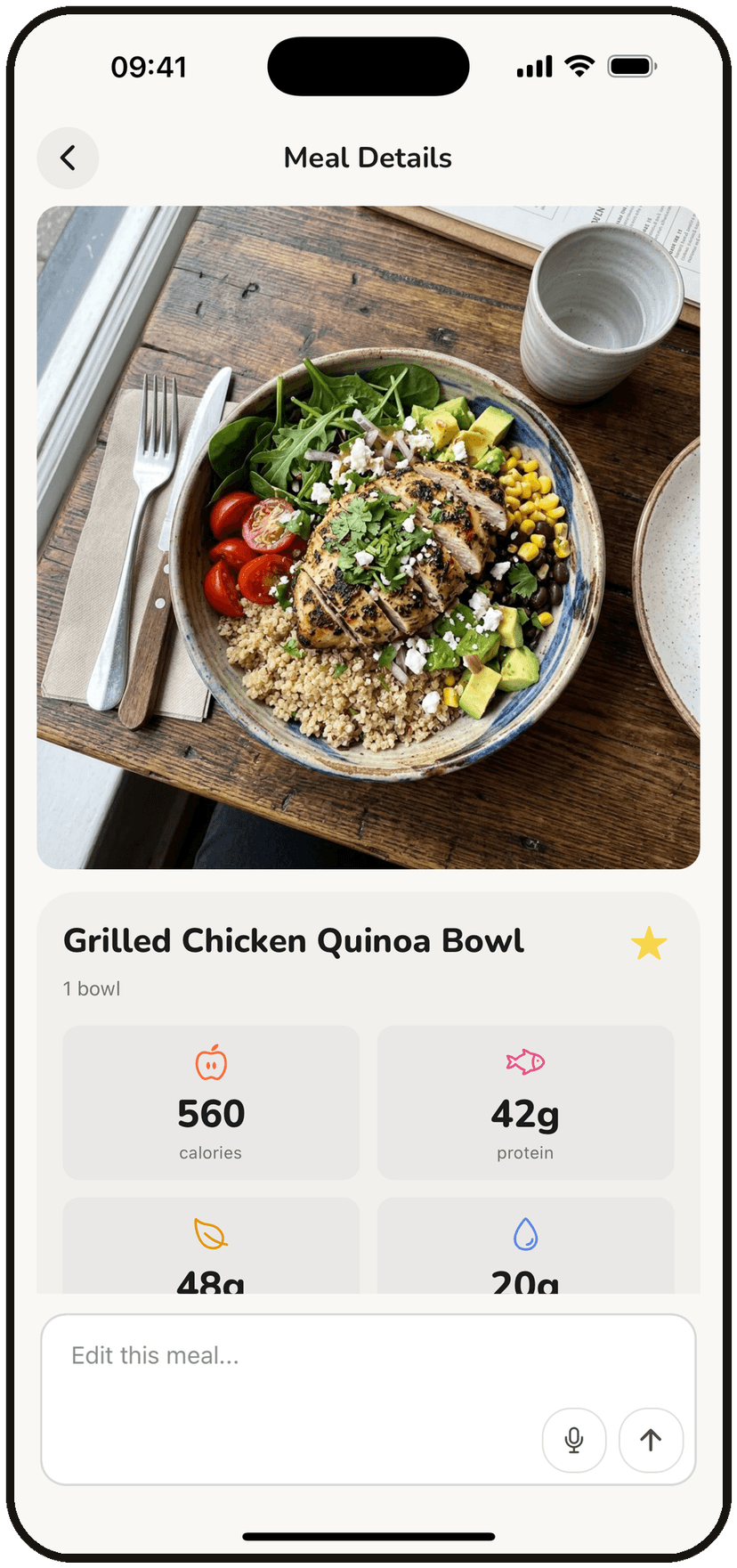
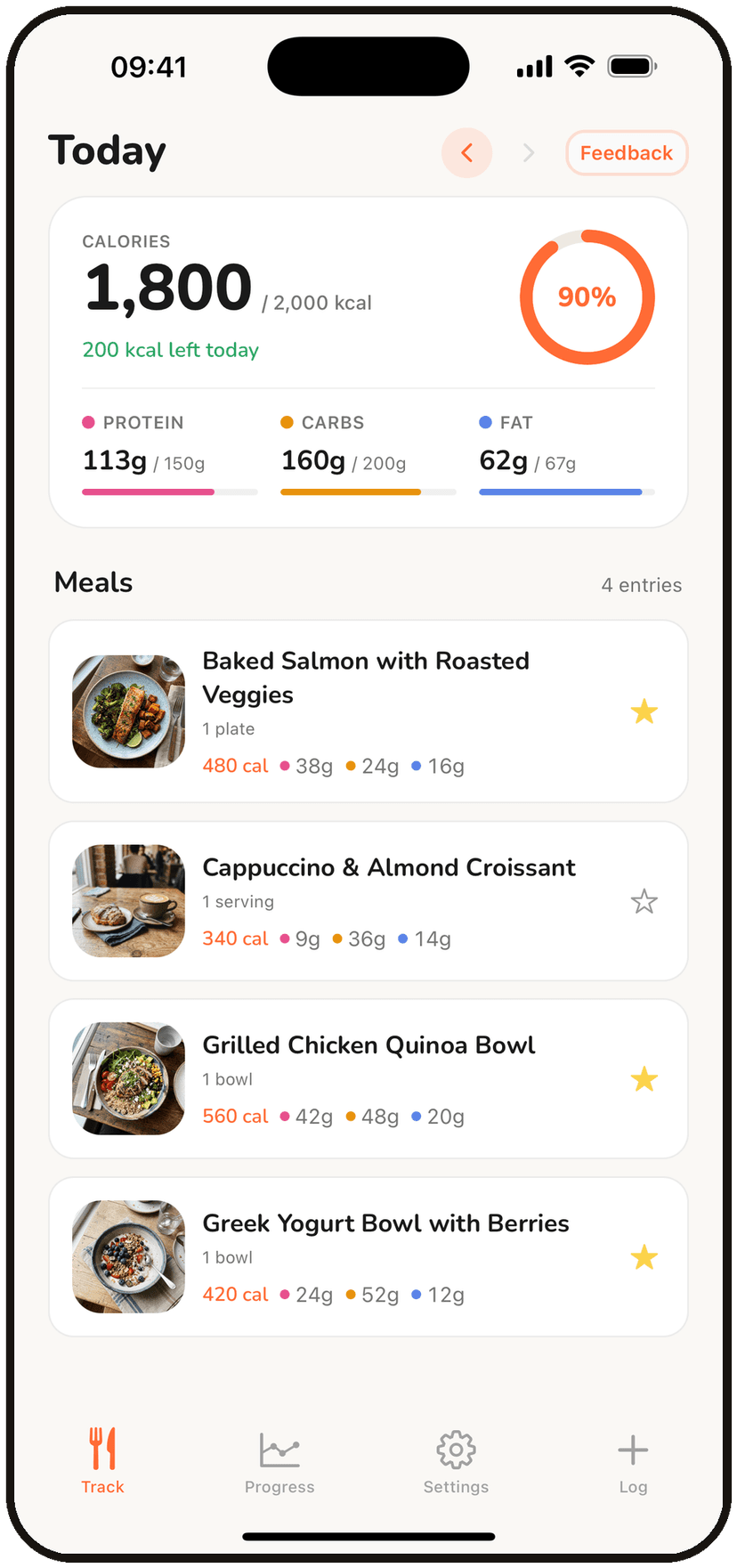
Portion guesses add up fast. BiteKit's AI estimates what's actually on your plate — oils, sides and all — so your log stays close to what you really ate.
- Log meals by photo, voice, or text
- Calories & macros estimated in seconds
- Syncs with Apple Health and Apple Watch
Free download · 3-day free trial, cancel anytime.
Scan with your iPhone camera