Beer Calorie Calculator
Pick a beer style or enter the ABV, set your serving size and number of drinks, and see exactly how many calories are in your beer — with an honest alcohol-versus-carbs breakdown and standard-drink count.
What Actually Drives Beer Calories
Two things determine how many calories are in a beer: the alcohol and the residual carbohydrates left over from the grains after fermentation. Alcohol is the bigger lever. Pure alcohol carries 7 calories per gram — nearly as much as fat (9 cal/g) and far more than carbs or protein (4 cal/g each). That is why a higher-ABV beer is almost always a higher-calorie beer.
Carbohydrates are the second source. Maltier, sweeter, or fuller-bodied beers keep more residual sugar, which is why a stout or a New England IPA feels heavier than a crisp light lager. Beer contains virtually no fat and only trace protein, so alcohol plus carbs accounts for essentially all of its calories.
The Beer Calorie Formula
You can estimate any beer's calories from just its volume, ABV, and carbs. The alcohol portion uses the density of ethanol (0.789 g/ml):
alcohol_grams = volume_ml × (ABV ÷ 100) × 0.789
alcohol_calories = alcohol_grams × 7
carb_calories = carbs_g × 4
total_calories = alcohol_calories + carb_calories
Example: a 12 oz (355 ml) beer at 5% ABV holds about 14 g of alcohol (≈98 calories). Add roughly 13 g of residual carbs (≈52 calories) and you land near 150 calories — right where a standard lager sits. The By ABV mode above runs this exact calculation for any beer on the label.
Calories in Common Beers (per 12 oz)
Style has a bigger effect than color. Guinness looks heavy but is lighter than a regular Budweiser, while a pale-colored double IPA is one of the most calorie-dense beers you can order. Here is how common styles compare per 12 oz serving:
| Beer Style | Calories | Typical ABV | Carbs |
|---|---|---|---|
| Non-alcoholic beer | 70 | 0.4% | 15 g |
| Hard seltzer (comparison) | 100 | 5.0% | 2 g |
| Light lager (Bud Light, Coors Light) | 103 | 4.2% | 6 g |
| Guinness Draught | 125 | 4.2% | 10 g |
| Pilsner | 130 | 4.8% | 11 g |
| Sour / Gose | 145 | 5.0% | 12 g |
| Regular lager (Budweiser) | 153 | 5.0% | 13 g |
| Wheat / Hefeweizen | 170 | 5.2% | 15 g |
| Amber / red ale | 175 | 5.5% | 15 g |
| Pale ale | 180 | 5.6% | 14 g |
| IPA | 210 | 6.8% | 17 g |
| Stout / porter | 210 | 6.0% | 18 g |
| Double IPA / NEIPA | 275 | 8.5% | 22 g |
Values are representative typicals per 12 oz, cross-checked against published brand nutrition data. For an exact beer, read the ABV off the label and use the By ABV mode.
Serving Size Changes Everything
A can is 12 oz, but a bar pint is 16 oz and a UK imperial pint is 20 oz — so the same beer can carry very different calories depending on the glass. Scaling is linear: a 16 oz pour is about 1.33× the 12 oz calories, and a 20 oz imperial pint is about 1.67×.
That means an IPA that reads as a reasonable 210 calories in a can becomes roughly 280 in a US pint and 350 in an imperial pint. If you are tracking, the serving size is often a bigger surprise than the style itself.
Beer, Weight, and the "Beer Belly," Honestly
There is no magic fat that beer creates and no special abdominal storage — a "beer belly" is just body fat gained from a calorie surplus, and beer makes that surplus easy to reach. The reasons are practical: alcohol calories are dense and easy to drink quickly, they carry almost no protein or fiber to keep you full, and your body burns alcohol first, effectively pausing fat burning until it is cleared.
Beer also tends to travel with late-night snacking and lowered restraint. None of this means you can never enjoy a beer — it means the calories are real and worth accounting for. Three 16 oz IPAs on a Friday can be 850+ calories before any food, which adds up over a month.
Lower-Calorie Beer Choices
You do not have to give up beer to cut calories. A few practical swaps make a large difference over a night or a week:
- •Choose lower ABV. Since alcohol dominates the count, a 4.2% light lager or session ale beats a 7% IPA by 100+ calories per glass.
- •Mind the pour. Sticking to 12 oz cans instead of 16 or 20 oz pints trims roughly a quarter to a third of the calories automatically.
- •Space them out. Alternating each beer with water slows the pace, so you drink fewer over the same evening.
- •Try non-alcoholic or Guinness. NA beers (60–80 cal) and Guinness Draught (~125 cal) let you keep the ritual for fewer calories than most craft options.
Frequently Asked Questions
How many calories are in a beer?
A standard 12 oz beer ranges from about 100 to 300 calories depending on style and ABV. A light lager like Bud Light has around 103 calories, a regular lager like Budweiser about 145 to 153, a craft IPA roughly 200 to 240, and a double IPA can top 275. The two drivers are alcohol (7 cal/g) and residual carbs. Use the calculator above for your exact beer, serving size, and number of drinks.
How many calories are in an IPA?
A typical 12 oz IPA contains roughly 200 to 240 calories because it pairs a higher ABV (often 6 to 7 percent) with more residual malt sugars. A double IPA or NEIPA above 8 percent ABV can reach 250 to 300 calories per 12 oz, and a 16 oz pint often lands between 270 and 320. IPAs are among the most calorie-dense beers, so watch the pour size.
Which beer has the fewest calories?
Ultra-light lagers like Michelob Ultra (about 85 to 96 calories) and light lagers like Bud Light and Coors Light (around 100 to 103) are the lowest-calorie mainstream beers. Non-alcoholic beers run 60 to 80 calories. Guinness Draught is only about 125 calories per 12 oz despite its rich appearance because it is just 4.2 percent ABV and uses nitrogen instead of heavy carbonation.
How many calories are in a pint of beer?
A US pint is 16 oz, about a third larger than a 12 oz serving, so multiply the per-12oz figure by roughly 1.33. A 16 oz pint of regular lager is around 200 calories, a pint of IPA is roughly 270 to 320, and a pint of stout is about 280. A 20 oz imperial (UK) pint is larger still, at about 1.67 times the 12 oz calories. Set the serving size in the calculator for an exact number.
Does beer make you gain weight?
Beer can contribute to weight gain because its calories are easy to overlook and add up fast. Alcohol provides 7 calories per gram, almost as much as fat, and those calories are "empty" — little protein, fiber, or micronutrients. Your body also burns alcohol first, temporarily pausing fat burning. There is no special beer-belly fat, but a few beers several nights a week add hundreds of calories that lead to gradual gain if not accounted for.
How are beer calories calculated?
Beer calories come from alcohol and carbs. Alcohol calories = volume in ml × (ABV ÷ 100) × 0.789 (ethanol density) × 7 calories per gram. Carb calories = grams of residual carbs × 4. Add them for the total. A 12 oz beer at 5% ABV has about 14 g of alcohol (≈98 calories) plus carb calories on top. The By ABV mode uses this exact formula for any beer on the label.
Related Tools
iPhone app · 3-day free trial
You're likely eating 500 calories more than you think
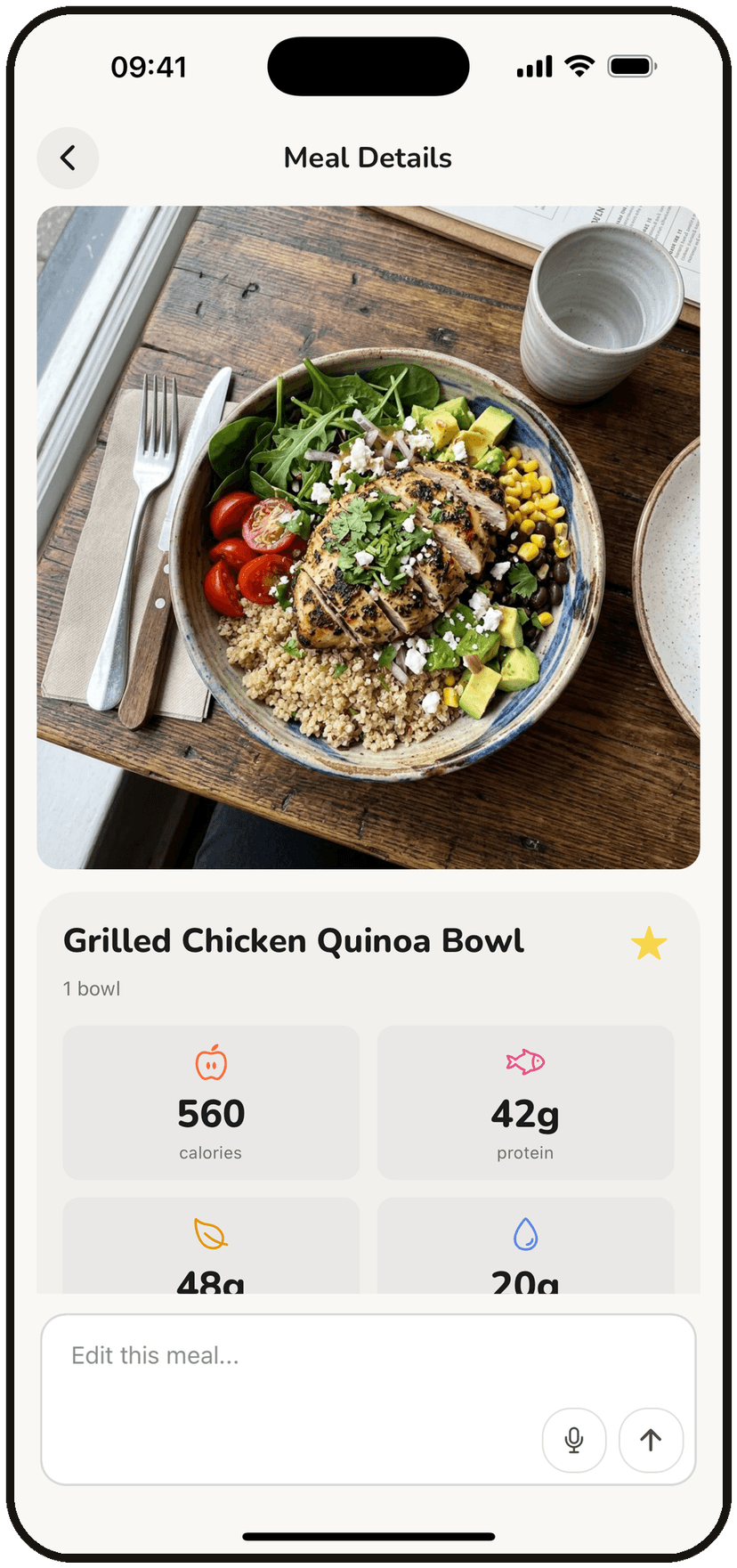
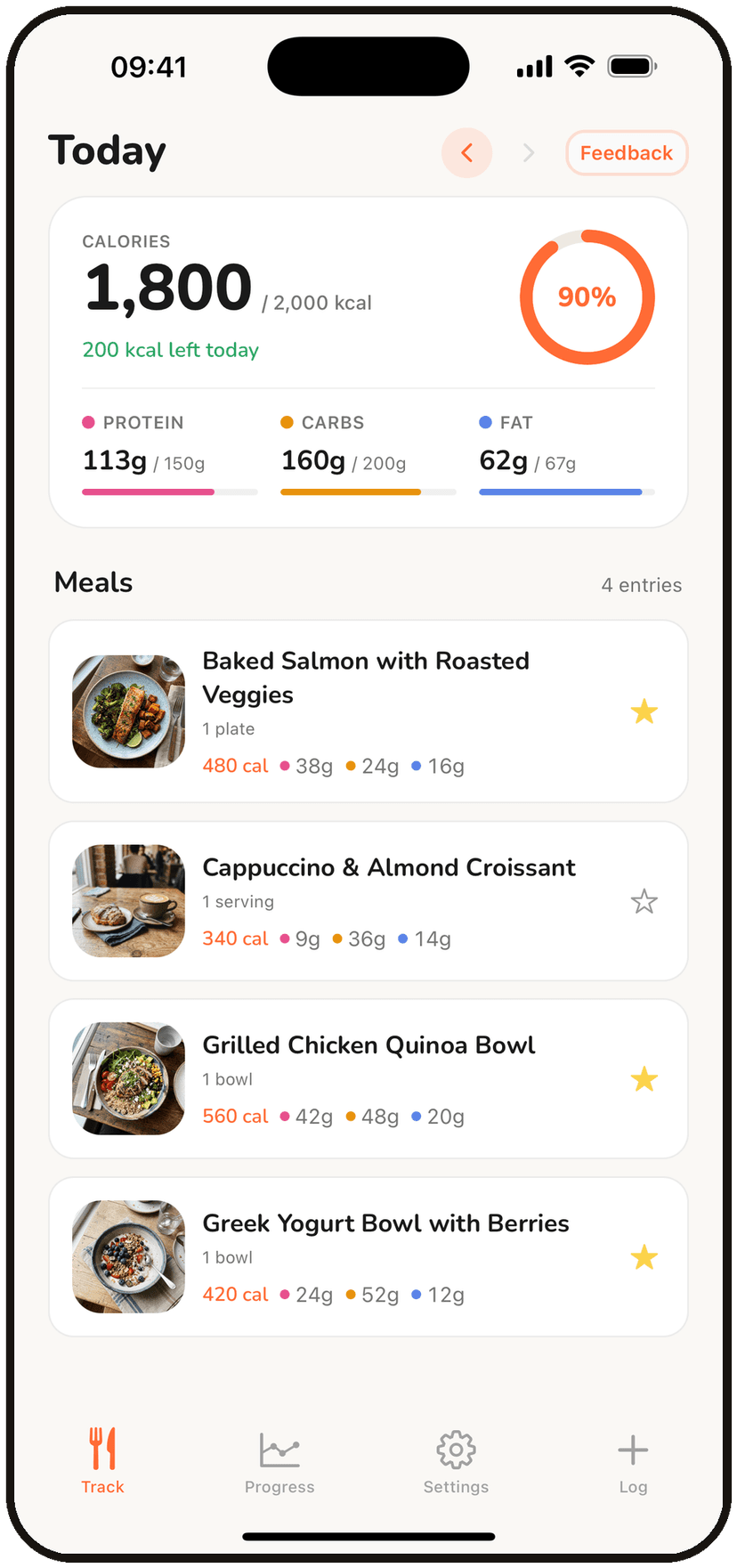
Portion guesses add up fast. BiteKit's AI estimates what's actually on your plate — oils, sides and all — so your log stays close to what you really ate.
- Log meals by photo, voice, or text
- Calories & macros estimated in seconds
- Syncs with Apple Health and Apple Watch
Free download · 3-day free trial, cancel anytime.
Scan with your iPhone camera