Paleo Macro Calculator
Calculate your optimal protein, fat, and carb ratios following Paleo principles. Choose from four paleo variants - Standard, Low-Carb, Keto, or Athletic - with calorie targets personalized to your goals.
Choose the paleo approach that fits your lifestyle
What is the Paleo Diet?
The paleo diet, often called the caveman diet or ancestral diet, is based on eating whole, unprocessed foods similar to what humans consumed during the Paleolithic era. The core principle is simple: if our hunter-gatherer ancestors didn't eat it, neither should we.
This means prioritizing nutrient-dense whole foods - grass-fed meats, wild-caught fish, vegetables, fruits, nuts, and seeds - while eliminating modern processed foods, grains, legumes, dairy, refined sugars, and vegetable seed oils that became common after the agricultural revolution.
- Weight management: High protein and healthy fats naturally reduce appetite and calorie intake
- Reduced inflammation: Eliminating processed foods and seed oils lowers systemic inflammation
- Better energy: Stable blood sugar from whole-food carbs prevents energy crashes
- Improved digestion: Removing grains and legumes may reduce bloating and gut issues
Paleo Macro Ratios by Variant
Not all paleo diets are the same. The macro ratios you choose should match your lifestyle, activity level, and goals. Here are the four main paleo approaches:
Standard Paleo
30% P / 40% F / 30% C
The most balanced approach. Includes moderate carbs from sweet potatoes, fruits, and vegetables. Ideal for most people starting paleo or maintaining a healthy weight.
Low-Carb Paleo
35% P / 45% F / 20% C
Higher protein and fat with reduced carbs for accelerated fat loss. Limits starchy tubers and high-sugar fruits while emphasizing non-starchy vegetables.
Keto Paleo
30% P / 55% F / 15% C
Combines paleo food quality with ketogenic macro ratios. Very low carbs to achieve ketosis while eating only paleo-approved whole foods.
Athletic Paleo
30% P / 30% F / 40% C
Higher carbs for athletes and highly active people. Sweet potatoes, plantains, and fruits fuel intense training while maintaining paleo food quality.
Paleo Food List
The paleo diet has clear guidelines on which foods are included and which should be eliminated. All variants share these same food rules - only the macro ratios differ.
Paleo-Approved Foods
- ✓Grass-fed beef, bison, lamb, pork
- ✓Wild-caught fish and seafood
- ✓Pasture-raised eggs
- ✓All vegetables and leafy greens
- ✓Fruits and berries
- ✓Sweet potatoes and tubers
- ✓Nuts and seeds (almonds, walnuts, etc.)
- ✓Avocado, coconut oil, olive oil, ghee
- ✓Herbs, spices, and natural seasonings
Foods to Avoid
- ✗Grains (wheat, oats, rice, corn)
- ✗Legumes (beans, lentils, peanuts, soy)
- ✗Dairy products (milk, cheese, yogurt)
- ✗Refined sugar and artificial sweeteners
- ✗Vegetable and seed oils (canola, soy, corn)
- ✗Processed and packaged foods
- ✗Bread, pasta, and baked goods
- ✗Soda, juice, and sugary drinks
- ✗Alcohol (especially beer and cocktails)
How the Paleo Macro Calculator Works
Our calculator uses the Mifflin-St Jeor equation, considered the most accurate BMR formula for the general population, combined with standard activity multipliers to estimate your Total Daily Energy Expenditure (TDEE).
Mifflin-St Jeor Formula
Men: BMR = (10 x weight in kg) + (6.25 x height in cm) - (5 x age) + 5
Women: BMR = (10 x weight in kg) + (6.25 x height in cm) - (5 x age) - 161
TDEE = BMR x Activity Multiplier
Target Calories = TDEE x Goal Modifier (0.80 / 1.00 / 1.12)
Macros = Target Calories split by variant ratios
Tips for Hitting Your Paleo Macros
Prioritize Protein at Every Meal
Start meal planning with your protein source. A palm-sized portion of grass-fed meat or wild-caught fish provides roughly 25-30g of protein. Build each meal around quality protein first.
Do Not Fear Healthy Fats
Cook with coconut oil, ghee, or avocado oil. Add half an avocado to meals. Snack on macadamia nuts or almonds. Healthy fats are essential for hormone production, brain health, and satiety.
Choose Your Carbs Wisely
Sweet potatoes, plantains, and berries are paleo carb staples. Time your starchy carbs around workouts for best results. Fill the rest of your plate with non-starchy vegetables for fiber and micronutrients.
Meal Prep for Consistency
Batch cook proteins and roast vegetables in advance. Having paleo meals ready makes it easy to stay on track and hit your macro targets during busy weekdays.
Frequently Asked Questions
What are the best macro ratios for a paleo diet?
The standard paleo macro ratio is 30% protein, 40% fat, and 30% carbs. However, ratios vary by variant: Low-Carb Paleo uses 35/45/20, Keto Paleo uses 30/55/15, and Athletic Paleo uses 30/30/40. Choose the variant that matches your goals and activity level.
How many calories should I eat on a paleo diet?
Your calorie target depends on your TDEE. For weight loss, eat about 20% below TDEE. For maintenance, eat at TDEE. For muscle gain, eat about 12% above TDEE. Our calculator determines your personalized target based on your age, gender, weight, height, and activity level.
What is the difference between paleo and keto?
Paleo focuses on food quality - eating whole, unprocessed foods while eliminating grains, legumes, and dairy. Keto focuses on macros, requiring very low carbs to achieve ketosis. You can combine both with Keto Paleo, which uses paleo-approved foods with ketogenic macro ratios (30% protein, 55% fat, 15% carbs).
What foods can I eat on a paleo diet?
Paleo-approved foods include grass-fed meats, wild-caught fish, pasture-raised eggs, all vegetables, fruits, nuts and seeds, sweet potatoes, avocados, coconut oil, olive oil, and natural herbs and spices. Avoid grains, legumes, dairy, refined sugar, processed foods, and vegetable seed oils.
Which paleo variant should I choose?
Standard Paleo is best for most people starting out. Low-Carb Paleo is ideal for faster fat loss. Keto Paleo combines paleo food quality with ketogenic benefits for maximum fat burning. Athletic Paleo provides the extra carbs active individuals and athletes need for training performance.
Can I build muscle on a paleo diet?
Absolutely. Select the Gain Muscle goal for a 12% calorie surplus and choose the Athletic Paleo variant for 40% carbs to fuel intense training. The 30% protein provides ample amino acids for muscle repair and growth. Grass-fed beef, wild salmon, and eggs are excellent paleo protein sources for building muscle.
iPhone app · 3-day free trial
You're likely eating 500 calories more than you think
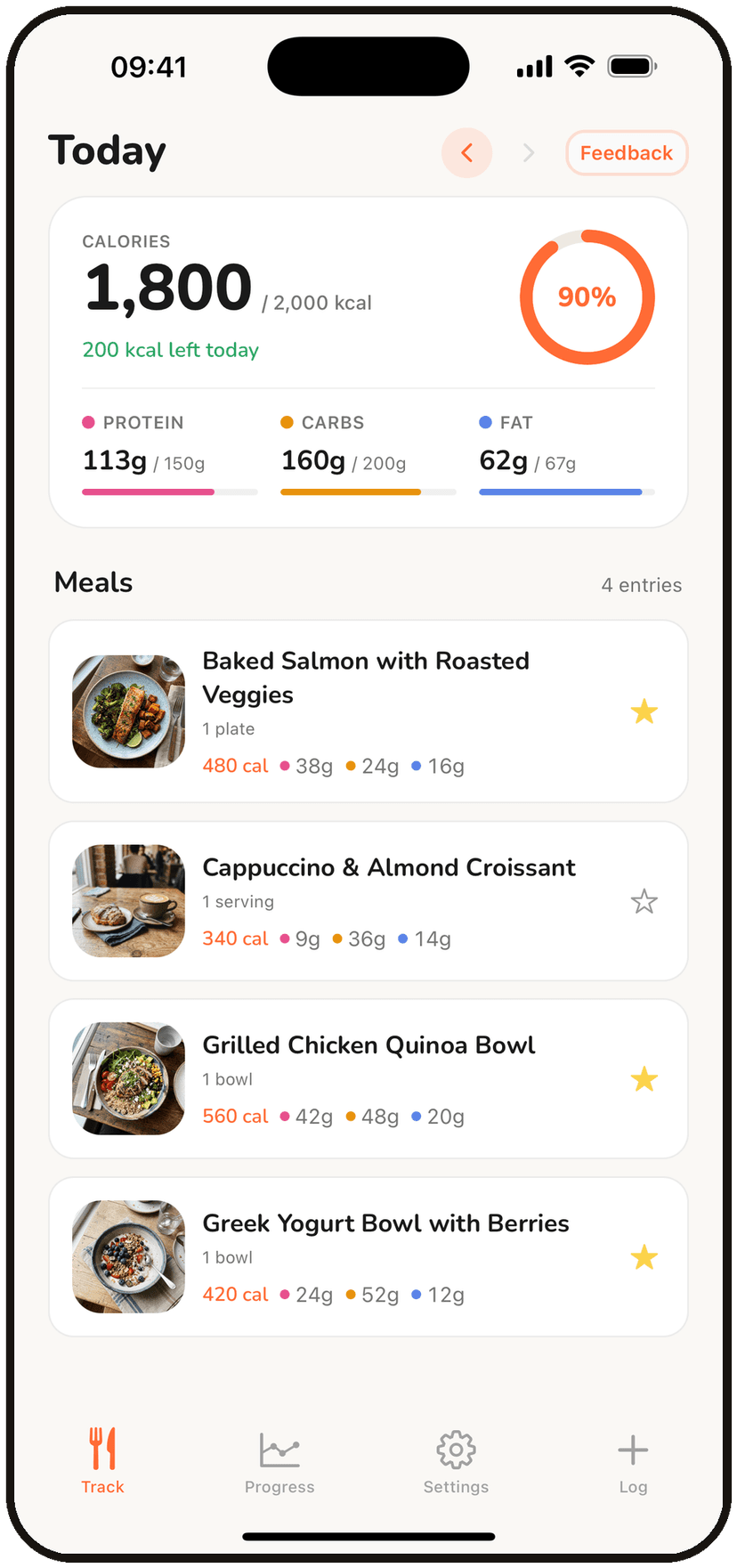
Portion guesses add up fast. BiteKit's AI estimates what's actually on your plate — oils, sides and all — so your log stays close to what you really ate.
- Log meals by photo, voice, or text
- Calories & macros estimated in seconds
- Syncs with Apple Health and Apple Watch
Free download · 3-day free trial, cancel anytime.
Scan with your iPhone camera