Plank Calorie Calculator
Estimate calories burned holding a plank — by hold time and body weight — with an honest per-minute number that doesn't pretend a 1-minute plank torches 100 calories.
The Honest Truth: A Plank Burns Only a Few Calories
If you searched “how many calories does a 1-minute plank burn” expecting a big number, here is the reality most calculators quietly hide: a 1-minute standard plank burns only about 3-5 calories for most people. Hold it for a full, grueling 5 minutes and you are still looking at roughly 17-20 calories — about the same as one minute of running. That is because calorie math is based on time, and a plank is a low-intensity isometric hold.
This does not mean planks are a waste of time — far from it. It means the calorie you burn during the hold is the smallest part of the story. The real payoff is the deep core strength, spinal stability, and endurance a plank builds — the kind of foundation that improves your posture, protects your lower back, and makes every other lift and movement stronger.
Why the number is smaller here
We apply the published plank MET (2.8 for a standard static hold) only to your actual hold time, and count any rest between sets at a low resting rate. No inflated durations, no padded MET values — just an estimate you can actually trust.
How Plank Calories Are Calculated
This calculator uses the MET (Metabolic Equivalent of Task) method, the scientific standard for estimating exercise calorie burn. MET compares an activity's energy cost to sitting at rest (1 MET = resting metabolic rate). Every plank value here comes straight from the 2024 Adult Compendium of Physical Activities, the current edition — and the standard plank entry (code 02024) literally names “plank.”
The Formula
Calories = MET × Body Weight (kg) × Duration (hours)
Example — a 165 lb (75 kg) person holding a standard plank (MET 2.8) for 3 minutes (180 seconds = 0.05 hours): 2.8 × 74.8 × 0.05 ≈ 10 calories, or about 3.5 calories per minute held.
| Plank Variation | MET | Code | Notes |
|---|---|---|---|
| Standard — forearm / high plank | 2.8 | 02024 | Static hold; entry names “plank” |
| Side / dynamic | 3.8 | 02022 | Leg lifts, shoulder taps, hip dips |
| Weighted / with movement | 6.5 | 02057 | Plate on back, plank jacks, mountain climbers |
Source: 2024 Adult Compendium of Physical Activities (Herrmann SD, Willis EA, Ainsworth BE, et al. J Sport Health Sci. 2024;13(1):6-12), category 02 “conditioning exercise.” All three MET values above are published, not estimated. The 30-second rest between sets is our modelling assumption, not a Compendium value.
Static Hold vs. Dynamic Plank Variations
A plain forearm plank is a static isometric hold — you brace and hold still — which is exactly why its MET (and its calorie burn) is low. Add movement, and the intensity climbs.
Standard Static Plank
- 2.8 METs — a light-effort isometric hold
- Builds deep core endurance and spinal stability
- Smallest direct calorie burn of the variations
- No equipment, no impact — do it anywhere
- Best measured in seconds/minutes held
Dynamic & Weighted Planks
- Side/dynamic 3.8 METs; weighted/movement 6.5 METs
- Shoulder taps, hip dips, plank jacks, mountain climbers
- Higher calorie burn per minute than a static hold
- Adds a cardio and stabilizer challenge
- Still modest calories — the win is the strength stimulus
The honest takeaway: adding movement raises the per-minute burn, but even a hard weighted plank stays well below running or cycling on a pure calorie basis. Choose variations for the strength and core challenge you want — not because any of them is a big calorie burner.
How to Progress Your Plank Hold Time
Add Time Gradually
Progress by 5-10 seconds each week rather than chasing a single marathon hold. Consistent short planks with perfect form beat one shaky long one for building real core endurance.
Use Sets Instead of One Long Hold
Three sets of 45 seconds with short rests often gives a better training stimulus than one 2-minute hold where form breaks down. Switch this calculator to “Multiple Sets” to model it.
Brace, Don't Sag
Squeeze your glutes, tuck your ribs, and keep a straight line from head to heels. A properly braced plank recruits far more muscle than letting your hips sag toward the floor.
Progress to Harder Variations
Once a 60-second static plank feels easy, move to side planks, shoulder taps, or a weighted plank rather than just holding longer. Adding load or movement builds strength faster than endless time.
Planks for Different Goals
Fat Loss
Don't rely on planks to burn the fat — the direct calorie burn is tiny. Use them to build core strength, and drive fat loss with a modest calorie deficit. What you eat decides the outcome.
Core Strength
This is where planks shine. Train them 3-4x per week, progress hold time and variation, and you will build the deep stabilizers that protect your spine and improve every lift.
Conditioning
For a higher calorie burn, use dynamic or weighted planks in a circuit with minimal rest. It doubles as light cardio while still training the core, but pair it with real cardio for weight loss.
Frequently Asked Questions
How many calories does a 1-minute plank burn?
Roughly 3-5 calories for most people — a genuinely small number. For a 165 lb person holding a standard forearm plank (MET 2.8), one minute is about 3.5 calories. A plank is an isometric hold, so its direct burn is always small; the real payoff is core strength.
How many calories does a 5-minute plank burn?
About 17-20 calories for a 165 lb person at MET 2.8 — roughly the same as one minute of running. Holding a plank that long is an impressive endurance feat, but the calorie burn stays modest because plank calories scale with time at a low metabolic rate.
How many calories does a plank burn per minute?
About 3-4 cal/min for a 165 lb person doing a standard plank (MET 2.8). A side or dynamic plank (MET 3.8) is around 4.7 cal/min, and a weighted plank or plank with vigorous movement (MET 6.5) can reach 8 cal/min — still small next to running or cycling.
Does planking burn belly fat?
Not directly — you cannot spot-reduce fat. Planks strengthen the deep core that stabilizes your spine and supports your midsection, but belly fat comes off with an overall calorie deficit, driven mostly by what you eat. Planks build the muscle; the deficit removes the fat.
Why does this calculator show fewer calories than others?
Because it is honest about how MET math works. We apply the published plank MET (2.8 for a standard hold) only to your actual hold time, and count rest between sets at a low resting rate. Many rivals inflate the number with padded durations or MET values.
What MET values does this calculator use?
From the 2024 Compendium, category 02: standard plank 2.8 (code 02024, which names “plank”), side/dynamic 3.8 (code 02022), and weighted/movement 6.5 (code 02057). The 30-second rest between sets is our assumption, not a Compendium value.
iPhone app · 3-day free trial
You're likely eating 500 calories more than you think
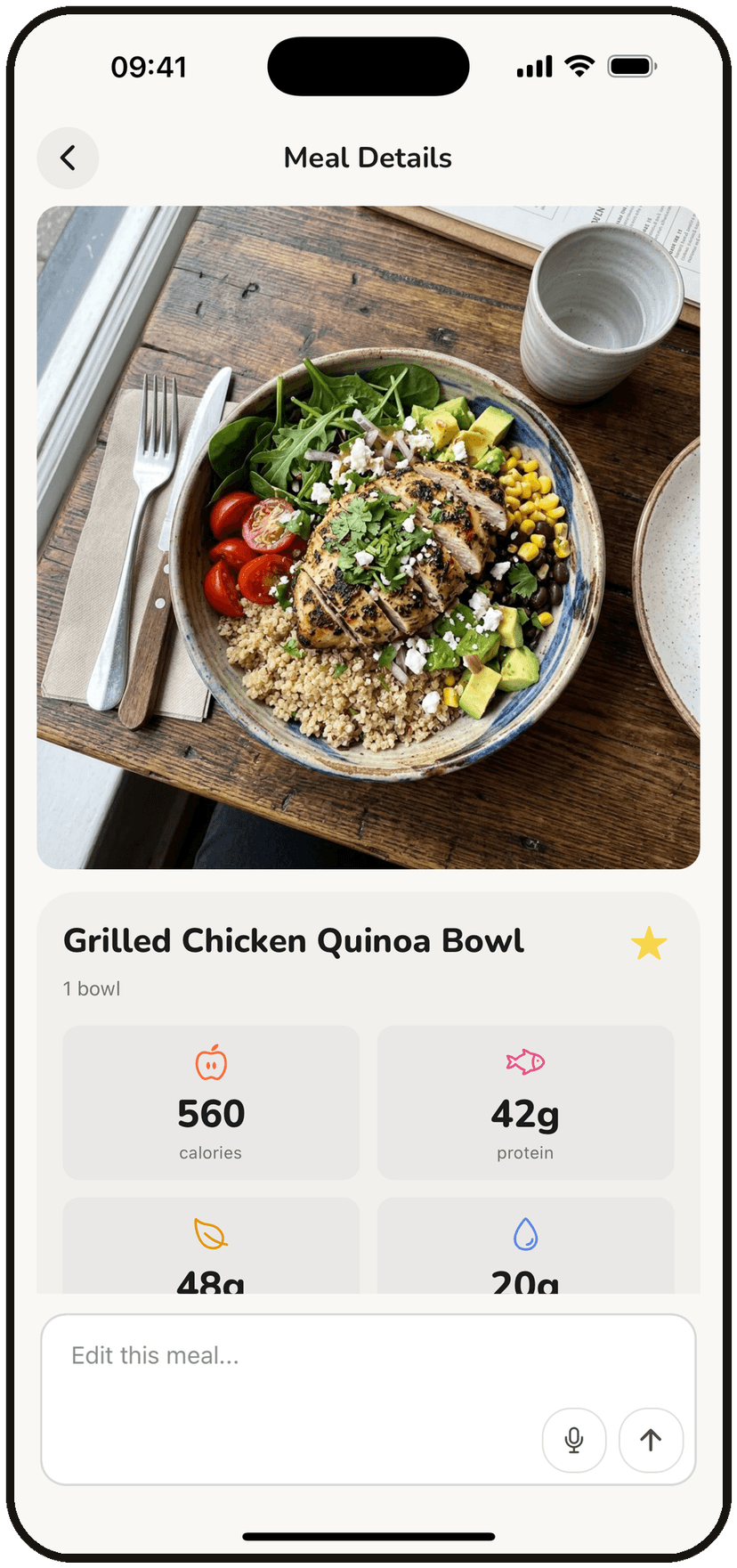
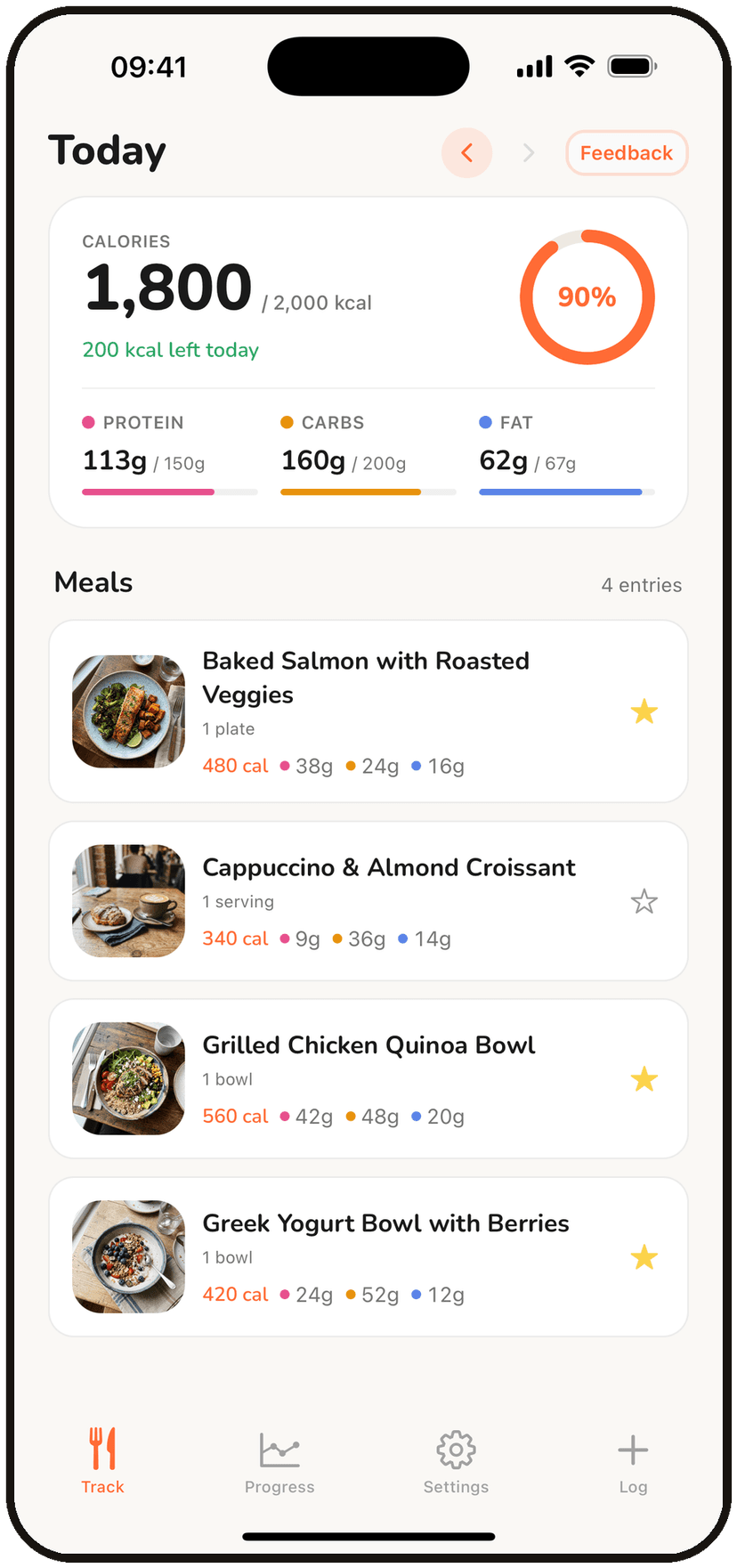
Portion guesses add up fast. BiteKit's AI estimates what's actually on your plate — oils, sides and all — so your log stays close to what you really ate.
- Log meals by photo, voice, or text
- Calories & macros estimated in seconds
- Syncs with Apple Health and Apple Watch
Free download · 3-day free trial, cancel anytime.
Scan with your iPhone camera