Your Guide to an 1800 Calories a Day Meal Plan
Is an 1800 calories a day plan right for your goals? Discover meal plans, macro splits, and sustainable weight loss strategies in our ultimate guide.
An 1,800-calorie-a-day meal plan is a popular target for a good reason. It’s often just right for sustainable weight loss or healthy maintenance, especially for moderately active women. This calorie level can create a gentle deficit that works without making you feel deprived, which is key for sticking with it long-term.
Is 1800 Calories a Day Right for Your Goals?
Choosing a daily calorie target can feel like you’re just pulling a number out of thin air. You've probably seen 1,800 calories thrown around a lot, and for many people, it hits a sweet spot. It can be enough to fuel your body while still helping you shed pounds, avoiding the burnout that comes from overly restrictive diets.
But is it the right number for you? That all comes down to your body's unique energy needs.
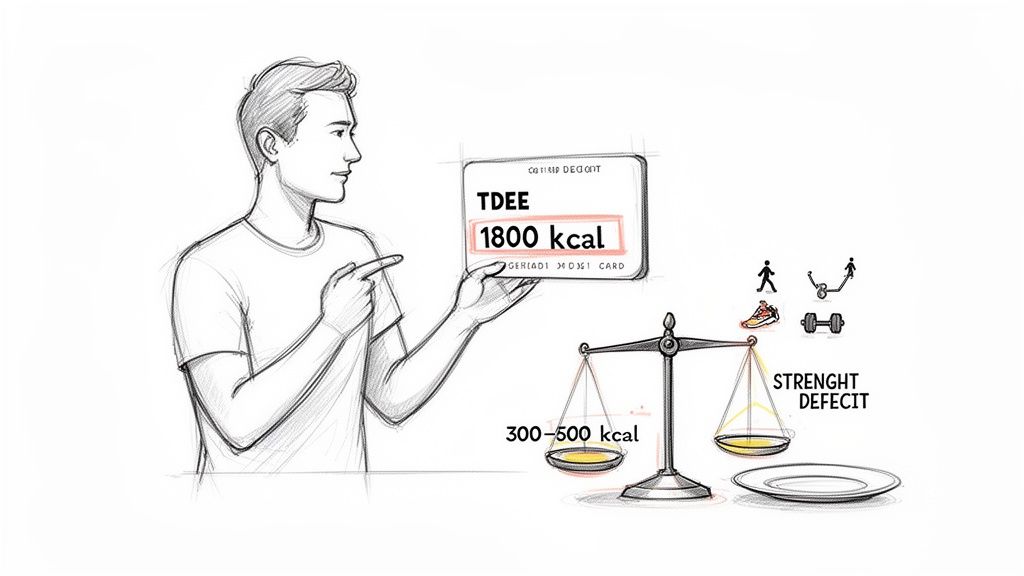
Think about it like a personal energy budget. Your body has a set number of calories it burns every single day just to function—this is your Total Daily Energy Expenditure (TDEE). It covers everything from breathing and thinking to your workouts and daily walks.
To lose weight, you simply need to eat fewer calories than your TDEE. This creates a "calorie deficit." For weight loss that actually lasts, a small, consistent deficit is the way to go.
A daily deficit of 300 to 500 calories is widely considered the gold standard for losing a healthy 0.5 to 1 pound per week. This pace helps you hold onto precious muscle mass and keeps your metabolism from slowing down.
This is exactly where an 1,800-calorie plan comes into play. If your body naturally burns around 2,100–2,300 calories a day (your TDEE), then eating 1,800 calories puts you right in that perfect deficit sweet spot.
Who Is a 1800 Calorie Diet Suited For?
While not a magic number for everyone, an 1,800-calorie diet is a fantastic starting point for several common profiles. Here’s a quick breakdown of who it tends to work best for, based on their goals and activity levels.
| Profile | Goal with 1800 Calories | Reasoning |
|---|---|---|
| Moderately Active Women | Weight Loss | A woman who exercises 3-4 times a week often has a TDEE around 2,200 calories. Eating 1,800 creates a manageable 400-calorie deficit. |
| Sedentary or Lightly Active Men | Weight Loss | A man with a smaller frame or a desk job might have a TDEE around 2,300 calories. An 1,800-calorie plan creates a solid 500-calorie deficit. |
| Smaller, Less Active Women | Weight Maintenance | For some smaller women who are not very active, 1,800 calories might be their maintenance level, making it a perfect target to stay at a healthy weight. |
As you can see, your activity level, size, and gender all play a huge role.
For a highly active person, 1,800 calories could be far too low, potentially leading to fatigue, hunger, and even muscle loss. On the flip side, for a very small and sedentary individual, it might not be low enough to create a meaningful deficit.
The first step is always to figure out your own numbers. If you want to get specific, our guide shows you how to calculate your personal daily calorie needs. Once you know your TDEE, you’ll have the confidence to know if an 1,800 calories a day plan is the right move for you.
The Science of Energy Balance for Weight Management
So, you're considering an 1800-calorie a day plan. To make it truly work—and stick—it helps to look past the number itself and understand the simple science of what's happening inside your body. It all boils down to a concept called energy balance.
Think of your body like a car and food as its fuel. Calories are just a way to measure how much fuel you're putting in the tank. Your body uses this energy for everything, from the automatic functions that keep you alive (like breathing and your heartbeat) to all the things you choose to do, like walking the dog or crushing a workout.
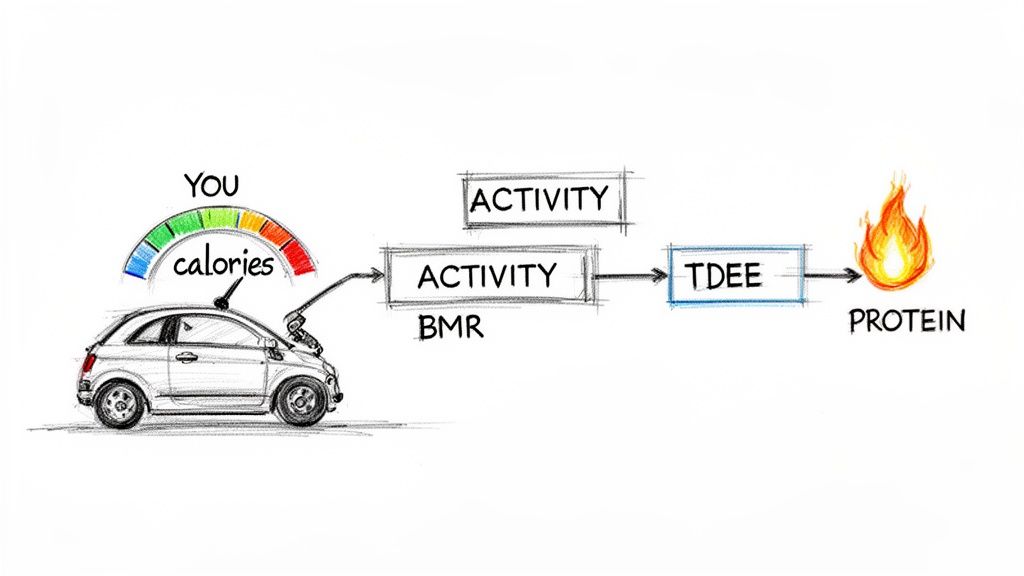
When the fuel you put in matches the fuel you use, your weight stays stable. But if you consistently provide more fuel than your body needs, the excess gets stored for later—mostly as body fat. This is the core principle behind weight management.
Your Body's Daily Energy Budget
To get this balance right, we need to understand the two sides of your body's energy equation: what you burn just by being alive, and what you burn through activity.
-
Basal Metabolic Rate (BMR): This is your body's baseline. It’s the energy you’d burn if you just laid in bed all day, doing absolutely nothing. Your BMR powers essential functions like organ activity and cell repair, and it accounts for a huge chunk of your daily burn—often 60-75%.
-
Total Daily Energy Expenditure (TDEE): This is the big one. TDEE is the grand total of all calories you burn in a 24-hour period. It combines your BMR with the energy you use for physical activity, daily chores, and even digesting food. For weight loss, the goal is to eat fewer calories than your TDEE.
This is where personalization becomes non-negotiable. For a 45-year-old sedentary woman who is 5'3" and 160 pounds, her TDEE is likely around 1750-1850 calories. For her, an 1800-calorie diet would just maintain her current weight. In contrast, an active 35-year-old man who is 6'2" and 240 pounds could have a TDEE over 3,000 calories. An 1800-calorie a day diet would be dangerously low for him, leading to intense hunger and muscle loss.
These examples show why a "one-size-fits-all" number rarely works. The proven strategy is to subtract a moderate 300-500 calories from your unique TDEE. This is a hot topic, as recent surveys show many people are planning to change their eating habits; you can learn more about how Americans are approaching their dietary goals on PCRM.org.
The Metabolic Advantage of Protein
Now, here’s an interesting twist: not all calories are processed the same way. Your body actually burns energy just to digest and absorb the nutrients from food. This process is called the Thermic Effect of Food (TEF), and this is where protein has a distinct edge.
Your body uses significantly more energy to digest protein compared to fats and carbohydrates. Roughly 20-30% of the calories from protein are burned off during digestion, while only 5-10% for carbs and 0-3% for fats are used.
This "metabolic advantage" is a key reason high-protein diets feel so effective. Prioritizing protein not only helps you stay full and satisfied, but it also gives your metabolism a small but meaningful boost.
By packing enough protein into an 1800-calorie a day plan, you make the calorie deficit feel much more manageable. You avoid the extreme hunger and fatigue that often come with crash diets, setting yourself up for success that actually lasts.
How to Structure Your Daily Macronutrients
Hitting your calorie target is one thing, but understanding what you're eating is the real key to success. This is where we talk about macronutrients—protein, carbohydrates, and fats. If you think of your 1,800 calories as a daily budget, macros are how you "spend" that budget to get the most bang for your buck in terms of energy, fullness, and results.
Each macro plays a critical role in how your body functions. Protein is the ultimate building block for muscle and is fantastic for keeping you full. Carbs are your body's go-to fuel source, powering everything from your brain to your workouts. And fats? They're essential for hormone balance and absorbing key nutrients. Getting the right mix is what makes a diet feel good.
Don't get bogged down in hitting your macro numbers perfectly every single day. The goal is to build a flexible framework that supports what you’re trying to achieve, whether that’s losing fat while keeping muscle or just feeling more energetic. When you prioritize whole, nutrient-rich foods, every calorie starts working for you.
Finding Your Ideal Macro Split
There’s no one-size-fits-all macro ratio. The best split for you will depend on your activity level, fitness goals, and even just what foods you enjoy. However, a few well-tested starting points work great for an 1,800 calorie diet.
- The Balanced Approach (40/40/20): This is a really popular setup, assigning 40% of your calories to carbs, 40% to protein, and 20% to fat. It’s a great all-rounder for general health and sustainable weight management, with plenty of protein to keep you satisfied and enough carbs to keep you energized.
- The Fitness Focus (40/30/30): If you’re hitting the gym regularly, this split might be for you. It dedicates 40% of calories to protein, 30% to carbs, and 30% to fat. The extra protein helps with muscle repair and growth, while the balanced fats and carbs provide steady energy for your training sessions.
So, how do these percentages translate into actual food on your plate? First, you need to know the calorie math.
Here's a handy rule of thumb: Protein and carbs both have 4 calories per gram, while fat packs 9 calories per gram. It's why fatty foods add up so quickly in your calorie count!
If you want to get more specific and dial in the numbers for your own body, playing around with a macro calculator is the next step. Our tool can help you determine the best macronutrient split for your needs.
Sample Macronutrient Splits for an 1800-Calorie Diet
To make this crystal clear, let's look at how those percentages convert into grams per day. This table gives you a concrete target to aim for as you build your meals.
| Goal | Protein (Grams) | Carbohydrates (Grams) | Fat (Grams) |
|---|---|---|---|
| Balanced Wellness (40/40/20) | 180g | 180g | 40g |
| Fitness & Muscle (40/30/30) | 180g | 135g | 60g |
| Fat Loss & Satiety (35/35/30) | 158g | 158g | 60g |
Think of these numbers as a guide, not a strict rule. Aim for consistency over perfection—getting close most days is what drives progress in the long run.
This can get tricky, especially if you're cooking for others. Practical tips on managing diverse dietary needs within a family can be a lifesaver. The main takeaway is to build your plate around high-protein, high-fiber foods that will keep you feeling full and fueled up on your 1,800-calorie plan.
Sample 1,800-Calorie Meal Plans to Get You Started
It’s one thing to know your calorie target is 1,800, but it’s another thing entirely to see what that actually looks like on a plate. So, let's take the guesswork out of the equation.
We’ve put together three different sample meal plans to show just how delicious and satisfying eating 1,800 calories a day can be. Think of these as a starting point—follow them exactly or use them as inspiration for your own creations.
This visual gives you a great snapshot of how your macros might be split on a typical, balanced plan.
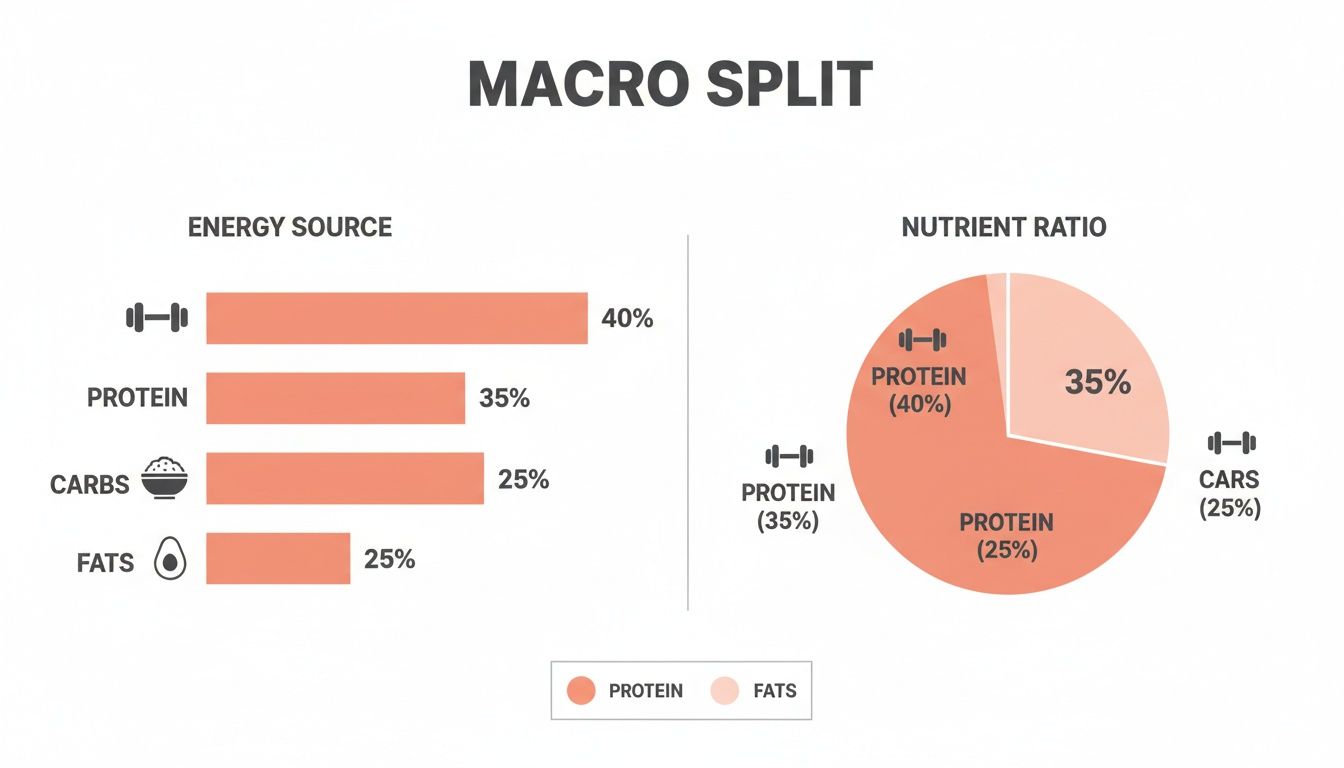
Having a clear picture of your protein, carb, and fat distribution helps you build meals that properly fuel your body instead of just filling your stomach.
High-Protein Plan for Active People
If you’re hitting the gym regularly, your body needs fuel for performance and repair. This plan is built to support muscle growth and keep you feeling full by prioritizing protein in every single meal.
-
Breakfast (Approx. 450 Calories):
- Scrambled Eggs & Turkey Sausage: 3 large eggs scrambled with 2 turkey sausage links.
- Side: 1 slice of whole-wheat toast topped with a thin spread of avocado.
- Macros: ~35g Protein / 25g Carbs / 22g Fat
-
Lunch (Approx. 550 Calories):
- Grilled Chicken Salad: A big bed of mixed greens topped with 6 oz of grilled chicken breast, cucumber, bell peppers, and cherry tomatoes.
- Dressing: A light vinaigrette made with olive oil and vinegar.
- Macros: ~50g Protein / 20g Carbs / 30g Fat
-
Dinner (Approx. 600 Calories):
- Lean Beef Stir-Fry: 5 oz of lean beef strips stir-fried with a generous portion of broccoli, snap peas, and carrots in a low-sodium soy sauce.
- Side: 1 cup of quinoa.
- Macros: ~45g Protein / 55g Carbs / 20g Fat
-
Snack (Approx. 200 Calories):
- Greek Yogurt with Almonds: 1 cup of plain, non-fat Greek yogurt mixed with a small handful of almonds for a nice crunch.
- Macros: ~20g Protein / 10g Carbs / 9g Fat
Balanced Plan for Sustainable Weight Management
This is the perfect approach for anyone who wants to manage their weight without feeling deprived. It provides a steady, balanced mix of macronutrients to keep your energy levels stable all day long. No crazy restrictions here—just smart, sustainable eating.
- Breakfast (Approx. 400 Calories): A warm bowl of oatmeal topped with fresh fruit and a sprinkle of nuts.
- Lunch (Approx. 550 Calories): A large salmon salad with mixed greens and a light vinaigrette dressing.
- Dinner (Approx. 650 Calories): A flavorful chicken and vegetable stir-fry served with a side of brown rice.
- Snack (Approx. 200 Calories): A crisp apple with two tablespoons of peanut butter for a satisfying protein and fat boost.
Remember, these are just templates. The real key to success is finding meals you actually enjoy eating. If you're drawing a blank, you can always use a tool like BiteKit's AI Meal Plan Generator to get personalized ideas that fit your tastes.
Plant-Based, Nutrient-Dense Plan
This fully vegan plan is proof that you can hit your 1,800-calorie target with a diet packed with fiber, vitamins, and plant-powered goodness. It’s designed to be both filling and incredibly nutritious.
-
Breakfast (Approx. 450 Calories):
- Tofu Scramble: 1/2 block of firm tofu scrambled with spinach, onions, and a dash of turmeric.
- Side: 1 slice of whole-grain toast with 1/4 of an avocado.
- Macros: ~25g Protein / 40g Carbs / 20g Fat
-
Lunch (Approx. 500 Calories):
- Lentil & Vegetable Soup: A hearty, homemade bowl of lentil soup loaded with carrots, celery, and potatoes.
- Side: A small whole-wheat roll for dipping.
- Macros: ~20g Protein / 75g Carbs / 10g Fat
-
Dinner (Approx. 600 Calories):
- Black Bean Burgers: Two black bean patties on whole-wheat buns with all the fixings—lettuce, tomato, and onion.
- Side: A simple side salad with a light dressing.
- Macros: ~30g Protein / 80g Carbs / 15g Fat
-
Snack (Approx. 250 Calories):
- Hummus & Veggies: 1/4 cup of hummus served with plenty of sliced cucumbers and bell peppers.
- Macros: ~8g Protein / 25g Carbs / 13g Fat
For those focused on building muscle on a plant-based diet, it's worth checking out an ultimate vegan bodybuilding meal plan for more high-protein ideas. The same principles of structuring meals around protein apply, no matter your dietary preference.
Navigating Common Pitfalls for Lasting Success
Starting an 1800 calories a day plan is a great move, but let's be real—the road to making it a lifestyle isn't always smooth. The real trick is learning to anticipate the little bumps and detours that can throw you off course. Think of this as your field guide for sidestepping the common traps that separate a temporary diet from lasting results.
One of the sneakiest culprits? Hidden calories. That "light" vinaigrette, the creamy sauce on your chicken, or even just the glug of olive oil you used to sauté your veggies can pile up fast. These little extras can easily add hundreds of unplanned calories, accidentally turning what you thought was a deficit into a maintenance day.
Then there’s the classic challenge: weekends and social gatherings. It’s one thing to stick to your plan from Monday to Friday when your routine is set. But a couple of carefree weekend meals can quickly undo a whole week of disciplined effort, leading to a frustrating cycle of progress and setbacks.
The Protein and Satiety Problem
Here’s a big one that often flies under the radar: not getting enough protein. When you’re cutting calories, hunger is the main boss you have to defeat. Nothing keeps you feeling full and satisfied quite like protein, which is far more satiating than carbs or fats.
If your meals are heavy on carbs and light on protein, you'll probably find yourself fighting off persistent hunger and cravings. That makes sticking to your 1800-calorie target feel like an uphill battle. Over time, skimping on protein can also cause you to lose muscle, which is the last thing you want for a healthy metabolism.
It's no secret that cutting calories is a popular strategy. A 2026 survey revealed that of the 125 million U.S. adults starting diets, a full 42% were focused specifically on calorie reduction. This makes an 1,800-calorie plan a common starting point, and studies even show that plant-based versions of this approach can lead to significant weight loss while lowering food costs. You can explore the research and learn more about how an 1800 calorie diet aids weight loss at trimrx.com.
Smart Fixes for Real-World Challenges
Instead of chasing perfection, which is a recipe for burnout, it’s all about having flexible, real-world strategies.
- Track Everything (The Easy Way): Little things add up. Use a photo-logging app like BiteKit to snap a quick picture of your plate before you eat. This creates a visual diary that makes it way easier to account for the sauces, dressings, and oils you might otherwise forget.
- Plan Your "Splurges": Don't ban your favorite foods; that just makes you want them more. If you know you’re going out for pizza on Saturday, just plan for it! You can eat a little lighter earlier in the day or the day before to make room. A weekly calorie target is often much more forgiving than a rigid daily one.
- Make Protein the Star: Build every meal around a solid protein source. Aim for lean protein at breakfast, lunch, and dinner to keep hunger locked down. Keep high-protein snacks on hand—like Greek yogurt, cottage cheese, or a handful of almonds—to get you through the afternoon slump.
At the end of the day, you have to listen to what your body is telling you. If you’re constantly hungry or feeling drained, your body is sending a signal. A truly successful plan is one that feels sustainable in your actual life, not just one that looks good on paper.
Got Questions About Eating 1800 Calories a Day? Let's Answer Them.
Whenever you start a new way of eating, questions are bound to pop up. It’s completely normal. Let’s walk through some of the most common ones I hear about sticking to 1800 calories a day so you can feel confident moving forward.
Can I Build Muscle on 1800 Calories a Day?
Yes, you absolutely can, especially if you're pretty new to lifting weights. You might have heard this called "newbie gains," where your body is so ready to adapt that it can build muscle even in a slight calorie deficit.
To make it happen, though, you have to get two things right. First, protein is your best friend. You'll want to aim high, somewhere in the range of 1.6 to 2.2 grams of protein per kilogram of your body weight. Second, you need a solid resistance training program that consistently pushes your muscles.
But what if you're an experienced lifter? For you, 1800 calories is better suited for a "cutting" phase. Think of it less as a plan for building significant new muscle and more as a way to shed body fat while holding onto the hard-earned muscle you already have.
What if I Feel Hungry All the Time?
Feeling constantly hungry is a big red flag. It’s your body telling you that something isn't quite right with your current setup. The first place to look is your plate.
Are you loading up on protein and fiber at every meal? These two are the cornerstones of satiety. They're what keep you feeling full and satisfied, which is critical when you're managing your calorie intake. Also, make sure you're drinking plenty of water—it's surprisingly easy to mistake thirst for hunger.
If you’ve already optimized your meals with filling foods and you're well-hydrated but the hunger just won't quit, your 1800-calorie target might be a bit too low for your activity level. Try bumping it up by a small amount, maybe 100-150 calories, and see how your body responds. The goal is sustainability, not suffering.
A successful diet is not about enduring constant hunger. It's about finding the right balance of calories and nutrient-dense foods that fuels your body and satisfies your appetite, making the journey enjoyable and sustainable.
Is This Diet Safe for Long-Term Use?
For many people, an 1800 calories a day plan is perfectly safe and effective to follow for the long haul. This is particularly true for individuals whose daily energy needs naturally hover around 2000-2300 calories, like many moderately active women. For them, 1800 calories creates a gentle deficit for weight loss or a stable target for maintenance.
However, safety is always personal. If you're a highly active person or your body requires significantly more calories just to function, sticking to an 1800-calorie plan long-term could be too restrictive. It might lead to fatigue or even nutrient deficiencies over time.
The best approach is to always listen to your body. Pay attention to your energy levels and overall well-being. And when in doubt, it never hurts to check in with a healthcare professional or registered dietitian to get advice tailored specifically to you.