The Surprising Truth About Carbohydrates in Avocado
Confused about carbs in an avocado? Our guide unpacks the science of net carbs, fiber, and why avocados are a weight-loss friendly superfood.
How can a fruit so rich and creamy be a low-carb superstar? It’s a common question in nutrition, and the answer lies in the fundamental difference between the total carbohydrates listed on a nutrition label and the carbohydrates your body actually digests and uses for energy.
The Fiber Factor: Why Net Carbs Are the Crucial Metric
A whole, medium avocado contains approximately 12 to 17 grams of total carbohydrates. At first glance, this might seem high for a low-carb diet. However, the vast majority of these carbohydrates are dietary fiber.
Fiber is a unique type of carbohydrate that the human body cannot digest. Since it isn't broken down into glucose (sugar), it passes through the digestive system without causing a significant spike in blood glucose levels. For individuals monitoring their macronutrient intake or adhering to a ketogenic diet, the net carb count is the most relevant figure.
Net Carbs = Total Carbs - Fiber
This simple equation is fundamental to understanding why avocados are exceptionally well-suited for low-carbohydrate dietary approaches.
A Closer Look at the Scientific Data
Let's analyze the nutritional data for a standard 100-gram serving of a Hass avocado (approximately half of a medium-sized fruit). This portion contains roughly 8.5 grams of total carbs, but an impressive 6.7 grams of that is dietary fiber.
By applying the net carb formula, we are left with just 1.8 grams of net carbs. This is an exceptionally low value for such a nutrient-dense food.
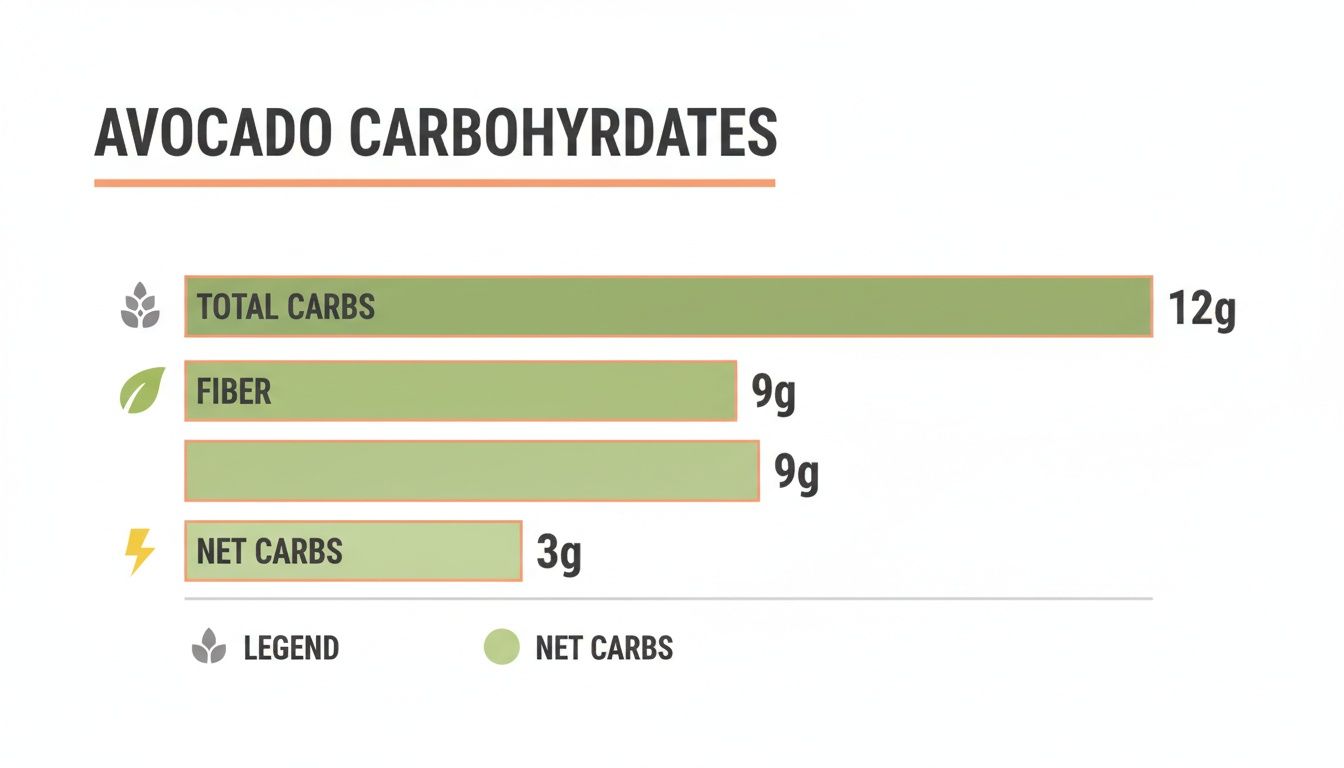
As the data illustrates, fiber constitutes the bulk of an avocado's carbohydrate profile. Once this indigestible component is subtracted, the remaining net carbs are minimal, positioning it as an ideal food for a low-carb lifestyle.
To gain a comprehensive understanding of its nutritional value, including healthy fats and micronutrients, refer to our complete avocado nutrition guide.
Understanding Net Carbs: The Fiber Factor
To fully appreciate why avocados are considered a low-carb superfood, it is essential to look beyond the "Total Carbohydrates" line on a standard nutrition label. This is where the concept of net carbs becomes critical, and it revolves entirely around one key component: fiber.
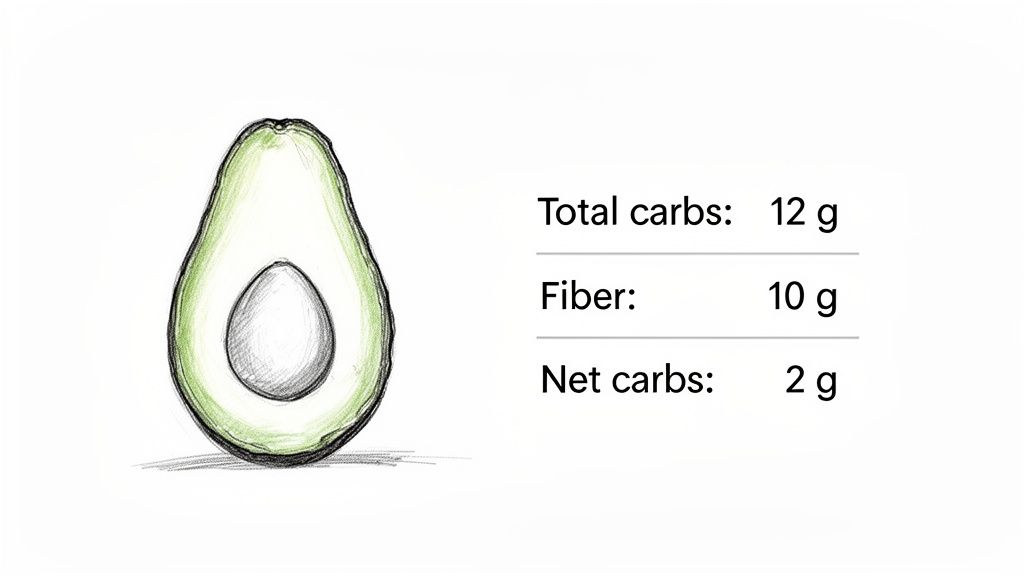
From a metabolic standpoint, total carbohydrates include sugars, starches, and fiber. Sugars and starches are digested and absorbed by the body, where they are converted into glucose and used for energy.
Fiber behaves differently. It travels through the digestive tract largely intact. Because the body does not possess the enzymes to break it down into glucose, it does not impact blood sugar levels in the same way. Therefore, we can subtract it from the total carbohydrate count to get a more functionally accurate measure of a food's metabolic impact.
The Simple Math for Smart Dieters
Calculating net carbs is a straightforward process that provides a more accurate representation of how a food will affect your body, particularly if you are following a low-carbohydrate or ketogenic diet. It is a fundamental tool for precise macronutrient tracking.
Net Carbs = Total Carbohydrates – Dietary Fiber
For an avocado, this calculation is a game-changer. A medium avocado might list 12 grams of total carbs, which could appear restrictive. However, upon discovering that 9 grams of that total is indigestible fiber, you realize you are only consuming 3 grams of net carbs.
This significant difference is precisely why avocados are a cornerstone of ketogenic and other low-carb eating patterns. This is not a dietary loophole; it is a reflection of the physiological processing of different carbohydrate types.
This knowledge empowers you to make more informed dietary choices. Instead of avoiding a nutrient-rich food like avocado due to its total carb count, you can confidently incorporate it into your diet. For assistance with calculations for other foods, you can use a helpful Atkins net carb calculator here. Mastering this concept is crucial for tracking intake accurately without unnecessary dietary restrictions.
How Avocados Can Help You Manage Your Weight
It may seem counterintuitive that a food high in fat and calories could facilitate weight loss. Yet, scientific evidence supports this very case with avocados, primarily due to their profound effect on satiety—the feeling of fullness and satisfaction after a meal.
Their unique composition of healthy monounsaturated fats, high dietary fiber, and significant water content creates a powerful combination that combats hunger.

This feeling of satiety is a critical factor in weight management. When you conclude a meal feeling genuinely satisfied, you are far less likely to seek out high-calorie snacks between meals or overconsume at your next meal. This provides a natural mechanism for reducing overall calorie intake without the psychological burden of feeling deprived.
The Science Behind Feeling Full
The mechanism behind this effect is the way fat and fiber in avocados slow down gastric emptying. A high-carbohydrate snack often leads to a rapid increase in blood glucose followed by a sharp decline, triggering hunger. Avocados provide a more sustained energy release, which helps stabilize blood sugar and keep hunger pangs at bay.
A useful analogy: a slice of toast is like quick-burning kindling, providing a fast burst of energy that quickly dissipates. Adding avocado is akin to placing a dense log on the fire, offering sustained warmth and energy for hours.
This is not merely theoretical; it is supported by clinical research. One study demonstrated that participants could include a whole avocado in their daily calorie-restricted diet without impeding their weight loss progress. The key was the powerful synergy of water, fiber, and healthy fats working to promote longer-lasting satiety. You can review the full research on avocado and satiety to examine the data firsthand.
More Than Just a Number on the Scale
By aiding in appetite control, avocados make long-term adherence to a healthy eating plan more achievable. This makes them a strategic food for sustainable weight management, not something to be feared. The low carbs in an avocado are a significant benefit, but their ability to promote satiety is what truly makes them an invaluable ally in any health and fitness journey.
The extremely low net carbohydrate count is what initially attracts many people to avocados, especially those on ketogenic or low-carb diets. However, focusing solely on this aspect overlooks the broader nutritional benefits. The true value of an avocado lies not just in what it lacks (digestible carbs), but in what it contains.
This is what elevates it from a simple fatty fruit to a genuine superfood. Many processed "keto-friendly" snacks are stripped-down formulations of fats and proteins, often devoid of the essential micronutrients the body requires. An avocado, in contrast, is a whole-food powerhouse.
What's Really Inside an Avocado?
Beyond its healthy fats and fiber, an avocado is rich in essential vitamins and minerals. It provides impressive levels of potassium (often exceeding that of a banana), vitamin K, vitamin E, and various B vitamins. It also offers a modest amount of quality protein, which contributes to satiety and supports muscle health—a characteristic not found in most other fruits.
The composition becomes even more interesting at a molecular level. Avocados contain unique compounds not widely found in other foods. A standard 100-gram serving, with 160 calories, contains 8.5 grams of total carbs but only 0.6 grams of sugar. Research into Hass avocado pulp has identified rare seven-carbon sugars like mannoheptulose and perseitol, which scientists are investigating for their unique metabolic effects. For those interested in the deeper science, the nutritional profile of avocados offers a fascinating overview.
Choosing an avocado is not merely about meeting a carb limit. It is a strategic decision for superior nutrition. You are providing your body with a complex matrix of vitamins, minerals, and unique bioactive compounds that offers benefits far beyond simple macronutrient tracking.
When you incorporate avocado into your diet, you are not just reducing carbs; you are making a deliberate investment in your long-term health and well-being.
Putting Avocado on Your Plate (and in Your Tracker)
Understanding the carbohydrate count of an avocado is useful, but practical application is what truly matters. Fortunately, incorporating it into your meals doesn't require obsessive measurement.
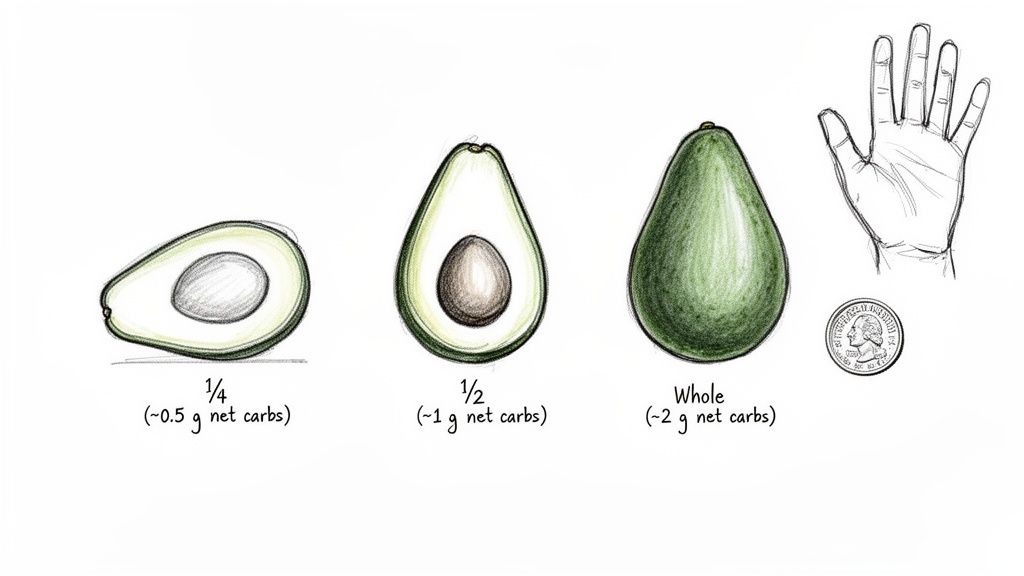
Developing an eye for portion sizes is surprisingly simple. A quarter of a medium avocado, for example, is a standard serving size—roughly 25-30 grams. That portion will only contribute 1-2 grams of net carbs to your daily total. If you add half an avocado to a salad, you are looking at a very manageable 2-3 net carbs.
Quick Tips for Portioning and Logging
Once you are familiar with these visual cues, estimating your intake becomes a natural and efficient process, which is a game-changer for quick and painless macro logging.
- Quarter Avocado: This is an ideal portion for adding a touch of creaminess or healthy fat to a smaller meal without significantly impacting your carb budget.
- Half Avocado: This more substantial portion is excellent for boosting the fat content of breakfast or lunch, helping you feel full and satisfied for hours.
Using a nutrition tracking application can simplify this process even further. For instance, with a tool like BiteKit, you could simply log, “Salad with half an avocado,” and it would perform the calculations automatically. This removes the guesswork and promotes consistent, accurate tracking.
The objective is consistency, not perfection. Do not stress over precise gram measurements. A simple visual estimate is typically sufficient to keep you aligned with your dietary goals.
More Than Just Guacamole: Getting Creative with Avocado
While avocado toast and guacamole are popular for good reason, this fruit's creamy texture and mild flavor make it a true kitchen powerhouse.
Try blending a quarter of an avocado into your morning smoothie for an incredible creaminess and a boost of healthy fats without altering the flavor profile. For lunch, mash some with a squeeze of lemon juice and a pinch of salt as a replacement for mayonnaise in chicken or tuna salad. You can even create a decadent, dairy-free pasta sauce by blending it with garlic, basil, and a little olive oil.
Why Avocados Are a Keto Diet Staple
For individuals following a ketogenic diet, avocados are more than just a good choice—they are a nutritional superstar. The primary goal of keto is to shift the body's primary fuel source from carbohydrates to fat, inducing a metabolic state known as ketosis. Avocados are almost perfectly formulated to support this process.
Their exceptionally low net carb count allows them to fit easily within a strict daily carbohydrate limit, which is typically under 50 grams per day. Simultaneously, they are rich in healthy monounsaturated fats, helping you meet the high-fat macronutrient targets required for energy on a ketogenic diet. This dual benefit makes them a go-to food for the keto community.
Fueling Ketosis Without the Carbs
The combination of high fat and low net carbs provides exactly what your body needs to maintain stable energy levels while in ketosis. You receive a steady supply of fuel without the blood sugar fluctuations that digestible carbohydrates can cause. For many people, this translates to more consistent energy and enhanced mental clarity throughout the day.
The nutritional profile of an avocado aligns perfectly with keto's macro requirements. It delivers the fat your body needs for fuel while keeping the carbs in an avocado low enough to maintain a state of ketosis.
Unsure of your personal macronutrient targets? You can use our simple keto calculator to determine your personal targets and establish precise goals.
Keto-Friendly Meal Ideas
Beyond their nutritional data, avocados offer incredible culinary versatility, which makes dietary adherence much simpler.
- Creamy Sauces: For a dairy-free sauce, blend an avocado with herbs, garlic, and a splash of olive oil. This is an excellent topping for zucchini noodles or grilled chicken.
- Filling Smoothies: Add a quarter of an avocado to your keto smoothie for a rich, creamy texture and a boost of healthy fats without a significant increase in net carbs.
- Satisfying Sides: Simplicity is often best. Slice half an avocado, season it with salt and pepper, and you have a quick, satiating side dish that complements almost any meal.
Common Questions About Avocado Nutrition
To conclude, let's address some of the most common questions that arise when people begin to track the carbohydrates in avocados. Consider this a quick review to solidify the key concepts we have covered.
Can I Eat Avocado Every Day on a Low-Carb Diet?
Absolutely. With only a few grams of net carbs in a whole avocado, it is one of the easiest whole foods to incorporate into a daily low-carb or ketogenic meal plan.
The combination of high fiber and healthy fats is also highly satiating. This helps manage hunger and promotes adherence to dietary goals. The only consideration is the overall context of your diet—while the carbs in an avocado are minimal, the calories and fat will contribute to your daily totals, so ensure they fit within your macronutrient targets.
Is Avocado a Good Source of Protein?
Not particularly. While an avocado does contain some protein—a medium one has about 4 grams—it is not considered a primary protein source. For comparison, a single large egg provides around 6 grams of protein.
It is more accurate to view avocado as a premier source of healthy fats and dietary fiber. It functions as the perfect complement to a primary protein source, such as chicken, steak, or eggs.
An avocado is a powerful nutritional asset, but its main role is providing healthy fats and fiber, not protein. Always pair it with a dedicated protein source to create a balanced meal.
How Do Avocados Compare to Other Fruits?
In terms of nutritional composition, avocados are in a category of their own. Most other fruits are high in sugar, which significantly increases their net carbohydrate counts.
A medium banana, for example, contains about 24 grams of net carbs. A medium avocado contains only 3-4 grams. This vast difference is what makes avocados unique; within a low-carb dietary framework, they function more as a fat source than a typical fruit.