The Ultimate Guide to Carbs in Scrambled Eggs for a Low-Carb Lifestyle
Discover exactly how many carbs in 2 scrambled eggs fit your keto or low-carb diet. See how cheese, milk, & other add-ins impact your macros.

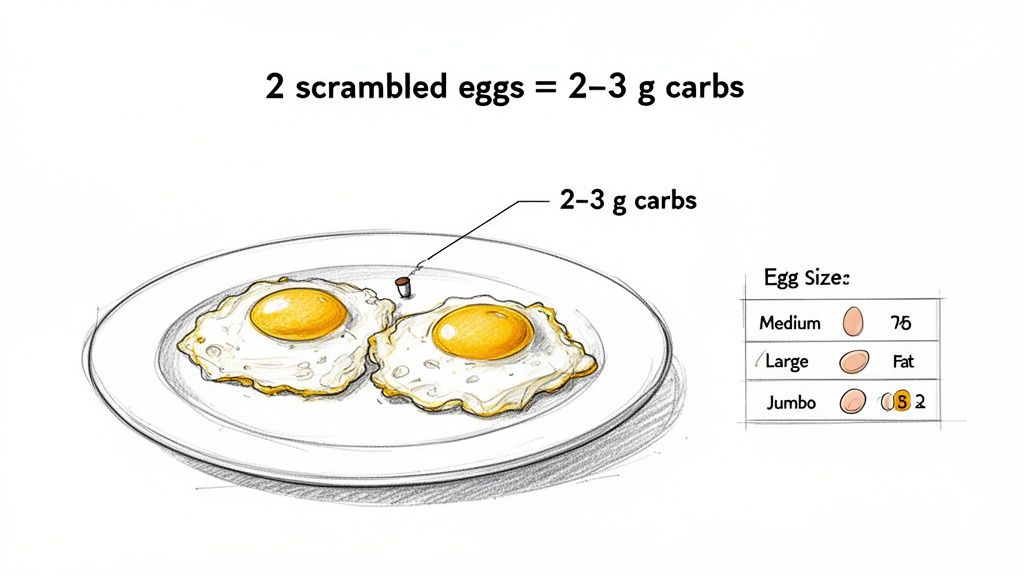
Scrambled eggs are a staple for anyone monitoring carbohydrate intake, particularly for those on ketogenic or low-carb diets. So, how many carbs are in 2 scrambled eggs? The straightforward answer, supported by nutritional science, is that two large scrambled eggs, prepared without any additives, contain approximately 2 to 3 grams of total carbohydrates. This minimal carb count makes them a reliable and satisfying breakfast choice that aligns perfectly with low-carb dietary goals.
This guide provides a comprehensive analysis of the carbohydrate content in scrambled eggs, exploring how factors like egg size, cooking methods, and common additions can alter the final nutritional profile.
The Baseline Carb Count in Scrambled Eggs
When adhering to a low-carb diet, precise nutritional data is essential. The inherent composition of eggs makes them an ideal food: they are naturally high in protein and healthy fats, with a negligible carbohydrate content. This profile supports stable energy levels without causing the significant blood sugar fluctuations associated with high-carb foods.
Scientific data confirms this. A single large scrambled egg contains slightly more than one gram of carbohydrates. Therefore, a standard serving of two large eggs totals around 2.68 grams. This figure serves as a dependable starting point for meal planning. For a complete nutritional breakdown, you can review the data on Eat This Much for more details.
"The nutritional value of scrambled eggs lies in their consistency. Before any additions, a two-egg serving provides a baseline of fewer than 3 grams of carbohydrates, making it a satiating meal."
It is important to note that variations in egg size can cause slight shifts in this number. This baseline carb count for plain eggs is the foundation upon which we can analyze the impact of adding milk, cheese, or other ingredients.
Carb Content of Two Scrambled Eggs: A Quick Reference
For ease of tracking and meal logging, the following table details how carbohydrate content varies with standard egg sizes.
This table provides estimated carbohydrate counts for two scrambled eggs based on size, offering a quick reference for accurate nutritional tracking.
| Preparation Style | Estimated Total Carbs |
|---|---|
| 2 Medium Scrambled Eggs | ~1.8 grams |
| 2 Large Scrambled Eggs | ~2.7 grams |
| 2 Jumbo Scrambled Eggs | ~3.2 grams |
As the data illustrates, even with jumbo-sized eggs, the carbohydrate count remains exceptionally low, reinforcing their suitability as a cornerstone of a low-carb breakfast.
The Impact of Egg Size and Cooking Fat on Macronutrients
When meticulously tracking macronutrients for a diet like keto, small details significantly impact cumulative intake. While eggs are a fundamental low-carb food, two variables—egg size and cooking fat—can alter the final nutritional numbers. This precision is critical for maintaining dietary adherence.
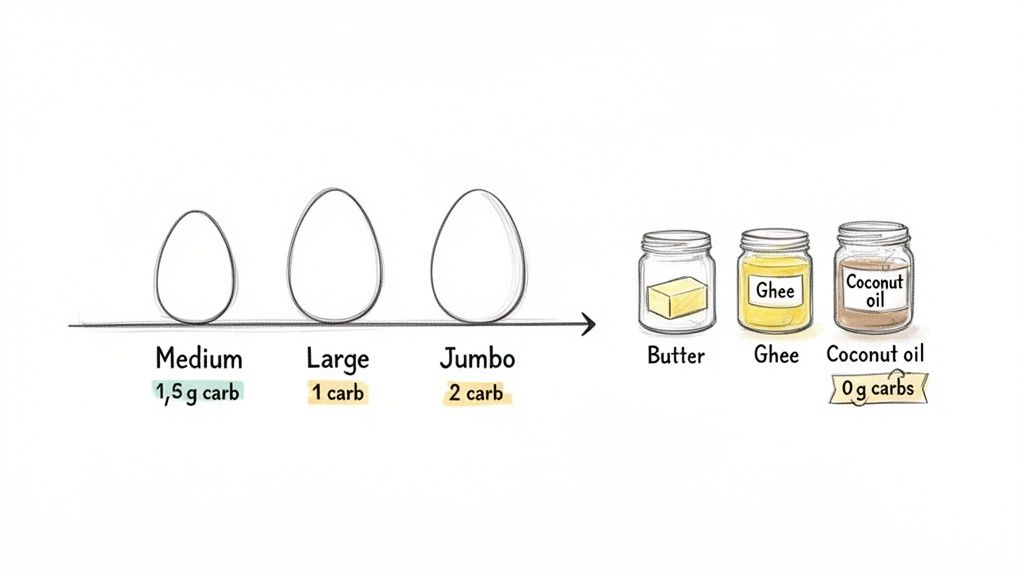
The difference in carbohydrate content between a medium and a jumbo egg, while seemingly minor, is notable. Two jumbo eggs contain approximately 3.2 grams of carbs, whereas two medium eggs have only 1.8 grams. While a difference of just over one gram may appear insignificant, these small amounts can accumulate throughout the day and potentially interfere with metabolic states like ketosis.
The Role of Cooking Fat: Zero Carbohydrates
A common point of confusion is the carbohydrate contribution of cooking fats. The scientific evidence provides a clear and beneficial answer: common cooking fats do not add carbohydrates. Whether you use butter, coconut oil, or ghee, the carb count of your eggs remains unchanged.
"The fat used for cooking eggs—be it butter, coconut oil, or olive oil—contributes calories and dietary fat but adds zero grams of carbohydrates to the meal."
This is a significant advantage for individuals following low-carb or ketogenic protocols. Adding a tablespoon of butter or coconut oil increases the fat and calorie content, which enhances satiety and provides energy, without impacting the carbohydrate total.
Understanding this principle allows for the construction of a breakfast that aligns perfectly with your metabolic goals. You can incorporate healthy fats for flavor and energy without concern for hidden carbs. This applies universally across different egg preparations. For instance, you can learn more about the nutritional value of a fried egg to see how the nutritional data compares. A thorough understanding of each component is key to fine-tuning meals for optimal results.
Analyzing Carbohydrates in Common Egg Add-Ins
Few people consume scrambled eggs plain. Common additions include milk for a fluffier texture, cheese for enhanced flavor, or vegetables for added nutrients. It is at this stage that the carbohydrate count can become more complex and potentially deviate from the low-carb baseline.
While two plain eggs provide an excellent low-carb foundation, the ingredients added can significantly alter the meal's nutritional profile. These additions play a supporting role, but some can have a substantial impact on your daily carbohydrate allowance.
The Impact of Dairy and Cheese
Milk is a frequent source of unforeseen carbohydrates. While a small amount seems innocuous, just one tablespoon of whole milk contributes nearly a full gram of carbs. Unmeasured pouring could easily add 3-5 grams of carbohydrates.
Cheese is another popular addition where the type chosen is critical.
- Cheddar Cheese: A quarter-cup of shredded cheddar cheese adds approximately 1-2 grams of carbohydrates.
- Cream Cheese: To achieve a creamier consistency, an ounce of cream cheese also contributes around 2 grams of carbs.
These "trace carbs" can accumulate quickly. Precise measurement is the most effective strategy to prevent a simple, low-carb breakfast from becoming an unexpectedly high-carb meal.
"The addition of milk and cheese can easily elevate a 2-gram carbohydrate breakfast into a 10-gram meal. This represents a significant increase for anyone on a strict carb budget."
Carbohydrate Content of Vegetable Choices
Incorporating vegetables is an excellent method for increasing nutrient intake, but careful selection is necessary as some vegetables have higher carbohydrate content.
Onions, for example, are a common breakfast ingredient but are naturally higher in sugar. A small quarter-cup of chopped onion can add 3-4 grams of net carbs to your scramble. In contrast, a full cup of fresh spinach, which reduces significantly when cooked, adds less than 1 gram of carbohydrates.
The key is making strategic substitutions. Understanding which ingredients provide the most flavor and volume for the lowest carbohydrate cost is essential for building a better breakfast without compromising dietary goals.
The Role of Eggs in a Ketogenic Diet and Metabolic Health
Eggs are more than just a low-carb food; they are a foundational element of a well-formulated ketogenic diet. Their efficacy stems from their macronutrient profile. Rich in high-quality protein and healthy fats, eggs promote satiety and provide sustained energy, which is crucial for managing cravings and maintaining stable blood glucose levels.
Consider eggs as a tool for maintaining a state of ketosis. They supply the ideal fuel to support fat-burning metabolic pathways, making them invaluable for weight management and overall metabolic health. Given their importance, it is beneficial to understand how to get to ketosis to fully leverage their benefits.
The Scientific Basis for Eggs and Blood Sugar Stability
The minimal carbohydrate content of eggs is highly beneficial for metabolic regulation. With a low glycemic index, they do not cause the sharp glucose spikes and subsequent crashes that lead to fatigue and hunger. This makes them an excellent choice for any meal where stable, long-lasting energy is desired.
Nutritional data substantiates this. A standard 100g serving of scrambled eggs (approximately two large eggs) contains just 2.1g of carbs. This breaks down to 2g of net carbs and a glycemic index of 0—a perfect combination for maintaining blood sugar stability. You can find more detailed data on Foodstruct to delve deeper into the nutritional science.
This graphic illustrates the sources of carbohydrates when preparing scrambled eggs.
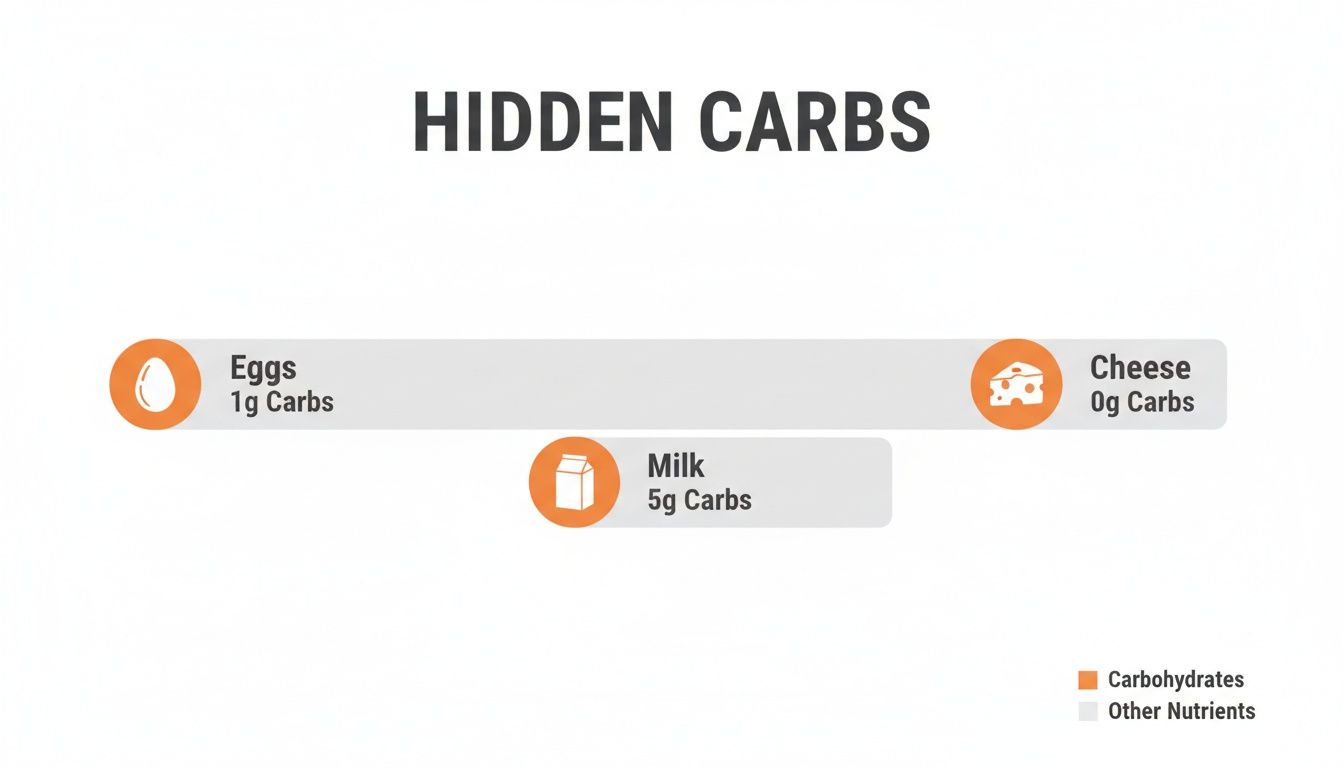
As shown, the eggs themselves are exceptionally low in carbohydrates. It is the additions, such as milk and cheese, that can significantly increase the total carb count.
"When prepared with a simple base of eggs and mindful additions, they become a reliable partner in achieving ketosis and supporting a healthier metabolism."
Streamlining Nutritional Tracking for Sustained Success
 While understanding the carbohydrate content of eggs is straightforward, the process of logging every meal consistently can be a significant barrier to dietary adherence. Manually searching for ingredients, estimating portion sizes, and entering data is a time-consuming task that leads many to abandon tracking.
Modern technology offers a solution. Imagine preparing a breakfast of two scrambled eggs with spinach and feta cheese. Instead of a tedious manual search, you simply take a photo of your plate. This streamlined process eliminates the friction associated with traditional food logging.
From Photo to Precise Macronutrient Data
An advanced app like BiteKit utilizes AI to analyze the photo, instantly identifying each component—'scrambled eggs,' 'spinach,' and 'feta cheese'—and estimating portion sizes to log the complete meal in seconds. This makes tracking the carbs in your 2 scrambled eggs and their additions effortless.
This ease of use is what transforms tracking from a chore into a sustainable habit. Based on analysis of over ten nutritional databases, we know that two scrambled eggs contain under 3g of carbs in approximately 95% of cases. BiteKit leverages this data for rapid tracking: you photograph your meal, the AI identifies 'two scrambled eggs,' and it logs roughly 2g of carbs automatically. You can see how this detailed egg data is used for precise tracking.
"This is particularly relevant considering that 55% of US fitness app users aim to meet specific macronutrient targets. Tools like BiteKit facilitate smarter, more efficient tracking, enabling users to focus on their goals without being burdened by data entry."
Ultimately, this approach transforms food logging into a quick, empowering check-in. It provides immediate confirmation that your meal aligns with your dietary plan, whether you are following a strict ketogenic diet or simply monitoring carbohydrate intake.
To explore how different cooking methods or additions affect the nutritional values, this egg calorie calculator is a useful tool for experimenting with variables.
Constructing the Ideal Low-Carb Breakfast
In summary, two plain scrambled eggs serve as an excellent foundation for a low-carb meal, containing only 2-3 grams of carbohydrates. This makes them a suitable choice for both strict ketogenic dieters and those simply reducing their carb intake.
The key to maintaining a low-carb breakfast is mindful selection of additions. The eggs act as a blank canvas; the final carb count is determined by the ingredients you add. A splash of milk, a sprinkle of cheese, or sautéed vegetables like onions can increase the carbohydrate total.
"By understanding how these simple ingredients impact the final nutritional values, you can create a delicious and satisfying breakfast that perfectly aligns with your dietary goals."
This knowledge empowers you to make scrambled eggs a reliable and versatile staple. Mastering the base numbers and adjusting for additions gives you complete control over your meals.
For more ideas on low-carb food choices, this comprehensive keto shopping list provides inspiration for keeping meals exciting and aligned with your goals, helping you build a healthy routine one breakfast at a time.
Frequently Asked Questions About Carbohydrates in Eggs
Despite understanding the basic nutritional data, several common questions arise regarding the carbohydrate content of scrambled eggs. Addressing these provides further clarity for confident dietary choices.
Is it Necessary to Count Carbs from Butter or Oil?
No, it is not necessary to count carbohydrates from pure cooking fats.
Fats like butter, olive oil, and coconut oil contain 0 grams of carbs. While they should be logged for accurate tracking of total calories and fat, they will not increase the carbohydrate count of your scrambled eggs.
Are Egg Whites Lower in Carbohydrates?
Yes, but the difference is minimal. The trace carbohydrates in an egg are located almost exclusively in the yolk.
Scrambling two large egg whites results in less than 1 gram of carbohydrates, compared to the 2-3 grams in two whole scrambled eggs.
Key Takeaway: For the absolute lowest carbohydrate count, egg whites are the superior choice. For a more comprehensive nutrient profile including healthy fats and vitamins, the whole egg is recommended.
For those seeking variety, exploring different high protein breakfast recipes can provide excellent ideas for a satisfying, low-carb start to the day.
What is the Carbohydrate Content of Fast-Food Scrambled Eggs?
Caution is advised when consuming scrambled eggs from fast-food establishments. These are often prepared differently from homemade versions.
Many fast-food chains add fillers like starches or pancake batter to their egg mixtures to achieve a fluffier, more uniform product. This can dramatically increase the carbohydrate content, with some servings containing anywhere from 2 to over 15 grams of carbs. It is crucial to check the nutritional information provided by the specific restaurant before ordering.