Keto Shopping List: A Science-Backed Guide for Success
Build your keto shopping list with a science-backed guide that simplifies healthy choices, saving time and boosting weight loss.
Embarking on a ketogenic diet requires a fundamental shift in how you stock your kitchen. A well-crafted keto shopping list isn't just a guide; it's the architectural plan for your nutritional success. This article moves beyond generic advice to provide a scientifically grounded, actionable list of food categories essential for sustained ketosis, weight management, and overall health.
We will explore the "why" behind each food group, citing evidence on metabolic health, satiety, and nutrient density. The ketogenic diet's efficacy is rooted in metabolic precision, typically requiring that around 70% of calories come from fat, 25% from protein, and only 5% from carbohydrates. This guide is designed to eliminate guesswork, prevent common pitfalls like nutrient deficiencies and the "keto flu," and empower you to build sustainable habits from your very first grocery run. By understanding these core categories, you can create a versatile, delicious, and effective ketogenic lifestyle.
Once you have your shopping list, learning efficient ways to use these ingredients is crucial. For great ideas on how to get started, explore some easy keto meal prep tips to turn your groceries into quick, healthy meals. We'll also cover crucial shopping strategies, portion control, and how to make tracking these foods effortless. This comprehensive approach ensures you're not just buying keto-friendly foods but are fully equipped to use them for long-term success. Let's build the foundation for your ketogenic journey, starting with what goes into your cart.
1. Proteins & Meats
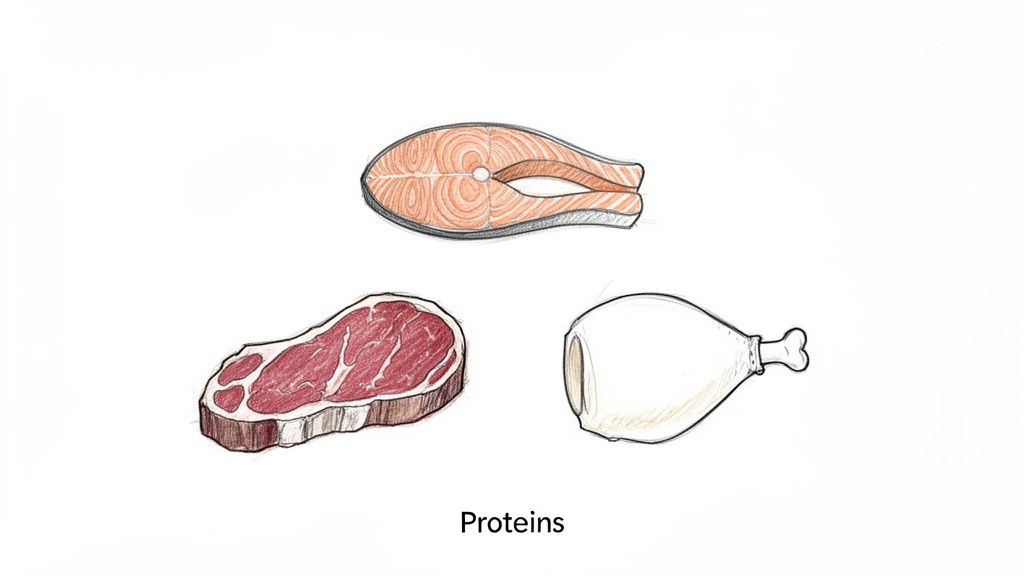
Proteins are the cornerstone of a well-formulated ketogenic diet, providing the essential amino acids your body needs for muscle repair, hormone production, and overall function without a significant carbohydrate load. High-quality animal proteins form the foundation of countless satisfying keto meals, making them a non-negotiable part of your keto shopping list. Their composition, typically high in protein and fat with minimal to zero carbs, aligns perfectly with ketogenic macronutrient goals (around 70% fat, 25% protein, 5% carbs).
The efficacy of low-carbohydrate, high-protein diets for improving metabolic health is supported by extensive research, including studies from institutions like Duke University. A key principle is to choose a variety of sources to ensure a broad spectrum of nutrients and prevent dietary monotony.
Key Protein Sources for Your List
- Fatty Fish: Salmon is a keto superstar, rich in anti-inflammatory omega-3 fatty acids. Studies published in journals like The American Journal of Clinical Nutrition have linked omega-3 intake to improved cardiovascular health markers.
- Grass-Fed Beef: Opt for cuts like ribeye or ground beef with a higher fat percentage (e.g., 80/20). Grass-fed options contain more conjugated linoleic acid (CLA), a beneficial fatty acid associated with positive body composition changes.
- Poultry (Dark Meat): Chicken thighs and drumsticks offer more flavor and a higher fat content than lean breasts, contributing to better satiety and easier macro balancing.
- Eggs: Incredibly versatile and affordable, a single large egg contains about 6g of high-quality protein and less than 1g of carbs. The yolk is a rich source of choline, a vital nutrient for brain health.
- Organ Meats: Liver and heart are nutritional powerhouses, packed with vitamins A, B12, and iron. Incorporating them weekly can fill common micronutrient gaps often seen in restrictive diets.
Actionable Insight: To simplify meal prep and macro tracking, buy proteins in bulk and freeze them in pre-portioned amounts. When logging your meals with an app like BiteKit, photograph the raw portion size or the final cooked meal from a consistent overhead angle for the most accurate visual analysis. Pairing visible protein with a measured fat source, like a tablespoon of olive oil or butter, ensures your logged macros are precise.
2. Healthy Fats & Oils
Healthy fats are the primary fuel source on a ketogenic diet, representing roughly 70% of daily caloric intake. Far from being just a source of calories, high-quality fats provide satiety, support hormone production, and are essential for absorbing fat-soluble vitamins (A, D, E, and K). Including a diverse range of these fats is a critical part of any successful keto shopping list, as they ensure you meet energy needs while keeping carbohydrates minimal.
The emphasis on fat quality is supported by a wealth of scientific literature. Research on the Mediterranean diet, for example, consistently highlights the benefits of monounsaturated fats from olive oil for cardiovascular health. Similarly, studies on Medium-Chain Triglycerides (MCTs) demonstrate their unique ability to be rapidly converted into ketones for energy. You can dial in your personal macro goals using a keto calculator to determine your ideal daily fat intake.
Key Fats & Oils for Your List
- Extra Virgin Olive Oil: A staple rich in polyphenols and monounsaturated fats. Best for drizzling on salads or for low-heat cooking to preserve its beneficial compounds.
- Avocado Oil: With its high smoke point (around 520°F or 271°C), this oil is perfect for high-heat cooking like searing and frying without oxidizing, a process that can create harmful compounds.
- Coconut Oil & MCT Oil: Coconut oil contains Medium-Chain Triglycerides (MCTs), which research shows are rapidly converted into ketones. For a more concentrated dose, pure MCT oil is an excellent addition to coffee or smoothies. When considering these options, understanding the distinctions between Olive Oil vs Coconut Oil can help you make informed choices.
- Butter & Ghee: Sourced from grass-fed cows, these fats provide butyrate, a short-chain fatty acid that supports gut health. Ghee (clarified butter) is lactose-free and has a higher smoke point than butter.
Actionable Insight: Fat sources are calorie-dense, so precision is key for accurate tracking. Use a food scale to weigh fats like butter or coconut oil before adding them to a pan. For liquids, use a measuring spoon. When logging your meal with an app like BiteKit, make sure the fat source is visible in your photo, for example, a pat of butter melting on a steak or a visible drizzle of oil on your salad. This visual cue helps the app's analysis provide a more precise macro breakdown.
3. Low-Carb Vegetables
Contrary to common misconceptions, a ketogenic diet is not just meat and cheese. Non-starchy vegetables are a crucial component of a healthy, sustainable keto lifestyle. They provide essential fiber for digestive health, a wide array of vitamins and minerals, and satisfying volume to meals without disrupting ketosis, making them a vital part of your keto shopping list. Their low net carbohydrate content (total carbs minus fiber) allows for generous portions that enrich your diet.
This emphasis on nutrient-dense, low-glycemic vegetables is a core principle for leading researchers in ketogenic nutrition like Dr. Stephen Phinney. Scientific evidence underscores the importance of dietary fiber for gut microbiome health and the role of phytonutrients from vegetables in reducing inflammation and oxidative stress.
Key Vegetable Sources for Your List
- Leafy Greens: Spinach and kale are nutritional powerhouses, offering iron, calcium, and vitamin K with nearly zero impact on blood sugar.
- Cruciferous Vegetables: Broccoli and cauliflower are keto staples. They contain compounds like sulforaphane, which has been studied for its antioxidant and anti-inflammatory properties.
- Zucchini & Cucumber: Extremely low in carbs, these are perfect for adding bulk to salads, creating "zoodle" pasta, or serving as a crisp vehicle for dips.
- Bell Peppers: Offering a splash of color and sweetness, red and yellow bell peppers are rich in Vitamin C, a potent antioxidant. Their carb count is slightly higher, so portioning is important.
- Asparagus & Green Beans: These vegetables are excellent side dishes when roasted or steamed, providing fiber and micronutrients with a minimal carb load.
Actionable Insight: For fast and accurate meal logging, pre-cut your vegetables and store them in clear containers. This visual readiness simplifies portioning. When using an app like BiteKit, photograph your colorful vegetable portions directly on your plate. A variety of colors often signals a broader spectrum of micronutrients. Roasting or steaming vegetables with a measured fat source not only improves flavor but also helps you hit your fat macros with precision.
4. Dairy & Cheese
Full-fat dairy products can be excellent additions to a ketogenic diet, offering a satisfying combination of fat, protein, and essential micronutrients like calcium. However, not all dairy is created equal; the carbohydrate content, primarily from lactose (milk sugar), varies significantly. Careful selection is key to keeping this category a keto-friendly part of your shopping list.
The principle is to choose full-fat, low-sugar options to support your ketogenic goals. The fat in dairy contributes to satiety and can slow the absorption of any existing carbohydrates, leading to a more stable blood glucose response compared to low-fat versions, which often contain added sugars.
Key Dairy Sources for Your List
- Hard Cheeses: Cheddar, Parmesan, and Swiss are keto champions. The aging process breaks down most of the lactose, leaving them with very low carbohydrate counts.
- Heavy Cream: With almost no carbs, heavy cream is a calorie-dense fat source perfect for coffee, sauces, and desserts.
- Full-Fat Greek Yogurt: A good source of protein and probiotics, which support gut health. Look for plain, full-fat versions, and check the label as carb counts can vary.
- Full-Fat Cottage Cheese: Rich in slow-digesting casein protein, which research shows promotes fullness over a longer period.
- Mozzarella: Whether fresh or low-moisture, mozzarella is a great, melty option for keto pizzas and casseroles. It's low in carbs and adds delicious texture.
Actionable Insight: When adding dairy to your keto shopping list, prioritize hard, aged cheeses over softer, fresh varieties to minimize lactose intake. For liquid dairy like cream or yogurt, precise measurement is crucial. Photograph your measuring spoon or cup next to the food when using BiteKit to ensure the visual log is accurate. Choosing full-fat versions is non-negotiable, as low-fat dairy often contains added sugars to compensate for flavor.
5. Nuts & Seeds
Nuts and seeds are convenient, nutrient-dense additions to any keto shopping list, offering a satisfying crunch along with healthy fats, plant-based protein, and important micronutrients like magnesium and selenium. While they are a fantastic source of energy, their high calorie density and variable carbohydrate content make portion control absolutely essential for maintaining ketosis.
Scientific studies, including large-scale epidemiological research like the PREDIMED trial, have linked regular nut consumption to improved metabolic syndrome markers and reduced risk of cardiovascular disease. The key on keto is strategic selection and strict measurement to ensure they fit within your macros.
Key Nut & Seed Sources for Your List
- Macadamia Nuts: The lowest-carb nut, macadamias are a keto favorite, prized for their high monounsaturated fat content.
- Pecans & Walnuts: These nuts are celebrated for their polyphenol and omega-3 fatty acid content, which have neuroprotective and anti-inflammatory properties.
- Almonds: A great source of protein and vitamin E, a powerful antioxidant that helps protect cells from oxidative damage.
- Pumpkin Seeds (Pepitas): An excellent source of magnesium, a mineral involved in over 300 enzymatic reactions in the body, including energy production and muscle function.
- Flaxseeds & Chia Seeds: Packed with soluble fiber, these seeds are fantastic for digestive health and can help regulate blood sugar by slowing digestion.
Actionable Insight: The caloric density of nuts makes them a high-risk food for under-reporting. To maintain accuracy, use a kitchen scale to weigh your desired portion before you start eating. Photograph the measured portion with your BiteKit app immediately. This creates a pre-emptive log, preventing the "mindless handfuls" that can sabotage your progress. For on-the-go snacking, pre-portion nuts into small containers or bags to enforce serving sizes.
6. Eggs
Eggs are the quintessential keto food, a perfect package of high-quality protein and healthy fats with virtually zero carbohydrates. Their nutritional profile makes them a fundamental component of any well-planned ketogenic diet, providing sustained energy and excellent satiety. An average large egg offers approximately 6 grams of protein and 5 grams of fat, aligning perfectly with the macro ratios needed to maintain ketosis.
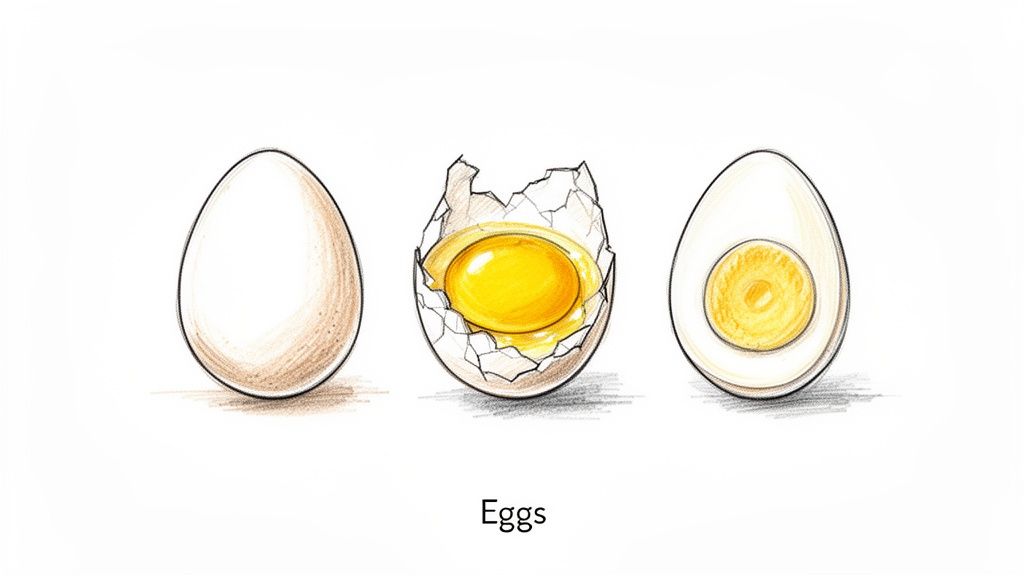
The science on eggs has evolved significantly. Once vilified for their cholesterol content, large-scale studies have since shown that for most people, dietary cholesterol has little effect on blood cholesterol levels. The yolk is a source of important nutrients like choline, which supports brain health, as well as lutein and zeaxanthin, antioxidants that benefit eye health.
Key Egg Varieties for Your List
- Pasture-Raised Eggs: From hens with outdoor access, these often have higher levels of omega-3 fatty acids and vitamins A and E, as shown in studies comparing different farming methods.
- Omega-3 Enriched Eggs: These come from hens fed a diet supplemented with flaxseed or fish oil, boosting the omega-3 content of each egg.
- Conventional Eggs: The most affordable and widely available option, conventional eggs are still a fantastic and nutritious choice for your keto shopping list.
- Hard-Boiled Eggs: Many stores now sell pre-peeled, hard-boiled eggs, offering an incredibly convenient grab-and-go snack or a quick protein addition to salads.
Actionable Insight: For fast and convenient keto snacks, boil a dozen eggs at the start of the week. When logging meals with an app like BiteKit, photograph your eggs from a consistent angle alongside other meal components. For instance, capturing a two-egg scramble next to a measured tablespoon of butter allows for a precise visual log of both protein and fat, helping you stay on track with your macros.
7. Avocados & Avocado Oil
Avocados are a true gift to the ketogenic lifestyle, prized for their unique composition of healthy fats, minimal carbohydrates, and creamy texture. A medium avocado contains a significant amount of fat and fiber with very few net carbs, making it an ideal food for maintaining ketosis. Its high content of monounsaturated fats supports heart health, while its impressive potassium levels help manage the electrolyte balance crucial for avoiding the "keto flu."
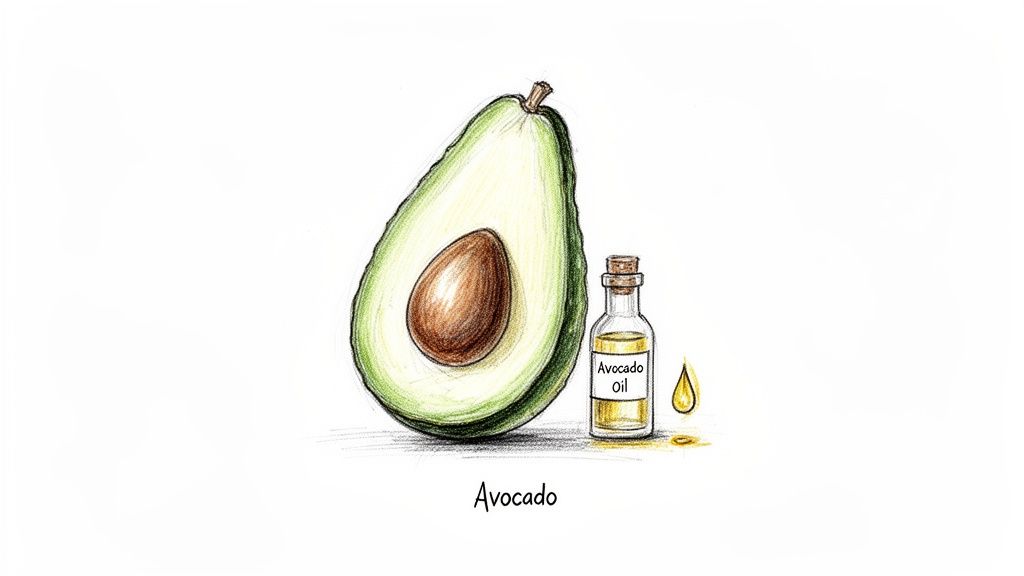
The health benefits of avocados are well-documented. Research published in the Journal of the American Heart Association has shown that regular avocado consumption can help improve lipid profiles, including lowering LDL ("bad") cholesterol. Their versatility makes them an indispensable part of any keto shopping list. You can explore a detailed breakdown of the carbohydrates in an avocado to better understand its macronutrient profile.
Key Avocado Sources for Your List
- Hass Avocados: The most common variety, known for its pebbly skin and rich, creamy flesh. Perfect for guacamole, smoothies, or simply sliced with salt.
- Bacon Avocados: Larger and with a lighter, more buttery flavor, these are excellent for slicing into salads or sandwiches made with keto bread.
- Avocado Oil: A fantastic cooking fat with a high smoke point (around 520°F or 271°C) and neutral flavor. This stability at high heat prevents the formation of harmful oxidative byproducts.
- Pre-made Guacamole: When short on time, look for brands with clean ingredients—just avocado, lime juice, salt, and spices. Always check the label for added sugars or fillers.
Actionable Insight: For effortless portion control and tracking, buy avocados slightly underripe and let them ripen on your counter. Once ripe, store them in the refrigerator to prolong freshness. When logging with BiteKit, photograph half an avocado next to another food item, like an egg, to give the visual AI a clear size reference for accurate macro estimation. To preserve a cut half, leave the pit in, spritz with lime juice, and wrap it tightly in plastic to slow oxidation.
8. Low-Carb Sweeteners & Sugar Alcohols
Managing sweet cravings without derailing your ketogenic state is entirely possible thanks to low-carb sweeteners and sugar alcohols. These sugar substitutes provide sweetness without the high carbohydrate count and subsequent blood sugar spike of regular sugar. Their molecular structure is either not absorbed by the body or metabolized differently, preventing the insulin response that would otherwise stop ketosis.
The science behind sugar's metabolic impact highlights why these alternatives are so valuable. By replacing sugar, you avoid its negative effects while still satisfying a sweet tooth, which can be critical for long-term dietary adherence. Clinical studies on sweeteners like erythritol and stevia confirm they do not raise blood glucose or insulin levels, making them suitable for ketogenic and diabetic diets.
Key Sweetener Sources for Your List
- Erythritol: A sugar alcohol that closely mimics the texture of sugar, making it ideal for baking. It’s about 70% as sweet as sugar with a minimal cooling aftertaste.
- Monk Fruit: Extracted from a small green gourd, this natural sweetener is 150-200 times sweeter than sugar and has no calories or aftertaste.
- Stevia: A highly concentrated plant-based sweetener (200-300 times sweeter than sugar) available in liquid and powder forms. Some people detect a slightly bitter aftertaste, which can be minimized by blending it with erythritol.
- Allulose: A newer "rare sugar" that tastes and behaves almost identically to table sugar but with 90% fewer calories and minimal impact on blood glucose, as confirmed by FDA guidance.
Actionable Insight: When using these sweeteners, start with small amounts and adjust to taste. To accurately track intake, log even zero-carb sweeteners in an app like BiteKit. When you photograph a coffee or keto dessert, make a quick note in the app’s caption like "with 1 tsp Swerve." This practice helps you correlate intake with feelings of satiety, cravings, or any digestive sensitivity, as some sugar alcohols can cause bloating in certain individuals.
9. Processed Keto Products (Bars, Breads, Chips)
The market for keto-friendly processed foods has expanded rapidly, offering convenience with products like bars, breads, and pastas. While these items can be a useful bridge for those transitioning to a keto lifestyle, they require careful scrutiny. The quality, accuracy of nutrition labels, and potential for hidden carbs or inflammatory ingredients vary wildly.
A cautious, whole-food-first approach is scientifically prudent. Processed foods, even those labeled "keto," can contain industrial seed oils, artificial additives, or forms of fiber that may still impact blood sugar in some individuals. Prioritizing whole, unprocessed foods remains the gold standard for health.
Key Processed Products for Your List (with Caution)
- Keto Bars: Convenient for emergencies, but always check labels for hidden sugars and industrial seed oils (like soy or canola).
- Low-Carb Breads: These often rely on wheat gluten or other ingredients that can be inflammatory for some. Limit their use and monitor your body's response.
- Keto Crisps & Chips: Pork rinds and cheese crisps (like Whisps) are generally safe bets. They are typically made from single ingredients and have minimal to zero carbs.
- Low-Carb Pasta: Options like shirataki noodles are composed of indigestible fiber and are a safe choice, though texture can be an adjustment.
Actionable Insight: Always calculate net carbs yourself: Total Carbs - Fiber - (most Sugar Alcohols). When logging these items in an app like BiteKit, photograph the product next to its packaging. This provides the visual recognition system with the necessary data to pull the correct nutritional information, avoiding the pitfalls of inaccurate user-generated entries. This helps keep your tracking precise, even when you can't build every part of your keto meal plan from scratch.
10. Supplements & Electrolytes
Supplements and electrolytes are crucial for managing the physiological shifts that occur on a ketogenic diet. As carbohydrate intake drops, insulin levels fall, signaling the kidneys to excrete more sodium and water. This diuretic effect can lead to a flush of key minerals. Proactively managing your intake of sodium, potassium, and magnesium is essential for preventing the "keto flu" and supporting overall metabolic function.
This focus on electrolyte management is heavily promoted by ketogenic researchers like Dr. Dominic D'Agostino and Dr. Eric Westman. Their work highlights that proper supplementation is not just an add-on but a foundational component for sustaining energy levels, preventing muscle cramps, and ensuring a smooth transition into ketosis.
Key Supplements for Your List
- Electrolyte Powders: Zero-carb powders offer a convenient way to get sodium, potassium, and magnesium. They help replenish what’s lost through increased urination on keto.
- Magnesium Glycinate: This highly bioavailable form of magnesium supports muscle relaxation and can improve sleep quality, a common issue during keto adaptation.
- Potassium Citrate: A necessary mineral for balancing fluids and supporting nerve function. Needs can be partially met with keto-friendly foods like avocados and spinach, but supplementation is often necessary.
- Bone Broth: An excellent natural source of sodium, collagen, and other trace minerals. Check labels for added sugars.
- Collagen Peptides: Unflavored collagen peptides support hair, skin, nails, and connective tissue. They add a protein boost to coffee or smoothies without altering the taste.
Actionable Insight: Begin supplementing with electrolytes before you feel symptoms like headaches or fatigue. Aim for 3,000-5,000mg of sodium daily from sources like pink salt and electrolyte mixes. When using BiteKit, log every supplement, even zero-calorie ones, to build a consistent tracking habit. Photographing your daily supplement lineup next to a glass of water creates a simple visual log to ensure you never miss an entry.
Top 10 Keto Grocery Comparison
| Item | Implementation complexity | Resource requirements | Expected outcomes | Ideal use cases | Key advantages |
|---|---|---|---|---|---|
| Proteins & Meats | Moderate — simple cooking but requires storage | Moderate–high — cost, refrigeration, sourcing quality | High satiety, muscle preservation, stable keto macros | Main meals, macro-focused planning, strength maintenance | Nutrient-dense, highly trackable, filling |
| Healthy Fats & Oils | Low — add to meals, match cooking heat | Low–moderate — purchase & store oils properly | Sustained ketosis, greater satiety, calorie density | Fat-tuning meals, ketone support, energy timing | Essential for macros and fat‑soluble vitamin absorption |
| Low‑Carb Vegetables | Low–moderate — washing/prep needed | Low — affordable, seasonal storage | Improved micronutrients, fiber, fullness with minimal carbs | Sides, volume for meals, digestive health | Very low carbs, high fiber and micronutrients |
| Dairy & Cheese | Low — ready-to-eat, simple portioning | Moderate — refrigeration, variable cost/quality | Added fat/protein, increased satiety, calcium intake | Snacks, flavoring, slow-digest protein at meals | High fat/protein, easy portion control, flavorful |
| Nuts & Seeds | Low — minimal prep but strict portioning | Low–moderate — purchase, shelf storage | Portable fats/protein; risk of excess calories if unmeasured | On-the-go snacks, textural additions, travel food | Nutrient-dense, portable, long shelf life |
| Eggs | Low — quick to prepare and versatile | Low — inexpensive, easy refrigeration | Complete protein, high satiety, nutrient-dense | Quick meals, meal prep, budget protein source | Complete amino acids, zero carbs, highly bioavailable |
| Avocados & Avocado Oil | Low — simple prep; manage ripeness | Moderate — cost and seasonality | Potassium and monounsaturated-fat support, satiety | Salads, fat boosts, mitigating keto flu | High potassium, recognizable for tracking, versatile fat |
| Low‑Carb Sweeteners & Sugar Alcohols | Low — use in recipes, require recipe adjustments | Low–moderate — specialty purchases | Sweet options without glycemic spikes; variable digestive effects | Baking, desserts, occasional treats to improve adherence | Enables treats with minimal blood glucose impact |
| Processed Keto Products (Bars, Breads, Chips) | Very low — ready-to-eat but label scrutiny needed | Moderate–high — often expensive, packaging to verify | Convenience and variety; variable macro accuracy and nutrient density | Travel, convenience, transitional dieting | Convenience and familiarity; can aid adherence if verified |
| Supplements & Electrolytes | Low–moderate — dosing and timing management | Low–moderate — recurring purchases, quality varies | Reduced keto flu, electrolyte balance, improved recovery | Early adaptation, athletes, symptom prevention | Targets common deficiencies, fast symptom relief, easy dosing |
From List to Lifestyle: Effortless Tracking with BiteKit
You now have a complete, strategic keto shopping list that serves as the foundation for your nutritional success. We've moved beyond simple grocery items and explored the practical application of each category, from selecting the right proteins and healthy fats to integrating low-carb vegetables and navigating processed keto snacks. The goal was to equip you not just with what to buy, but how to use these ingredients to build satisfying, effective ketogenic meals.
Mastering your grocery haul is the critical first step. The true test, however, lies in consistently applying these principles day after day. This is where the bridge between a well-stocked kitchen and tangible results is often weakest. The ketogenic diet’s effectiveness is rooted in metabolic precision, requiring you to maintain a specific balance of macronutrients. For many, this is the most challenging part.
The Achilles' Heel of Keto: Inconsistent Tracking
Even with the perfect ingredients, success can be derailed by small, cumulative inaccuracies. A little extra olive oil, a slightly larger portion of nuts, or an unaccounted-for serving of cheese can shift your macros enough to stall progress or even kick you out of ketosis. Manually logging every component of a meal is tedious and prone to error, turning what should be an empowering health journey into a frustrating chore.
This friction is a primary reason why people abandon the diet, despite its scientifically supported benefits for weight management, metabolic health, and cognitive function. The mental load of constantly measuring, calculating, and entering data becomes unsustainable. The solution isn't to guess and hope for the best; it's to make the act of tracking itself almost invisible.
Key Insight: Sustainable dietary change doesn’t come from willpower alone. It comes from creating systems that make the correct choices the easiest choices. For keto, this means making accurate tracking a seamless, background habit rather than an active, daily task.
Turning Your Keto Shopping List into Daily Reality with BiteKit
This is precisely where a tool like BiteKit changes the game. It directly addresses the friction of manual logging by automating the entire process. Instead of dismantling your meal to weigh and record each ingredient, you can simply use your phone to capture the reality of what's on your plate.
Imagine the workflow:
- Prepare a Meal: You've used your keto shopping list to create a delicious dinner: a pan-seared salmon fillet (protein), a side of asparagus roasted in olive oil (low-carb vegetable, fat), and a few slices of fresh avocado (fat, fiber).
- Snap a Photo: Before you eat, you take a quick picture of your plate with the BiteKit app. Its AI analyzes the visual data, identifying each food item and estimating its portion size.
- Receive Instant Analysis: Within seconds, the app provides a complete macronutrient breakdown for the entire meal, automatically logging the protein, fat, and net carbs against your daily targets.
This process removes the guesswork and the tedious data entry. What was once a five-minute-long task of searching databases and using a food scale becomes a two-second habit. This efficiency is just as crucial for smaller items. For the MCT oil in your morning coffee or that handful of macadamia nuts, you can use a simple voice or text command. Just say, "coffee with one tablespoon of MCT oil" or type "30 grams of pecans," and BiteKit’s AI logs it accurately.
By making data collection this effortless, you can finally focus your energy on what truly matters: enjoying your food, listening to your body's signals, and building the consistency that drives real, lasting results. Your meticulously planned keto shopping list is the blueprint; BiteKit is the tool that ensures the structure is built perfectly, every single day. Download the BiteKit app to transform your plan into a reality and make your ketogenic lifestyle not just effective, but truly sustainable.