How Much Water To Lose Weight: The 2026 Guide
Learn how much water to lose weight with our science-backed guide. Discover daily intake, timing, & how hydration boosts metabolism.
Individuals asking how much water to lose weight often receive the same answer: drink eight glasses a day.
That advice is simple, but it is also incomplete. Your body does not respond to water only by tallying glasses. Timing matters. Meal context matters. Your own appetite signals matter.
Water can support weight loss in a few practical ways. It can help you feel full before meals. It can replace higher-calorie drinks. It may also give metabolism a small push in some situations. But the most useful question is not just “How many glasses?” It is, “When should I drink, how much should I drink, and how does that affect what I eat next?”
That is where people often get stuck. They drink more water, but not at the times that help most. Or they mistake thirst for hunger and eat when they needed fluids. Or they hit a generic target without adjusting for exercise, climate, or a high-protein eating plan.
A smarter approach looks at daily total + timing + meal composition. Think of water less like a magic fat burner and more like a quiet assistant in the background. It helps your body regulate appetite, supports training, and makes it easier to stick to your calorie and macro goals.
Beyond Eight Glasses a Day Why Water Matters More Than You Think
The familiar “eight glasses a day” rule sounds sensible, but it often points people in the wrong direction. Weight loss support from water is less like hitting a fixed score and more like setting the right conditions at the right time.
Your fluid needs change with your body size, activity level, climate, food choices, and even how your meals are built. The National Academies use broader daily intake guidelines than the old rule, and Harvard T.H. Chan School of Public Health summarizes them as total water from both foods and beverages, not a one-size-fits-all glass count, in its hydration overview. That shift matters because a person eating salty takeout and a high-protein lunch will often experience thirst and fullness differently than someone eating fruit, soup, and yogurt.
That is why “drink more water” is only a partial instruction.
Water helps with weight management because it changes what happens around eating. It can make meals easier to pace. It can replace calorie-containing drinks that add energy without much fullness. It can also make appetite signals easier to read, especially for people who tend to confuse thirst with hunger in the late afternoon or after exercise.
Meal composition changes the effect. Protein and fiber usually slow digestion and extend fullness, but they also create a setting where drinking too little can make a meal feel oddly unsatisfying. A dry, high-protein meal with little produce or whole grains often leaves people looking for “something else” after eating. In many cases, what they need is fluid, not another snack. Water works like part of the meal’s support system. The food provides staying power, and the fluid helps that fullness register more clearly.
Timing matters for the same reason. If you sip inconsistently all day, you may meet your total by evening and still miss the windows that shape appetite most. A glass before a meal can slow the first few bites. Water with a salty or protein-heavy meal can reduce the chance that post-meal thirst gets mistaken for lingering hunger. Fluids after sweating matter too, but sweating itself is not a reliable fat-loss signal. This article on Does Sweating Burn Calories? explains why.
A nutrition tracker such as BiteKit can make this pattern easier to see. Log your water next to your meals and macros, then look for simple trends. Do higher-protein lunches leave you thirsty an hour later? Do low-fiber meals trigger more snacking unless you drink beforehand? Those observations are more useful than memorizing a single daily number.
The goal is a better match between intake, timing, and the kind of meals you eat. That is where water becomes practical, not just healthy in theory.
The Science of Hydration and Weight Loss
Water helps with weight loss in a quieter way than people expect. It does not melt fat on its own. It changes the conditions around eating, appetite, and drink choices so staying in a calorie deficit feels less like a fight.
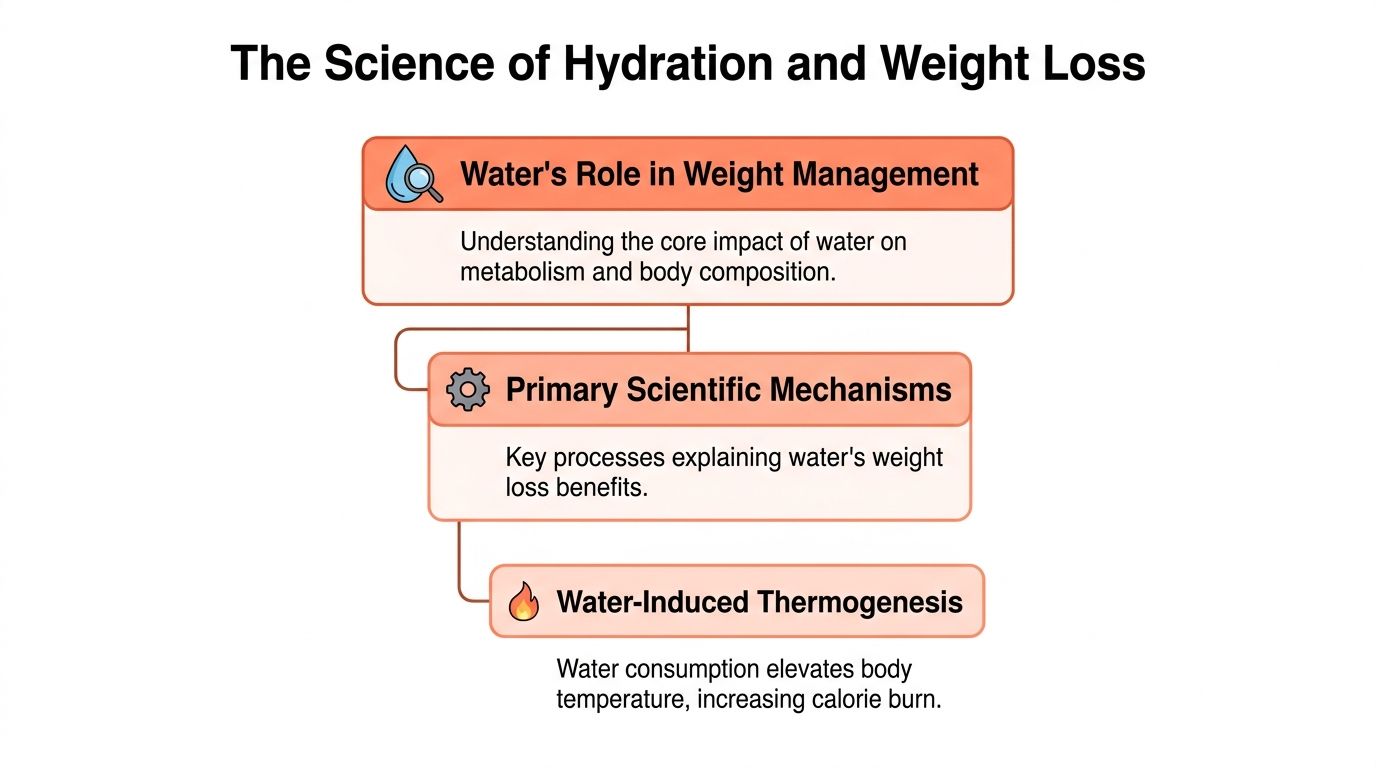
Water can slightly raise energy use
One reason water gets attention is water-induced thermogenesis. Your body has to warm the fluid you drink to body temperature, and that process uses a small amount of energy.
A WebMD summary of the research explains that drinking about 500 mL, or 17 ounces, of water can temporarily increase metabolic rate in healthy adults, with the effect peaking about 20 to 30 minutes later.
A simple comparison helps. Water works like a cool package brought into a warm house. The heating system has to do a bit of work before everything matches the indoor temperature.
That effect is real, but small. The more useful science for everyday weight loss is what water does to appetite signals during and around meals.
Water changes how fullness is felt
Your stomach, brain, and hormones all help decide whether a meal feels satisfying. Hydration affects that conversation. If you sit down to eat already a little thirsty, it becomes easier to read that body signal as "I still need something" even when you have had enough food.
This matters even more when you look at meal composition. A salty meal raises thirst. A high-protein meal can feel more satisfying overall, but it may also leave you wanting fluid alongside it. A higher-fiber meal absorbs water like a sponge, which can help stretch the stomach and support fullness if enough fluid is available. If the water piece is missing, the same meal may feel less settled than expected.
That is why generic advice like "drink more water" misses part of the story. Timing and macros interact. A glass of water before a fiber-rich lunch may help fullness arrive sooner. Water with a salty takeout dinner may reduce the odds that post-meal thirst gets mistaken for dessert hunger an hour later.
If you want a practical way to test your own pattern, use a daily water intake calculator alongside your meal log and note which meals leave you full, thirsty, or snacky soon after.
Water improves calorie control by replacing liquid calories
One of the clearest benefits is substitution. Water can take the place of drinks that add energy without doing much for fullness, such as soda, sweet tea, juice drinks, and many coffee beverages.
That swap matters because calories from drinks often slide in under the radar. You do not chew them, they pass through quickly, and they usually do less to quiet hunger than a meal with protein, fiber, or volume. Replacing a sugary drink with water lowers calorie intake without forcing you to shrink your plate.
This is also why hydration works better as part of a meal strategy than as a stand-alone habit. Water next to a balanced meal supports satiety. Water instead of a sweet drink reduces easy-to-miss calories. Put those together, and the day often feels easier to manage.
Why sweat is the wrong signal
People also overestimate sweat as proof of fat loss. Sweat reflects cooling, not whether you burned meaningful body fat. A hard workout can help with weight loss, but the sweat itself is not the mechanism. For a clear explanation, read Does Sweating Burn Calories?.
Key point: Water helps weight loss most through appetite control, better meal satisfaction, and replacing calorie-containing drinks. The small metabolic effect is a bonus.
Calculating Your Personal Daily Water Needs
A good water goal is less like a universal rule and more like setting the right thermostat for your house. The target depends on body size, activity, climate, and what your meals are made of. If you eat lots of protein and fiber, for example, water often helps that food do its job better by supporting fullness and digestion. If your meals are salty, low in produce, or built around convenience foods, your fluid needs can feel different across the day.
Start with a baseline you can adjust, not a number you feel pressured to hit perfectly.
One practical option is to use the general intake ranges from the National Academies. Men are often advised to aim higher than women overall, and those totals include fluids from both drinks and foods. That last part matters. Soup, yogurt, fruit, vegetables, milk, and other beverages all count toward the day. Plain water still matters most for many people, but it does not have to do all the work alone. The National Academies explains these intake values in its overview of dietary reference intakes for water, potassium, sodium, chloride, and sulfate.
Another simple method uses body weight. A common rule of thumb is to drink roughly half to two-thirds of your body weight in ounces per day, then increase that amount if you exercise, spend time in heat, or sweat heavily. It is not a clinical formula. It is a useful starting estimate that often feels more personal than a one-size-fits-all target.
Daily Water Intake Quick Calculation Guide
| Method | Formula | Example (150 lb / 68 kg person) |
|---|---|---|
| General intake baseline | Use broad daily intake guidance from health authorities, remembering that food contributes fluid too | A 150 lb adult uses the general range as a starting point, then adjusts based on meals, thirst, and activity |
| Body weight rule | About half to two-thirds of body weight in ounces | 150 lb person = about 75 to 100 oz per day |
| Exercise adjustment | Add extra fluids around training based on sweat loss and duration | A 150 lb person who exercises may need more than their usual baseline |
| Meal composition adjustment | Higher protein, higher fiber, or saltier meals often call for more fluid across the day | A high-protein lunch may feel more satisfying if water intake is also adequate |
The meal-composition piece gets overlooked. Water needs are not only about your body. They are also about what you ask your body to process. Protein works a bit like dense cargo. It can help with fullness, but it also tends to increase thirst for many people. Fiber acts more like a sponge. It helps with satiety and bowel regularity, yet it works best when enough fluid is available. A high-protein, high-fiber day with very little water can leave you feeling strangely hungry, bloated, or unsatisfied even when calories are on target.
This is one reason tracking helps. If your lunch is protein-heavy and low in water-rich foods, and you get snacky an hour later, the issue may not be calories alone. It may be the combination of meal structure and low hydration. A tool like the BiteKit water intake calculator is useful because it gives you a starting target you can compare against your meal pattern, not just your body weight.
Adjust for real-life conditions
Use your baseline, then make small corrections based on your day.
- Exercise: Longer or sweatier sessions raise fluid needs.
- Heat and humidity: Warm weather increases losses even outside workouts.
- Higher protein or fiber intake: These eating patterns often feel better with more water spread through the day.
- Saltier meals: Restaurant food, packaged snacks, and takeout can raise thirst and shift your usual target.
- Busy schedules: If you cannot sip often, plan water around meals and work breaks instead of relying on random reminders.
Athletes often learn this quickly because performance drops when hydration slips. The same principle applies to appetite control. If you want a practical example from sport, these essential football hydration tips show how fluid planning changes with sweat, heat, and activity demands.
Your best target is a range you can repeat. If your mouth feels dry, urine stays dark, or hunger feels noisy and hard to read, your baseline may be too low for your current meals and routine.
Strategic Timing When to Drink Water for Maximum Effect
More water is not always the smartest move. Better timing often does more for appetite control than adding another random glass late in the day.
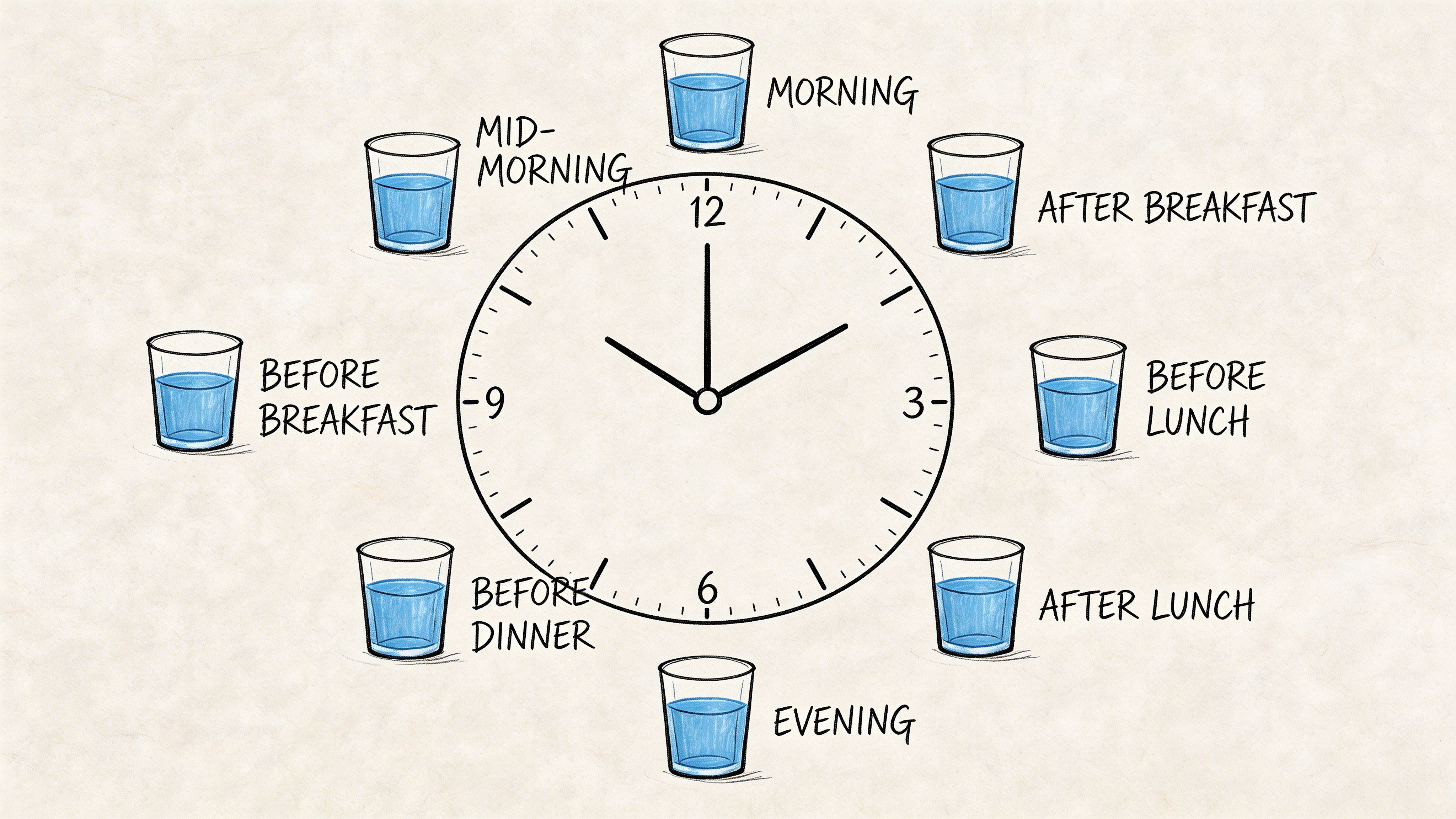
If daily total is the foundation, timing is the steering wheel. Water has the biggest effect when it shows up before your body sends mixed signals. A glass before a meal can make fullness cues easier to notice, especially if you usually eat fast, get to meals very hungry, or struggle to tell thirst from appetite.
Research on pre-meal water intake has found that drinking water before eating can support lower energy intake and help with weight management in some adults. A useful practical version is simple. Have water about 20 to 30 minutes before meals, then let the meal itself do the rest of the work.
The pre-meal window
A pre-meal routine works best when you match it to the meal in front of you, not when you treat every meal the same.
- Before breakfast: Useful if you wake up dry, drink coffee first, and then eat quickly without noticing when you are satisfied.
- Before lunch: Helpful if your morning is packed and you arrive at lunch ready to inhale whatever is nearby.
- Before dinner: Often the most powerful slot because evening meals are more likely to be larger, saltier, or eaten while distracted.
The goal is not to blunt hunger until you skip food. The goal is to clear the static. Water helps separate true hunger from thirst, so your portion decision is based on need instead of urgency.
That distinction matters even more if you track calories or macros in an app like BiteKit. Water timing adds context to the numbers. If a meal looks balanced on paper but still leaves you overeating, the issue may be pace, thirst, or a weak satiety signal rather than calories alone.
Meal composition changes the effect
Macros change how water feels in the body. Protein and fiber usually slow the meal down and stretch fullness longer, like adding logs to a fire so it burns steadily. A meal built mostly from refined carbs can digest faster and leave hunger bouncing back sooner, especially if you eat it quickly. Salt adds another layer because it can raise thirst later and make it harder to read what your body is asking for.
So the same glass of water can do different jobs.
Before a high-protein, high-fiber lunch, water may help you eat at a calmer pace and notice fullness sooner. Before a fast, calorie-dense dinner, that same habit may prevent the first ten minutes of eating from turning into autopilot. Before a salty takeout meal, it can reduce the chance that post-meal thirst gets mistaken for “I still need something.”
If you want to test this, keep the timing steady for a week and compare meals, not just days. Notice which combinations create the calmest appetite. The hydration status estimator can help you check whether low hydration is muddying those signals.
Video can help make a schedule easier to picture in daily life:
Other key moments during the day
Pre-meal timing gets most of the attention, but a few other windows matter.
- Soon after waking: This can make morning thirst easier to correct before caffeine and breakfast stack on top of it.
- Before exercise: Starting activity underhydrated can make effort feel harder and can blur appetite later.
- After exercise: Replacing lost fluids supports recovery and can prevent post-workout hunger from becoming a catch-all signal.
Active people may need a more sport-specific rhythm, especially in heat or during longer sessions. If that applies to you, these essential football hydration tips offer practical ideas for timing fluids around intense sessions.
A Sample Hydration Schedule and Tracking Tips
Knowing what to do is one thing. Doing it on a busy Tuesday is another.
A sample schedule helps because it removes decision fatigue. You do not have to keep asking yourself whether you should drink more water. The choice is already made.
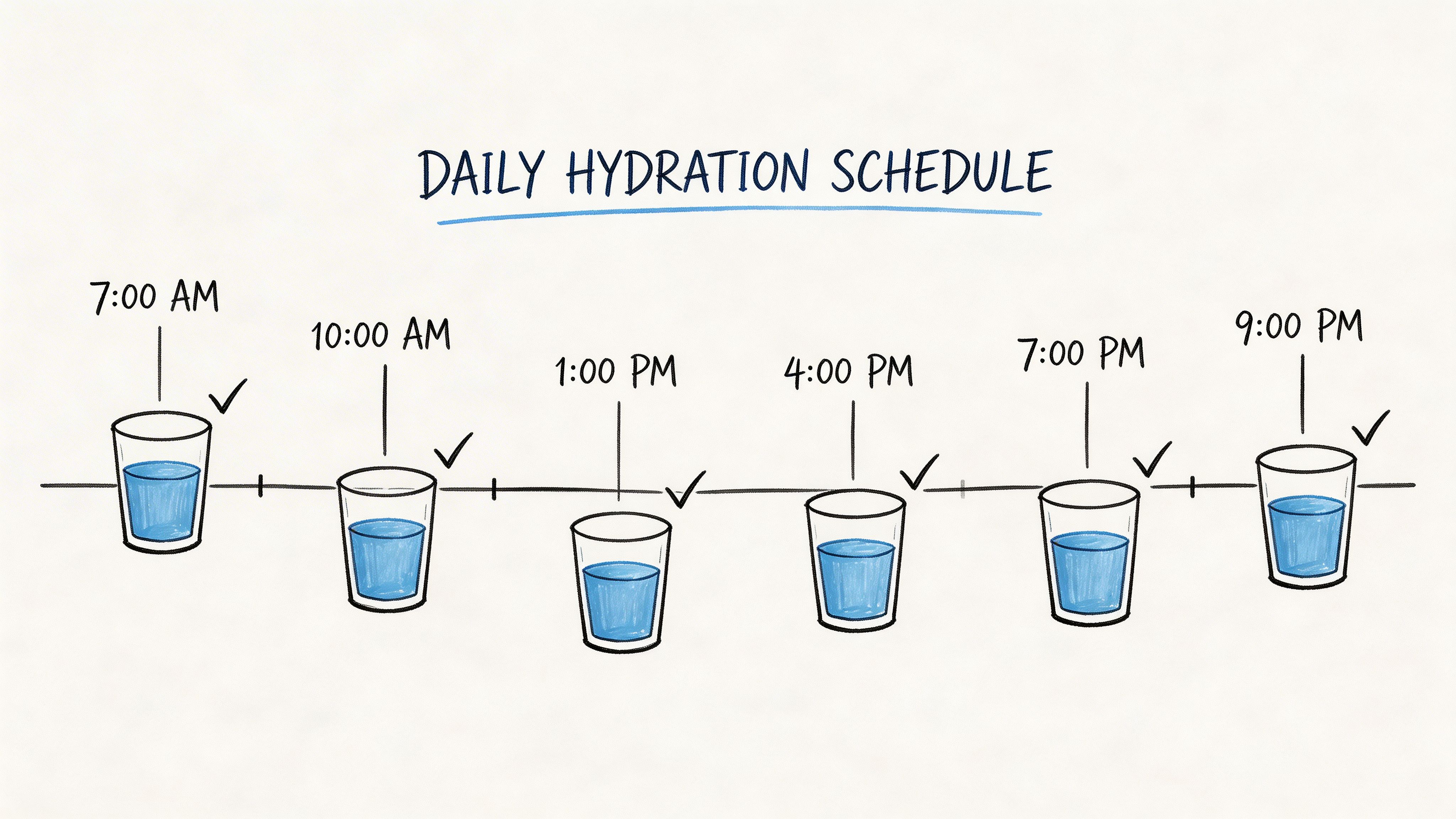
A simple daily rhythm
Try this kind of structure and adjust the amounts to fit your own target:
- Morning wake-up: Drink water before coffee or breakfast.
- Before lunch: Use your planned pre-meal water window.
- Mid-afternoon: Drink before the time you usually start craving snacks.
- Before dinner: Repeat the same pre-meal habit.
- Around workouts: Drink before and after activity.
- Evening: Finish the day hydrated, but not so late that sleep gets interrupted.
This works well because it attaches hydration to events that already happen. You are not relying on memory alone. You are pairing water with waking, meals, work breaks, and training.
How to tell if your schedule is working
The right schedule should make your day feel steadier.
Look for signs like these:
- Appetite feels less urgent: You can pause before eating instead of reacting instantly.
- Meals feel more controlled: You finish more often at comfortable fullness.
- Energy stays more even: You feel fewer slumps tied to dehydration.
- Tracking gets easier: You can spot patterns between low-fluid days and overeating.
The most overlooked part is observation. Many people ask how much water to lose weight, but the better question is often, “What happens to my appetite when I drink at the right times?”
Tracking turns guesses into patterns
If you log water next to meals, you can start noticing things. Maybe you snack less on days when you drink before lunch. Maybe salty dinners lead to evening cravings unless you hydrate earlier. Maybe your high-protein meals feel best when you spread fluids more evenly.
If you want help checking whether your current routine suggests dehydration, use the BiteKit hydration status estimator.
Tracking tip: Do not only record ounces. Add a short note like “very hungry before lunch” or “protein-heavy dinner, felt satisfied.” Those details teach you more than numbers alone.
Common Myths and Hydration Pitfalls to Avoid
The biggest hydration mistake is treating water like a fat-loss shortcut. It works more like a support system. The right amount, at the right times, can make appetite signals easier to read. The wrong strategy can leave you bloated, distracted, or convinced you are hungry when the issue is meal balance or thirst.
Myth one: more water always means more weight loss
Your body is not a sink you can flush for faster results. Drinking more than you need does not speed up fat loss. It can also backfire if you use huge amounts of water to ignore poor meal structure, low protein intake, or long gaps between meals.
Water fasts are a good example of this confusion. They can cause quick scale changes, but those changes are not the same as steady fat loss, and fasting without medical supervision carries real risks. The U.S. National Center for Complementary and Integrative Health warns that fasting may be unsafe for some people and should be approached carefully, especially for anyone with health conditions or a history of disordered eating, in its guide to fasting and cleanses.
A steadier goal works better. Use water to support meals that are satisfying.
Myth two: hunger and thirst are easy to tell apart
They often overlap.
That overlap gets stronger when meal composition is off. A lunch built mostly from refined carbs may digest quickly, so hunger returns fast even if you drank water. A high-protein, higher-fiber meal usually slows that process, which means water is supporting fullness, not trying to create it by itself. A salty meal adds another layer because it can raise thirst later and make the body ask for relief in a way that feels a lot like a snack urge.
Johns Hopkins explains that many adults do not drink enough water consistently, and that simple habits can improve intake in everyday life, as described in this Johns Hopkins discussion of hydration habits. The useful takeaway for weight loss is practical. If you feel “hungry” soon after a salty, protein-heavy meal, thirst may be part of the signal. If you feel hungry after a low-fiber, low-protein meal, water probably will not solve the whole problem.
Myth three: generic advice is enough
General rules help you start. They do not explain your patterns.
A better question is not just “Did I drink enough?” Ask, “What did I eat, and when did I drink relative to that meal?” Water before a high-protein meal may help you notice fullness sooner. Water with a very high-fiber meal may feel better when sipped instead of chugged. Large amounts right after a big meal can leave some people uncomfortable and make it harder to tell whether they are full or just physically stuffed.
If your appetite feels unpredictable, check these details:
- Was the meal high in protein, fiber, or mostly quick-digesting carbs?
- Did thirst show up after a salty meal or workout?
- Did I drink before the meal, during it, or only after I already felt overly hungry?
- Would plain water feel good right now, or do I specifically want food?
That last question helps because real hunger is usually specific to eating, while thirst is often accompanied by dry mouth, a heavy feeling, or a restless urge to consume something.
If you want help matching water timing to your meals and macros, a personalized hydration strategy builder for appetite and meal timing can make those patterns easier to spot.
Safety note: If you have kidney, heart, or endocrine conditions, or you take medication that affects fluid balance, follow medical guidance for fluid intake rather than generic weight-loss advice.
Making Hydration a Sustainable Weight Loss Habit
Water works best when it becomes automatic.
The most useful approach is simple. Set a personal daily target. Drink strategically before meals. Notice how different meals affect your thirst and fullness. Keep an eye on patterns instead of chasing perfection.
That is how hydration becomes part of weight loss rather than another rule to fail. You are using water to make better decisions easier, not trying to force results from water alone.
If you want a practical way to turn your meals, macros, and hydration patterns into a routine you can follow, try the BiteKit AI hydration strategy builder.
Consistency beats intensity. A calm, repeatable hydration habit can do more for your progress than any short burst of “perfect” drinking ever will.