Hummus Nutrition Facts: A Scientific Guide to This Healthy Dip
Explore the complete hummus nutrition facts. Learn about its calories, macros, and health benefits to see how it fits into your diet for wellness and fitness.
Hummus is a rare food that feels both indulgent and genuinely good for you. It's a powerful combination of plant-based protein, healthy fats, and fiber-rich carbohydrates, all packed into one creamy, delicious spread. This isn't just another tasty appetizer; a standard 100-gram serving offers a robust nutritional foundation backed by scientific evidence.
Why Hummus Is More Than Just a Dip
Not long ago, hummus was a niche item found in specialty food shops. Now, it's a staple in grocery stores everywhere, and its popularity is rooted in science. The secret to its success lies in its simple, powerhouse ingredients: chickpeas, tahini (a paste made from sesame seeds), lemon juice, and garlic. Each component contributes to a flavor and nutritional profile that is difficult to surpass.
This isn't just a fleeting trend; it's a global shift in eating habits. The global hummus market was valued at USD 4.5 billion in 2023 and is projected to skyrocket to USD 12.51 billion by 2034. Why the massive growth? Consumers are increasingly seeking healthy, convenient, plant-based options. You can explore the data behind these market trends and their drivers in industry reports, but the core reason is the evidence-based health benefits of its ingredients.
The real magic of hummus is its versatility. It effortlessly bridges the gap between a satisfying snack and a smart nutritional choice.
- It’s a perfect option for anyone seeking nutrient-dense food without empty calories.
- For individuals on a plant-based diet, it's a reliable source of protein and essential minerals.
- For the busy professional, it’s a ready-to-eat food that doesn’t compromise on nutritional quality.
To establish a clear baseline, let's examine the average nutrition facts for a standard 100-gram serving of classic hummus.
Hummus Nutrition At a Glance (Per 100g)
This table provides a high-level overview of the nutritional content in a typical serving. Consider this our starting point before we dive into a more detailed analysis of what these figures mean for your health and fitness goals.
| Nutrient | Average Amount |
|---|---|
| Calories | ~166 kcal |
| Protein | ~7.9 g |
| Carbohydrates | ~14.3 g |
| Dietary Fiber | ~6.0 g |
| Total Fat | ~9.6 g |
| Sodium | ~383 mg |
Note that these are averages. The exact nutritional values can vary significantly depending on the brand or recipe, a topic we will explore in greater detail throughout this guide.
The Nutritional Powerhouse: A Scientific Breakdown of Hummus
To fully appreciate the health benefits of hummus, one must look beyond the calorie count and analyze its core components. The magic of hummus lies in its balanced ratio of protein, carbohydrates, and fats. This trio is scientifically proven to enhance satiety and provide sustained energy.
This blend of powerful nutrients has elevated hummus from a simple dip to a health food staple. You're getting muscle-supporting protein, sustained energy from complex carbohydrates, and heart-healthy fats, all in one package. It's an excellent food for anyone, particularly if you are managing your macronutrient intake for fitness or weight loss.
Hummus Macronutrients: A Closer Look
The macronutrient profile is where hummus truly excels. Each of the three macros plays a specific and crucial role in fueling the body.
-
Plant-Based Protein: The protein in hummus is derived almost entirely from chickpeas, making it an excellent plant-based option. A standard 100g serving provides nearly 8 grams of protein, essential for muscle synthesis and tissue repair.
-
Complex Carbs and Fiber: Hummus is rich in slow-digesting, complex carbohydrates that provide steady, reliable energy, preventing blood sugar spikes. It also delivers approximately 6 grams of dietary fiber per 100g. Studies show that high-fiber diets are linked to improved digestive health and increased feelings of fullness.
-
Healthy Fats: The majority of the fat content consists of monounsaturated and polyunsaturated fats from tahini and olive oil. Research has consistently shown that these types of fats support cardiovascular health by helping to manage cholesterol levels.
This simple breakdown illustrates the nutrient density packed into every bite.
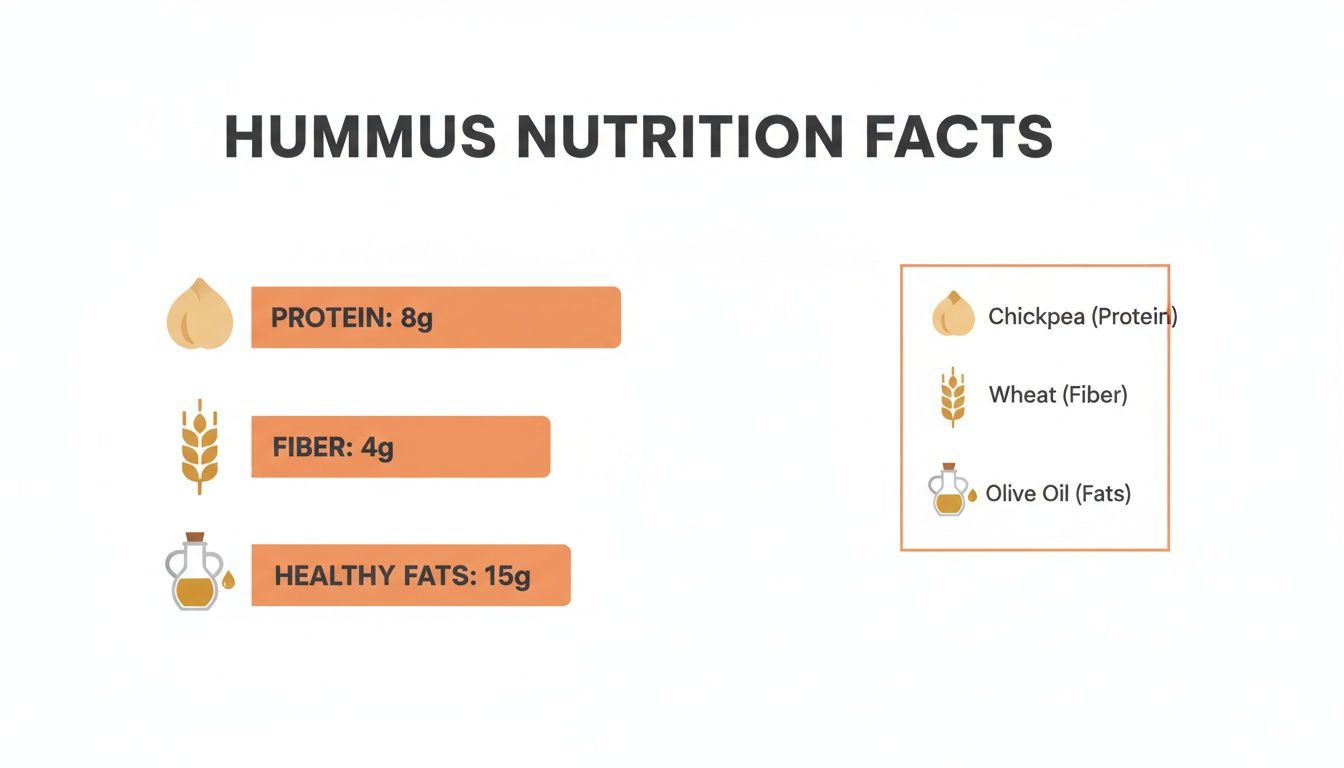
It’s this combination of protein, fiber, and healthy fats from whole-food sources that gives hummus its impressive nutritional resume.
The Hidden Gems: Micronutrients in Hummus
Beyond the primary macronutrients, hummus is also rich in essential vitamins and minerals that play vital roles in physiological functions. These micronutrients support everything from energy metabolism to immune response.
A few spoonfuls of hummus can contribute significantly to your daily recommended intake of several key minerals. Its nutrient density means you get a substantial nutritional return from a relatively small serving.
Here are some of the most important micronutrients found in hummus:
- Manganese: A key cofactor for enzymes involved in bone formation and metabolism.
- Copper: Crucial for energy production and maintaining a robust immune system.
- Folate: Essential for DNA synthesis and cell growth, making it particularly important during pregnancy.
- Iron & Magnesium: These minerals are vital for oxygen transport, energy production, and proper muscle and nerve function.
Understanding the nutritional content of your food is the first step; tracking it is how you optimize your diet. Accurately measuring protein is a great place to start, and our guide can walk you through how to calculate your protein intake. This comprehensive view ensures you’re not just meeting a calorie target, but truly providing your body with the nourishment it needs to thrive.
Homemade Hummus vs. Store-Bought Brands
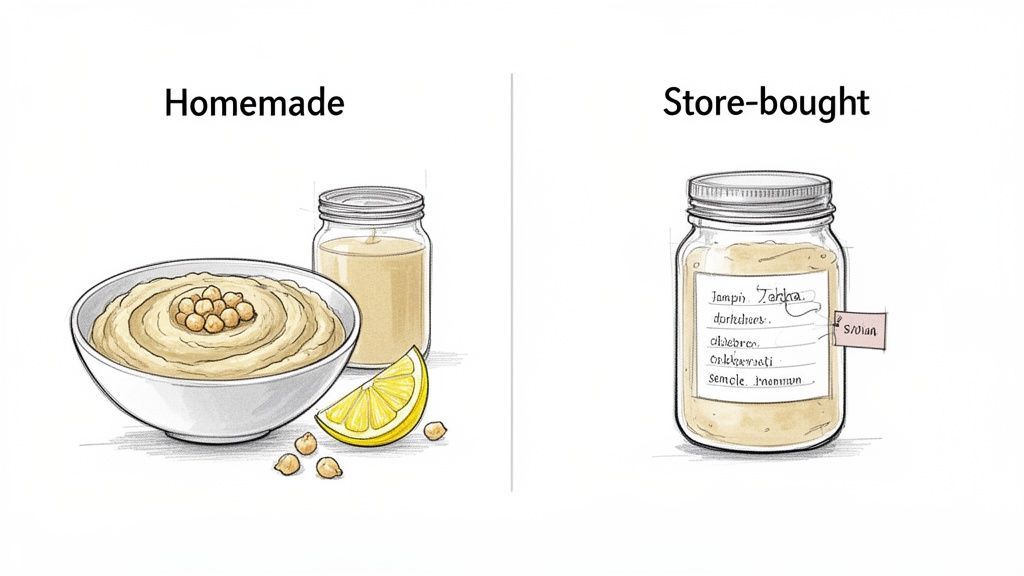
It’s a classic grocery store dilemma: purchase the convenient tub of hummus or prepare it at home? While store-bought hummus offers undeniable ease, this convenience often comes at a nutritional cost.
Making hummus at home grants you complete control over the ingredients. Commercial brands are formulated for extended shelf life and mass-market appeal, which often means adding excess sodium and using less expensive oils like soybean or canola to reduce costs. When you prepare your own, you can select high-quality extra virgin olive oil and precisely control the sodium content. No preservatives are necessary.
Key Nutritional Differences
The disparity is evident in the nutritional details. While both homemade and store-bought versions provide protein and fiber, the differences can be significant, especially for those tracking their intake for health reasons. For example, a typical store-bought brand can contain 200-250 mg of sodium in a small two-tablespoon serving—a substantial portion of the daily recommended limit.
When you prepare hummus at home, you're not just a cook; you're the quality control manager. You determine the sodium levels, the type and quantity of oil, and whether to include any additives. This level of control is crucial for anyone following a specific diet for medical reasons or simply striving for optimal nutrition.
To illustrate the difference, let's compare a typical homemade recipe with a standard commercial brand.
Nutritional Comparison Homemade vs Store-Bought Hummus
This table highlights the areas where the two versions typically diverge.
| Nutritional Factor | Homemade Hummus (Typical) | Store-Bought Hummus (Typical) |
|---|---|---|
| Sodium | Low (50-100 mg per serving) | High (200-250+ mg per serving) |
| Oils Used | Extra virgin olive oil | Often soybean or canola oil |
| Preservatives | None | Often contains potassium sorbate |
| Added Sugars | None | Sometimes present in flavored varieties |
As you can see, the trade-offs are clear. The homemade version provides a much cleaner nutritional profile with lower sodium and higher-quality fats.
Your Foundational Hummus Recipe
Regaining control over your food's nutritional content is surprisingly simple. This recipe creates a delicious, nutritious base that you can customize. If you're wondering how to log your own creation accurately, our guide on how to calculate calories in homemade food provides a step-by-step breakdown.
Basic Homemade Hummus:
- Combine one 15-ounce can of chickpeas (rinsed and drained), 1/4 cup of fresh lemon juice, 1/4 cup of well-stirred tahini, and one minced garlic clove in a food processor.
- Blend for about a minute, scraping down the sides of the bowl until it’s smooth and creamy.
- With the food processor running, slowly drizzle in 2 tablespoons of extra virgin olive oil.
- Season with a small pinch of salt, then blend one last time until it's perfectly combined.
This simple recipe produces a hummus with far superior nutrition, putting you completely in charge of what you consume.
Using Hummus to Support Your Health Goals
Understanding nutrition facts is one thing, but applying that knowledge to support your health is what truly matters. Hummus is a perfect tool for this. It is more than just a dip—it is a versatile food that can actively support your health and fitness objectives, from weight management to muscle growth.
Its unique composition of protein, fiber, and healthy fats makes it an excellent addition to almost any diet. Whether your goal is weight loss, muscle gain, or maintaining stable energy levels, hummus can be a valuable ally. The key is to think beyond dipping and consider how and why you incorporate it into your meals.
Hummus for Weight Management
For successful weight management, achieving satiety is critical. This is where the scientific properties of hummus are most beneficial. The combination of plant-based protein and fiber is highly effective at inducing and prolonging feelings of fullness.
This is not just a theory; it's supported by evidence. Protein and fiber work synergistically to slow down gastric emptying, which helps control hunger and reduces the likelihood of consuming high-calorie snacks later. One study published in the journal Appetite found that an afternoon snack of hummus and pretzels increased satiety and reduced subsequent eating compared to other common snacks.
Of course, since hummus is calorie-dense, portion control is paramount.
- Adhere to a standard 2-tablespoon serving. This provides the nutritional benefits without excessive calories.
- Pair hummus with low-calorie, high-volume foods like cucumber slices, bell pepper strips, or baby carrots. This strategy enhances satiety on fewer total calories.
This approach allows you to leverage the satisfying properties of hummus while remaining within your daily calorie budget.
Supporting Muscle Growth and Blood Sugar
While hummus won't replace a protein shake for bodybuilders, it is a valuable component of a muscle-building diet. The chickpeas provide a solid foundation of plant-based protein, which is necessary for the repair and growth of muscle tissue.
To optimize it for muscle-building, proper food pairing is key. The protein in chickpeas is not "complete," meaning it lacks a full profile of essential amino acids. However, combining it with a whole grain, such as by spreading hummus on whole-wheat toast or a whole-grain pita, creates a complete protein source. This makes it an excellent post-workout option, especially for vegans and vegetarians.
Hummus is also an incredibly smart choice for blood sugar management. Its ingredients possess a low glycemic index, meaning they release glucose into the bloodstream slowly. This prevents the sharp spikes and subsequent crashes in energy associated with high-sugar snacks, providing sustained fuel.
This steady energy release is beneficial not only for individuals with diabetes but for anyone looking to avoid the afternoon energy slump. Choosing hummus over a sugary granola bar or chips is a conscious decision to fuel your body for sustained performance.
How to Log Hummus for Accurate Macro Tracking
If you track your food intake, you know that some foods are challenging to log accurately. Hummus is one of them. It's easy to mindlessly consume more than a standard portion, which can significantly impact your calorie and fat counts.
Accurate logging begins with accurate portioning. A standard serving of hummus is just two tablespoons. To develop a better sense of this portion size, use measuring spoons for a few days. This simple practice trains your eye, making it easier to estimate portions when dining out.
Logging Hummus at Home vs. Eating Out
At home, logging is straightforward. A food scale provides the most precise measurement, but measuring spoons are also effective. Most nutrition tracking apps have entries for major hummus brands, but it's always wise to verify the nutrition label on your specific product. The sodium and fat content can vary substantially between brands.
Logging becomes more complex when dining out. Here’s how to manage it:
- Ask for it on the side. Receiving hummus as a dip rather than spread in a wrap gives you control and a clear view of the portion.
- Use visual cues. As a rule of thumb, a dollop the size of a golf ball is roughly two tablespoons. A smear that covers the palm of your hand is likely four or five tablespoons.
- Find a generic entry. When in a restaurant, search your tracking app for "restaurant-style hummus." These entries typically account for the extra oil and salt often used by chefs.
This level of detail ensures your log remains accurate and prevents hidden calories from hindering your progress. For a complete guide on managing your daily intake, see our article on how to track macros for weight loss.
Tackling Mixed Meals and Modern Solutions
The real challenge arises when hummus is part of a complex meal, like a loaded veggie wrap or a Mediterranean bowl. Manually deconstructing and logging each ingredient is tedious and often unsustainable.
The purpose of tracking is to build awareness and consistency, not to create a burdensome task. When logging becomes a chore, adherence plummets. The key is to find a method that is both accurate and sustainable.
This is where modern technology offers a superior solution. Instead of manual entry, photo-based AI logging provides a smarter approach. With an app like BiteKit, you simply take a picture of your meal, and the technology does the rest.
The AI is sophisticated enough to identify the hummus in your wrap, estimate its portion size relative to other ingredients, and provide a complete nutritional breakdown for the entire meal. It eliminates the guesswork and manual labor from tracking, delivering the accuracy you need without the hassle. It simply works, allowing you to focus on your health.
Creative and Healthy Ways to Eat Hummus
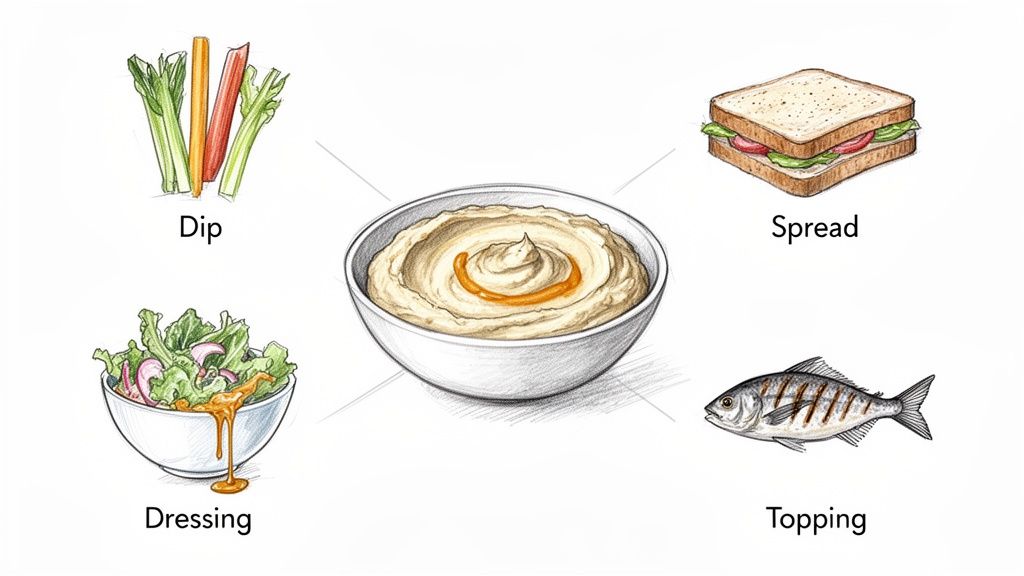
If hummus is only ever used as a dip in your household, you are missing out on its full potential. While it excels as a dip, limiting it to this role significantly underutilizes this versatile food. To maximize its benefits, pair it intelligently and think beyond the chip bag.
Let's begin with dipping, but with a nutritional upgrade. Swapping processed pita chips for fresh, whole foods is one of the simplest yet most impactful changes you can make. You’ll get a superior texture and a significant boost in nutrients.
Nutritious Dipping Companions
- Cucumber Slices: Cool, crisp, and hydrating, they offer a perfect textural contrast to the creamy hummus.
- Bell Pepper Strips: Sweet, crunchy, and rich in Vitamin C, these add a vibrant splash of color and antioxidants.
- Carrot and Celery Sticks: Classics for a reason! They provide a satisfying crunch along with beta-carotene and other phytonutrients.
- Whole-Grain Crackers: When a cracker is desired, choose one high in fiber. This enhances satiety, keeping you fuller longer and supporting digestive health.
But the real innovation occurs when hummus is used outside the snack bowl. Its creamy texture and savory flavor make it an excellent substitute for higher-calorie, less-nutritious kitchen staples.
Think of hummus as a healthy functional replacement. It can take the place of ingredients like mayonnaise, sour cream, or creamy dressings, adding flavor, protein, and fiber while reducing saturated fat intake.
A prime example is using it as a spread on sandwiches or wraps. Substituting hummus for mayonnaise provides the desired creamy texture while also adding a boost of protein and fiber with far less fat, instantly improving the overall hummus nutrition facts of your meal.
Innovative Hummus Uses
Don't stop there. Try thinning hummus with a splash of water and a squeeze of fresh lemon juice to create a rich, savory salad dressing. A dollop on top of grilled chicken, fish, or a baked potato adds moisture and a burst of flavor.
It can even serve as an effective binder in homemade veggie burgers or meatballs, helping them maintain their structure while adding extra plant-based protein and nutrients. With a little creativity, hummus can transform from a simple dip into a cornerstone of healthy, flavorful cooking.
Frequently Asked Questions About Hummus Nutrition
Let's address some of the most common questions about hummus nutrition with clear, evidence-based answers.
Is Hummus Good for Weight Loss?
Yes, hummus can be an excellent food for a weight loss plan, provided you practice portion control. Its effectiveness stems from its blend of plant-based protein and fiber, a combination scientifically shown to increase satiety and keep you feeling full. This can significantly aid in managing overall calorie intake.
However, hummus is calorie-dense, so moderation is key. Stick to a serving size of 2-4 tablespoons to reap the benefits without exceeding your daily calorie targets.
Does Hummus Count as a Protein or a Carb?
This is a great question. The answer is that hummus is a balanced food that provides a mix of all three macronutrients, not just one.
- The chickpeas, the primary ingredient, contribute both complex carbohydrates for sustained energy and a substantial amount of plant-based protein.
- The tahini (sesame paste) provides healthy fats, primarily monounsaturated and polyunsaturated, along with additional protein.
This well-rounded profile is precisely what makes hummus a nutritionally complete choice, rather than just a simple carbohydrate or protein source.
Can I Eat Hummus Every Day?
Yes, incorporating a moderate serving of hummus into your daily diet can be a very healthy habit. Consuming 2-4 tablespoons daily is an effective way to increase your intake of fiber, protein, and essential micronutrients without adding excessive calories.
The key is to be mindful of what you pair it with. Accompanying hummus with fresh vegetables like carrots, cucumbers, and bell peppers will ensure your snack remains nutritious and low in overall calories.
Is Flavored Hummus as Healthy as Plain Hummus?
This depends entirely on the specific flavor and brand. Some varieties are as healthy as classic hummus, while others should be considered an occasional treat.
Savory flavors like roasted red pepper or garlic often add minimal calories and can even contribute extra vitamins and antioxidants. Conversely, dessert-style versions like chocolate hummus almost always contain significant amounts of added sugar and should be categorized as a dessert, not a health food. Your best practice is to always examine the nutrition label to check for added sugars and sodium content before purchasing.