Carbs in Tomato Juice: A Complete Guide for 2026
Discover the exact carbs in tomato juice, including net carbs for keto. Learn how counts vary by brand and preparation, and how to log it for your diet.

TL;DR: A standard 8 oz glass of tomato juice has about 9 to 10g of total carbs and roughly 7 to 8g of net carbs. More precisely, one 8 fluid ounce (243g) serving contains 8.6g total carbs and 7.3g net carbs, which makes tomato juice a low-carb beverage that can fit many macro-focused eating styles.
You pour a glass of tomato juice, glance at the carton, and wonder whether it belongs in your day with the rest of your macros. That question comes up more often than people expect, especially for anyone trying to keep carbs controlled without defaulting to plain water or coffee.
Tomato juice sits in an interesting middle ground. It isn't carb-free, but it also isn't in the same category as sweeter juices that can eat up your carb budget fast. The practical part is knowing which version you're drinking, how to count it accurately, and when it works well in a low-carb or weight-loss plan.
Is Tomato Juice a Low-Carb Choice
For those tracking macros, yes, tomato juice is a low-carb choice. The catch is that "tomato juice" on a label can mean slightly different things in practice, and those differences matter more when you're aiming for precision.
I usually tell clients to think about tomato juice the way they think about milk or yogurt. It can fit well, but you still need the actual serving and the actual label. If you're comparing savory drinks more broadly, something like Mandarin Juice also shows why beverage choices can differ a lot once fruit sugars enter the picture.
What works is treating tomato juice as a measured carbohydrate source, not a free food. What doesn't work is assuming every red vegetable drink has the same carb load. Plain tomato juice, low-sodium tomato juice, and cocktail-style mixes can behave very differently in a macro plan.
Practical rule: If you want carbs in tomato juice to stay predictable, buy plain 100% tomato juice and log the exact serving you actually drank.
How Many Carbs in Tomato Juice The Definitive Numbers
You pour a standard 8-ounce glass, log it as “vegetable juice,” and move on. For macro tracking, that shortcut is usually where the numbers drift.
A practical baseline for plain tomato juice is 8.6g total carbs per 8 fluid ounces (243g). That same serving typically comes with 1g fiber, 7.3g net carbs, 6.3g sugars, 41 calories, 0.7g fat, and 2.1g protein. For anyone tracking closely, that makes tomato juice a moderate-carb drink, not a free pour.
The part that matters in real use is consistency. If you buy plain 100% tomato juice and keep the serving at 8 ounces, the entry is easy to log and easy to repeat. If you switch between salted, unsalted, low-sodium, or cocktail-style products, the carb number can shift enough to matter, especially on tighter carb targets.
Here is the reference point worth saving in your tracker:
- Serving size: 8 fl oz (243g)
- Total carbs: 8.6g
- Fiber: 1g
- Net carbs: 7.3g
- Sugars: 6.3g
- Calories: 41
- Protein: 2.1g
- Fat: 0.7g
That serving can fit comfortably into many lower-carb plans, but context matters. On a 100g carb target, 8.6g is manageable. On a 20g net carb keto target, 7.3g net carbs uses a meaningful share of the day.
If you want to verify how a label fits your own method, use an Atkins net carb calculator for drink logging. That is especially useful if your app shows total carbs first and your plan is built around net carbs.
I also recommend setting up tomato juice as a custom food entry in BiteKit if you drink the same brand regularly. It saves time and reduces logging errors from grabbing a generic database item. If your carb target is still a moving piece in your plan, this discussion on how many carbs should you be eating gives broader context for where a drink like tomato juice fits.
Understanding Total Carbs Versus Net Carbs
If you're counting carbs in tomato juice, you need to know whether your plan uses total carbs or net carbs. Those aren't the same thing.
Total carbs are the full carbohydrate amount listed on the label. Net carbs are typically calculated by subtracting fiber from total carbs. In tomato juice, that matters because some people on keto or lower-carb plans track net carbs as their main target.
The simple calculation
Using the standard serving described earlier, the math is straightforward:
- Total carbs: 8.6g
- Fiber: 1g
- Net carbs: 7.3g
The principle is simple even if labels vary a little by brand. You start with the total carbohydrate number, then account for fiber based on the way your plan tracks intake.
If you want a quick tool for label math, an Atkins net carb calculator can help you sanity-check what counts toward your daily target.
Fiber changes the usable carb count. That's why two tomato juice labels can look similar at first glance but fit differently into a low-carb day.
Why this matters more than people think
Many people mis-log drinks because they grab the first carb number they see and move on. That works poorly on tighter plans. If you're following a structured approach and still wondering how many carbs should you be eating, the answer depends on your goal, but the method stays the same. Log consistently, and don't switch between total and net carb tracking halfway through the week.
How Preparation and Additives Change Carb Content
Not all tomato juice lands the same in a nutrition plan. The biggest overlooked difference isn't just flavor. It's preparation, especially whether the product has added salt and how the manufacturer formulated it.
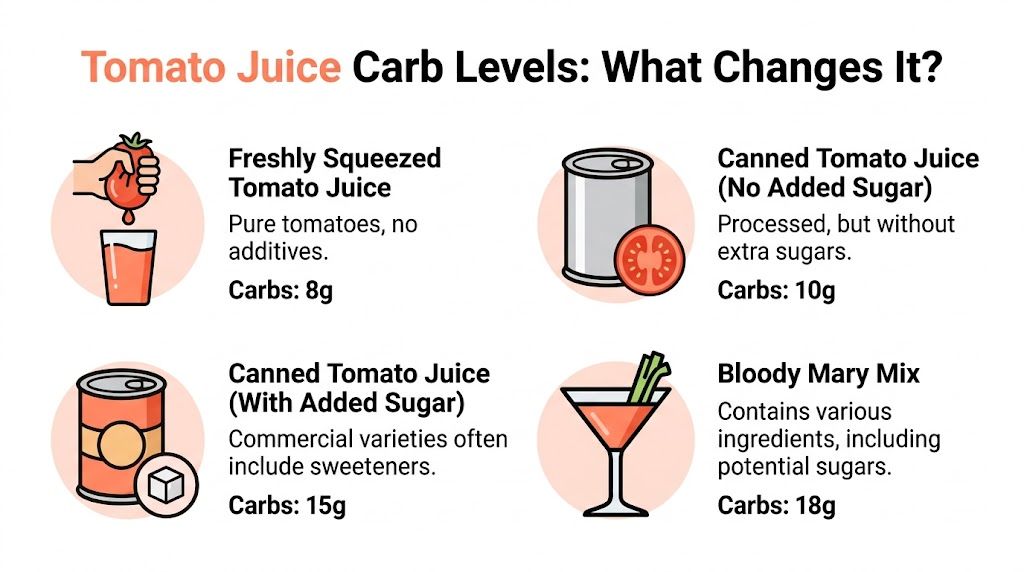
According to the University of Rochester tomato juice nutrition listing, standard canned tomato juice with salt has 10.3g total carbs per cup, while unsalted versions have 9g total carbs. The same source notes a major sodium gap too, with salted versions around 614 to 680mg sodium and unsalted versions around 24mg sodium.
Salted versus unsalted
This matters for two reasons.
First, if you're targeting a strict carb ceiling, 10.3g versus 9g isn't massive, but it is enough to matter when the rest of your day is tight. Second, sodium can affect how you feel after drinking it. Some people blame "carbs" for puffiness when the issue is really a high-sodium version of the drink.
| Type | Total carbs per cup | Sodium |
|---|---|---|
| Salted canned tomato juice | 10.3g | 614 to 680mg |
| Unsalted tomato juice | 9g | 24mg |
What works and what doesn't
- Best for low-carb precision: Unsalted or no-salt-added versions tend to be easier to fit into a detailed plan.
- Best for label accuracy: Stick with products that clearly list serving size and ingredients.
- Least reliable approach: Guessing based on color, thickness, or taste. Savory doesn't always mean low-carb.
When someone says tomato juice made them feel bloated, I look at the sodium line before I blame the carbs.
Fresh homemade tomato juice can also vary, especially if ingredients are strained differently or mixed with other vegetables. For macro tracking, packaged products with clear labels are usually easier to handle consistently.
Carbohydrate Counts in Popular Tomato Juice Brands
You scan two bottles at the store, both labeled tomato juice, and expect the carb line to match. It often does not.
Across mainstream brands, plain tomato juice usually lands in a narrow band, but the label still deserves a close read. A standard serving commonly falls around 8 to 10 grams of total carbohydrate, and some products include enough fiber to slightly lower net carbs for people who track that metric.
One practical example is Campbell's 100% Tomato Juice, which lists 10g total carbs and 2g fiber per serving on its nutrition panel. For macro tracking, that is a small difference on paper, but it matters if you are fitting tomato juice into a tighter carb budget or logging net carbs in an app.
What to compare on the label
Use the package, not memory, as your final reference point.
- Total carbohydrate per serving: check the exact serving size first
- Fiber: useful if you track net carbs
- Ingredients: plain tomato juice is easier to log than seasoned or cocktail-style blends
- Serving format: cans, bottles, and multipacks often use different serving amounts
Brand names matter less than product style. A plain 100% tomato juice will usually stay close to the standard range. A vegetable blend, spicy version, or cocktail mix can shift the carb count enough to throw off your log if you pick the wrong database entry.
For app logging, match all three fields before you save the food: brand, product name, and serving size. In BiteKit or any similar tracker, that step prevents a common mistake I see often. People choose a generic "tomato juice" entry for a product that has added ingredients and a different serving amount, then wonder why their daily totals keep drifting.
Calculating Carbs for Any Serving Size
You pour tomato juice into a large glass, log “1 serving,” and move on. That shortcut is one of the easiest ways to undercount carbs, especially with juices that vary by brand, sodium level, and serving format.
A better method is to use the label as your base unit and scale from there. For plain tomato juice, the package may list carbs per cup, per bottle, or per smaller serving such as 8 fluid ounces. Unsalted and salted versions often land in a similar range, but the exact number still needs to match the product in your hand.
A practical formula that works
Use whichever formula matches the label:
-
If the label lists carbs per serving
[ \text{Carbs logged} = \left(\frac{\text{amount consumed}}{\text{serving size}}\right) \times \text{carbs per serving} ] -
If the label lists carbs per 100 ml
[ \text{Carbs logged} = \left(\frac{\text{ml consumed}}{100}\right) \times \text{carbs per 100 ml} ] -
If the label lists carbs per bottle or can
Check whether you drank the full container. Many bottles look like one serving but contain more than one.
A quick example makes this easier. If your tomato juice has 10 grams of carbs per 8 fluid ounces and you drink 12 fluid ounces, log 1.5 servings. That comes to 15 grams of carbs.
Eyeballing is where people drift off target.
For macro tracking, I recommend measuring tomato juice at least once in the actual glass you use most often. After that, you have a more accurate visual reference. This matters more than people expect with a drink that often gets poured casually alongside breakfast or used as a mixer.
How to log it accurately in an app
In BiteKit or any macro tracker, choose the entry that matches these details:
- brand
- product name
- serving size on the label
- salted, low-sodium, or no-salt-added version
If your carb budget is tight, use a keto macro calculator before deciding whether a 6-ounce pour or a full 12-ounce glass fits better.
The goal is simple. Match the label, measure the pour, and log the amount you drank. That gives you numbers you can use, not estimates that slowly throw off the rest of the day.
Is Tomato Juice Keto Friendly or Good for Diabetics
You pour a breakfast glass, log it later, and realize the serving was closer to 12 ounces than 8. For anyone trying to stay under a keto carb cap or keep post-meal glucose steadier, that difference matters.
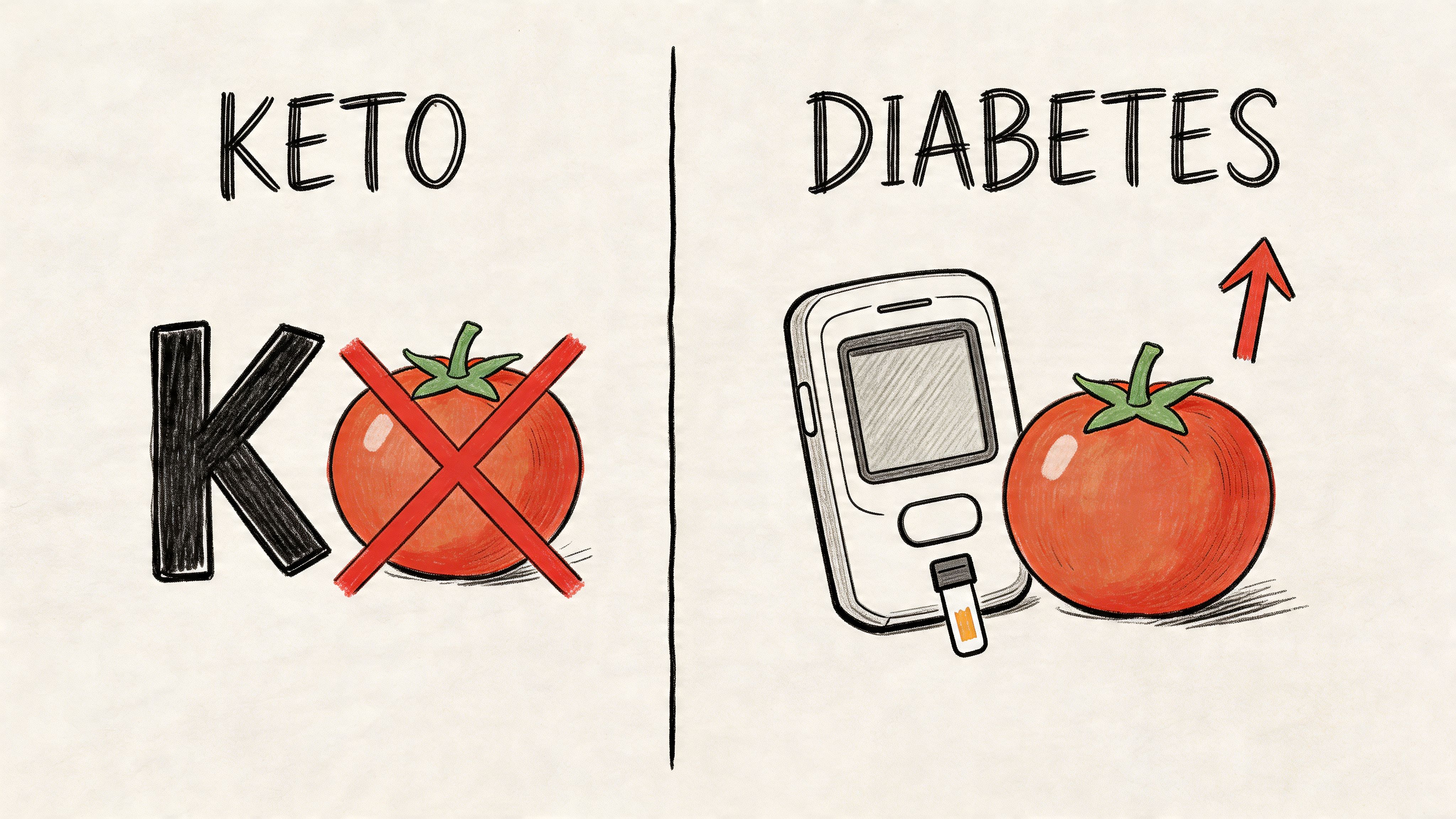
Plain tomato juice can fit either goal, but portion size decides the outcome. As noted earlier, a standard serving lands in a range that many low-carb eaters can use. A small measured pour may work well. A large casual glass, a Bloody Mary mix, or a vegetable juice blend with added sugars can push carbs up fast.
For keto
Tomato juice is usually a limited-carb food, not a free food. If your daily target is very low, even one full glass can take a noticeable share of your carb budget.
The practical approach is simple:
- Use plain tomato juice, not cocktail mix
- Pick a defined serving, such as 4 to 6 ounces if your carb limit is tight
- Pair it with protein and fat so the meal is more filling
- Log the exact version you bought, especially if you switch between salted, unsalted, or low-sodium products
If you are unsure whether a small pour fits your day, run your numbers with a keto macro calculator for daily carb targets.
For diabetes or prediabetes
Tomato juice is often easier to work with than fruit juice because it is less carb-dense and usually less sweet. That said, "better than orange juice" is not the same as "unlimited." Blood glucose response still depends on serving size, what you eat with it, your medication plan, and your own tolerance.
In practice, I would treat tomato juice like any other carb-containing beverage. Keep the serving consistent for a week or two, drink the same brand, and pay attention to the result. That gives you usable feedback. Random portions do not.
A few habits make it easier to use well:
- Drink it with a meal instead of on its own
- Choose plain versions with no added sugar
- Recheck the label if you change brands
- Measure first, then log it in BiteKit by ounces or milliliters instead of guessing
Tomato juice can work on keto, and it can work for people managing blood sugar. The trade-off is straightforward. It needs to be plain, measured, and counted accurately.
Nutritional Benefits Beyond Carbohydrates
You measure 8 ounces of tomato juice, log the carbs, and move on. That is fine for macros, but it misses why some people keep tomato juice in the rotation.
Plain tomato juice does more than add carbohydrate. It also contributes vitamins and minerals that can help round out a meal or snack, especially on days when produce intake is low. In practice, that matters most for people who want a drink that pulls some nutritional weight instead of acting like flavored water with sugar.
The main upside is nutrient density per serving. Tomato juice can add vitamin C, vitamin A, potassium, folate, and vitamin B6 while keeping calories fairly modest. That combination makes it more useful than many other ready-to-drink options in the juice aisle.
If you are comparing formats, the broader tomato nutrition profile helps put juice next to whole tomatoes, sauce, and other tomato products.
There is still a trade-off. Juice is easier to drink quickly than whole tomatoes are to eat, and the fiber stays relatively low. For macro tracking, that means tomato juice works best as a measured beverage with a purpose, not a free-pour extra that slips into the day unnoticed.
I usually frame it this way with clients. If the choice is between plain tomato juice and a higher-sugar fruit drink, tomato juice often gives you better nutritional return per gram of carbohydrate. If the choice is between tomato juice and whole vegetables, the whole vegetables usually win for fullness and fiber. Both can fit. The better option depends on whether your priority is convenience, satiety, or keeping carbs tightly controlled.
Effortless Tracking with The BiteKit App
Knowing the numbers is useful. Logging them fast enough to stay consistent is what changes behavior.
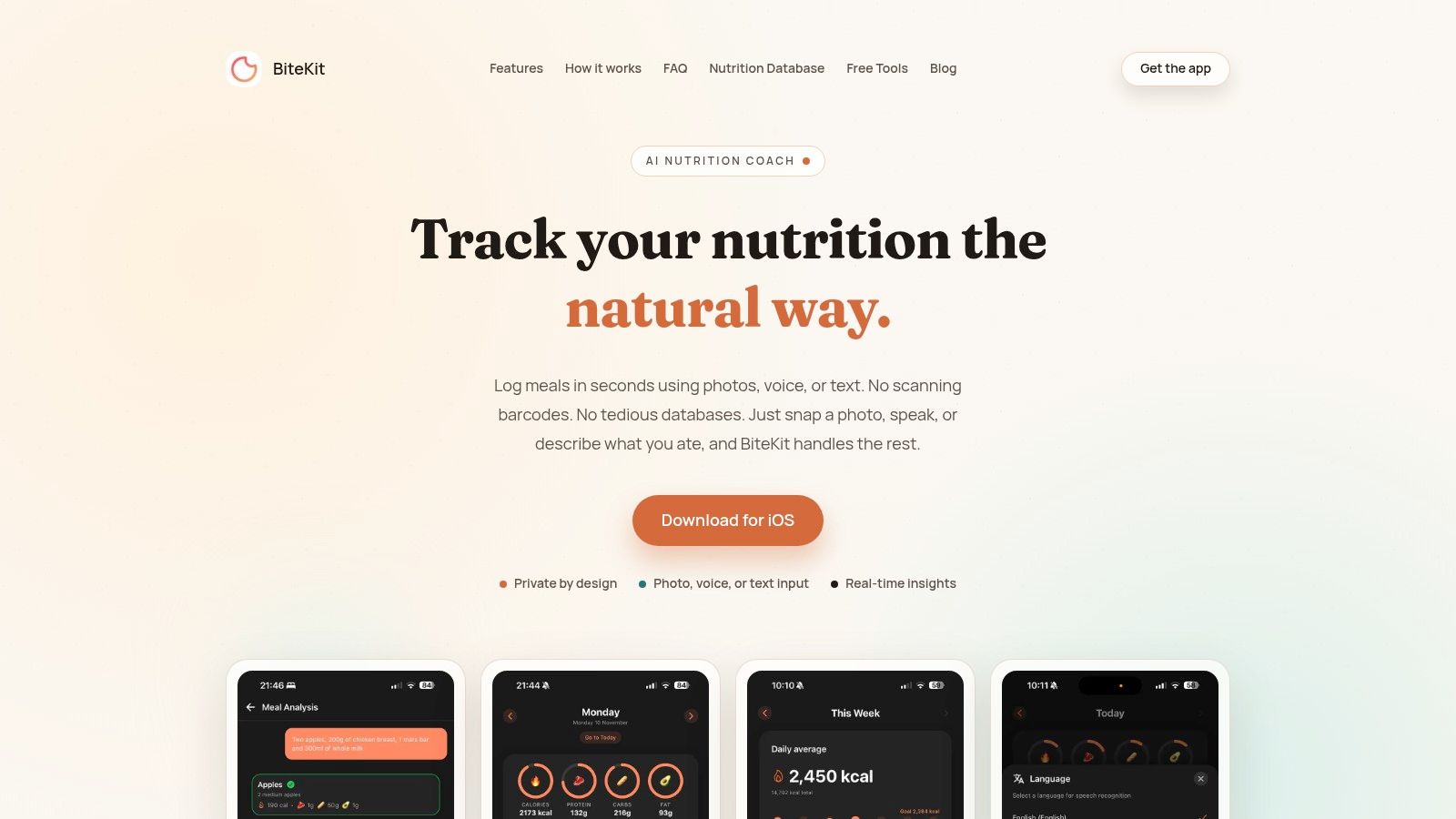
The simplest way to track tomato juice is to use the exact product and serving you poured. That keeps your macro history cleaner and prevents the common habit of logging "juice" as a generic entry that doesn't match the carton in your fridge.
Three fast ways to log it well
- Photo logging: Snap the glass and carton together if possible. This works best when portion size is visible.
- Voice logging: Say something specific like "8 ounces tomato juice" or "half cup low-sodium tomato juice."
- Text logging: Enter the product name and amount rather than searching broadly and choosing the first result.
What tends to work best
People stay more consistent when logging feels quick. That's especially true for drinks, because drinks are easy to forget. Tomato juice is one of those foods that seems small enough to skip, but over time skipped drinks can distort your carb totals more than expected.
The most accurate food log isn't the most detailed one. It's the one you'll actually keep using every day.
Tomato Juice Nutrition Quick Reference Table
If you want one clean snapshot, use the table below as your quick reference for a standard serving of plain tomato juice.
Nutrition Facts for Tomato Juice (per 8 fl oz / 243g)
| Nutrient | Amount | % Daily Value (DV) |
|---|---|---|
| Calories | 41 | |
| Total carbohydrates | 8.6g | 3.1% |
| Net carbs | 7.3g | |
| Dietary fiber | 1g | |
| Sugars | 6.3g | |
| Protein | 2.1g | |
| Fat | 0.7g | |
| Potassium | 527mg | 11% |
| Vitamin C | 170mg | 189% |
If you want macro tracking to feel less like data entry and more like something you can keep up with, BiteKit makes that easier. You can log meals and drinks with a photo, voice, or natural text, keep your calorie and macro totals updated in real time, and stay consistent without digging through giant food databases.