10 Best Foods to Take on a Road Trip
Discover the 10 best foods to take on a road trip. Healthy, macro-friendly options with packing tips to stay on track with your diet and fitness goals.
The open road is fun until the food situation turns into random chips, candy, and whatever you grabbed at the last gas station. That’s usually where people slide off track. You leave with good intentions, get hungry two hours in, then start eating whatever is fast, salty, sweet, and easy to reach.
That pattern is common for a reason. A 2023 survey from HI-CHEW found that road trippers heavily favor indulgent snacks, with chips and chocolate tied at 47%, cookies at 44%, nuts and seeds at 43%, candy at 42%, fruit at 40%, and granola bars at 38% (HI-CHEW road trip snack survey). The issue isn't that road trip food has to be unhealthy. It's that travelers often don't plan for hunger, boredom, and convenience at the same time.
If you're trying to lose weight, hit protein, or feel better while driving, the fix is straightforward. Bring foods that travel well, fill you up, and don't require a full picnic setup in the passenger seat. Then make logging easy enough that you'll do it. BiteKit helps there. Snap the snack, say what you ate, and move on.
Some foods need a cooler. Some don't. Some are great for satiety but easy to overeat. Some look healthy but don't hold up well in a hot car. If you're also traveling in an RV, it helps to know how to fix your RV refrigerator before you rely on it for perishables.
1. Mixed Nuts and Seeds
Five hours into a drive, hunger usually shows up before the next decent food stop does. Mixed nuts and seeds solve that problem well because they travel well, require no prep, and hold up in a backpack, center console, or glove box better than fragile snack foods.
They also fit a macro-conscious plan better than the usual gas station lineup. The mix of fat, some protein, and a little fiber can help with satiety, which matters on a long drive where boredom and convenience push people to keep grabbing food. The trade-off is calorie density. Nuts are easy to overeat if you treat the container like an open bag of popcorn.
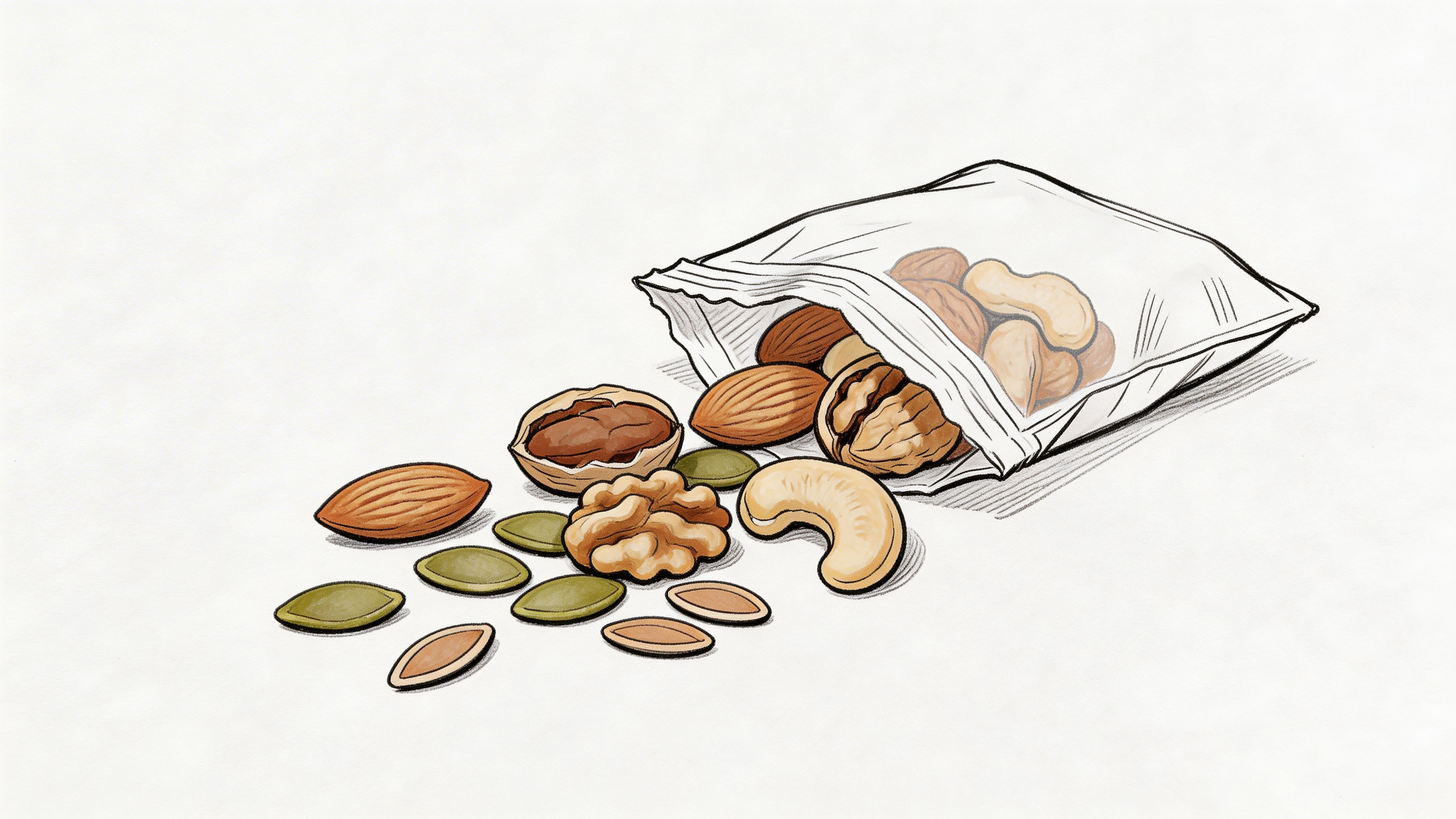
That is why portioning matters more here than with almost any other road trip snack. I prefer building single-serve packs before the trip with almonds, walnuts, pistachios, pumpkin seeds, or sunflower seeds. A simple nut-and-seed mix usually works better than trail mix loaded with chocolate candies and sweetened dried fruit, especially if the goal is stable energy instead of turning a snack into dessert.
Best way to pack them
Use plain or lightly salted mixes and divide them into small bags or reusable containers before you leave. If you want a little sweetness, add a small amount of unsweetened dried fruit instead of buying a sugary pre-made blend.
- Pre-portion at home: One serving in a bag is easier to control than eating straight from a large container.
- Choose texture carefully: Seeds and pistachios slow eating down more than soft trail mix clusters.
- Keep them cool and sealed: Heat and air make nuts taste stale faster.
- Log the portion first: A quick BiteKit photo of the packed serving keeps tracking realistic.
Practical rule: Nuts and seeds are effective for hunger control. The full family-size bag rarely is.
Planters-style mixes are easy to find almost anywhere, and raw or roasted store-brand versions are usually just as useful. Pick the one you will eat, portion it before the car starts moving, and treat it like a planned snack instead of a free-for-all.
2. String Cheese and Cheese Cubes
String cheese is one of the least exciting road trip foods, which is exactly why it works. It's portion-controlled, predictable, and easy to pair with something higher in fiber like fruit.
When people mess up road trip eating, it's often because everything is either pure carbs or a full meal. Cheese gives you a middle option. It's small, satisfying, and doesn't require much thought.
What works best in the car
Individually wrapped cheese sticks are cleaner than a larger block, and cheese cubes work better when you're building snack boxes. Sargento sticks and Tillamook cubes are common examples you'll find in grocery coolers.
Pairing matters here. Cheese alone can hold you over for a bit, but cheese with an apple or grapes works much better for appetite control than cheese with crackers you'll keep picking at.
A few practical notes:
- Start cold: Buy it from a refrigerated case right before departure if possible.
- Use it strategically: Mid-morning or late-afternoon is usually the sweet spot.
- Don't leave it loose in heat: Even if it stays edible for a while, texture gets unpleasant fast.
I like string cheese for drivers who don't want a messy snack and for beginners who need easy wins. It takes almost no effort to log one stick in BiteKit, and that matters when you're trying to stay consistent, not perfect.
3. Hard-Boiled Eggs
Hard-boiled eggs are one of the most efficient protein foods you can bring, especially if you're trying to avoid turning every stop into a full fast-food meal. They travel reasonably well for shorter stretches, they're filling, and they're easy to pair with fruit or cut vegetables.
They aren't perfect. Eggs smell. They can get messy. If you're in a packed car, not everyone will be thrilled when the container opens. But nutritionally, they do the job.
If you prep them at home, peel them before you leave. A peeled egg is far easier to eat in a parking lot than one that leaves shell fragments in your cup holder.
For a quick visual, this prep video is useful:
Where eggs fit best
Eggs are better as a planned mini-meal than a random snack. Two eggs with berries or carrot sticks works well at a long stop. That setup gives you protein plus something fresh and lighter.
- Pack them in a chilled container: Use an ice pack and keep them with your colder foods.
- Keep seasoning simple: Salt or an everything bagel blend is enough.
- Clean up right away: Wipes matter here more than people think.
Eat eggs when you can stop and actually enjoy them. They're less useful for one-handed driving.
Pre-cooked store-bought eggs are fine if you don't want prep. They're more expensive than doing it yourself, but they're convenient and usually cleaner.
4. Greek Yogurt Cups
A few hours into a drive, dry snacks start to blur together. Greek yogurt fixes that fast. It gives you a cold, high-protein option that feels more like real food than another handful of something salty.
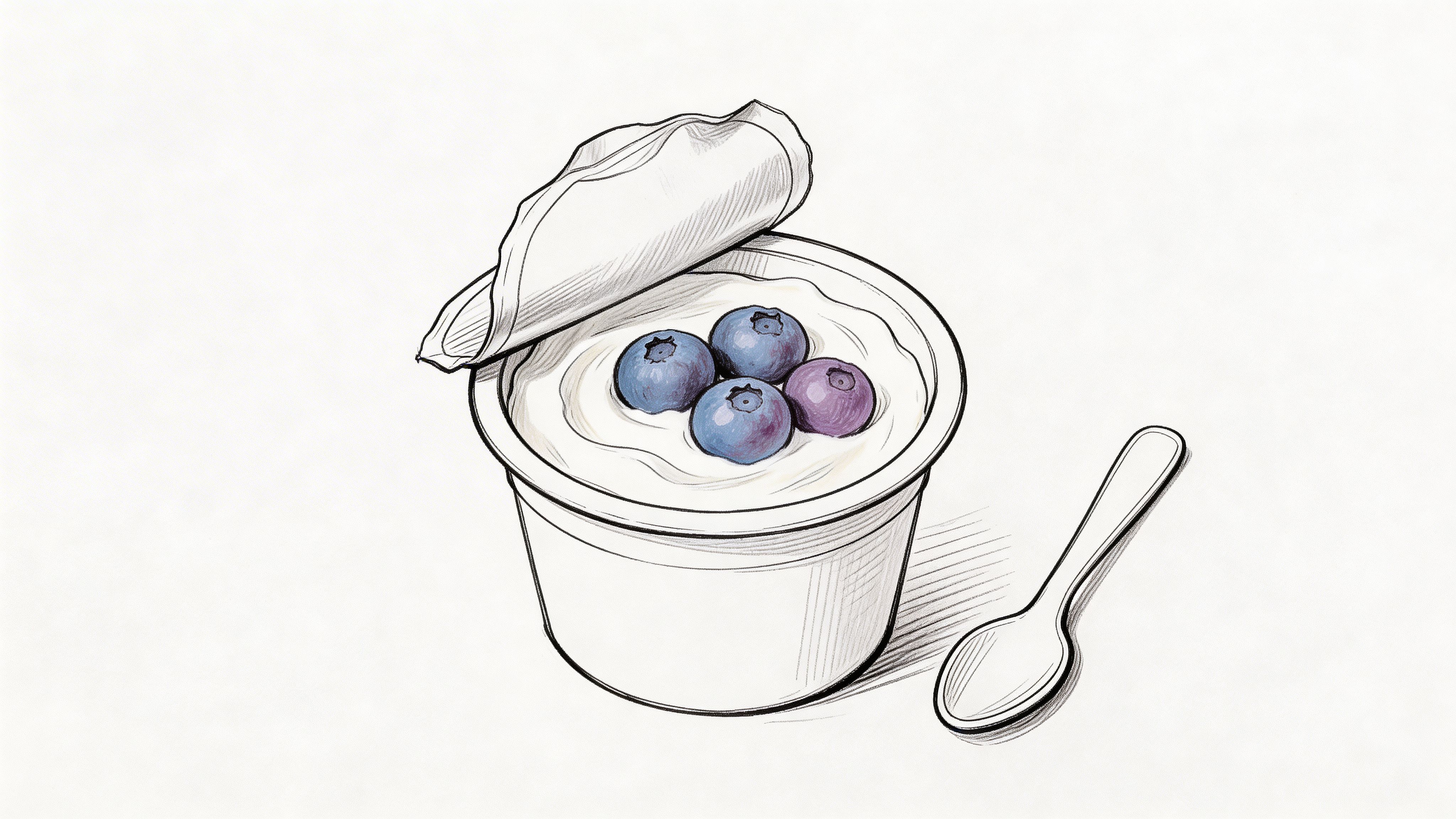
Greek yogurt earns its spot because protein and texture both matter for satiety. A cup with solid protein content can hold you over better than crackers or granola alone, especially if you're trying to keep macros under control and avoid grazing at every gas station. I use it most often as a planned stop snack or a light breakfast in the car.
Pick the right kind
Plain or lower-sugar cups are usually the better call for a road trip. They give you more control. You can add fruit if you want carbs, or nuts if you need the snack to last longer, instead of getting locked into a flavored cup that tastes good but burns through calories fast.
Fage, Chobani, Oikos, and store-brand high-protein options are common finds at larger convenience stores. If keeping carbs down matters to you, save this guide to low-carbohydrate yogurt brands before you leave.
There are real trade-offs here.
- Good for appetite control: Protein plus volume makes this more satisfying than many shelf-stable snacks.
- Only works with cold storage: Pack it in a cooler with an ice pack and eat it early in the day.
- Needs a little planning: Bring a spoon, napkins, and a place to toss the cup right away.
This is also one of the easier snacks to log accurately while traveling. Single-serve cups have clear labels, so tracking in BiteKit takes almost no effort. Scan it, log it, move on. That matters when you're trying to stay honest about protein intake without turning a road trip into a math project.
Greek yogurt is best for travelers who want a cleaner, higher-protein option and already have a decent cooler setup. If your cold storage is weak, choose something more stable. Warm dairy is not a smart gamble.
5. Beef Jerky and Meat Sticks
Jerky is the road trip protein classic for one reason. It survives. No cooler, no prep, no utensils, and no major mess if you choose decent packaging.
This is one of the easiest ways to avoid drifting into a high-carb snack day. A benchmark from the Don't Waste the Crumbs roundup puts jerky around 70 to 100 calories, 10 to 15g protein, under 5g carbs, and 2 to 4g fat per ounce (best snacks for road trips including jerky). That's why it shows up so often in fitness-focused snack lists.
What to watch for
Not all jerky is built the same. Some brands push sugar harder than people realize. Others are very salty. Jack Link's is easy to find. Chomps and similar meat sticks are popular if you want something simpler and portioned.
Use jerky as an anchor, not the whole snack. Pair it with fruit, nuts, or veggies if you want better staying power and fewer cravings an hour later.
- Read the label: Watch for added sugar in flavored versions.
- Drink water with it: High-sodium snacks feel worse when you're already under-hydrated.
- Rotate flavors: Taste fatigue is real on multi-day drives.
This is a strong pick for athletes, lifters, and anyone who tends to under-eat protein while traveling.
6. Fresh Fruit
Three hours into a drive, sweet cravings usually hit before people notice they're getting tired or snacky. Fresh fruit handles that better than gas-station candy because it gives you sweetness, water, and fiber in one move.
It also fixes a common road-trip mistake. A lot of travel snacks run salty, dry, and easy to overeat. Fruit adds volume without turning your macros upside down, which makes it useful for anyone trying to stay reasonably full between stops.
Best fruit for different trips
Choose fruit based on durability, mess, and timing. Apples are the safest all-day option. They travel well, don't need a cooler right away, and pair easily with higher-protein foods. Bananas are convenient and work well earlier in the trip, but they bruise fast. Grapes and berries are better if you have a cooler and plan to eat them sooner.
The best approach involves pairing fruit on purpose.
- Apple with cheese: Better satiety than fruit alone, and easy to eat at a rest stop.
- Banana with nut butter: A solid pre-workout-style combo if you need quick energy and a little staying power.
- Berries with Greek yogurt: Higher protein, more filling, and easier to log accurately if you track portions.
If you use bars as backup meals on the road, it helps to compare them against real-food options like fruit first. This protein bars nutrition facts guide makes that easier when you're deciding what deserves space in your bag.
For macro-conscious travelers, fruit works best as a support food, not a full snack by itself. Pair it with protein or fat, log it once in BiteKit, and you get a snack setup that is easier to stick with for the whole trip.
7. Protein Bars
Protein bars are the backup plan that often becomes the main plan. That's fine if you choose them carefully. They're compact, easy to stash, and useful when your timing gets wrecked by traffic, kids, or long stretches without good food options.
The problem is that “protein bar” doesn't tell you much. Some are basically candy with added protein. Some are useful. Some digest well. Some don't.
How to choose one that actually helps
Go for bars you already know your stomach handles. Road trips aren't the time to discover that a high-fiber, high-sugar-alcohol bar makes the next two hours miserable.
RXBAR, Quest, and ONE are common examples people recognize. They each scratch a different itch. RXBAR is more whole-food leaning. Quest is often chosen for higher protein and lower sugar. ONE bars tend to win on taste for a lot of people.
For a smarter comparison before you shop, save this guide on protein bars nutrition facts.
What works in practice:
- Keep one as insurance: Bars are best when they prevent bad choices later.
- Avoid heat-sensitive bars: Chocolate coatings can turn into cleanup projects.
- Log the wrapper once: BiteKit makes this easy if the label is visible.
Protein bars shouldn't replace every real food option on your trip, but they're one of the most practical foods to take on a road trip when convenience has to carry part of the load.
8. Veggies with Hummus or Nut Butter
A few hours into a drive, salty packaged snacks start to blur together. Crunchy vegetables reset your appetite without adding another heavy, dense option to the mix.
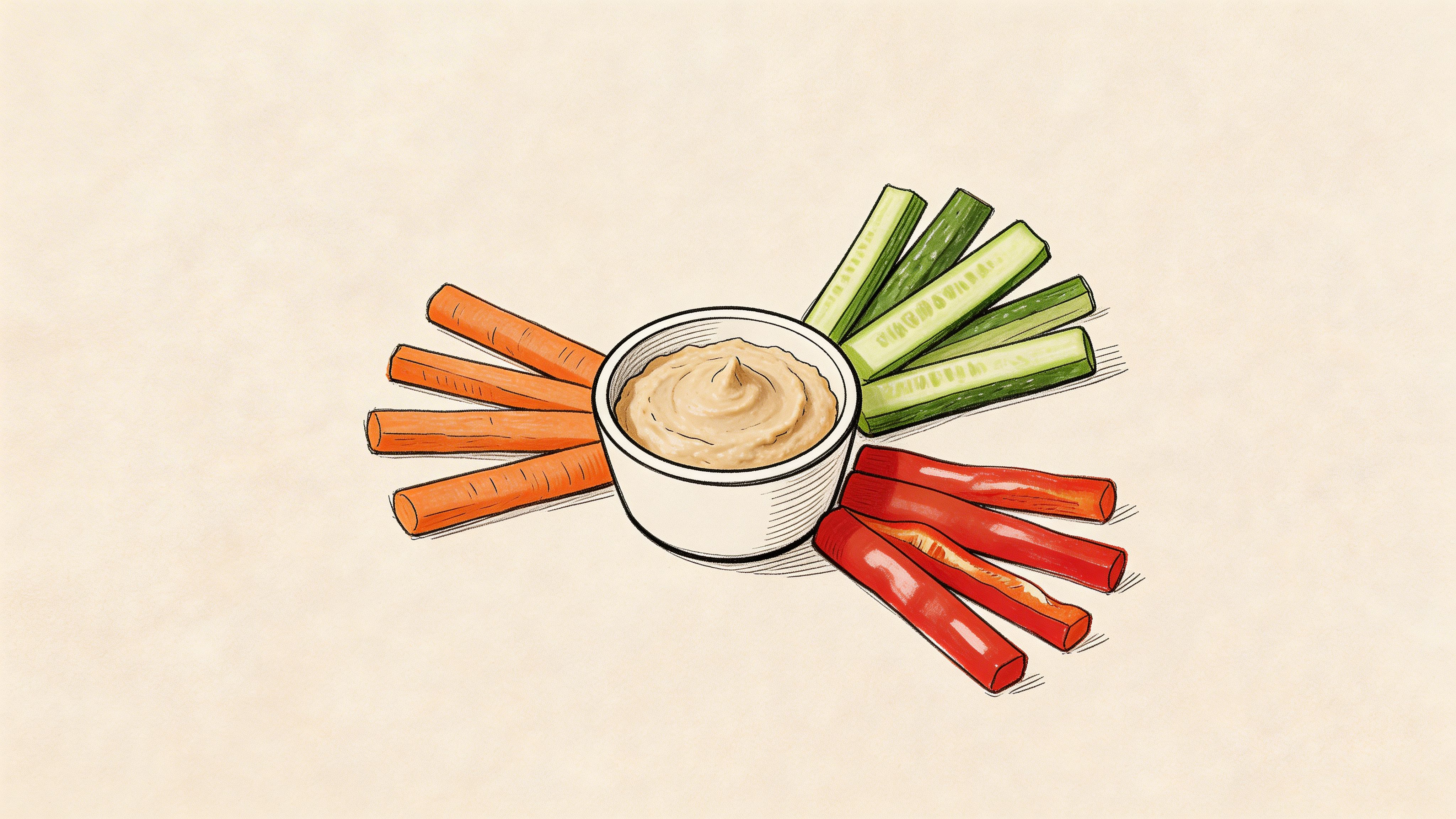
This pairing works well for macro-conscious travelers because it covers two jobs at once. The vegetables add volume and texture. Hummus or nut butter slows the snack down enough that it holds you over, instead of turning into another handful-and-reach-back cycle 20 minutes later.
Build it so you'll actually eat it
Use vegetables that travel well and stay edible after a few hours in a cooler. Baby carrots, celery, snap peas, bell pepper strips, and cucumber spears are the practical picks. Delicate greens and anything that gets watery fast usually end up wasted.
Hummus is usually the better road-trip match if you want something savory and refreshing. Nut butter works best with celery or apple slices, but it eats more like a calorie-dense add-on than a light reset. If you're tracking closely, this guide on hummus nutrition facts makes it easier to choose a brand and portion that fits your day.
A few things make a big difference in practice:
- Pack single-serve dip cups: They control portions and keep the container cleaner.
- Use a hard-sided container: Peppers and cucumbers get crushed fast in a soft bag.
- Save this for a stop: It is possible to eat while driving, but it's much less annoying when the car is parked.
- Log it once in BiteKit: Scan the hummus cup or nut butter packet, then estimate the veggie portion. Good enough beats skipping the log.
This is one of the better road-trip snacks for days when protein-heavy options start to feel repetitive and you still want your food choices to stay intentional.
9. Cottage Cheese Cups
Cottage cheese doesn't get the same hype as Greek yogurt, but on the road it can be just as useful. It's creamy, high in protein, and easy to turn into a real snack instead of a random bite here and there.
What I like about cottage cheese for travel is that it feels more substantial than it looks. You can pair it with fruit for something sweet, or with tomatoes and pepper if you want something savory.
When it makes sense
This is another cooler-dependent food. If your cold storage is reliable, single-serve cups are convenient and clean. If it isn't, skip them. Warm cottage cheese is not something you want to gamble on.
Good Culture and Breakstone's are common examples. Plain versions give you the most flexibility. Fruit-on-the-bottom versions can work, but they often push the snack in a sweeter direction than you intended.
A few practical notes:
- Pack a spoon in advance: You only forget this once.
- Choose single-serve cups: They travel better than a large tub.
- Pair on purpose: Berries if you want lighter. Nuts if you need more staying power.
Cottage cheese isn't the ideal driver's snack, but it works very well at a rest stop when you want protein and don't want another meat stick.
10. Unsweetened Peanut or Almond Butter Packets
Nut butter packets are the emergency tool I recommend most. They don't require refrigeration, they fit anywhere, and they instantly make a basic snack more filling.
An apple alone is fine. An apple with a nut butter packet is a real snack. Celery alone is mostly crunch. Celery with almond butter has enough fat and flavor to hold you over.
Why packets beat jars
Portion control. That's the whole story. A jar turns into repeated scoops. A packet gives you a clear start and stop.
Justin's and Barney Butter are easy examples to look for. Unsweetened versions are usually the better fit if you're trying to stay on top of calories and avoid turning a snack into a dessert.
Keep two packets in the car even if you packed other food. Delays happen.
Use them with:
- Apples or bananas: Best for a fast, balanced stop.
- Celery sticks: Messier, but very satisfying.
- Greek yogurt: Useful when you want more staying power from a cooler snack.
They can get oily in heat, so don't bury them under gear in direct sun. Still, as a shelf-stable option, they're one of the most practical foods to take on a road trip when you want flexibility without chaos.
Top 10 Road-Trip Snacks Comparison
| Item | Implementation complexity | Resource requirements | Expected outcomes | Ideal use cases | Key advantages |
|---|---|---|---|---|---|
| Mixed Nuts and Seeds | None, ready-to-eat; optional pre-portioning | No refrigeration; small bags/containers; moderate cost | Sustained energy and satiety; calorie-dense with consistent macros | Long drives, quick macro-tracking snacks between meals | High protein & healthy fats; shelf-stable; portable |
| String Cheese and Cheese Cubes | Very low, grab-and-eat, single-serve | Short-term refrigeration preferred; individual packaging | Fast satiety from protein/fat; predictable macros | Short trips, low-carb/keto snacking, portion-controlled needs | Portion-controlled, easy logging, calcium source |
| Hard-Boiled Eggs | Moderate, require boiling/peeling or buying pre-made | Cooler advised for longer trips; protective containers; prep time | Complete, bioavailable protein; high satiety; economical | Fitness-focused trips or strict protein targets | Complete protein, low cost per gram, minimal carbs |
| Greek Yogurt Cups | Low prep but requires refrigeration | Cooler/ice packs; spoon; purchased single-serve | High protein plus probiotics; filling but perishable | Short trips with cooler; post-workout recovery | High protein density, probiotics, versatile toppings |
| Beef Jerky and Meat Sticks | None, ready-to-eat, no prep | No refrigeration; variable cost; high sodium | Concentrated protein, durable shelf-life; may increase sodium intake | Long shelf-stable trips; precise protein intake on the go | Shelf-stable, high protein per ounce, low carb |
| Fresh Fruit (Apples, Berries, Bananas) | Minimal, wash/pack; some peeling | Little refrigeration for some fruits; hand wipes; low cost | Vitamins, hydration, fiber; quick carb energy but low protein | Healthy snacking, pairing with protein sources | Micronutrient-rich, hydrating, low-calorie density |
| Protein Bars | None, ready-to-eat; no prep | No refrigeration; higher cost per serving | Precise macros and protein; possible additives or sugar alcohols | Macro tracking when whole foods unavailable; long trips | Macro precision, long shelf-life, highly portable |
| Veggies with Hummus or Nut Butter | Moderate, chopping and portioning required | Cooler recommended for hummus; containers; utensils/wipes | High-volume satiety, fiber-rich, moderate protein from dips | Weight-loss-focused snacking, high-volume low-calorie needs | High fiber/volume, nutrient-dense, low glycemic impact |
| Cottage Cheese Cups | Low prep but needs refrigeration and a spoon | Cooler/ice packs; limited availability at some stops | Very high protein (casein) and long satiety; perishable | Short trips with cooler; muscle maintenance or dairy preference | Highest dairy protein density, slow-digesting for satiety |
| Unsweetened Peanut/Almond Butter Packets | None, single-serve ready; no utensils | Shelf-stable; napkins/wipes for stickiness; moderate cost | Calorie-dense satiety from fat/protein; easy to overconsume | Pairing with fruit/crackers or quick calorie boost | Convenient portions, shelf-stable, versatile pairings |
Your Road Trip Nutrition, Simplified
Road trip eating usually falls apart for predictable reasons. People wait too long to eat, rely on whatever is available at a gas station, and underestimate how much mindless snacking adds up over a full day in the car. The fix isn't a perfect meal plan. It's a short list of foods that travel well and make the next good decision easier.
That's why these choices work. Nuts and seeds give you portable satiety. Jerky, eggs, cheese, Greek yogurt, and cottage cheese help you keep protein up. Fruit and vegetables add freshness, hydration, and fiber that road trip food often lacks. Protein bars and nut butter packets cover the gaps when plans change.
There are trade-offs. Perishables are great if your cooler setup is solid. If it isn't, lean harder on shelf-stable options. Jerky is convenient, but sodium can stack up. Nuts are nutrient-dense, but they need portion control. Protein bars are useful, but they shouldn't be your whole strategy. Good road trip nutrition is less about finding one perfect snack and more about building combinations that are satisfying, easy to carry, and realistic to log.
That last point matters more than people admit. A lot of travelers bring decent food and still lose track because they stop logging once the day gets busy. BiteKit removes most of that friction. Take a photo of the snack box, say what you ate, or log a quick voice note before you pull back onto the highway. That's much easier than searching databases while parked at a pump.
If you're planning to rely on chilled food, your bag matters too. A better setup keeps yogurt, cheese, eggs, and veggies far more practical, so it's worth reviewing the characteristics that make a great cooler backpack before a long drive.
The main rule is simple. Pack food you will eat, not food that looks good in a Sunday meal prep photo and gets ignored by mile 200. Keep protein easy. Keep fruit visible. Portion calorie-dense snacks before you leave. Build in one or two backup options for traffic, delays, and missed stops.
Do that, and the road doesn't have to derail anything. You can travel, eat well, stay on top of your macros, and arrive feeling better than if you'd spent the whole drive living on chips and candy.
BiteKit makes road trip nutrition easier to stick with. Instead of guessing portions or digging through food databases in a parking lot, you can log meals with a photo, voice note, or simple text and get calories and macros fast. If you want tracking that fits real travel days, download BiteKit for iOS or Android and keep your next trip organized without the usual friction.