What to Eat to Lose Weight: A Science-Backed Guide
Learn what to eat to lose weight with our evidence-based guide. Discover calorie principles, high-satiety foods, and how to track meals effortlessly.
Most advice about what to eat to lose weight starts with a shopping list. Eat this. Avoid that. Cut carbs. Skip fat. Drink this special tea. Stop eating after a certain hour.
That approach usually fails because it treats weight loss like a list of approved foods instead of a skill. The essential skill is choosing meals you can repeat, portions you can judge, and a tracking method you’ll keep using when life gets busy.
You don’t need a perfect diet. You need a food pattern that helps you eat a little less without feeling like you’re white-knuckling your way through the day.
Deciding What to Eat to Lose Weight
The biggest mistake people make is asking, “What are the best foods for weight loss?” as if there’s one secret menu. There isn’t.
A food can be helpful, neutral, or unhelpful depending on context. Oats can fit. Rice can fit. Eggs can fit. Pasta can fit. Even treats can fit. The question isn’t whether a single food is “good” or “bad.” The better question is whether your usual meals help you stay satisfied while keeping intake in a range that supports fat loss.
Why food lists often create more confusion
Most list-style advice leaves out two things that matter most:
- How filling the food is: Some meals keep you full for hours. Others leave you hungry again fast.
- How easy the meal is to track: A plain yogurt is simple. A restaurant grain bowl with sauce, oil, nuts, and protein is harder.
That second point gets ignored all the time. A plan only works if you can follow it on a Wednesday when you’re busy, tired, and eating something that didn’t come with a label.
If you enjoy supportive habits like tea between meals, a practical guide to tea for weight loss can help you think about where beverages fit. Just don’t treat any drink as the driver of progress. Your overall eating pattern matters more.
The better frame
Think in principles, not food rules.
Practical rule: Pick foods that make it easier to eat a little less, not foods that make you feel punished.
That usually means meals built around protein, fiber, and sensible portions. It also means having a simple way to notice what you’re eating. If you need a starting point for the numbers side, this guide on daily calorie targets can help: https://bitekit.app/blog/how-to-calculate-daily-calorie-needs
Once you understand those foundations, “what to eat to lose weight” becomes much less confusing. You stop chasing magic foods and start building repeatable meals.
Understanding the Foundational Science of Weight Loss
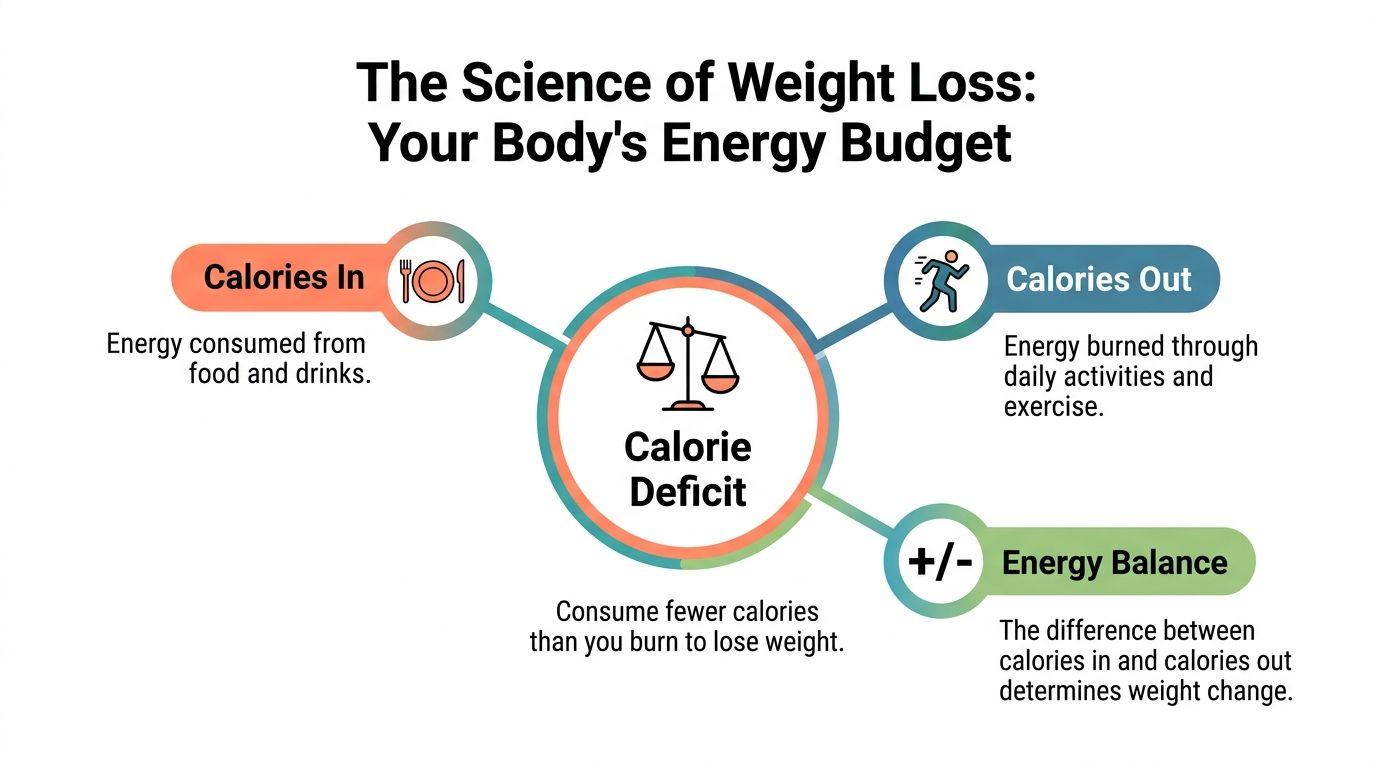
Weight loss isn’t mysterious, but the language around it often makes it sound that way. The simplest way to understand it is to treat your body like a budget.
Your body runs on an energy budget
Food gives your body energy. Your body spends that energy by staying alive, moving around, digesting food, and exercising.
If you consistently take in less energy than you use, your body has to draw from stored energy. That’s the basic reason body weight goes down over time.
If the phrase still feels abstract, this plain-English explanation of what is a calorie deficit is a useful companion. The main goal
Calories decide direction. Macros shape the experience
Calories are the budget total. Protein, carbohydrates, and fat are how that budget gets spent.
Here’s the practical version:
| Focus | What it affects most |
|---|---|
| Calories | Whether weight tends to go up, down, or stay stable |
| Protein | Fullness, muscle support, and meal staying power |
| Carbs | Energy, training support, and food flexibility |
| Fat | Satisfaction, flavor, and meal richness |
People often get stuck arguing about macros as if one ratio is the answer for everyone. But a controlled study over a significant period with many participants found that people in four diet groups with different fat and protein setups all achieved meaningful weight loss, according to the summary in https://www.medicalnewstoday.com/articles/320613
That matters because it shifts the question from “What macro split is perfect?” to “What eating pattern can I stick with?”
What this means at the dinner table
You don’t need to become a human calculator. You need a simple mental model:
- Keep the overall budget in check
- Use protein and fiber to control hunger
- Choose foods you can repeat without burnout
Your body doesn’t grade you on food morality. It responds to patterns.
That’s why extreme diets can look appealing but fall apart in real life. If a plan makes you obsessed, hungry, or socially isolated, it usually won’t last long enough to matter.
Choosing High-Impact Foods for Satiety and Nutrition
If you want to know what to eat to lose weight, start with foods that help you feel full on fewer calories. That’s the center of good food selection.
Protein does more work than people think
Protein isn’t just for athletes. It helps with appetite control.
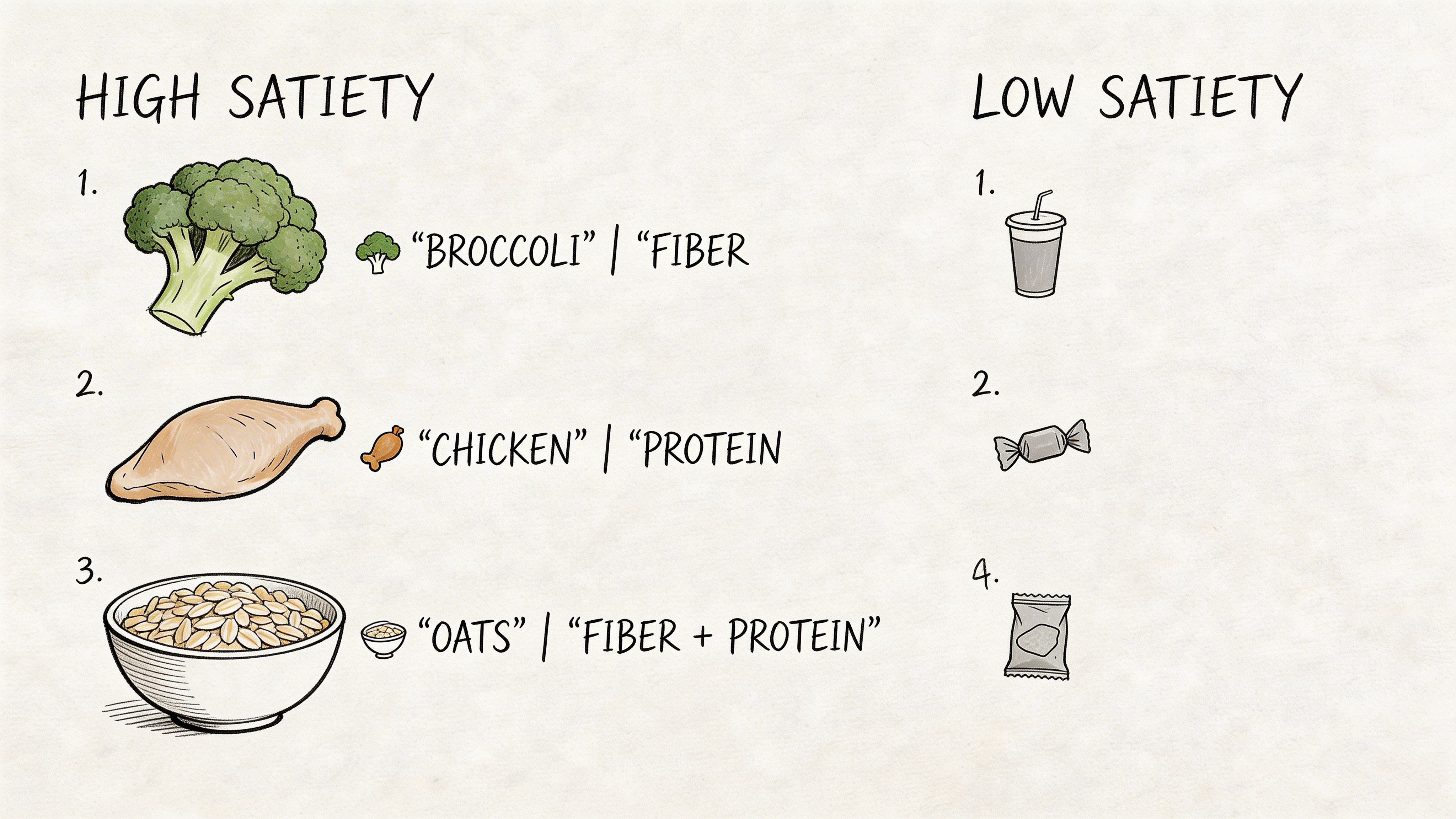
Research summarized by Medical News Today notes that protein triggers the release of satiety hormones, which is one reason it’s so helpful during fat loss. The same summary notes that pulses such as beans, chickpeas, lentils, and peas contain soluble fiber that slows digestion and absorption, adding another layer of fullness support: https://www.medicalnewstoday.com/articles/320613
That combination is powerful. A meal with protein plus fiber usually feels very different from a meal built mostly from refined starch and added fat.
A few examples from the same evidence summary make this practical:
- Fish: Contains a significant amount of protein per serving with relatively few calories
- Legumes: Offer a good amount of protein per cooked cup
- Pulses: Useful because they combine protein with soluble fiber
Food quality changes how easy dieting feels
A long-term study of many healthy adults found that weight change was most strongly linked with certain foods, including potato chips, potatoes, sugar-sweetened beverages, and processed or unprocessed red meats, based on the same Medical News Today summary.
That doesn’t mean those foods are forbidden. It means some foods make it much easier to overshoot your target because they’re less filling, easier to overeat, or both.
Build meals around three anchors
A simple meal framework works better than memorizing endless food lists.
- Start with protein: chicken, fish, Greek yogurt, tofu, eggs, cottage cheese, beans, lentils
- Add fiber and volume: vegetables, fruit, beans, soups, salads
- Use carbs and fats intentionally: rice, potatoes, pasta, bread, avocado, olive oil, nuts, cheese
Here’s how that looks in real meals:
| Meal | A more filling build |
|---|---|
| Breakfast | Greek yogurt with fruit and seeds |
| Lunch | Chicken or lentil bowl with vegetables and a sensible serving of rice |
| Dinner | Fish, potatoes, and a large portion of vegetables |
| Snack | Cottage cheese and fruit, or hummus with crunchy vegetables |
If you want meal ideas that naturally push fiber higher, this collection is useful: https://bitekit.app/blog/high-fiber-meals
Simple test: After you eat, ask whether the meal keeps you satisfied for a reasonable stretch of time. If not, it may need more protein, more fiber, or both.
Mastering Portion Control Without a Food Scale
Many people don’t want to weigh every bite forever. That’s reasonable.
You still need some way to estimate portions, because even nutritious foods can slow progress when portions drift upward.
Use your hand as a portable measuring tool
Your hand goes everywhere. That makes it more practical than a kitchen scale at restaurants, work events, and family dinners.
A useful shortcut:
- Palm: a portion of protein
- Fist: a portion of vegetables or starchy carbs, depending on the food
- Thumb: a portion of fats like nut butter, oils, or dressing
- Cupped hand: a portion of carb-dense foods such as rice or pasta
This isn’t lab-grade precision. It doesn’t need to be. It just helps you avoid the common trap of portions that slowly become restaurant-sized at home.
Try the plate method when you want less math
The plate method is even simpler.
Fill your plate like this:
- Half the plate: vegetables or salad
- A quarter: protein
- A quarter: starch or other carb-rich food
If you’re still hungry after finishing, pause before getting more starch or fat. Often the better second serving is protein or vegetables.
If your plate is mostly beige and dense, hunger usually returns sooner.
For a visual walkthrough of these ideas, this quick video helps:
Handle restaurant meals without overthinking them
Restaurant food is tricky because oils, sauces, and mixed ingredients add up fast. You don’t need to panic. You need a repeatable filter.
When ordering, use this checklist:
- Choose the protein first
- Look for vegetables or a salad
- Keep sauces and dressings in view
- Decide whether the carb portion matches your hunger
- Stop when you’re satisfied, not when the plate is empty
If portion estimation is the part that trips you up, this guide is worth saving: https://bitekit.app/blog/how-to-measure-food-without-a-scale
Building Your Plate for a Busy Life
A good weight loss plan has to survive meetings, commuting, takeout, school pickups, late workouts, and low-energy evenings. If it only works in a perfectly organized kitchen, it won’t last.
Breakfast that doesn’t create a hunger crash
A rushed breakfast often turns into toast, a pastry, or nothing at all. Then hunger hits hard later.
A better pattern is something with protein plus produce.
Examples:
- Greek yogurt with fruit
- Eggs with vegetables and toast
- Cottage cheese with fruit
- Oatmeal with added protein from yogurt or eggs on the side
The point isn’t to make breakfast fancy. It’s to avoid starting the day with a meal that disappears in your system.
Lunch for people who work through lunch
Busy professionals often need meals that are fast, portable, and not sleepy. A huge heavy lunch can backfire just as much as a tiny one.
A balanced work lunch usually looks like:
| Situation | Practical option |
|---|---|
| Packed at home | Protein bowl with vegetables and a moderate carb |
| Grab-and-go | Salad or grain bowl with visible protein and dressing on the side |
| Office catering | Start with protein and vegetables, then add the carb that looks worth it |
If your lunch is a mixed dish like salmon with quinoa and roasted vegetables, don’t get stuck trying to mentally reverse-engineer every ingredient. Estimate reasonably and move on. Consistency beats obsessing over a perfect entry.
Dinner that fits real life
Dinner is where many people either do very well or completely unravel. They’ve been “good” all day, get home tired, and eat whatever is easiest.
Keep dinner assembly simple:
- Protein you can cook quickly or reheat
- One easy vegetable
- One carb you enjoy and can portion without drama
That could be chicken with frozen vegetables and rice. It could be tofu stir-fry. It could be fish tacos with slaw. It could be a bean-based soup with bread.
A note for women dealing with appetite swings
Many women notice that hunger, cravings, and energy change across the month. That doesn’t mean anything is wrong. It means rigid dieting often collides with normal physiology.
On higher-hunger days, it usually helps to lean harder on structured meals instead of trying to “be good” by eating almost nothing. Protein, fiber-rich carbs, and planned snacks tend to work better than restriction followed by evening overeating.
A plan you can adjust is stronger than a plan you can only obey.
Common Weight Loss Mistakes and How to Avoid Them
Many stalls aren’t caused by one bad food. They’re caused by blind spots.
Drinking calories you barely notice
Liquid calories often create less fullness than solid food. Coffee add-ins, smoothies, juices, alcohol, and sweet drinks can fit into a diet, but they’re easy to overlook.
The fix is simple. Count drinks as part of the day, not as background noise.
Falling into all-or-nothing thinking
A lot of people eat one unplanned meal and decide the day is ruined. Then the “bad” meal becomes a “bad” weekend.
That pattern has nothing to do with metabolism. It’s a decision problem.
Try this instead:
- Missed one meal target: return to your next planned meal
- Ate more than intended: log it accurately
- Had a social event: treat it as one meal, not a personal failure
Underestimating complex meals
This is the failure point almost nobody talks about enough.
A 2023 study in Appetite found that 68% of dieters abandon tracking within 2 weeks due to logging friction, leading to 25% to 40% underestimation of intake for complex meals. Recent 2025 MyFitnessPal data reported that photo-based AI logging reduces this error by 85% and boosts adherence by 62%: https://www.aarp.org/health/healthy-living/weight-loss-foods/
That matters because most real meals aren’t plain chicken and broccoli. They’re burrito bowls, curries, pasta dishes, takeout salads, wraps, casseroles, and restaurant plates with extras you can’t see clearly.
Thinking healthy always means low-calorie
Foods can be nutritious and still easy to overeat. Granola, nut butters, trail mix, smoothies, wraps, and “clean” snack foods often create confusion because they carry a healthy halo.
The useful question is not “Is this healthy?” It’s “Does this portion fit my goal, and does it keep me satisfied?”
If you answer that accurately, progress becomes much easier.
Effortless Tracking for Sustainable Weight Loss
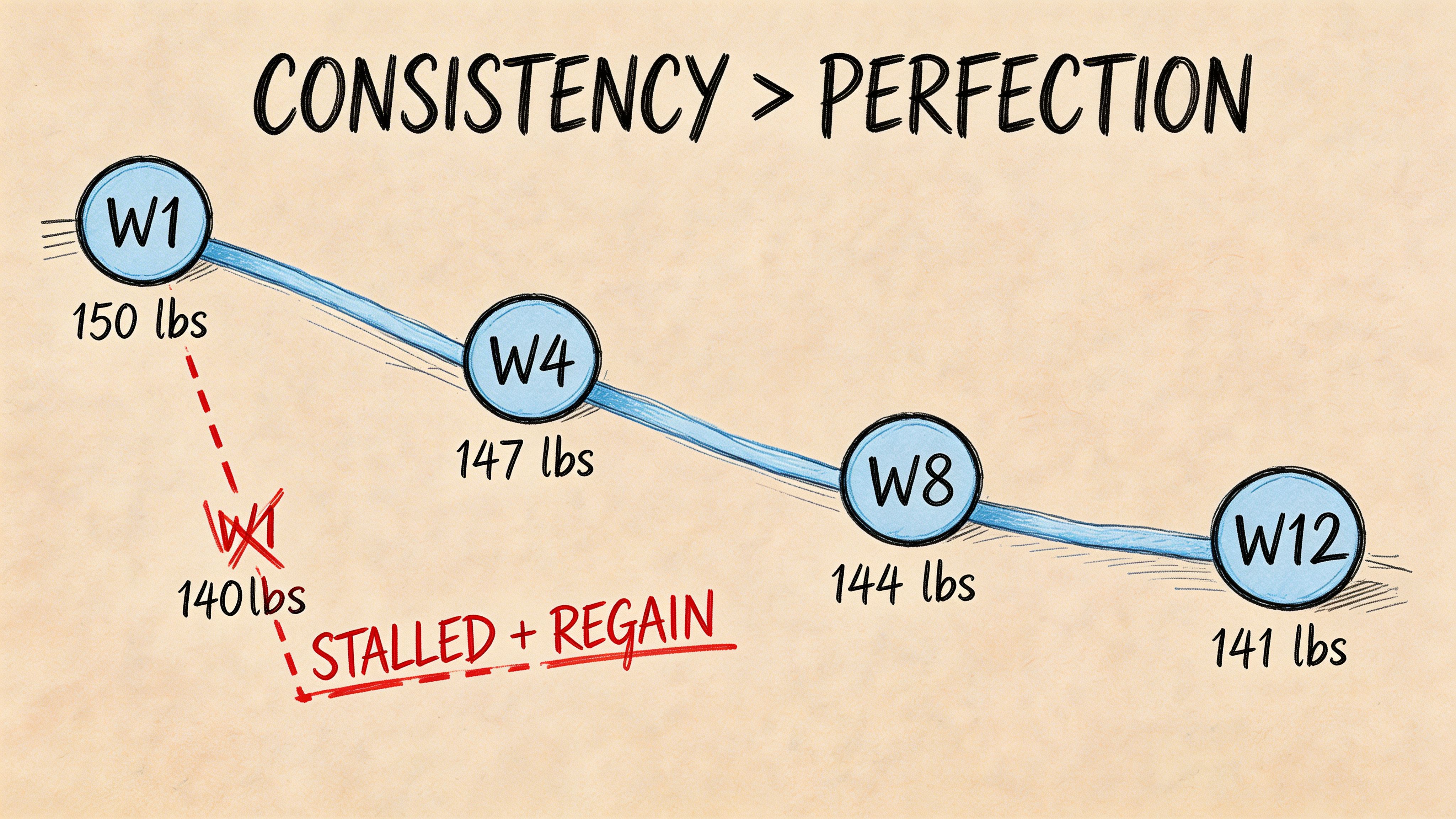
Perfection is one of the fastest ways to quit. The better target is consistency.
A 2023 clinical trial involving 153 participants in a six-month program found that diet tracking didn’t need to happen every day to produce meaningful results. People who tracked on about 30% of days lost more than 3% of body weight, those who tracked on about 40% of days lost over 5%, and tracking on nearly 70% of days was linked with more than 10% loss. The same source notes that 5% to 10% weight loss improves important health markers, and the study also identified a group that started strong, later dropped to roughly one day per week by month four, and still lost 5%: https://today.uconn.edu/2023/06/diet-tracking-how-much-is-enough-to-lose-weight/
What that means in daily life
You don’t need to log flawlessly forever. You need a system that makes logging easy enough that you’ll keep doing it.
That’s where simpler tools matter. Some people use handwritten notes. Some use standard calorie apps. Some prefer photo or voice logging because mixed meals are hard to enter manually. BiteKit is one example of that approach. It lets users log meals by photo, voice, or text, estimates portions and macros, and keeps data stored locally on the device rather than in an account-based cloud history.
The main goal
Use tracking to reduce guesswork, not to create guilt.
The best food choices for weight loss are usually the ones you can repeat, estimate, and recover from when the day isn’t ideal. Protein-rich meals, fiber, practical portions, and low-friction tracking all support the same thing: a pattern you can maintain long enough to matter.
If you want a simpler way to track real meals without constant database searches, BiteKit can help. You can log food with a photo, voice note, or plain text, keep an eye on calories and macros, and make weight loss tracking fit a busy life instead of interrupting it.