Calories in turkey wrap: Decoding the Real Numbers
Calories in turkey wrap revealed: compare portions, ingredients, and tips to fit your nutrition goals.

How many calories are in a turkey wrap? The answer can range from a lean 300 calories to a loaded meal topping 700 calories. This wide variation is driven almost entirely by the ingredients used, with the tortilla, sauces, and cheese being the most significant contributors to the final count.
Why Turkey Wrap Calories Can Be So Deceptive
A turkey wrap is often perceived as a light, healthy lunch option, and it certainly can be. However, the wrap itself is a blank slate, and seemingly minor ingredient choices can easily double its calorie count.
The tortilla serves as the caloric base. Extras like creamy sauces, full-fat cheese, and bacon can rapidly increase the total. For instance, a single large flour tortilla can contain over 200 calories before any fillings are added.
Let's break down the primary factors that influence the calorie count:
- The Wrap Itself: The type and size of the tortilla lay the foundation for the entire calorie count.
- Protein Portion: The amount and type of turkey—whether it's lean, roasted breast or processed deli meat—affect the nutritional profile.
- The Add-Ins: Calorie-dense additions like cheese and avocado contribute significantly to the total.
- Sauces and Spreads: Creamy, high-fat dressings are often the largest source of hidden calories.
Understanding these four components is key to constructing a wrap that aligns with your dietary goals. As we will explore, simple substitutions can make a substantial difference without compromising flavor. For a precise estimate of how different ingredients impact the total, a sandwich calorie calculator can be a useful tool.
How Each Ingredient Adds Up in Your Turkey Wrap
Building a turkey wrap is analogous to packing a suitcase—each item adds to the total weight. In this case, every ingredient, from the tortilla to the final drizzle of sauce, contributes to the final caloric and nutritional breakdown. A few simple swaps can be the difference between a light lunch and a surprisingly calorie-dense meal.
The flowchart below provides a quick visual on how different choices can steer your wrap into lean, balanced, or high-calorie territory.
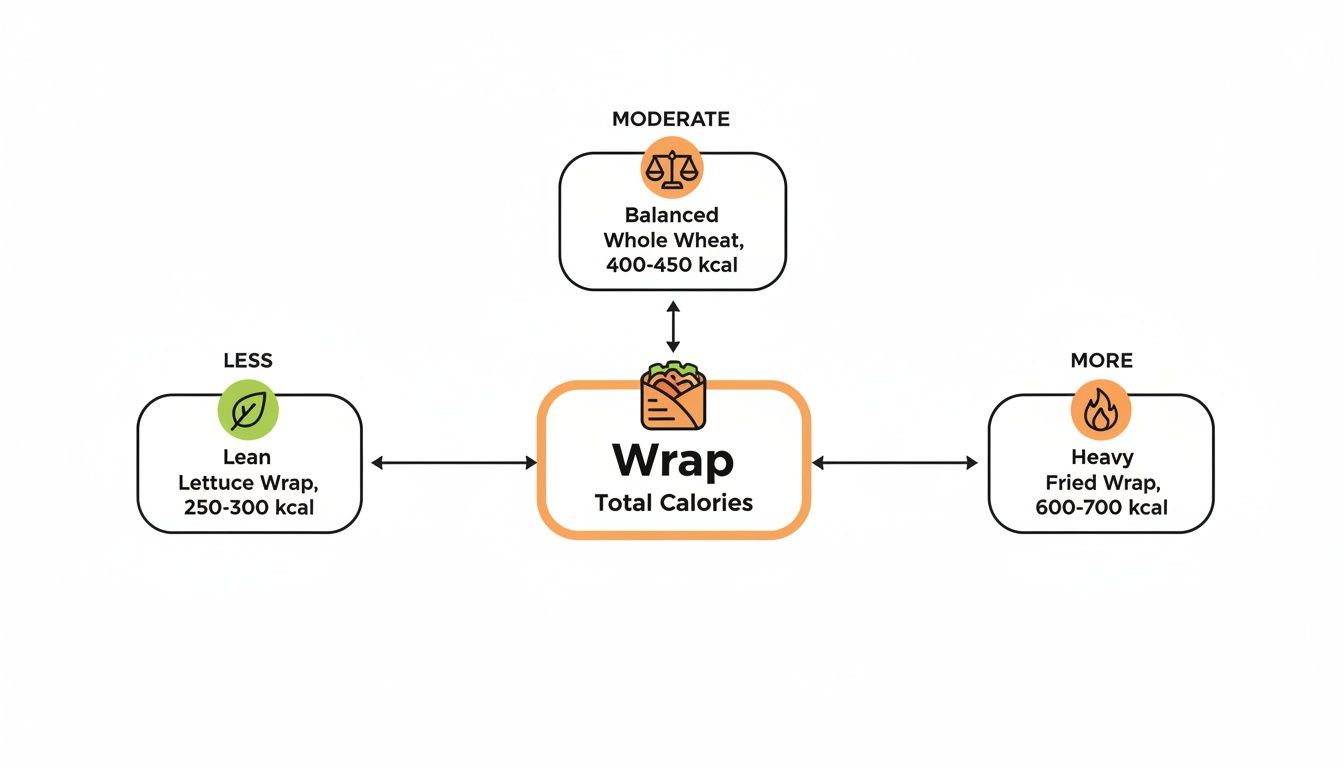
As the chart illustrates, the initial choice of wrap and the subsequent fillings are critical determinants of the final calorie count.
The Foundation: It Starts with the Tortilla
The wrap is the starting point, and its caloric contribution is often underestimated. A standard large, plain flour tortilla can contain 200-250 calories before any fillings are added. This means the wrapper alone can constitute over half the calories of a lighter meal.
In contrast, choosing a whole-wheat or high-fiber option typically reduces the calorie count to around 100-150 calories while increasing dietary fiber. The added fiber promotes satiety, which is beneficial for appetite control. For a more detailed comparison of different tortilla types, our analysis of corn tortilla nutrition offers further insight.
The Protein and All the Extras
The primary filling, turkey, is next. A four-ounce portion of lean, oven-roasted turkey breast is an excellent choice, providing approximately 120-140 calories and a significant amount of protein. It's important to note that some processed deli meats may contain higher levels of sodium and fat, which can slightly increase the calorie count.
The extras are where calories often accumulate unnoticed. A single slice of provolone or cheddar cheese adds an extra 80-110 calories, while one tablespoon of creamy ranch or Caesar dressing can contribute another 100-150 calories.
These additions can transform a healthy wrap into a high-calorie meal. For example, substituting mustard for mayonnaise can save nearly 100 calories. By understanding where these hidden calories lie, you can construct a wrap that supports, rather than hinders, your nutritional objectives.
Navigating Restaurant and Store-Bought Wraps
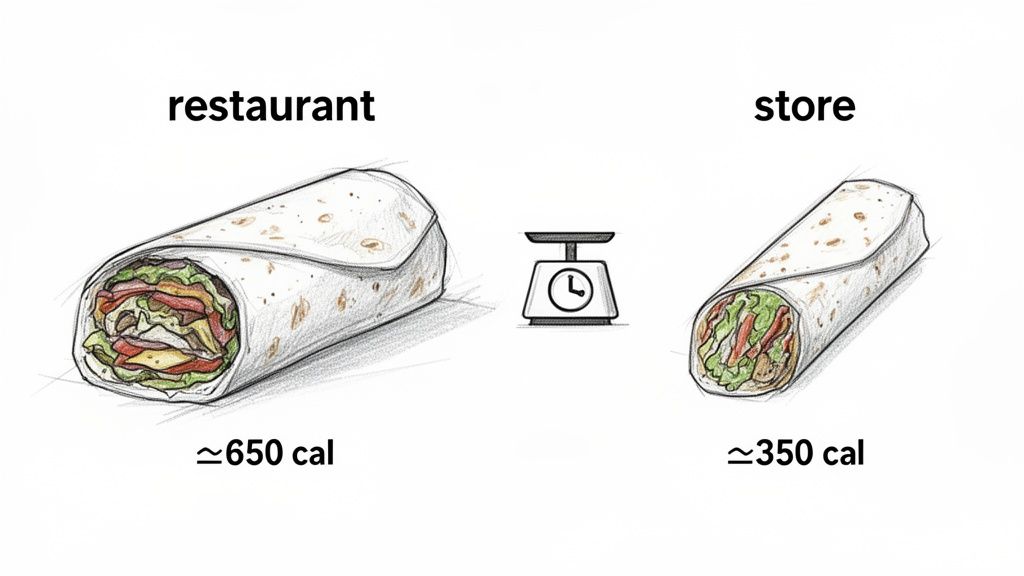
While preparing a healthy wrap at home is straightforward, making wise choices when dining out can be more challenging. Restaurant and pre-packaged turkey wraps can be nutritional minefields, with convenience often masking high levels of calories, sodium, and unhealthy fats. The appealing menu descriptions may not provide a complete picture of the nutritional content.
A turkey wrap might seem like a safe bet, but portion sizes and ingredients vary widely. Wraps can be loaded with creamy, high-fat sauces and excessive amounts of cheese, significantly elevating the calorie count.
Unpacking the Nutritional Facts
The nutritional differences between offerings at various restaurants can be substantial. Let's examine a few popular fast-casual chains to illustrate this point.
Restaurant Turkey Wrap Nutritional Showdown
Here’s a quick comparison of turkey wraps from a few well-known chains. Note the significant variations in calories, protein, and fat, even when the main ingredient is consistent.
| Restaurant & Wrap Name | Total Calories | Protein (g) | Fat (g) | Carbohydrates (g) |
|---|---|---|---|---|
| Subway Turkey Breast Wrap (6-inch portion) | 420 | 27g | 13g | 49g |
| Panera Bread Bacon Turkey Bravo (Whole) | 780 | 48g | 28g | 83g |
| First Watch Turkey, Egg & Avocado Wrap | 500 | 37g | 23g | 37g |
| Great Wraps California Turkey Wrap | 679 | 39g | 36g | 50g |
The data are clear. The Panera wrap, while high in protein, contains nearly double the calories of the Subway option. This demonstrates how two establishments can take the same basic concept and produce vastly different nutritional outcomes.
The key takeaway is that not all wraps are created equal. A difference of over 300 calories between two seemingly similar items is substantial, equivalent to the energy expended during a 30-minute jog for many individuals.
Making Smarter Choices on the Go
How can you avoid these calorie traps while still enjoying the convenience of a quick meal? The key is to take an active role when ordering.
Here are a few simple tips that can make a significant difference:
- Ask for Sauce on the Side: This is the most effective way to control your intake of high-calorie dressings.
- Double the Veggies: Request extra lettuce, tomatoes, cucumbers, and onions. These add volume, texture, and nutrients for a negligible number of calories.
- Hold the Cheese (or Go Light): Cheese is calorie- and fat-dense. Asking for half the usual amount or omitting it can save 100 calories or more.
- Choose Whole Wheat: If available, always opt for a whole-wheat tortilla. The additional fiber will enhance satiety.
Why a Turkey Wrap Is a Fitness Favorite
Why is the turkey wrap a staple in many fitness-oriented diets? It's not just about the calorie count. A well-constructed turkey wrap offers a balanced macronutrient profile, providing high-quality protein, complex carbohydrates, and healthy fats. This combination works synergistically to fuel daily activities, support muscle repair, and maintain stable energy levels.
The primary appeal lies in its protein content. Turkey is an exceptionally lean protein source, essential for building and repairing muscle tissue. This makes a turkey wrap an excellent post-workout meal to facilitate recovery.
The Power of Protein for Satiety
Beyond its role in muscle synthesis, protein is highly effective at promoting satiety—the feeling of fullness and satisfaction after a meal. High-protein foods are digested more slowly than simple carbohydrates, which helps to suppress hunger for extended periods.
For individuals managing their weight, this effect is a significant advantage. A protein-rich lunch like a turkey wrap can help prevent the common afternoon energy slump that often leads to snacking. By promoting sustained fullness, it becomes easier to adhere to calorie targets without experiencing feelings of deprivation.
A well-designed wrap is not just about managing calories; it's about making those calories work for you. The objective is to create a meal that fuels your body and provides genuine, lasting satisfaction.
Turning Nutrition into Real Results
The impact of this protein is significant, and scientific evidence supports its benefits. A typical turkey wrap can provide 24-37g of protein. Research has shown that high-protein lunches can reduce evening snacking by up to 25%, a considerable advantage for weight management. For athletes, a wrap containing 37g of protein is an ideal tool for post-workout recovery. You can learn more about these nutritional benefits in detailed food service fact sheets.
This simple dietary choice can transform lunch from a mere meal into a strategic component of your health and fitness plan. Whether your goal is to build muscle, lose fat, or simply maintain a healthier lifestyle, the turkey wrap is a delicious and effective option.
Effortless Tracking for Your Custom Meals
Manually calculating the calories in your turkey wrap can be tedious. Breaking down each component—adding the tortilla, weighing the turkey, and estimating the sauce—is a time-consuming process that can feel more like a math problem than meal preparation. This complexity is a major reason many people abandon nutritional tracking.
Traditional tracking methods often require deconstructing your meal, searching for each ingredient in a database, and logging them individually. This friction can be a significant barrier to forming a consistent habit.
A Smarter Way to Track
Fortunately, modern technology has streamlined this process. Imagine snapping a photo of your wrap and receiving a near-instant, accurate nutritional breakdown. AI-driven tracking applications perform the heavy lifting, analyzing your meal and providing immediate feedback.
This technology fundamentally changes the user experience. The focus shifts from laborious data entry to mindful eating. Instead of getting bogged down in numbers, you can see the impact of your food choices in real-time and make adjustments without the associated hassle.
Voice commands can also simplify the process. For example, saying, "Log my turkey wrap with swiss on a whole wheat tortilla," provides the app with sufficient information for a precise entry. This instant feedback loop makes it easier to stay on track, particularly on busy days. For more strategies, our guide on how to calculate calories in homemade food offers additional tips.
Ultimately, the goal is to make consistency effortless. By transforming a complicated chore into a simple action, you are far more likely to maintain the habit. As is well known, consistency is the key to achieving long-term results.
Build a Better Wrap with Smart Swaps
Now that you understand the components of a typical wrap, let's discuss how to build a better one. A few intelligent substitutions can significantly reduce calories and increase nutrient density without sacrificing flavor. These small changes can turn a potential high-calorie meal into one that aligns with your health goals.
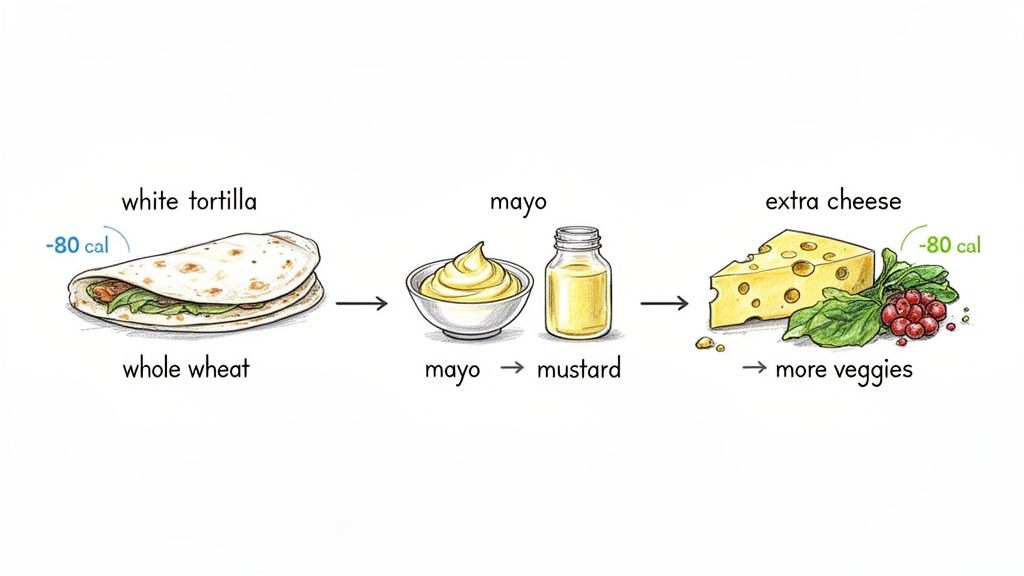
The strategy is to increase volume with low-calorie ingredients (such as vegetables) while reducing calorie-dense, high-fat components. This approach ensures your wrap is both satisfying and supportive of your health objectives.
Easy Swaps for a Lower Calorie Wrap
Consider these tips a toolkit for creating a delicious, diet-friendly wrap, whether at home or when ordering out.
- Swap the Tortilla: Replace a large, plain flour tortilla with a low-carb or whole-wheat version. This simple change can save over 100 calories and provides a boost of fiber for increased satiety.
- Pile on the Veggies: Be generous with high-volume, low-calorie vegetables like spinach, cucumbers, tomatoes, and bell peppers. They add texture, bulk, and nutrients for very few calories, making the wrap feel more substantial.
- Rethink Your Spreads: Instead of high-fat mayonnaise or ranch dressing, opt for flavorful, lower-calorie alternatives. Mustard, hummus, or a spread made from Greek yogurt are excellent choices that can easily save 80-150 calories.
Consider a real-world example: a wrap initially containing 528 calories can be reduced by 20-30% simply by swapping the bread for a thinner tortilla and replacing mayonnaise with a lighter filling. For inspiration, this healthy turkey wrap recipe on Beacon Health System's website offers a great template.
The key is to focus on nutrient density. Every ingredient should justify its inclusion by providing flavor, essential nutrients, or satisfying volume without a high caloric cost.
By mastering these swaps, you gain complete control over the calories in your turkey wrap, ensuring it is a meal that truly fuels your goals.
Got Questions About Turkey Wraps? We've Got Answers.
Here are answers to some of the most frequently asked questions about turkey wraps.
So, Is a Wrap Actually Healthier Than a Sandwich?
The answer depends entirely on the ingredients. Many people assume wraps are inherently lighter, but a large flour tortilla can contain more calories and refined carbohydrates than two slices of whole-wheat bread.
The determining factor is the filling. A wrap filled with fresh vegetables and lean protein is nutritionally superior to a sandwich made with processed meat and high-fat mayonnaise. Conversely, a sandwich with healthy fillings is a better choice than a wrap loaded with cheese and creamy dressing. It's the contents that matter most.
What’s the Best Tortilla to Use for a Low-Calorie Wrap?
To minimize calories, a low-carb or high-fiber tortilla is your best option. These specialty wraps typically contain between 50-80 calories.
Whole wheat or spinach tortillas are also solid choices, generally ranging from 90-130 calories. They offer the added benefit of extra fiber and nutrients compared to standard white flour tortillas.
How Much Protein Should I Put In My Wrap?
For a meal that promotes lasting satiety, aim for 20-30 grams of protein. This amount is effective for appetite control and supports muscle maintenance and repair.
This target is easily achievable with four to six ounces of lean turkey breast. To increase the protein content further, you can add a slice of low-fat cheese or use a spread made from Greek yogurt.