Protein Intake for Women Weight Loss: A Complete Guide
Unlock your weight loss goals with this guide on protein intake for women weight loss. Learn how much you need, the best sources, and how to track it easily.
When you're trying to lose weight, focusing only on cutting calories is a common mistake. The type of calories you consume is critically important, and prioritizing protein can be a game-changer. For women, scientific evidence suggests a target of 1.2 to 1.6 grams of protein per kilogram of body weight. This isn't an arbitrary number; it's a strategic range designed to help you lose fat while preserving precious, metabolically active muscle.
Think of protein as your most valuable partner on this journey.
Why Protein Is So Important for Weight Loss
Let's break down why focusing on protein is one of the smartest moves you can make. It works in three key ways to help you reshape your body and see faster, more sustainable results.
It Gives Your Metabolism a Natural Boost
Imagine your metabolism is a fireplace. Protein is like high-quality, slow-burning hardwood that keeps the fire roaring. This isn't just a nice analogy; it's a real biological process called the Thermic Effect of Food (TEF).
Your body actually has to work—and burn calories—to digest and process the food you eat. And it works much harder to break down protein than it does for carbs or fats.
In fact, your body burns up to 30% of the calories from protein just by digesting it. Compare that to the 5-10% for carbs and a tiny 0-3% for fats. By simply swapping some carbs or fats for protein, you're already giving your metabolism an automatic leg up.
It Helps You Control Cravings and Stay Full
Protein is also a champion when it comes to satiety, which is the feeling of being full and satisfied after a meal. It does this by modulating the hormones that regulate your appetite.
Eating a protein-rich meal helps your body produce more of the hormones that signal fullness (like peptide YY and GLP-1). At the same time, it lowers levels of ghrelin, the "hunger hormone" that tells your brain it's time to eat.
This hormonal teamwork is the secret to quieting those nagging cravings and stopping mindless snacking. When you feel truly full, you're much less likely to overeat, which makes sticking to a calorie deficit feel a whole lot easier. It's the difference between having eggs for breakfast and feeling satisfied for hours, versus having a bagel and feeling hungry an hour later.
It Protects Your Muscle (Your Body’s Fat-Burning Engine)
This might be protein's most important job during weight loss: preserving your lean muscle. When you cut calories, your body looks for energy wherever it can find it. Unfortunately, that sometimes means breaking down muscle tissue right along with body fat.
Losing muscle is the last thing you want. Muscle is metabolically active, meaning it burns calories even when you're resting. Losing it slows down your metabolism and can lead to that "skinny fat" look, where the number on the scale goes down, but your body composition doesn't really improve.
Getting enough protein gives your body the building blocks (amino acids) it needs to protect and repair muscle, even in a calorie deficit. This ensures the weight you lose is coming from fat, not muscle. Keeping that muscle keeps your metabolic engine revving high, making your weight loss more effective and much easier to maintain for good.
Calculating Your Ideal Daily Protein Intake
Alright, let's move past the general advice and figure out exactly how much protein you need. It's one thing to know protein is important, but it's another to have a concrete number to aim for each day.
The standard recommendation you might see, the Recommended Dietary Allowance (RDA), is 0.8 grams of protein per kilogram of body weight. Here's the catch: that number is for the average, mostly sedentary person, and its goal is simply to prevent deficiency, not optimize body composition. When you're an active woman looking to lose fat, your needs are entirely different.
Finding Your Optimal Protein Range
For women who are actively trying to lose weight by eating in a calorie deficit, the science is clear: you need more protein. A lot more.
The sweet spot for maximizing fat loss while holding onto precious, metabolism-boosting muscle is between 1.2 and 1.6 grams of protein per kilogram of body weight each day. This higher intake is crucial. It tells your body to keep your muscle tissue, helps fire up your metabolism, and does wonders for keeping you feeling full and satisfied.
Think of it like this: the standard 0.8 g/kg is like putting regular, low-octane fuel in a high-performance car. It’ll run, but not very well. The 1.2 to 1.6 g/kg range is the premium fuel your metabolic engine needs to perform at its best during weight loss.
While the average protein intake for women in some parts of the world can be quite low, studies repeatedly show that aiming higher delivers far better results. Research consistently points to getting 20%-30% of your total calories from protein to enhance satiety and protect muscle. One study even found that dieters who bumped their protein up to around 80 grams per day saw significant drops in body weight, fat mass, and waist circumference. You can dive deeper into these findings in this comprehensive scientific review.
Why a Higher Target Matters: If you stick to the basic RDA while dieting, you risk losing valuable muscle along with fat. Since muscle burns more calories at rest, losing it can slow down your metabolism, making future weight loss (and maintenance) much harder. The 1.2-1.6 g/kg range provides the essential building blocks to ensure the weight you're shedding is primarily fat.
This simple infographic breaks down how protein's power works on three fronts to help you reach your goals.
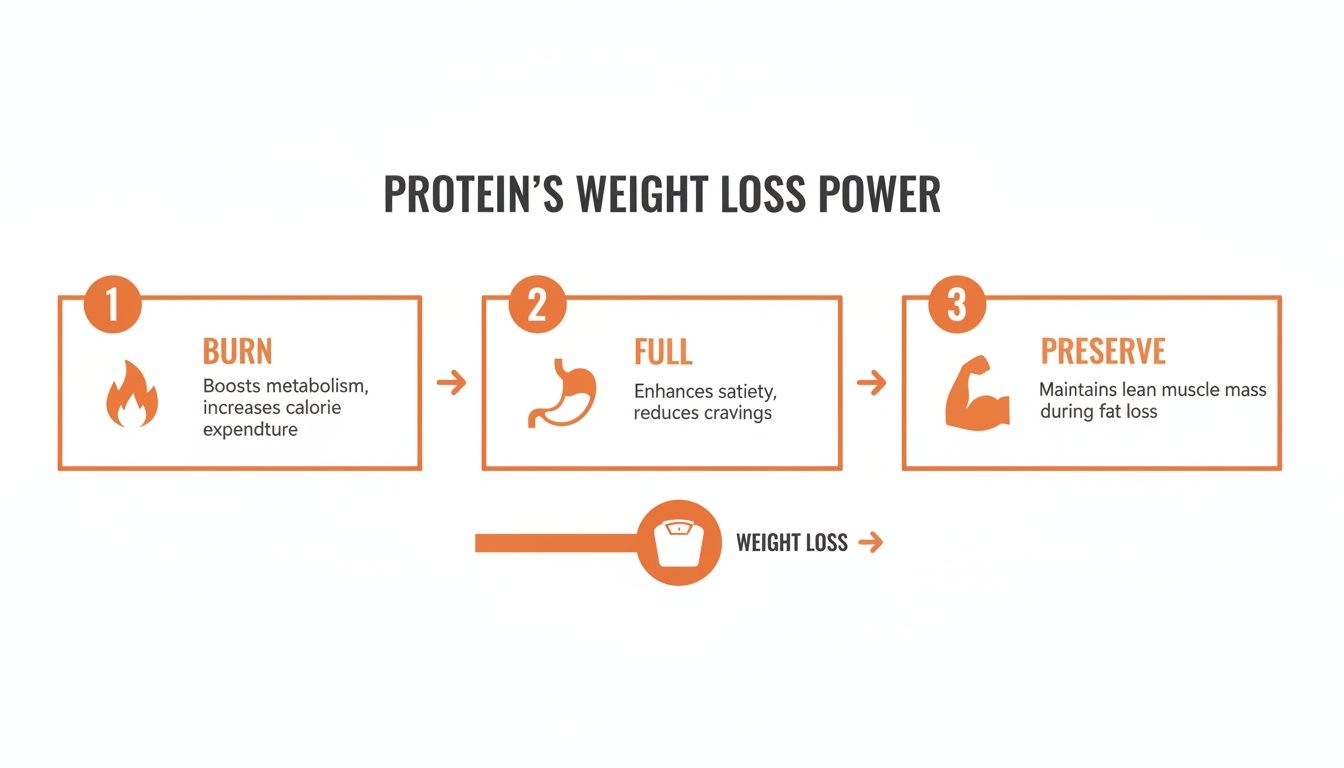
The real magic is that protein tackles metabolism, hunger, and muscle preservation all at once, making your efforts more efficient and sustainable.
To see how these recommendations compare, take a look at the table below. It clearly shows the difference between the baseline for general health and the optimized target for weight loss.
Daily Protein Intake Recommendations for Women
| Goal | Grams per Kilogram (g/kg) | Grams per Pound (g/lb) | Example (150 lb / 68 kg Woman) |
|---|---|---|---|
| General Health (Sedentary) | 0.8 g/kg | ~0.36 g/lb | ~54 grams |
| Weight Loss & Muscle Retention (Active) | 1.2 - 1.6 g/kg | ~0.54 - 0.73 g/lb | 82 - 109 grams |
As you can see, the needs for an active woman in a fat loss phase are significantly higher. This isn't about just getting "enough" protein; it's about using it strategically.
How to Calculate Your Daily Goal
Let’s turn this science into a simple, personal calculation. Don't worry, the math is straightforward.
- Find Your Weight in Kilograms: If you think in pounds, just divide your weight by 2.2.
- Calculate Your Protein Range: Multiply your kilogram weight by 1.2 for the low end of your target, and then by 1.6 for the high end.
Example Calculation for a 150 lb Woman:
Let's walk through it for a 150-pound woman.
-
Step 1: Convert pounds to kilograms.
- 150 lbs ÷ 2.2 = 68 kg (approximately)
-
Step 2: Calculate her daily protein range.
- Lower End: 68 kg x 1.2 g/kg = 82 grams
- Higher End: 68 kg x 1.6 g/kg = 109 grams
So, our 150-pound woman should aim for 82 to 109 grams of protein every day to get the best results from her weight loss efforts. This specific, personalized number turns vague advice into a clear, daily mission.
To make this even easier, you can skip the manual math and use our dedicated protein intake calculator for women to get your exact numbers in seconds.
The Science Behind High-Protein Diets for Women
The advice to eat more protein for weight loss isn't just a popular trend—it's a strategy rooted in solid science. Study after study shows a clear pattern: when women make protein a priority, they see better results. We're talking specifically about losing more fat while protecting the lean muscle that keeps your metabolism humming.
When researchers compare different diet plans, the ones with higher protein consistently outperform standard, lower-protein approaches. It’s not just about calories. Protein has a unique and powerful effect on your body's metabolism and composition.
Evidence from Real-World Studies
The connection between protein and a healthy body weight is surprisingly strong. A revealing 2023 study on women of reproductive age found that the average protein intake was a meager 0.8 grams per kilogram of body weight per day. That’s just enough to hit the bare minimum suggested by the World Health Organization.
But here’s where it gets interesting. Women in the study who ate even moderately more protein were far less likely to be overweight. The most stunning finding? Those with a high-protein intake saw their odds of obesity plummet, with an adjusted odds ratio of just 0.03 compared to those eating the least. You can dive into the full research on this protein and BMI connection yourself to see the powerful data.
Why This Scientific Proof Matters
This isn't just a bunch of numbers in a lab report; it translates directly to your health and your success on the scale. The evidence confirms that simply by eating more protein, you’re using a proven method to reshape your body for the better.
The science essentially provides a roadmap: increasing your protein intake is one of the most effective levers you can pull to accelerate fat loss while protecting your muscle mass. This prevents the metabolic slowdown that often sabotages long-term weight management.
Understanding the "why" behind this strategy can give you real confidence. You're not just hopping on a fad; you're using a biological principle to make your body work with you, not against you. This makes all your hard work more efficient and helps you build results that actually last. The data is clear—protein is a cornerstone of effective weight loss for women.
Building Your High-Protein Meal Plan
Knowing your personal protein target is the first step, but what does 100 grams of protein actually look like on a plate? This is where theory meets reality—and it can be a delicious one. Let’s translate those numbers into satisfying meals that will keep you full and power your weight loss journey.
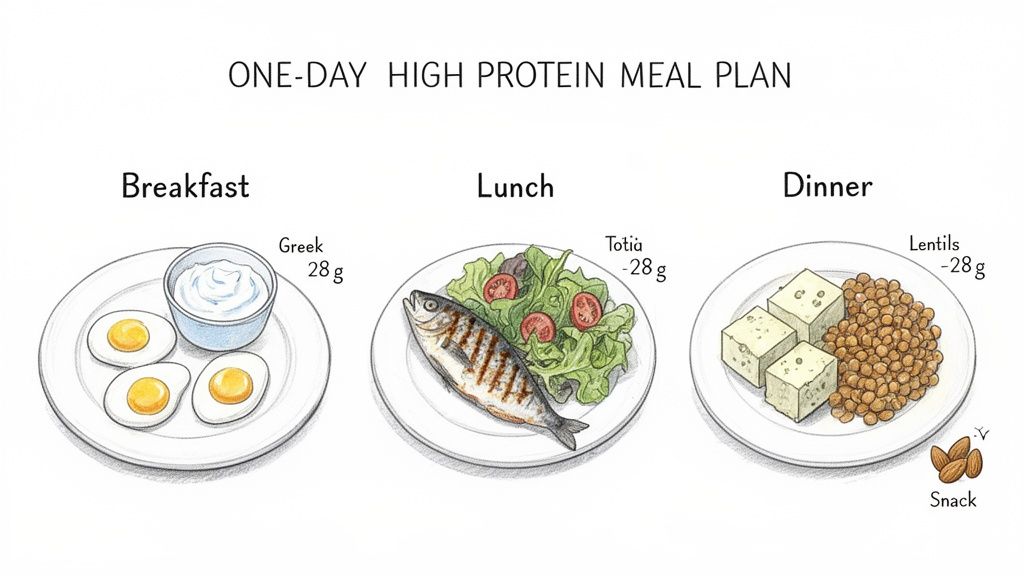
The secret to hitting a higher protein goal is simply planning ahead. When you have a structure for your day, you’re not left scrambling for good options when hunger strikes. This simple habit helps keep cravings at bay and stabilizes your energy levels all day long.
A Sample High-Protein Day
Let's say your goal is around 100 grams of protein for the day. Here’s a simple, whole-foods-based example of how you can hit that number without feeling like you're on a restrictive diet.
-
Breakfast (8:00 AM): 3 scrambled eggs with spinach and 1/2 cup of cottage cheese.
- Protein: ~25 grams
-
Lunch (12:30 PM): A big salad with 4 ounces of grilled chicken breast, mixed greens, and a light vinaigrette.
- Protein: ~30 grams
-
Snack (3:30 PM): A single-serving container of plain Greek yogurt (about 3/4 cup) mixed with a handful of almonds.
- Protein: ~22 grams
-
Dinner (6:30 PM): 4 ounces of baked salmon served with a side of quinoa and roasted broccoli.
- Protein: ~23 grams
Total Daily Protein: Approximately 100 grams
This is just one example, of course! It shows how easily you can build a satisfying menu around lean meats, fish, and dairy. If you're plant-based, swapping the chicken for tofu or the salmon for lentils will get you similar, impressive results. For even more inspiration, check out our guide on how to eat more protein.
The goal isn't restriction; it's smart substitution. By building each meal around a quality protein source, you naturally create a plate that is more filling and metabolically beneficial, making your calorie deficit feel effortless.
Common Food Portions and Their Protein Content
You don’t need to carry a food scale everywhere to succeed. Honestly, one of the most powerful skills you can develop is the ability to eyeball portions and estimate their protein content. This frees you up to build meals on the fly, wherever you are.
Here is a quick reference guide to help you estimate the protein in your meals without needing a scale for every item.
| Food Item | Serving Size | Approximate Protein (grams) |
|---|---|---|
| Chicken Breast (cooked) | 3 oz (size of a deck of cards) | 26g |
| Greek Yogurt (plain) | 1 cup (227g) | 22g |
| Salmon (cooked) | 3 oz | 22g |
| Eggs (large) | 1 egg | 6g |
| Cottage Cheese (low fat) | 1/2 cup | 14g |
| Lentils (cooked) | 1 cup | 18g |
| Tofu (firm) | 3 oz | 8g |
| Almonds | 1/4 cup (a handful) | 6g |
With this table as your guide, you can start mixing and matching to create countless combinations that fit your taste. If you realize you're a bit short on protein by the end of the day, no problem—adding a scoop of protein powder to a smoothie or having a high-protein yogurt for dessert is an easy fix. This flexible approach is what turns a diet into a sustainable lifestyle.
Effortless Tracking with Modern Tools Like BiteKit
Let’s be honest: consistently hitting your protein goals shouldn't feel like a second job. While manual tracking can work—the endless barcode scanning and database searching—it often leads to burnout. For busy women, the constant friction of traditional logging can turn a smart strategy into an impossible chore.
Thankfully, this is where modern tools can completely change the game. Imagine a smarter, faster way to track your protein that actually fits into your life.
The Smart Alternative to Manual Logging
Apps like BiteKit are designed to make tracking feel effortless. Instead of tedious manual entry, you can log your meals simply by taking a photo or just by speaking. This removes the biggest hurdles to consistency, turning a dreaded task into a quick, empowering habit.
For example, you could just say, "a scoop of protein powder with almond milk," or snap a picture of your chicken salad, and let the tech figure out the rest.
This is what simple, effective tracking looks like in action.
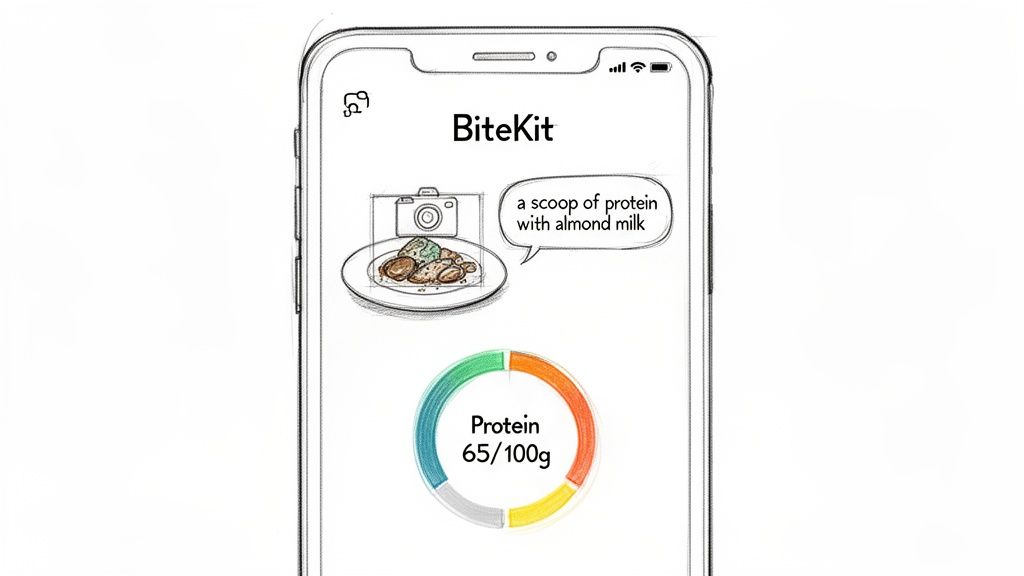
This screenshot captures the beauty of effortless logging—a simple voice command instantly becomes accurate nutritional data, including that all-important protein count.
By transforming tracking from a chore into a simple action, you’re far more likely to stick with it. This consistency is the key to achieving your protein intake goals and seeing the results you want.
Features like real-time progress bars give you immediate feedback, showing you exactly where you stand against your daily goal. This visual cue helps you make smarter food choices throughout the day. It’s not just about logging what you’ve already eaten; it’s about having the information you need to stay on track.
Best of all, some of the better apps prioritize your privacy by keeping your data on your device, with no accounts or cloud syncing required. This blend of ease, accuracy, and security allows you to focus on what truly matters: building healthy habits that last. If you're curious about different options, you can explore some of the best free nutrition tracking apps available today.
Busting Common Protein Myths and Sidestepping Mistakes
When it comes to protein and weight loss for women, there's a lot of noise out there. Let's cut through the confusion and tackle a few stubborn myths so you can focus on what actually works.
One of the biggest scare tactics you'll hear is that a high-protein diet will wreck your kidneys. For the vast majority of healthy, active women, this is simply not true. Your kidneys are powerhouses, built to filter waste products efficiently—including the byproducts of protein digestion. Unless you have a pre-existing kidney condition, increasing your protein intake to the levels we've discussed is perfectly safe.
Another myth that just won't quit is the idea that your body can only absorb 20-30 grams of protein at a time. While spreading your protein out is a great strategy for keeping hunger at bay and supporting muscle, your body can absolutely digest and use more than that in a single meal. Don't sweat the exact number in every sitting.
Practical Pitfalls to Watch Out For
Beyond the myths, a few common stumbles can trip you up on your weight loss journey.
A big one is leaning too heavily on supplements. Protein powders and bars are fantastic for convenience, but they should be a backup, not your primary source. Whole foods like lean meat, fish, eggs, dairy, and legumes offer a much broader spectrum of nutrients that you just can't get from a shake.
Another mistake is forgetting protein’s best friend: fiber. These two are a true power couple for weight management. A 2021 meta-analysis drove this point home, showing just how effective the combination is.
For instance, the iDip trial demonstrated incredible results: participants lost an average of 12.9% of their body weight by aiming for about 80g of protein and 20g of fiber each day. This duo keeps you feeling full for longer and supports a healthy gut, making the whole process feel much more manageable. You can dive into the details by exploring this comprehensive protein and fiber research here.
Common Protein Questions, Answered
Making the switch to a higher-protein diet usually brings up a few questions. That's completely normal! Let's walk through some of the most common ones so you can feel confident you’re doing it right.
How Should I Spread My Protein Intake Throughout the Day?
Think of your daily protein goal less as one giant number to hit by midnight and more as a series of smaller targets. The best approach is to distribute your intake evenly across your meals.
A great rule of thumb is to aim for 25-35 grams of protein at breakfast, lunch, and dinner. This steady trickle of protein does two fantastic things. First, it keeps your muscles in a constant state of repair and growth (a process called muscle protein synthesis).
More importantly for weight loss, it’s a game-changer for managing hunger. Spreading your protein out keeps you feeling full and satisfied all day long, which helps you sidestep those energy slumps and intense cravings that can lead you straight to the cookie jar.
Can I Get Enough Protein on a Plant-Based Diet?
Absolutely! While it requires a bit more intention, hitting your protein goals as a vegetarian or vegan is entirely possible. The trick is to be strategic about including a variety of high-quality plant-based sources in your diet.
Some of the best options include:
- Legumes: Lentils, chickpeas, and black beans are your best friends.
- Soy Products: Tofu, tempeh, and edamame pack a serious protein punch.
- Grains: Don't forget about protein-rich grains like quinoa and seitan.
- Nuts and Seeds: Almonds, chia seeds, and hemp seeds are easy to add to any meal.
Because most plant foods don't contain all the essential amino acids on their own, it’s a good idea to mix and match sources. Think of classic pairings like rice and beans—together, they create a complete protein, giving your body everything it needs.
The old idea that you can't get enough protein from plants is just a myth. With a little planning, you can easily fuel your body and meet your weight loss goals.
Do I Really Need to Use Protein Powders?
Nope, protein powders aren't a requirement. But they are an incredibly convenient tool to have in your toolbox. Your first priority should always be getting protein from whole foods, which offer a full spectrum of nutrients like vitamins, minerals, and fiber.
That said, a quality protein powder can be a lifesaver. It’s perfect for a quick shake after a workout when your muscles are screaming for recovery, or for boosting the protein in your morning smoothie when you're rushing out the door.
Think of supplements as your backup plan. They’re there to help you hit your daily number consistently, especially when life gets hectic. Just remember they are meant to supplement a healthy diet, not replace it.