Find Your Simple Weight Loss App for Lasting Results in 2026
Tired of complex diets? A simple weight loss app can be your key to sustainable health. Learn how to choose the right app and build habits that stick.
Starting a weight loss journey often feels like you're standing at the bottom of a mountain. But the right tool can make the climb feel less like a struggle and more like a series of manageable steps. A simple weight loss app does just that—it gets out of your way so you can focus on building habits that actually last.
This guide will explore the science-backed principles that make these apps effective, covering topics from habit formation and the psychology of self-monitoring to the practical benefits of different dietary approaches.
Why Simplicity Is Your Secret Weapon for Weight Loss
Think about the last time you tried a new health plan. Did you feel overwhelmed by complicated rules and endless tracking? Most weight loss apps ask you to track every bite, but that means wrestling with huge food databases, scanning barcodes that refuse to register, or manually calculating the ingredients in your homemade chili.
That initial hassle is exactly why so many well-intentioned efforts fizzle out. The best tool is the one you'll actually use consistently. A simple weight loss app understands this. It’s not a drill sergeant barking orders; it’s a quiet partner, helping you stay mindful of your choices without adding more chaos to your day.
Overcoming the Friction of Tracking
The real secret to any lasting change is consistency. Behavioral science has shown us time and again that the easier a new habit is, the more likely we are to stick with it. If logging your lunch takes five minutes and a dozen taps, it quickly becomes a chore you’ll find excuses to skip.
The point of tracking isn’t just to count calories—it's to build a rhythm of awareness with as little effort as possible. Simplicity makes that possible by making the act of logging almost an afterthought.
Imagine logging your entire breakfast in just a few seconds, instead of battling a clunky interface. That's the difference. A simple app is built from the ground up to eliminate that friction, turning a tedious task into a quick, satisfying check-in.
Visual Progress That Motivates
Beyond just making logging easier, a great app knows how to show you your progress in a way that actually keeps you going. A screen flooded with complex charts and endless data points can be more confusing than helpful. In contrast, clean, simple visuals give you the feedback you need at a glance.
A simple weight loss app focuses on what matters:
- Clear Daily Goals: You can see instantly where you stand with your calorie and macro targets for the day. No digging required.
- Simple Trend Lines: Instead of obsessing over daily weight fluctuations, you can watch your progress trend downward over weeks and months. That’s real motivation.
- Visual Meal History: A quick scroll through past days helps you spot your own patterns—like that afternoon snack you always reach for.
This clarity turns a mess of numbers into a compelling story of your own hard work. It helps you see and celebrate the small wins, proving that simplicity isn’t about fewer features—it's about having the right features that genuinely drive results.
What Makes a Weight Loss App Truly Simple and Effective?
If you've ever searched for a "simple" weight loss app, you know the App Store throws a hundred different options at you, all promising to be the easiest. But what does "simple" even mean when it comes to tracking your food? It’s not about having the fewest features. It’s about having the right ones that make logging your meals feel like a reflex, not a chore.
A great app is less like a cluttered toolbox with a dozen wrenches you'll never use, and more like a single, perfectly balanced multi-tool. It's built for speed and consistency, not for making you spend five minutes digging through a database just to log a salad. This is the crucial difference between an app you’ll ditch after a week and one that actually helps you build lasting habits.
The Core Features That Matter Most
A genuinely simple app gets out of your way. It’s designed to be so fast and intuitive that tracking supports your day instead of interrupting it. The whole point is to make monitoring what you eat so effortless you barely notice you're doing it.
Here are the non-negotiable features that make this possible:
- Effortless Meal Logging: This is the big one. You should be able to log a meal with a quick photo, a voice note like "bowl of oatmeal with blueberries," or just a few typed words.
- Instant Calorie Estimates: The app should do the heavy lifting. Whether you're eating a homemade stew or a dish from a restaurant, it needs to instantly analyze your entry and give you a reliable estimate for calories and macros. No more manual calculations.
- Clean, Intuitive Progress Charts: Your progress shouldn't be hidden in a mess of numbers. Clear, simple graphs that show your weight trend over time or your daily intake against your goal help you see the big picture at a glance.
Why Your Data Privacy is Non-Negotiable
Your health journey is incredibly personal. The food you eat, your weight, your daily habits—this isn't information you want floating around on some company's server. A major, and often overlooked, sign of a modern, trustworthy app is how it handles this sensitive data.
Most apps today push you to create an account, syncing all your information to the cloud. While that might sound convenient, it means you've handed over control of your personal data.
Your health data belongs to you, period. An app that stores everything locally on your device gives you complete control and ensures your private journey stays private.
This local-first approach means no accounts to create, no cloud servers, and no risk of your data being sold or exposed in a breach. It’s a foundational piece of a truly reliable tool. You get all the power of tracking and analysis without ever having to compromise your privacy, letting you focus entirely on what matters: your goals.
The Science of How Consistent Tracking Drives Results
So, does just writing down what you eat actually work? It sounds almost too simple, but the science behind it is solid. The core principle at play is self-monitoring, and it’s a powerful psychological tool. When you consistently observe your own behavior, you can’t help but become more aware of it, and that awareness is the first step toward change.
Think about it: every time you log a meal, you’re turning a mindless habit into a conscious choice. A simple calorie counting app is designed to make this moment of awareness as quick and painless as possible. When tracking isn't a chore, it becomes a small, reinforcing action you can stick with day after day.
The Power of the "Dose-Response" Effect
In the world of health and medicine, there’s a concept called the dose-response relationship. This principle states that the effect of a certain exposure is related to the amount of that exposure. For weight management, the "dose" is the frequency of self-monitoring.
The more consistently you log, the better your results tend to be.
A 2017 study published in the Journal of Diabetes Research found a significant correlation between the frequency of dietary self-monitoring and weight loss outcomes. Participants who tracked their intake more consistently achieved greater weight loss.
This is precisely why the design of a simple app is so important. By cutting out the friction—the clunky databases, the endless manual entries—it encourages you to "take your dose" every single day. That high frequency of engagement is what the research shows works best.
This chart breaks down how different app features either help or hinder that daily consistency.
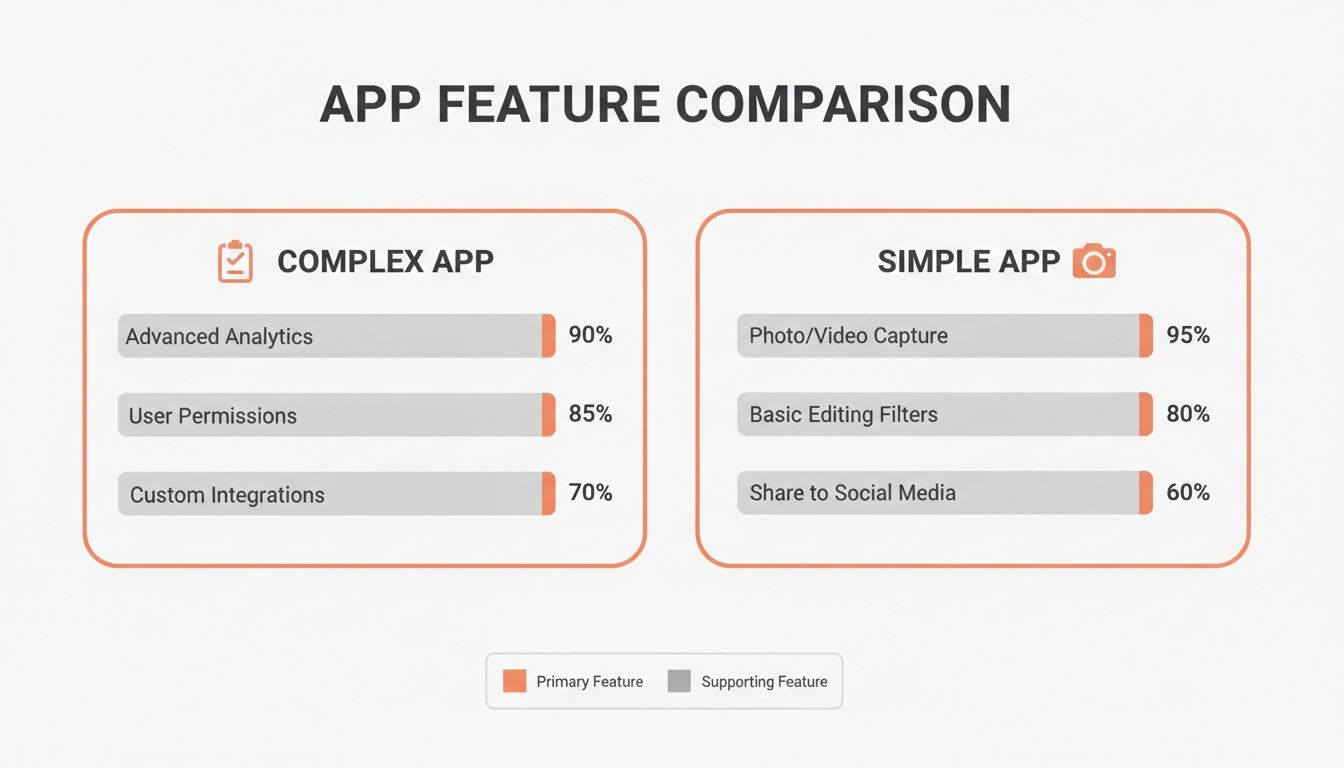
As you can see, features that prioritize speed and ease, like photo logging, directly lead to people sticking with the program far more than those requiring tedious manual effort.
What Real-World Data Shows Us
This isn't just theory; we see it play out with real people. A study published in JMIR mHealth and uHealth analyzed data from a mobile weight loss app and found that higher engagement was directly linked to better results. The most active users lost a clinically significant amount of weight.
What's really fascinating is how clear the dose-response effect was. For every 10% increase in app usage frequency, users achieved additional, measurable weight loss.
This connection held true even when researchers accounted for things like age or starting weight. It proves that the simple, consistent act of paying attention is what truly drives results. At the end of the day, a simple weight-loss app works because it makes the proven strategy of self-monitoring easy enough to become a daily habit—and that’s how real, sustainable change happens.
Choosing the Right App for Your Personal Lifestyle
With a seemingly endless number of apps all promising the world, just picking one can feel overwhelming. The real secret is to look past the flashy ads and think about how a tool will actually slot into your daily life. An app that’s perfect for a pro athlete could be a total disaster for a busy parent.
You're looking for something that feels like a helpful sidekick, not another chore to dread. The right app removes friction; the wrong one adds it. To find the right fit, you have to get honest about how you live and what you’ll actually stick with.
Evaluate the Core Logging Method
Here’s the make-or-break feature: how you actually log your food. If it’s slow, clunky, or confusing, you’re just not going to do it for long. And when it comes to weight loss, consistency is everything. That makes speed and simplicity non-negotiable.
Think about your most hectic days. Do you really have the time to individually search for lettuce, tomatoes, cucumbers, and dressing for your lunch salad? Or would a faster, more intuitive method serve you better?
- Photo Logging: Can you just snap a picture of your plate and let the app do the heavy lifting? This is often the quickest method, especially for complex or homemade meals.
- Voice Logging: Are you the type of person who would rather just say, "I had a bowl of oatmeal with almonds"? Voice entry can be a lifesaver when you’re driving or juggling a million things.
- Text Entry: Does the app understand natural language, like "two eggs and a slice of toast"? Or does it make you hunt for each item separately in a database?
Taking a closer look at the best meal tracking app options is a great way to see these different methods in action. Finding a logging style that clicks with you is the foundation of long-term success.
Align App Goals with Your Goals
A truly simple weight loss app should work for you, not force you into a generic plan. One-size-fits-all goals are a recipe for frustration because your health journey is entirely your own.
Look for an app that gives you control. Can you set specific targets for calories, protein, carbs, and fats? If your goal isn't just about the number on the scale but also about building muscle or having more energy, you need that control over your macronutrients. This kind of personalization means the app is actually helping you reach your definition of success.
The right app empowers you by providing a clear path to your personal targets. It should give you the flexibility to adjust your goals as your needs change over time.
Finally, a quick but important note on privacy. Think about where all your personal health data is going. An app that stores your information locally on your own device gives you complete peace of mind, ensuring your journey stays private. You can get a better sense of why this matters by learning how an easy food tracking app should handle your data.
Integrating Fitness and Diet: A Holistic Approach
While a simple app focuses on food intake, sustainable weight loss is a result of both diet and physical activity. The most effective strategies combine a caloric deficit with regular exercise. A 2012 meta-analysis in the Journal of the Academy of Nutrition and Dietetics concluded that combining diet and exercise led to greater weight loss than diet or exercise alone.
Finding a Fitness Routine You Enjoy
The "best" exercise is the one you will do consistently. Whether it's walking, strength training, dancing, or cycling, find something that feels less like a punishment and more like a reward.
- Strength Training: Builds muscle, which increases your resting metabolic rate. This means you burn more calories even when you're not active.
- Cardiovascular Exercise: Excellent for heart health and burning calories. High-Intensity Interval Training (HIIT) has been shown to be particularly effective for fat loss in a shorter amount of time.
- Daily Movement: Don't underestimate the power of Non-Exercise Activity Thermogenesis (NEAT)—the calories burned from activities like walking to the store, taking the stairs, or fidgeting. A simple app can motivate you to increase this daily movement.
The Role of Different Diets
There is no single "best" diet for everyone. The key is finding an eating pattern that you can sustain. A simple weight loss app can support various approaches by helping you track intake regardless of the specific diet.
- Low-Carb/Keto: Focuses on high fat and protein, minimizing carbohydrates. Tracking is crucial to ensure you stay in ketosis.
- Intermittent Fasting (IF): Cycles between periods of eating and fasting. An app helps track eating windows and total daily intake.
- Mediterranean Diet: Emphasizes whole foods, healthy fats, and lean proteins. This approach is linked to numerous long-term health benefits beyond weight loss.
A simple app is a versatile tool that adapts to your chosen fitness and dietary strategy, providing the data you need to stay on track.
Building Sustainable Habits That Go Beyond Logging
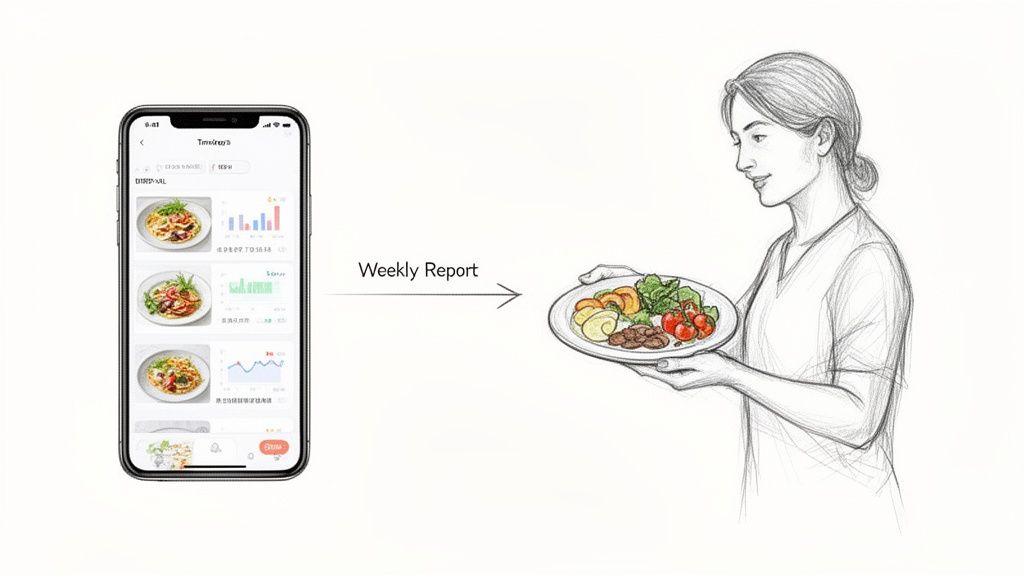
Let's be honest—no one wants to track their meals in an app for the rest of their life. The real goal is to get to a place where healthy choices are second nature. A good, simple weight loss app understands this. It’s supposed to be like training wheels for nutrition, a tool you use to learn, practice, and eventually outgrow.
Think of the first few weeks as your own personal nutrition course. Logging what you eat shines a bright light on your habits. This is where you connect the dots between the food you eat and the numbers on the screen—calories, protein, carbs. It’s the process of making the invisible visible, turning automatic eating into a series of conscious decisions.
That awareness is where the magic starts. The app slowly stops being a strict rulebook and starts becoming a personal diary, revealing how your food choices impact your energy, your mood, and your waistline.
Transitioning From Tracking to Mindful Eating
After you've been logging consistently for a while, you'll have a goldmine of data about your own habits. This is the moment to put on your detective hat and start looking at your weekly reports and daily entries. The real learning happens when you start asking why.
You'll quickly begin to spot your own unique patterns:
- Trigger Foods: Notice you grab a handful of chips every day around 3 p.m.? Seeing that logged consistently makes it impossible to ignore the habit.
- Portion Distortion: After a while, you won't need the app to tell you what 4 ounces of chicken looks like. You’ll just know. That knowledge moves from the app into your brain.
- Meal Timing and Energy: Does skipping breakfast always lead to a huge, late-night dinner? Your log history will lay out the evidence in black and white.
The app’s job changes from a simple data-entry clerk to your personal nutrition analyst. It gives you the hard facts you need to understand your own behavior and make smart changes.
This is how you truly learn what works for your body. You start making better choices not because an app sent you a notification, but because you understand the consequences. Eventually, you’ll be able to eyeball portion sizes and build a balanced plate without a second thought.
At that point, the training wheels can come off. The app has done its job. If you are exploring different apps, a good comparison guide can point you toward the best apps for weight loss that fit what you're looking for. Wondering what your path could look like? Our weight loss timeline calculator can help you visualize your potential progress.
Frequently Asked Questions About Simple Weight Loss Apps
Jumping into the world of health apps can definitely bring up a few questions. Let's clear up some of the most common ones you might have about using a simple app for weight loss.
Do I Have to Track My Food Forever?
That’s a great question, and the answer is a firm no. Think of a good weight-loss app as a set of training wheels, not a permanent part of your bike. In the beginning, tracking is your best friend for learning about your own habits, what portion sizes actually look like, and which foods are more calorie-dense than you thought.
But you're not meant to be a student forever. As you consistently log your meals, that knowledge starts to sink in. You’ll begin to eyeball portion sizes accurately and make healthier choices automatically, without even thinking about it. The goal is for the app to guide you toward mindful eating, giving you the skills and confidence to keep the weight off on your own.
How Accurate Is AI-Powered Food Logging?
For the purpose of steady, sustainable weight loss, it's remarkably good. It might not get every single gram or calorie perfect down to the decimal, but it's more than accurate enough to keep you on track and get you the results you're after.
The real magic of AI isn't about being flawless. It’s about drastically cutting down the effort it takes to log your food. By making tracking quick and painless, you’re far more likely to stick with it—and consistency is the single biggest key to success.
What if I Eat a Complex Homemade Meal?
This is where a modern, simple app really flexes its muscles and solves one of the oldest frustrations with food tracking. Forget trying to manually add every last ingredient from your grandma's famous stew or that stir-fry you just threw together.
Instead, you just snap a photo of the bowl. Or, you could use a quick voice note like, "a bowl of chicken stir-fry with rice." The app's AI takes a look, identifies what's in there, estimates the amounts, and gives you a solid calorie and macro estimate for the whole dish. It turns a five-minute research project into a ten-second tap.