Whole Wheat Wrap Nutrition: A Complete Explainer
Unlock the real whole wheat wrap nutrition facts. Learn about calories, macros, fiber, and how to choose the best wraps for your health and fitness goals.
Buying a package labeled whole wheat feels like a smart move. For a lot of people, that label ends the decision.
That’s where wrap choices start going off track.
Some wraps are solid staples for meal planning. Others carry a healthy halo while sneaking in trade-offs that matter if you care about calories, fiber, satiety, blood sugar, or sodium. A wrap can support fat loss, training, or easier lunches. It can also make those goals harder if you assume every brown tortilla is basically the same.
Whole wheat wrap nutrition only makes sense when you stop treating wraps as a category and start treating them as products with very different labels. Size matters. Ingredient order matters. Fiber matters. Sodium matters more than commonly assumed. And if you’re tracking macros, the fillings can matter just as much as the wrap itself.
The Healthy Habit That Might Be Sabotaging You
A lot of common advice around wraps is too simple. It goes like this: choose whole wheat instead of white, and you’ve made the healthy choice.
That advice breaks down in real grocery stores.
Some wraps labeled as wholesome are useful tools for balanced eating. Others are large enough to eat like a meal before you even add fillings. Some have decent fiber but more sodium than people expect. Some are made to sound like whole grain products while delivering a less impressive nutrition profile than the packaging suggests.
That matters if you're trying to lose weight, stay full longer, or build meals that fit your macro targets. A wrap can be the foundation of a practical lunch. It can also become the thing that pushes the meal into a calorie-heavy, sodium-heavy zone without much warning.
Whole wheat wrap nutrition isn't just about whether the package looks healthy. It's about what that specific wrap gives you per serving, and what it costs you in trade-offs.
The biggest mistake I see is treating the wrap as nutritionally neutral. People focus on chicken, turkey, hummus, or avocado and forget the base. But the base often carries a meaningful chunk of the calories and carbs, and sometimes a surprising amount of sodium.
If you want wraps to work for you, the fix isn't to avoid them. The fix is to get more precise. Read the label. Compare brands. Pair them better. Track the full meal instead of guessing. That’s how wraps become a reliable part of a diet instead of a “healthy” habit that subtly works against it.
Decoding the Nutrition Label of a Whole Wheat Wrap
A nutrition label tells you whether a wrap is a smart staple or just good packaging. One standard example gives a useful baseline. A 12-inch whole wheat wrap provides 270 calories, 49g total carbohydrates, 5g dietary fiber, and 8g protein, along with 10% DV calcium and 15% DV iron according to the Kontos 12-inch whole wheat wrap nutrition label.
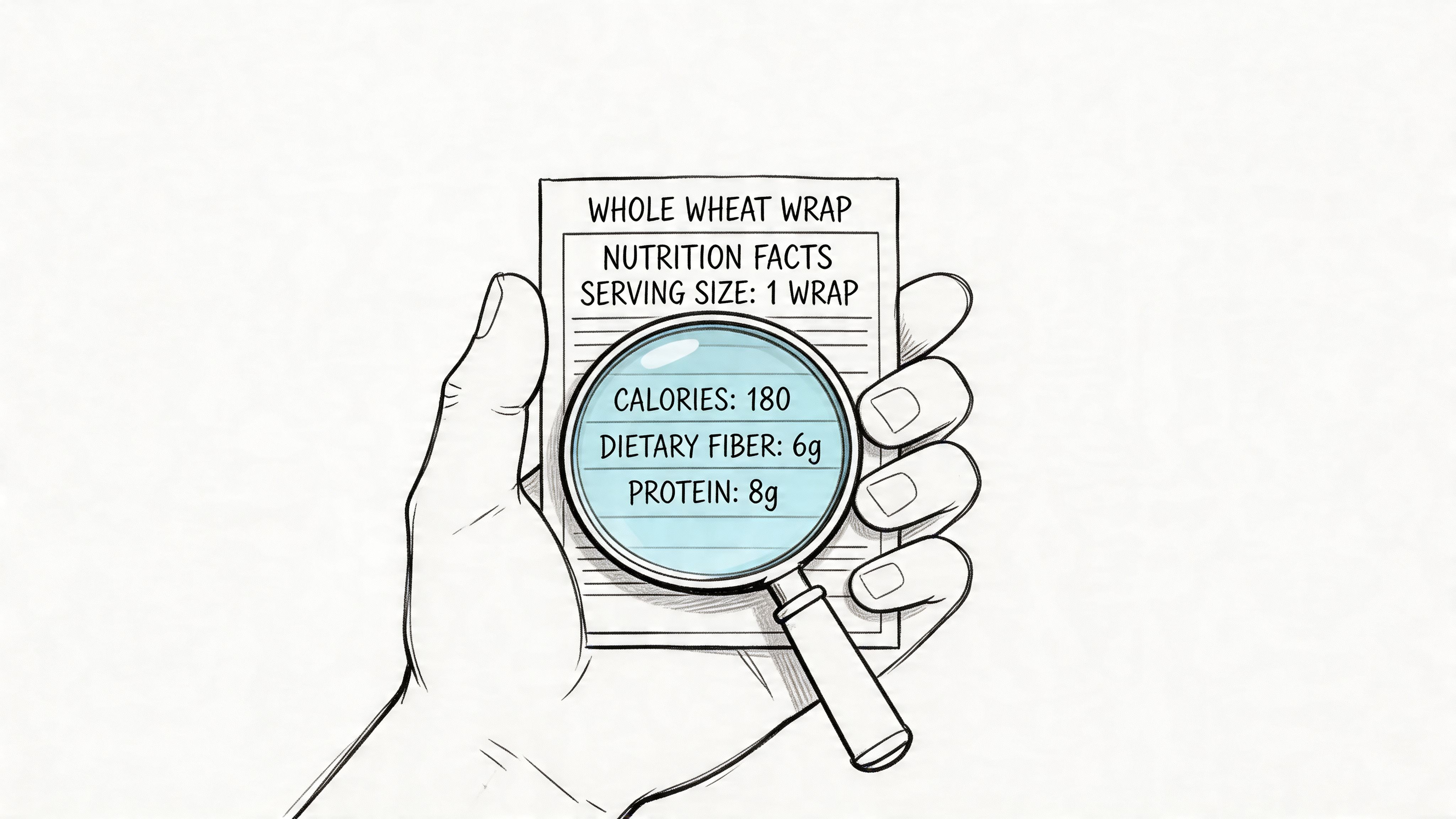
Start with serving size
The first thing to check is the size of the wrap. A large burrito-style wrap isn't nutritionally comparable to a smaller tortilla, even if both say whole wheat on the front.
If you skip serving size, the rest of the label gets misleading fast. You're not comparing products. You're comparing different portions.
What the calories and macros actually mean
270 calories for the wrap alone is manageable in some meals and too much in others. It depends on what you add.
A wrap like this already contributes a large share of the meal’s carbohydrate total at 49g carbs. That isn't automatically a problem. It just means the wrap isn't a side detail. It’s a major part of the meal structure.
The 8g protein helps, but it won't carry satiety on its own. Protein from the wrap is a bonus, not a substitute for a real protein source like eggs, chicken, tofu, beans, or Greek-yogurt-based fillings.
Fiber is the part many people undervalue
The most useful part of whole wheat wrap nutrition is often fiber. In this example, the wrap provides 5g dietary fiber, which is a meaningful amount for one item.
Think of fiber as a digestive traffic controller. It slows things down. Food moves through the system in a steadier way, and that usually means better fullness and less of the sharp rise-and-drop feeling that can happen after lower-fiber refined carbs.
That’s why a whole wheat wrap often feels more satisfying than a refined flour version, even when the calorie gap isn’t dramatic.
Practical rule: If a wrap claims to be healthy but the fiber looks weak for its size, treat the front label as marketing and trust the nutrition panel instead.
Micronutrients still matter
Calories and macros get the attention, but the wrap also contributes minerals. This example includes calcium and iron, which adds value if wraps are a frequent part of your routine.
If nutrition labels still feel harder to interpret than they should, this guide on how to read nutrition labels is a useful companion when you're comparing wraps in the store.
Why Not All Whole Wheat Wraps Are Created Equal
“Whole wheat” sounds like a reliable shortcut. It isn’t. In the wrap aisle, that label can describe products with very different calories, carb loads, sodium levels, and ingredient lists.
That matters if you track macros or rely on wraps as a routine lunch base. A wrap can fit your plan well, or unexpectedly make the meal much heavier than you intended.
The label on the front is usually the least useful part
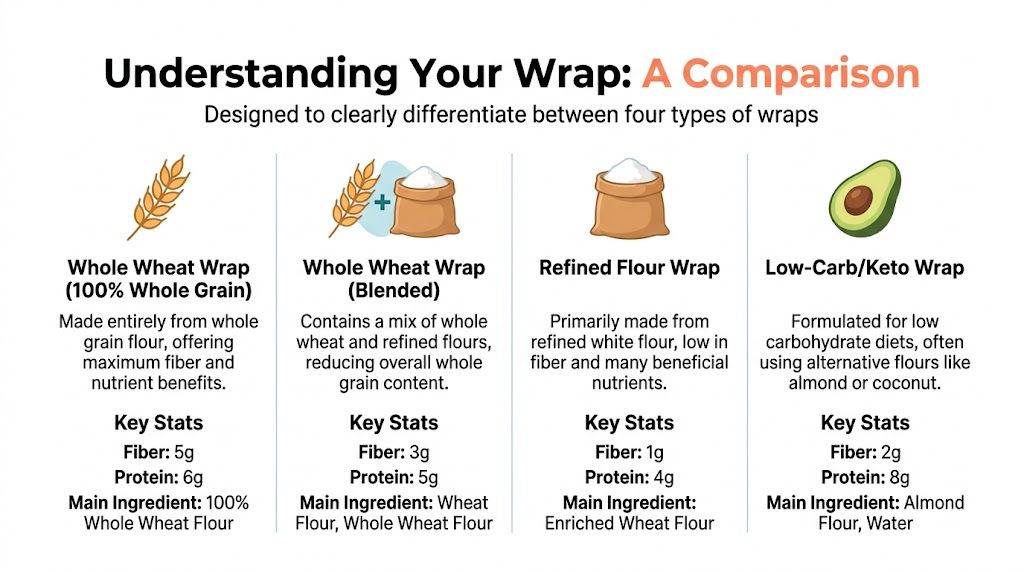
Two wraps can both say whole wheat and still perform very differently in a meal plan. One may be a smaller tortilla with moderate carbs and a modest calorie count. Another may be a large burrito-style wrap that adds far more calories before you put anything inside it. Low-carb versions shift the equation again by changing the fiber content, starch profile, and often the texture.
Size is a big reason people miscalculate wraps. A small tortilla and an oversized sandwich wrap are not interchangeable, even if the packaging uses the same health-focused language.
Here’s a practical comparison using verified examples.
| Wrap Type (Approx. 45-70g) | Calories | Total Carbs (g) | Dietary Fiber (g) | Protein (g) | Sodium (mg) |
|---|---|---|---|---|---|
| Whole wheat tortilla, smaller format | 130 | 25 | 3 | 4 | not specified in this source |
| Whole grain tortilla, school-style serving | 120 | 20 | 3 | 4 | 340 |
| Average smaller serving | 102 | 15 | not specified in this source | 3.2 | not specified in this source |
| Low-carb wrap example | 45 | not specified in this source | 9 | 3 | not specified in this source |
A difference like that changes the whole meal. If the wrap is larger, the fillings often grow with it. More sauce, more cheese, more meat, more calories.
Sodium is where many “healthy” wraps lose ground
Calories and fiber get attention. Sodium often gets skipped.
That is a problem because wraps are rarely eaten plain. If the base is already salty, then deli turkey, cheese, bottled dressing, buffalo sauce, or hummus can push the meal up fast. The Center for Science in the Public Interest points out that some whole grain products marketed as better choices still carry substantial sodium, as shown in CSPI’s guide to spotting better whole grain wraps and breads.
For clients who feel like their “healthy lunch” leaves them bloated or extra thirsty, I usually check sodium before anything else.
What actually matters when you compare brands
Start with serving size. Then check calories, carbs, fiber, protein, and sodium in that order based on your goal.
- For fat loss or tighter calorie targets: compare wrap size first, because larger wraps can erase the benefit of a lean filling.
- For appetite control: choose brands with stronger fiber numbers and enough room in your budget for a real protein source.
- For lower-sodium meal prep: keep the wrap’s sodium moderate so fillings do not push the total too high.
- For macro tracking: log the exact brand. Generic entries are where wrap math usually goes wrong.
If you use an app like BiteKit, this is one of those foods worth logging precisely instead of estimating. Brand variation is wide enough that “whole wheat wrap” is often too vague to be useful.
A whole wheat wrap is only a good choice if the nutrition panel matches the job you need it to do.
Health Benefits and Potential Drawbacks of Whole Wheat Wraps
A whole wheat wrap can help your diet, or make your numbers harder to manage. The difference usually comes down to the brand, the ingredient list, and whether the wrap fits the meal you are building.
Where whole wheat wraps earn a place
Whole wheat flour keeps more of the grain intact than refined white flour, so wraps made primarily from whole wheat tend to bring more fiber and a broader nutrient profile. In practice, that matters most for satiety and meal quality. A wrap with decent fiber usually holds you better than a low-fiber white wrap stuffed with the same filling.
Convenience matters too.
For busy clients, wraps often beat bread because they travel well, portion a meal clearly, and make it easier to pair carbs with protein and vegetables in one portable lunch. Adherence improves when the food is easy to repeat.
Whole grain products can also be a useful upgrade for meals you already like. If someone enjoys pizza flavors but wants more fiber in the base, a whole wheat pizza recipe shows the same principle in a different format.
Where they can work against you
The healthy halo is the problem.
A package can say "whole wheat" and still deliver a wrap that is light on fiber, high in sodium, or larger than your calorie budget allows. Some brands are basically a bigger carb vehicle with better branding. If you are tracking fat loss, appetite, or sodium, that distinction matters more than the front label.
Processing is part of the trade-off. A shelf-stable wrap is convenient, but convenience foods often rely on added sodium, oils, conditioners, and gums to hold texture and extend freshness. That does not make the product automatically bad. It does mean the wrap should be judged as a packaged food, not given a free pass because the word "whole" is on the bag.
I see this a lot with lunch wraps that look disciplined on paper and still leave people stalled. The wrap itself is not the whole problem, but it can be the part they forgot to count accurately.
A better standard for deciding
Use the wrap for what it is. A carb base with some potential upside.
A stronger option gives you useful fiber, reasonable calories for its size, and room in your day for the fillings that make the meal satisfying. A weaker option eats up calories and sodium before the protein even goes in. If you want a practical reference point for portions and meal totals, this guide to calories in a chicken wrap shows how quickly wrap ingredients can shift the full macro picture.
A whole wheat wrap is a good choice only if the nutrition label supports your goal, not just the marketing.
Building Balanced Meals with Whole Wheat Wraps
The wrap itself is only half the story. The meal quality changes fast depending on what goes inside.
A medium whole wheat tortilla has a moderate glycemic load of 9 to 14, and pairing it with protein and healthy fats such as avocado, grilled vegetables, or chicken can slow glucose absorption and improve satiety, according to the Blue Circle Foundation’s discussion of whole wheat tortillas.
Breakfast that holds up
A whole wheat wrap with eggs, sautéed spinach, and a little avocado works well when you need a breakfast that lasts longer than cereal or toast.
The wrap gives structure. The eggs do the heavy lifting on protein. The avocado and vegetables slow the meal down and usually make it more satisfying.
This kind of breakfast also travels well, which matters more than people admit. A good nutrition plan has to survive a commute.
Lunch that doesn't fall apart by 3 p.m.
A practical lunch wrap usually needs three things:
- A real protein source: grilled chicken, turkey, tofu, paneer, or chickpeas
- Volume from produce: lettuce, cucumber, peppers, shredded cabbage, tomatoes
- A smart spread: hummus, Greek yogurt dressing, avocado, or bean spread
That combination tends to work better than the common “protein plus cheese plus sauce” formula, which can turn into a heavy but oddly unsatisfying meal.
If you want another whole grain meal idea outside the wrap format, this whole wheat pizza recipe is a useful reminder that whole wheat doesn’t have to be bland to be practical.
For people who frequently buy lunch wraps out, this breakdown of how many calories in chicken wrap helps calibrate expectations before you assume every chicken wrap is lean.
Dinner that stays light but satisfying
At dinner, wraps work best when you stop treating them like burritos. A lighter build often tastes better and sits better.
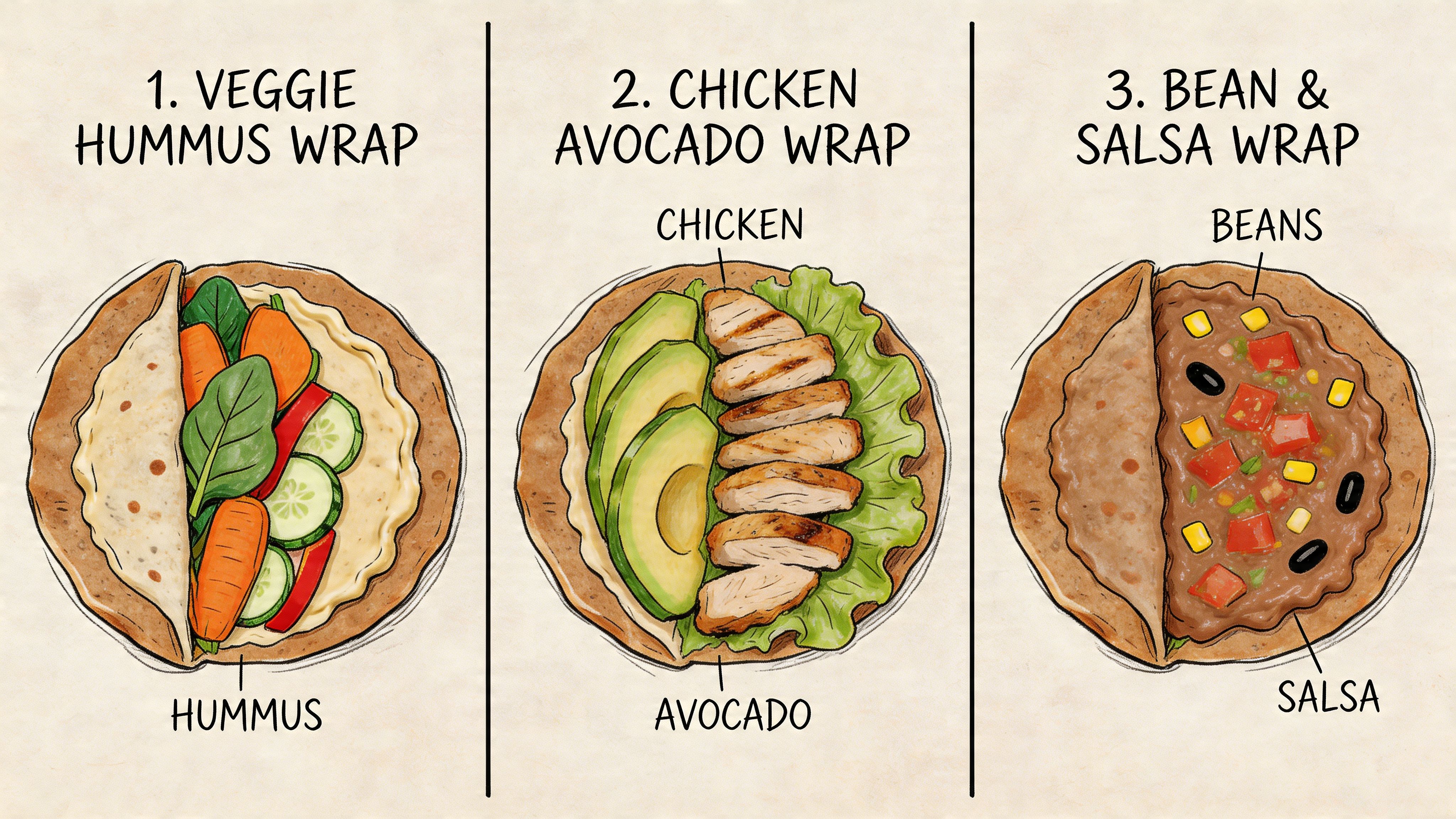
Try a hummus-and-roasted-vegetable wrap with crunchy greens, or a bean-and-salsa wrap with extra cabbage and herbs. These versions usually deliver better texture and fullness than overstuffed wraps loaded with cheese and creamy dressing.
A quick demo can help with assembly ideas and filling combinations:
Pairing is the difference between a wrap that keeps you steady and one that leaves you hungry again too soon.
Effortless Logging for Smarter Nutrition Choices
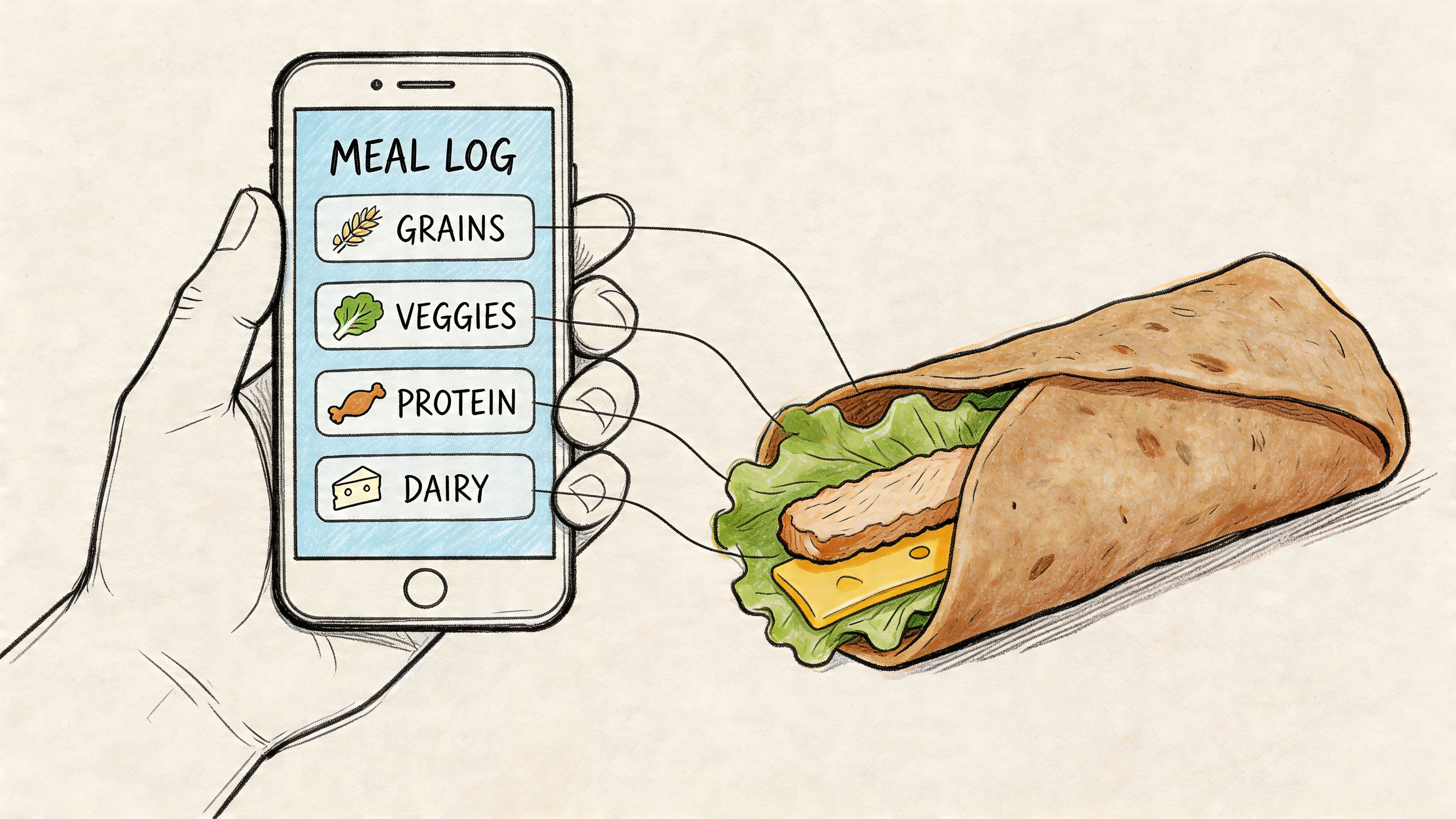
Homemade wraps are deceptively hard to track.
The wrap has one label. The chicken may be cooked in oil. The avocado was eyeballed. The hummus was “about a spoonful.” By the time you try to log it manually, individuals often either guess or skip it.
Why precision matters more with wraps
The problem with wraps isn't that they're unhealthy. The problem is that they combine several ingredients that are easy to underestimate.
Verified nutrition data shows that a 270-calorie whole wheat wrap with 49g carbs and 8g protein can be paired with 150g of lean protein to maintain a 40/30/30 macro split for muscle repair, according to the University of Maryland nutrition label reference. That kind of planning only works if the logging is close enough to reality.
Lower-friction ways to log them
A few methods work better than manual database hunting:
- Photo logging: snap the finished meal and estimate from the visible ingredients.
- Voice logging: say the components the way you'd say them to a coach.
- Text logging: enter the meal in plain language rather than searching item by item.
BiteKit is one tool that handles wrap meals through photo, voice, and natural-language text input, then estimates calories and macros without requiring barcode scanning or a long search flow. If you also want help interpreting packaged foods, the AI food label analyzer is relevant for comparing wraps before you buy them.
For people trying to match food logging with a broader health view, lab work can add useful context. This guide to nutritional blood testing is a good example of how intake tracking and biomarker review can complement each other.
What works in practice
Track the wrap and the fillings together. Don’t log “chicken wrap” as one generic item if you made it yourself.
The more your meals repeat, the easier this gets. Once you know your usual wrap build, logging becomes less about effort and more about consistency.
Frequently Asked Questions About Whole Wheat Wraps
Are whole wheat wraps better than bread for weight loss
Weight loss depends more on the numbers and the meal build than the food category.
Some whole wheat wraps are fairly modest. Others are oversized and can use up a big share of your calorie budget before you add chicken, cheese, sauce, or avocado. In practice, I see wraps work well for fat loss when the portion is clear and the filling brings enough protein and volume to make the meal satisfying.
The better comparison is simple. Which option fits your calories, keeps you full, and is easy to repeat without portion creep.
How can I tell if a wrap is really whole wheat
Check the ingredient list before you trust the front label.
Whole wheat flour should appear near the top. Terms like "multigrain" and "made with whole wheat" sound healthy, but they do not guarantee that most of the grain is whole grain. The ingredient order reveals the true composition. Then look at the fiber line. If a large wrap has very little fiber, the branding is probably doing more work than the grain content.
Are low-carb wraps a better choice
They can be useful for lower-carb meal planning, but they are not automatically the better pick.
Many low-carb wraps trade traditional flour for added fibers, resistant starches, or specialty ingredients. That can help with carbs and fiber on paper. It can also change taste, texture, fullness, and digestion. For some people, that trade-off is fine. For others, it makes the wrap harder to enjoy consistently.
The key is whether the product fits your macros, tastes good enough to keep using, and sits well after you eat it.
What should I pair with a whole wheat wrap
Treat the wrap as one part of the meal, not the whole plan.
A solid formula is protein first, then vegetables, then sauces and fats with a measured hand. Chicken, turkey, eggs, tofu, beans, Greek yogurt based sauces, hummus, and crunchy vegetables all work. That combination usually lands better for satiety and macro balance than a wrap built mostly from deli meat, cheese, and heavy dressing.
If sodium is already high in the wrap, watch the rest of the stack. Processed fillings and sauces can push the total up fast.
Do all whole wheat wraps have similar nutrition
Not even close.
Brand-to-brand variation is one of the biggest reasons wrap tracking goes sideways. Calories, fiber, protein, serving size, and sodium can differ a lot between products that look nearly identical on the shelf. Two wraps with the same "whole wheat" claim can behave very differently in a meal plan.
That is why brand-specific logging matters, especially if you eat wraps often.
If you eat wraps regularly, log the wrap and fillings as the meal you made. BiteKit lets you log by photo, voice, or text, which makes it easier to account for a homemade whole wheat wrap without digging through a giant food database.